Category: Culture

  • Indra’s Net and the Bodhisattva

    Indra’s Net and the Bodhisattva

    Indra's Net 3D render
    Indra’s Net created using Blender 3D (blender.org)

    Bodhisattva is a level of enlightenment to understand fractal patterns in the vibration of the universe as well as Indra’s Net and the very nature of the source but not the source itself, which is impossible, like seeing your own eyes with your eyes, it theoretically can’t be done.

    In the Early Buddhist schools as well as modern Theravada Buddhism, a bodhisattva (Pali: bodhisatta) refers to anyone who has made a resolution to become a Buddha and has also received a confirmation or prediction from a living Buddha that this will be so.

    Indra's Net

    The metaphor’s earliest known reference is found in the Atharva Veda. It was developed by the Mahayana school in the 3rd century Avatamsaka Sutra and later by the Huayan school between the 6th and 8th centuries

    “Imagine a multidimensional spider’s web in the early morning covered with dew drops. And every dew drop contains the reflection of all the other dew drops. And, in each reflected dew drop, the reflections of all the other dew drops in that reflection. And so ad infinitum. That is the Buddhist conception of the universe in an image.”

    Alan Watts

    Indra's Net: This image was designed by Stress Engineering Services in Cincinnati, OH to illustrate the need for an integrated, holistic approach to design that can anticipate the enormous and interconnected repercussions of change in a complex system. It depicts a sea of infinitely faceted jewels reflecting each other - change one jewel and its reflection is repeated in every other jewel.
    Indra’s Net: This image was designed by Stress Engineering Services in Cincinnati, OH to illustrate the need for an integrated, holistic approach to design that can anticipate the enormous and interconnected repercussions of change in a complex system. It depicts a sea of infinitely faceted jewels reflecting each other – change one jewel and its reflection is repeated in every other jewel.

    The of study of Cymatics helps us visualize this concept in sound vibrations that everything has a pattern. Then imagine what is the substance in which the frequency wave is travelling, compared to the ocean except infinite and mathematically identical and repetitive like a fractal pattern.

    Cornstarch and water solution under the influence of sine wave vibration
    Cornstarch and water solution under the influence of sine wave vibration

    Cymatics, from the Ancient Greek: κῦμα, meaning, “wave”, is a subset of modal vibrational phenomena. The term was coined by Hans Jenny (1904-1972), a Swiss follower of the philosophical school known as anthroposophy. Typically the surface of a plate, diaphragm, or membrane is vibrated, and regions of maximum and minimum displacement are made visible in a thin coating of particles, paste, or liquid. Different patterns emerge in the excitatory medium depending on the geometry of the plate and the driving frequency.

    fractal

    A Bodhisattva would become aware of these concepts from meditation and by exploring the depths of consciousness, in a method of attaining awareness of the awareness. And realizing that there is only one consciousness.

    Then the way to awaken oneself, is to awaken all beings. One’s imperfections are inexhaustible, vow to overcome them. The Dharma unknowable, vow to know it, and the way to enlightenment unattainable so vow to attain it. Such is the way of the Bodhisattva.

    Indra’s Net Fractal Photo credit: WayShare on Visualhunt / CC BY-ND
  • Free Energy and World Peace

    Free Energy and World Peace

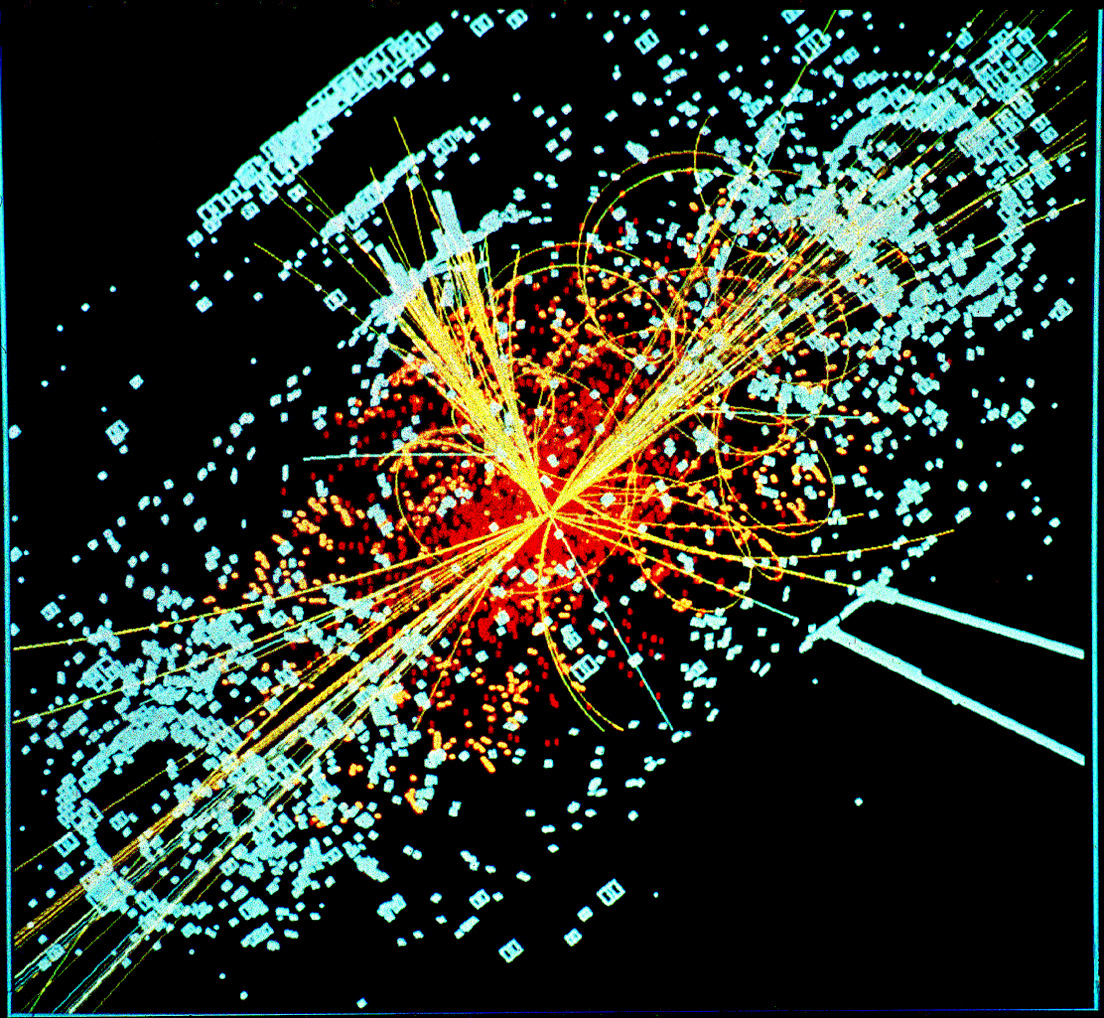
    Simulated data modeled for the CMS particle detector on the Large Hadron Collider (LHC) at CERN. Here, following a collision of two protons, a Higgs boson is produced which decays into two jets of hadrons and two electrons. The lines represent the possible paths of particles produced by the proton-proton collision in the detector while the energy these particles deposit is shown in blue.
    Simulated data modeled for the CMS particle detector on the Large Hadron Collider (LHC) at CERN. Here, following a collision of two protons, a Higgs boson is produced which decays into two jets of hadrons and two electrons. The lines represent the possible paths of particles produced by the proton-proton collision in the detector while the energy these particles deposit is shown in blue.

    Energy is free everywhere in the universe but some genius enslaved us with the combustion engine and we can’t break out of this paradigm but that’s all about to change because the truth is already out there and anyone can go and find Free energy, as for world peace that remains illusive but we have no problem getting leading scientists to collaborate at CERN to collide particles and search for the God particle.

    Timeline of the universe

    Timeline of the metric expansion of space
    Timeline of the metric expansion of space. On the left the dramatic expansion occurs in the inflationary epoch

    A representation of the evolution of the universe over 13.77 billion years. The far left depicts the earliest moment we can now probe, when a period of “inflation” produced a burst of exponential growth in the universe. (Size is depicted by the vertical extent of the grid in the above graphic.) For the next several billion years, the expansion of the universe gradually slowed down as the matter in the universe pulled on itself via gravity.

    More recently, the expansion has begun to speed up again as the repulsive effects of dark energy have come to dominate the expansion of the universe. The afterglow light seen by WMAP was emitted about 375,000 years after inflation and has traversed the universe largely unimpeded since then. The conditions of earlier times are imprinted on this light; it also forms a backlight for later developments of the universe.

    Free energy as a phrase looks comfortable near the phrase world peace, putting them together intentionally here for effect, although occasionally they have been seen together, as one concept does promote the other. Historically speaking wars are fought over energy dominance, so where are we on the scientific front-lines?

    Liquid helium
    Liquid helium retains kinetic energy and does not freeze regardless of temperature due to zero-point energy. When cooled below its Lambda point, it exhibits properties of superfluidity

    Physics currently lacks a full theoretical model for understanding zero-point energy; in particular the discrepancy between theorized and observed vacuum energy is a source of major contention

    The zero-point energy E = ħω/2 causes the ground-state of a harmonic oscillator to advance its phase (color). This has measurable effects when several eigenstates are superimposed.

    Zero-point energy (ZPE) is the difference between the lowest possible energy that a quantum mechanical system may have, and the classical minimum energy of the system. Unlike in classical mechanics, quantum systems constantly fluctuate in their lowest energy state due to the Heisenberg uncertainty principle. As well as atoms and molecules, the empty space of the vacuum has these properties. According to quantum field theory, the universe can be thought of not as isolated particles but continuous fluctuating fields: matter fields, whose quanta are fermions (i.e. leptons and quarks), and force fields, whose quanta are bosons (e.g. photons and gluons). All these fields have zero-point energy. These fluctuating zero-point fields lead to a kind of reintroduction of an aether in physics,  since some systems can detect the existence of this energy. However this aether cannot be thought of as a physical medium if it is to be Lorentz invariant such that there is no contradiction with Einstein’s theory of special relativity.

    Physics beyond the Standard Model (BSM) refers to the theoretical developments needed to explain the deficiencies of the Standard Model, such as the strong CP problem, neutrino oscillations, matter–antimatter asymmetry, and the nature of dark matter and dark energy. Another problem lies within the mathematical framework of the Standard Model itself: the Standard Model is inconsistent with that of general relativity, to the point where one or both theories break down under certain conditions (for example within known spacetimesingularities like the Big Bang and black holeevent horizons).

    What we know; is that we don’t know. Some things are not adding up and all of a sudden more and more people are asking about free energy.

    Free energy is the most thought provoking idea in a millennia because many of us believe that the truth has been withheld from us and the technology is in use already, the very reason for the secret space program for example, was to reverse engineer the technology they had salvaged from crash sites, not just in Roswell NM but all over the place.

    Free energy could usher in world peace but the time is running out, since crop -production is being decimated at a pace that would be hard to replace even with free energy. Now the focus would need to be on providing individuals with free energy and water to grow their own. However, again the time is running out and people are not being told how quickly crop production is being lost to natural disasters, one after another.

    Free energy and awakened population might have a chance, yet nothing is planned and no outcry has been heard. To be continued….

  • Digital Money and Cryptocurrency are Related by Birth

    Digital Money and Cryptocurrency are Related by Birth

    cryptocurrency is digital moneyI will never forget the first time I saw digital money, it was in about 1978 in West Vancouver at Park Royal Shopping center. Being old enough to drive, I remember taking my cousin’s girlfriend to her bank. I pulled up to the curb near the bank front door, beside which was the first ATM (automated teller machine) I had ever seen. From my car I watched this smart young women walk up to the cash machine (instead of through the bank doors like normal people), then pull out a bank card, slide it in a slot, type in a series of numbers on a keypad and “zap!” out of the machine pops crisp new $20 dollar bills. I was so impressed and knew that I had to have one too, as did every person given the choice.

    [box size=”large” style=”rounded” border=”full”]Now it’s taken for granted but it wasn’t long ago that plastic became more common than paper (money).[/box]

    Digital money has been around for a very long time, we just didn’t know it because it was not something anyone questioned until after the big crash, renamed as the 2008 Financial Crisis. After the entire world’s economy was damaged, by the contagion from the financial crimes that caused the problem, we learned that the underlying cause of the financial crisis was a combination of debt and mortgage-backed assets.

    [box type=”info” style=”rounded” border=”full”]The 2008 financial crisis was the largest and most severe financial event since the Great Depression and reshaped the world of finance and investment banking. The effects are still being felt today.[/box]

    The common man learned from the aftermath of the 2008 Financial Crisis that debt had amassed to a critical level and some institutions would need to be bailed out. One only needs to look at the U.S. Debt Clock (see: http://www.usdebtclock.org/ ) to know that the numbers have compounded negatively and are spiraling out of control. To date the money being used by people all over the world appears to be holding it’s value, although everyone knows they buy less and less over time but certainly not hyper-inflation.

    This entire Ponzi scheme called the Federal Reserve Banking system, is based on digital money, it’s an electronically calculated mathematics experiment gone horribly wrong and there’s no way to put the genie back in the bottle, or to contain the contagion of the next financial crisis, which is already overdue. Most all of the banks and institutions that were previously bailed-out, are once again in crisis mode, worse now in terms of cash deposits on hand, compared to the balance sheet of the bank. This time everyone knows there won’t be another massive bailout, the question is when is the next crash, and which institution is going to cause it to happen?

    Digital Money and CryptocurrencyAlong comes cryptocurrency, born of another digital money experiment. This time the conception was by computer software programmers and encryption geeks, hence the name crypto. This time the idea was to create a decentralized, hack-proof, simple and easy to use, pier-to-pier, electronic currency sharing system, and the mathematical equations to give it life.

    Bitcoin had a 4 year gestation period where anonymous programmers shared the idea with computer programming enthusiasts, and for sheer pleasure, this new social experiment grew large among a crowd of geeks, who had no interest in financial gain from the concept. It was these 4 or so years that enabled the actual value to become apparent to a capitalist, even then it was not a runaway success from the start.

    [box type=”info” style=”rounded” border=”full”]Bitcoin and all cryptocurrency are related to Digital Money in one major way: The need to use a bank card, chip, QR code, or some type of numerical signature, to access your account balance.[/box]

    Young people today, often referred to as Millennial’s, are much more inclined to invest in cryptocurrency than a stock, bond or gold bar. Millennial’s actually have more confidence in Bitcoin than they do in government issued paper money. Eventually most paper money will become obsolete, look around it’s already happening.

    Cryptocurrency Photo credit: Daveography.ca on Visualhunt.com / CC BY-NC-SA

  • Drudge Report, Zero Hedge and Youtube

    Drudge Report, Zero Hedge and Youtube

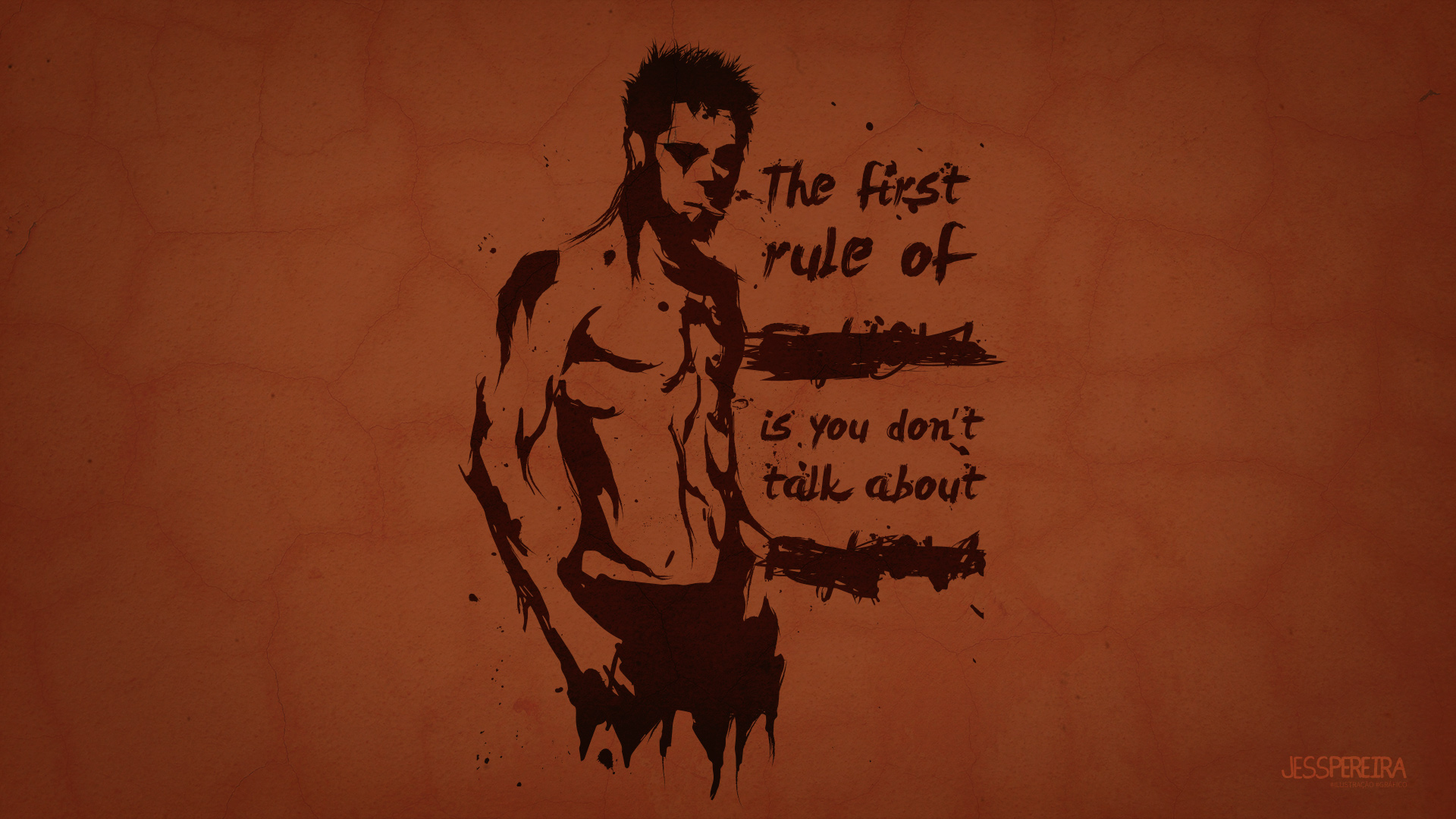
    Fight Club and Tyler Durden from Zero Hedge

    At the risk of sounding redundant, as I know I’ve said this somewhere before but because it’s worth repeating, I’ll say again; the first things I read online every morning and the last thing I look at online every night, in the same order is Drudge Report, Zero Hedge and Youtube and here’s why you should too. Always knowing the hot topics and trending videos enables the reader valuable insight into what other people are thinking and reading about, simply because Drudge Report has over 1 billion readers per month, or over 25 million people per day.

    Machiavellian reasoning written to give you an edge in these days of information overload, also provide enough hot topics to keep you dialed-in to the major world events. Imagine the influence of the collective consciousness the Drudge Report has over the technocrats on the planet?

    Appreciate the format and enjoy the simple, straight-forward way Matt Drudge has laid out the the content, all of which is open source.

    Zero Hedge plays by new rules

    “You’re not your job or the editor of ZH…” Tyler DurdenThe power of Zero Hedge is even more impressive than Drudge because Tyler Durden is a nom de plume that has earned enormous respect, one reader at a time, for a very simple reason, in that it’s superb reporting and professional journalism. What Zero Hedge does that no-other website does, is report all the stories that are effecting the financial markets to aggregate a much broader picture of the global markets, from a Wall Street insiders perspective. Coverage of topics and issues that commercially sponsored (MSM) websites would be unable to expose.

    The notion of Tyler Durden being the ZH editor, if you’ve ever seen the movie the Fight Club, is very compelling. Tyler played by Brad Pitt, is the alter-ego of Edward Norton as he experiences some type of deranged dual-personality, loss of identity, inner-struggle, which is the key theme to the story, the point of which is that Tyler knows that eventually he’s going to get destroyed but he doesn’t care because the thrill of the winning is so powerfully addicting and the complete total defiance of normalcy, rules and regulations takes control, just like anarchy.

    Youtube is a different matter because it’s a search engine and has predictive programming, so whatever you’ve been watching lately it will send you more of the same. Plus, most of us who watch more than an hour of Youtube per day have an account and have it set-up in the best way to present the selection that will be most related. In recent times there’s been a behind the scenes battle happening, to censor the channels and videos that promote topics that may be controversial, according to some small group of people who feel they need to protect the world, from knowing too much information about crimes committed by people in high places, dare I say any of these names, or topic titles, for the search engines to begin categorizing me, in with truth seeking activists.

    I love Youtube for how it’s revolutionized the web and created the most amazing platform for sharing ideas and developing communities etc… In my mind, for every bad intention or hate video uploaded to youtube, there’s 1,000 with good intentions and love. People really put their heart and soul into video, not all, however unfortunately the vast majority of video is of such poor production quality and/or without any reason or purpose, just like the spoken word in the real world.

    Where the problem is, as I see it, if youtube continue to censor video creators, the people will find a new place where the concept of “free speech” is the mission statement.

    Zero Hedge Photo credit: pejess on Visual Hunt / CC BY
    Tyler Durden quote photo credit: junaidrao on VisualHunt.com / CC BY-NC-ND

  • On This Day in History the Communist Manifesto was Published

    On This Day in History the Communist Manifesto was Published

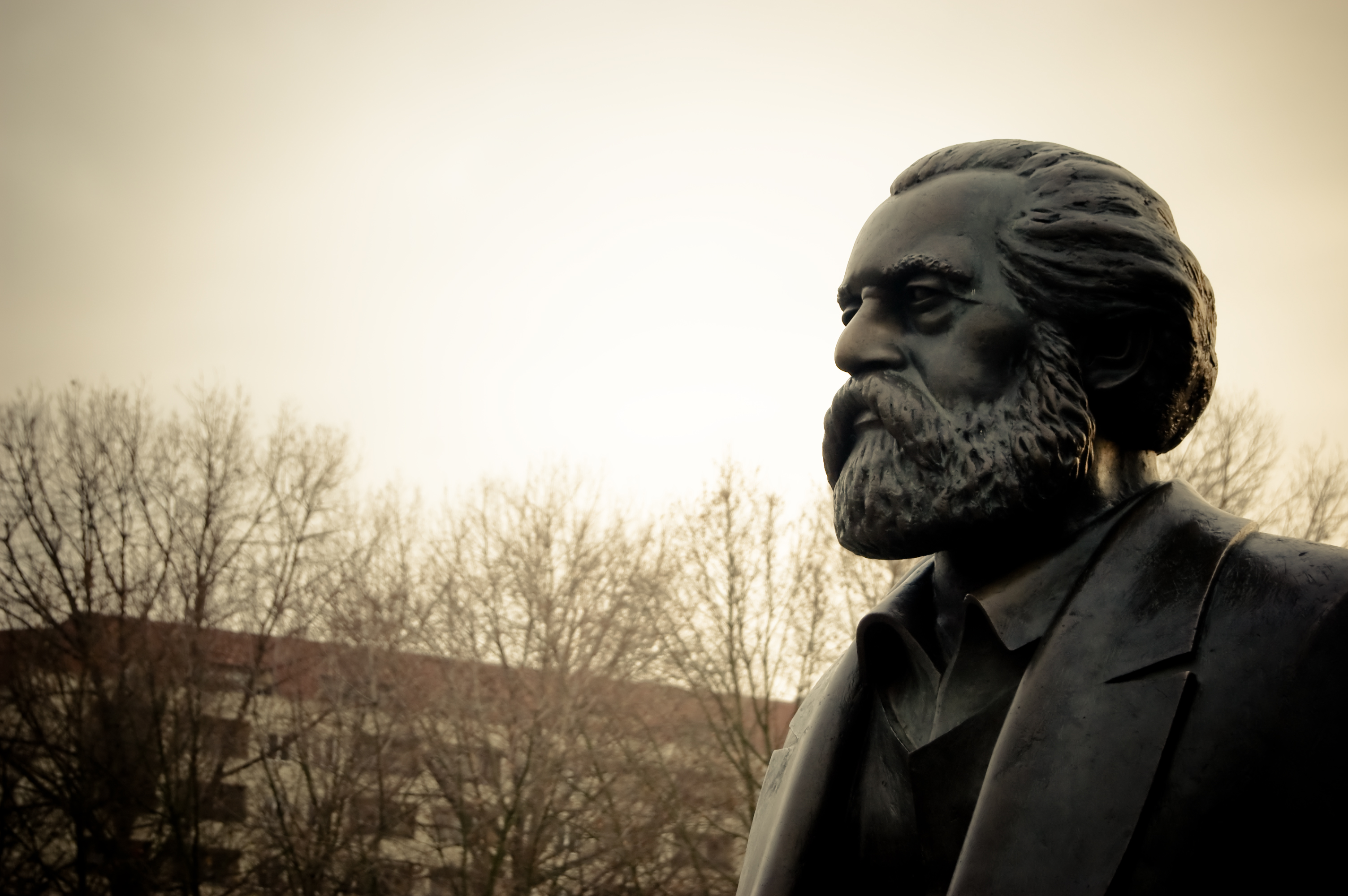
    Karl Marx in WinterOn February 21, 1848, The Communist Manifesto, written by Karl Marx with the assistance of Friedrich Engels, is published in London by a group of German-born revolutionary socialists known as the Communist League. The political pamphlet–arguably the most influential in history–proclaimed that “the history of all hitherto existing society is the history of class struggles” and that the inevitable victory of the proletariat, or working class, would put an end to class society forever. Originally published in German as Manifest der Kommunistischen Partei (“Manifesto of the Communist Party”), the work had little immediate impact. Its ideas, however, reverberated with increasing force into the 20th century, and by 1950 nearly half the world’s population lived under Marxist governments.

    Karl Marx was born in Trier, Prussia, in 1818–the son of a Jewish lawyer who converted to Lutheranism. He studied law and philosophy at the universities of Berlin and Jena and initially was a follower of G.W.F. Hegel, the 19th-century German philosopher who sought a dialectical and all-embracing system of philosophy. In 1842, Marx became editor of the Rheinische Zeitung, a liberal democratic newspaper in Cologne. The newspaper grew considerably under his guidance, but in 1843 the Prussian authorities shut it down for being too outspoken. That year, Marx moved to Paris to co-edit a new political review.

    Paris was at the time a center for socialist thought, and Marx adopted the more extreme form of socialism known as communism, which called for a revolution by the working class that would tear down the capitalist world. In Paris, Marx befriended Friedrich Engels, a fellow Prussian who shared his views and was to become a lifelong collaborator. In 1845, Marx was expelled from France and settled in Brussels, where he renounced his Prussian nationality and was joined by Engels.

    During the next two years, Marx and Engels developed their philosophy of communism and became the intellectual leaders of the working-class movement. In 1847, the League of the Just, a secret society made up of revolutionary German workers living in London, asked Marx to join their organization. Marx obliged and with Engels renamed the group the Communist League and planned to unite it with other German worker committees across Europe. The pair were commissioned to draw up a manifesto summarizing the doctrines of the League.

    Back in Brussels, Marx wrote The Communist Manifesto in January 1848, using as a model a tract Engels wrote for the League in 1847. In early February, Marx sent the work to London, and the League immediately adopted it as their manifesto. Many of the ideas in The Communist Manifesto were not new, but Marx had achieved a powerful synthesis of disparate ideas through his materialistic conception of history. The Manifesto opens with the dramatic words, “A spectre is haunting Europe–the spectre of communism,” and ends by declaring: “The proletarians have nothing to lose but their chains. They have a world to win. Workers of the world, unite!”

    In The Communist Manifesto, Marx predicted imminent revolution in Europe. The pamphlet had hardly cooled after coming off the presses in London when revolution broke out in France on February 22 over the banning of political meetings held by socialists and other opposition groups. Isolated riots led to popular revolt, and on February 24 King Louis-Philippe was forced to abdicate. The revolution spread like brushfire across continental Europe. Marx was in Paris on the invitation of the provincial government when the Belgian government, fearful that the revolutionary tide would soon engulf Belgium, banished him. Later that year, he went to the Rhineland, where he agitated for armed revolt.

    The bourgeoisie of Europe soon crushed the Revolution of 1848, and Marx would have to wait longer for his revolution. He went to London to live and continued to write with Engels as they further organized the international communist movement. In 1864, Marx helped found the International Workingmen’s Association–known as the First International–and in 1867 published the first volume of his monumental Das Kapital–the foundation work of communist theory. By his death in 1884, communism had become a movement to be reckoned with in Europe. Twenty-three years later, in 1917, Vladimir Lenin, a Marxist, led the world’s first successful communist revolution in Russia.

    Source: History.com

    Article Details:

    Marx publishes Manifesto

    • Author

      History.com Staff

    • Website Name

      History.com

    • Year Published

      2010

    • Title

      Marx publishes Manifesto

    • URL

      http://www.history.com/this-day-in-history/marx-publishes-manifesto

    • Publisher

      A+E Networks

    Karl Marx Photo credit: fhwrdh on Visual Hunt / CC BY

  • Chinese New Year

    Chinese New Year

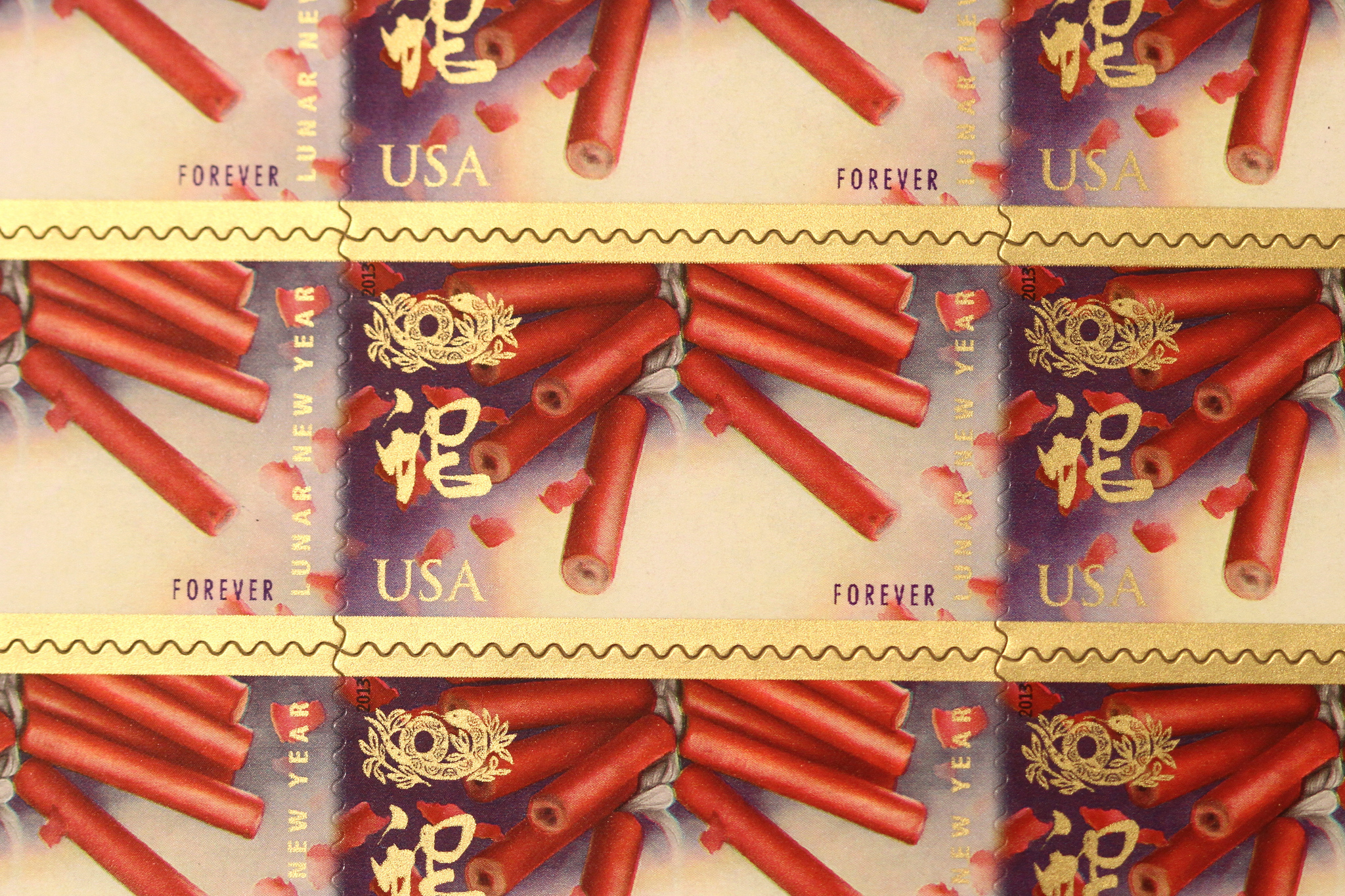
    Chinese New YearChinese New Year, also known as the Spring Festival (simplified Chinese: 春节; traditional Chinese: 春節; pinyin: Chūn Jié) in modern China, and one of the Lunar New Years in Asia, is an important Chinese festival celebrated at the turn of the traditional lunisolar Chinese calendar. Celebrations traditionally run from the evening preceding the first day, to the Lantern Festival on the 15th day of the first calendar month. The first day of the New Year falls on the new moon between 21 Jan and 20 Feb. In 2018, the first day of the Lunar New Year is on Friday, 16 February, initiating the year of the Dog.

    It is one of the world’s most prominent and celebrated festivals, with the largest annual mass human migration in the world. It is a major holiday in China and has had strong influence on the lunar new year celebrations of its geographic neighbours, including Taiwan, Hong Kong, Macau, Singapore, Indonesia, Malaysia, Korea, Thailand, Vietnam, Cambodia, Mauritius, Australia, and the Philippines.

    The New Year festival is centuries old and associated with several myths and customs. Traditionally, the festival was a time to honour deities as well as ancestors. Within China, regional customs and traditions concerning the celebration of the Lunar New Year vary widely. Often, the evening preceding Lunar New Year’s Day is an occasion for Chinese families to gather for the annual reunion dinner. It is also traditional for every family to thoroughly clean the house, in order to sweep away any ill-fortune and to make way for incoming good luck. Windows and doors are decorated with red colour paper-cuts and couplets with popular themes of “good fortune” or “happiness”, “wealth”, and “longevity”. Other activities include lighting firecrackers and giving money in red paper envelopes. In about one third of the Mainland population, or 500 million Northerners, dumplings (especially those of vegetarian fillings) feature prominently in the meals celebrating the festival.

    Photo credit: DrPhotoMoto on Visualhunt.com / CC BY-SA

  • The Girl from Ipanema

    The Girl from Ipanema

    Brazil enjoys the largest recording industry outside of the United States, so the number of brilliant artists and the wide variety of genres (most people have never heard of), is truly staggering.

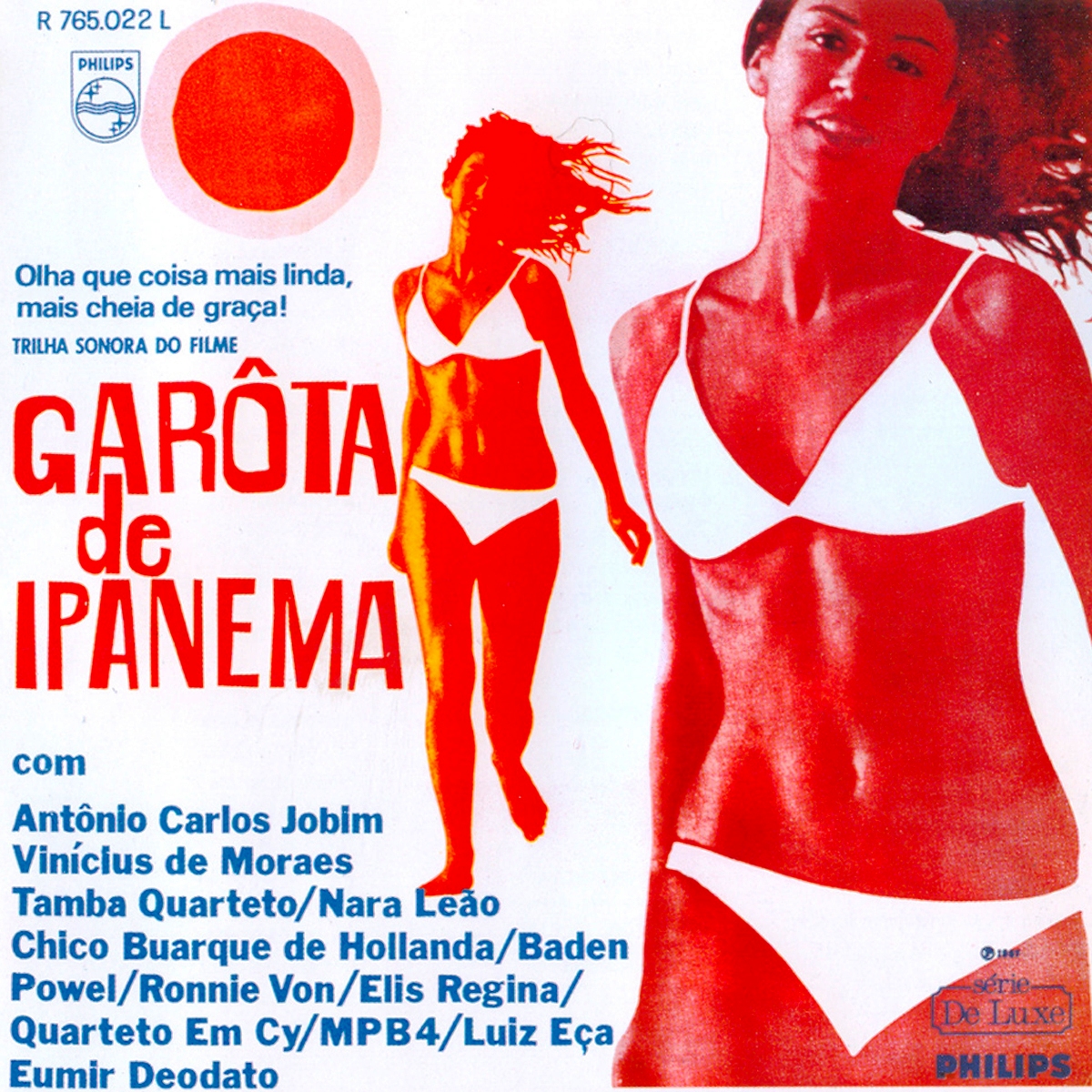
    The first time I’d ever hear this beautiful language was by vinyl record, as my father had a huge jazz collection, and even before I was born the Bossa Nova was played in my house often, so the first song I can remember, and first words in Portuguese are from the famous song: Garota de Ipanema (The Girl from Ipanema).

    The Girl from Ipanema is a well-known bossa nova song, a worldwide hit in the mid-1960s that won a Grammy for Record of the Year in 1965. It was written in 1962, with music by Antônio Carlos Jobim and Portuguese lyrics by Vinicius de Moraes. English lyrics were written later by Norman Gimbel.

    In Revelação: a verdadeira Garota de Ipanema (Revealed: The Real Girl from Ipanema) Moraes wrote she was:

    “o paradigma do broto carioca; a moça dourada, misto de flor e sereia, cheia de luz e de graça mas cuja a visão é também triste, pois carrega consigo, a caminho do mar, o sentimento da mocidade que passa, da beleza que não é só nossa—é um dom da vida em seu lindo e melancólico fluir e refluir constante.”

    Translation:

    “the paradigm of the young Carioca: a golden teenage girl, a mixture of flower and mermaid, full of light and grace, the sight of whom is also sad, in that she carries with her, on her route to the sea, the feeling of youth that fades, of the beauty that is not ours alone—it is a gift of life in its beautiful and melancholic constant ebb and flow.”

    The song was inspired by Heloísa Eneida Menezes Paes Pinto (now Helô Pinheiro), a nineteen-year-old girl living on Montenegro Street in the fashionable Ipanema district in Rio de Janeiro, Brazil. Daily, she would stroll past the popular Veloso bar-café, not just to the beach (“each day when she walks to the sea”), but in the everyday course of her life. She would sometimes enter the bar to buy cigarettes for her mother and leave to the sound of wolf-whistles.

    As the legend has it (which isn’t 100% accurate), in the winter of 1962, the composers watched the girl pass by the bar (now a restaurant, see footnote), and it is easy to imagine why they noticed her—Helô was a 173-cm (five-foot eight-inch) brunette, and she attracted the attention of many of the bar patrons. Since the song became popular, she has become a celebrity.

    While Helô inspired the song, it was another Carioca who carried it beyond Rio. Astrud Gilberto was just the wife of singing star João Gilberto when she entered a NYC studio in March 1963. João and Jobim were making a record with tenor saxman Stan Getz. The idea of cutting a verse on “Ipanema” in English came up, and Astrud was the only one of the Brazilians who spoke more than phrasebook English.


    The hit English language song; “The Girl from Ipanema” was the alchemy of Astrud’s child-like vocal, devoid of vibrato and singerly mannerisms, it was the perfect foil for her husband’s soft bumblebee voice. Jobim tinkled piano. Getz blew a creamy smooth tenor. Four minutes of magic went to tape.

    Note: One of my favorite places to eat and drink in Rio is the Garota de Ipanema, sure it’s a bit of a tourist trap because of the song “Girl from Ipanema” but seriously the restaurant is really excellent and it’s super casual being just a couple of blocks from Ipanema beach. You can grab a good window seat near the corner if your timing is good and then watch all the Cariocas trudging home from the beach at the end of the day. The draft beer is cold and frothy however the caipirinhas might be as good as you’ll find anywhere but the main attraction is the great food, especially the Picanha, which is thinly sliced beef rump that you grill yourself, right at your table, on a super-hot brazier, similar to a hibachi bar-b-que. (See: Garota de Ipanema Restaurant)

  • Big Pineapple Chronicles

    Big Pineapple Chronicles

    The nickname “Big Pineapple” for Sao Paulo made perfect sense. In Brasil they have an expression for when people (one or more) have a tough problem to solve: “descascar abacaxi”, which translates to “peel the pineapple”. This always refers to something that is unpleasant and painstaking, with the possibility of making a sticky mess.

    Interestingly, the Portuguese word abacaxi also translates to; “pain”. Maybe that’s the root of the expression “descascar abacaxi”, not sure, but I always liked it, for the visual of peeling pineapples, as they are the most prickly abrasive fruit, with by far the most abundant and sweetest juice, of any plant known to man.

    Now the visuals I can give you, to substantiate “why” the nickname “Big Pineapple”. Think about the sharp outer skin of the pineapple, also the barbs on the leaves. Now imagine razor-wire and you begin to see just one of the odd parallels of a pineapple and a giant city that has a very prickly outer layer.

    Descascar abacaxi - Big Pineapple chronicles Yes it’s sad to say, razor wire is a common sight in Sao Paulo and just like a pineapple, you’d have no idea how nice it was on the other side of that skin, unless you’d tasted it before, or someone told you how sweet it is. The surface seems to be designed to detract the would-be taster, from even getting started. It just looks too damn nasty from the outside.

    There must be a method, you might ask. And if it were a normal problem to solve, Google would provide the answer, so on the search term “descascar abacaxi” (translates to “peel a pineapple”) you’d find 295,000 results but if you search how to get “inside” Sao Paulo, you’d be lucky to find a dozen sources in English, most of them blogs and all of them out of date. That’s where the “Big Pineapple Chronicles” comes-in, to assist the curious seeker, on how to “descascar abacaxi”.

    Directly from the Big Pineapple, we share stories and cool videos to enlighten the topic. My objective is to get inside Sao Paulo and extract the juiciest content, mix it together with tales of the people we meet along the way, and serve it up fresh daily.

    Definition of pineapple

    noun
    A large juicy tropical fruit consisting of aromatic edible yellow flesh surrounded by a tough segmented skin and topped with a tuft of stiff leaves. It is low-growing, with a spiral of spiny sword-shaped leaves on a thick stem.

    Photo credit: x-ray delta one via Visualhunt.com / CC BY-NC-SA

  • Bar do Juarez of Sao Paulo

    Bar do Juarez of Sao Paulo

    Bar do Juarez Picanha no RéchaudBar do Juarez has long been my second favourite restaurant in Sao Paulo, they serve a steak dish that they’ve become famous for called “Picanha no Réchaud”, which is a cut of beef that arrives at your table un-cooked but thinly sliced and in the accompaniment of an extremely hot brazier, upon which you grill your own dinner, just the way you want it.

    The serving of “Picanha no Réchaud” is easily enough food for 3 people, or can be shared amongst 4 with a large salad or the best antipasto I know of in Brazil. However 2 hungry diners can also finish this meal, with some hard-work and patience. The side dishes are coleslaw, vinaigrette, and farofa, which is a popular toasted cassava flour mixture and this tasty ensemble is served with fresh Italian bread. In my opinion this is a really excellent way to eat, it’s a really fun meal to enjoy with a friend.

    Bar do Juarez History

    Juarez Alves is the owner of the trendy Bar do Juarez, which has four locations in São Paulo: Itaim, Moema, Brooklin and Pinheiros. Originally from Ibitira in the state of Bahia, Juarez came to the city of São Paulo in 1973, at age 12, and from an early age dreamed of setting up his own business. He achieved this goal with a lot of hard work to make the money, then discipline to save the capital: he worked as a cafeteria clerk, fry cook, then a waiter in various establishments. From the beginning Juarez discovered the pleasure of serving the people, contributing towards making it a nice time for family and friends.

    In 1986 with his brother and a partner opened the “Restaurant Bier Bier”, serving German food. In 1997, the house was sold and the following year opened the Juarez Moema, the first location of Bar do Juarez. Inspired by the famous pubs of the old center of São Paulo, places where a “good conversation” going through the night and people ended up almost forgetting to return home, the “Juarez Bar” soon became a reference and point meeting to the public that goes to the region for happy hour or to stay in the neighborhood through the night. With the successful establishment, it was opened in the following years the bars in Itaim (2001), Brooklyn and Pinheiros (both in 2008). A success story that has lasted 15 years.

    Of the 4 locations, Brooklin is my favourite, which naturally, is the reason I made a video about it. Here’s some photos of the Brooklin Bar do Juarez from their website.

    [hr]

  • Veteran Palm Trees of War

    Veteran Palm Trees of War

    São Paulo is the dynamic result of the demolition and reconstruction of successive cities in just over a century. In that short time, the citadel with 30 000 inhabitants has become a metropolis with 20 million inhabitants, and its nature has practically disappeared. Originally very rich in biodiversity, São Paulo showed extensive forests of the Atlantic Forest, Araucaria, savannas and wetlands, forming a unique landscape. During the process of urbanization, the ancestral vegetation was being cleared and replaced by species of foreign origin, cultural motivation that led to the mass extinction of native flora and fauna and the current situation of 80% of urban vegetation to be of foreign origin, ie , exotic.

    To be a palm tree, or any kind of tree in a city like São Paulo is not easy. It complicates your life – contaminated and compacted soil, the narrow sidewalk and all cemented the overhead wires everywhere, harmful pruning and people who see it as an obstacle or producers of “dirt”. However, they are what make the city livable, breathable and beautiful. We hired a tree care company from https://www.atlantatreeaces.com to help take care of our beautiful trees.

    The Organization; SOS Mata Atlântica of São Paulo decorates trees for resistance to uncontrolled urban development, mobilizing the population to create a map to the great trees in town, then tell their stories and to report any mistreatment.

    Check out the Veterans of War campaign – www.veteranasdeguerra.org

    Veteranas de Guerra

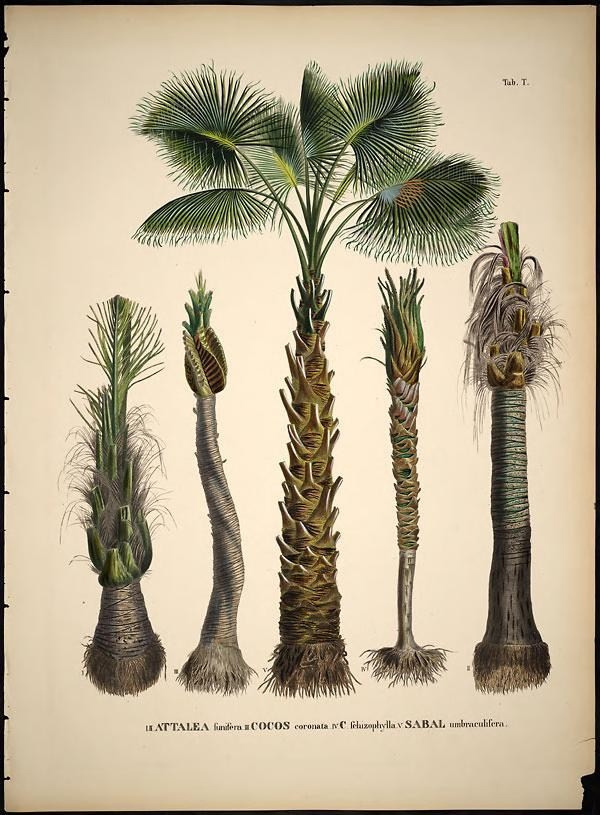
    Palmeiras do Jardim Botanico do Sao Paulo

    [box type=”info”]Euterpe edulis, commonly known as juçara, jucara (misspell of the former name, of Luso-Tupian origin), jussara (an archaic alternative spelling), açaí-do-sul or palmiteiro, is a palm species in the genus Euterpe. It is now predominantly used for hearts of palm. It is closely related to the açaí palm (Euterpe oleracea), a species cultivated for its fruit and superior hearts of palm. The larvae of Caligo brasiliensis are reported to feed on E. edulis.[/box]

    Palmeiras do Jardim Botanico – Imperial Palms are a Palm of great beauty and elegance, the palm-juçara is the parent plant of the Atlantic Forest, providing their food with fruit for much of the fauna, the paca the toucan. In São Paulo it occurred in abundance prior to urbanization, but faded to near local extinction by searching for your palm for cooking (heart of palms) and as a construction material. Palmital in the Botanical Garden, around the source of one of the trainers of the famous Riacho Ipiranga, São Paulo is an ancestral landscape, true environmental relic.

    Photo credit: BioDivLibrary via Visualhunt.com / CC BY