Tag: Brazil

  • Dark Horse Movie Premier, Las Vegas

    Dark Horse Movie Premier, Las Vegas

    Fraud Fighters Summit presented by Juan O Savin and Matt Meck features a Worldwide Premier of “Dark Horse” (movie) about the true story of deep state cabal crimes in Brazil. Starring Jim Caviezel as Jair Bolsonaro, the legitimate leader of Brazil.

    Dark Horse is an upcoming American biographical drama film directed by Cyrus Nowrasteh, who co-wrote the screenplay with Mark Nowrasteh, based on a story by Mário Frias. It follows the political career of former President of Brazil Jair Bolsonaro during the 2018 presidential election and a subsequent stabbing attack. Jim Caviezel stars as Bolsonaro alongside Marcus Ornellas, Sérgio Barreto and Eddy Finlay.

    Premise

    The film chronicles the political ascension of Jair Bolsonaro during his 2018 presidential campaign, focusing on his assassination attempt in Juíz de ForaMinas Gerais. It portrays Bolsonaro as an electoral “dark horse”, chronicling his hospital recovery, electoral debates and his marriage to Michelle de Paula. It includes a flashback scene portraying a young Bolsonaro as a Brazilian Army officer taking part in military operations targeting drug trafficking.

    The plot suggests that Bolsonaro had been a target of a conspiracy between left-wing groups and criminal organizations. Besides the attack perpetrated by Adélio Barba, the story includes other supposed assassination attempts occurred while Bolsonaro recovers at the hospital. A fictional antagonist is introduced, portraying an influential drug dealer that Bolsonaro had helped arrest in his Army years. According to newspaper Metrópoles, the screenplay mentions action scenes set in the Amazon rainforest, involving a battle between drug cartels, indigenous peoples and shamans.

    Cast

    Production

    Development

    Dark Horse was directed by Iranian-American filmmaker Cyrus Nowrasteh from a screenplay he co-wrote with his son Mark Nowrasteh, based on “Capitão do Povo” (lit. ’People’s Captain’), a story by São Paulo congressman Mário Frias, who was appointed Secretary of Culture in the first Bolsonaro administration. The production is headed by Eduardo Verástegui, known for producing Sound of Freedom.

    Filming

    Filming began in October 2025 at Indianópolis Hospital in São Paulo. Actor Jim Caviezel, known for portraying Jesus Christ in The Passion of the Christ, spent approximately three months in Brazil filming in different regions before filming moved to the United States and Mexico. One of the locations was the Latin America Memorial in São Paulo, between 19 and 22 November 2025, with a payment of R$125,921.36 to the State Government of São Paulo for image usage rights.

    The film was entirely shot in English, aiming to reach an international audience by reconstructing the political career of Bolsonaro, who was tried and convicted of the coup d’état attempt and is currently imprisoned. 

    Source: Wikipedia
  • Trancoso Night and Dreaming of Brazil

    Trancoso Night and Dreaming of Brazil

    Trancoso Night

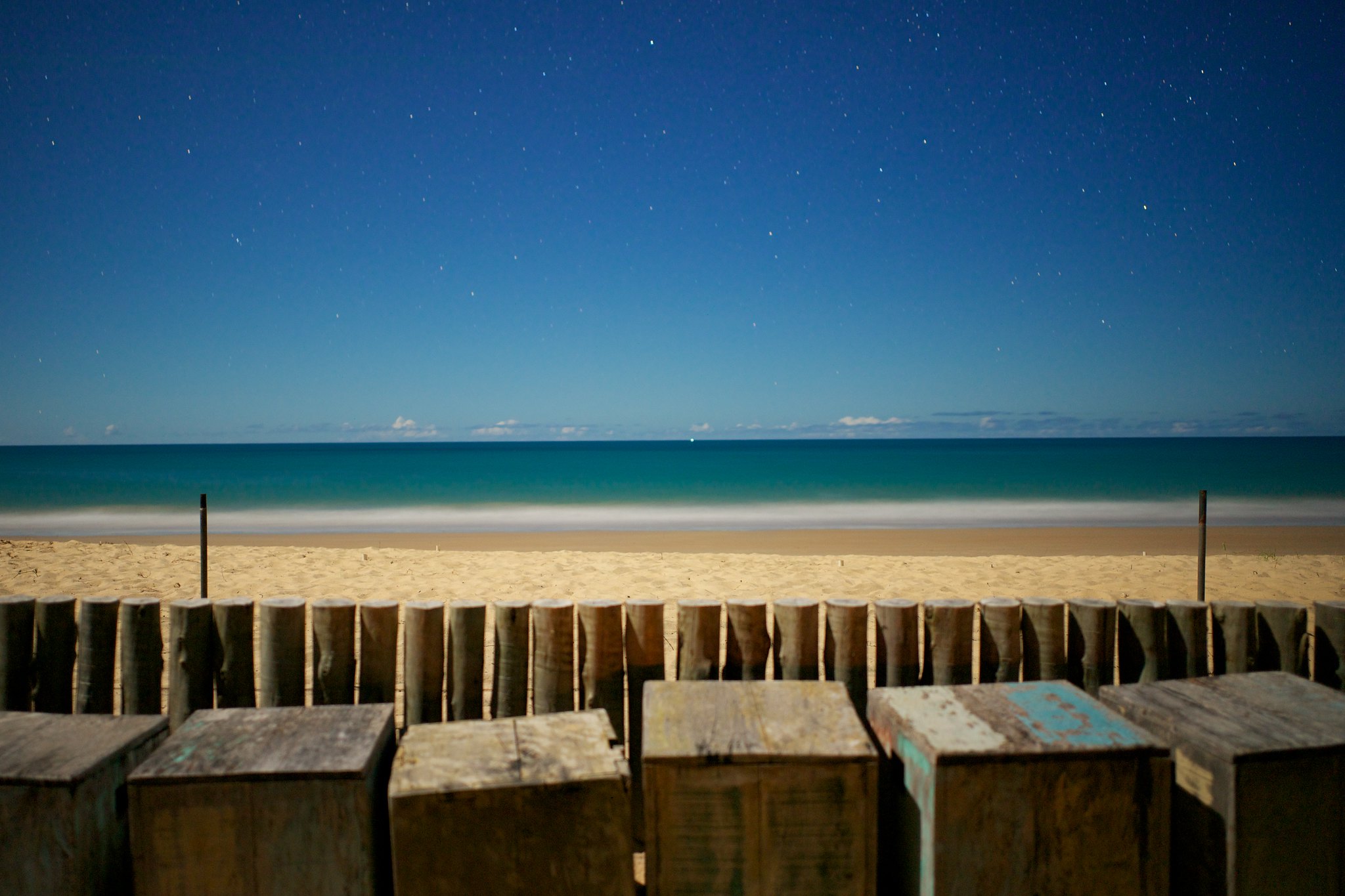
    I’ve been missing Brazil lately and then while searching the public domain for a Brazil image came across this photo called Trancoso Night, in that moment I was inspired me to make this post because it’s one place I was not able to see yet and the best way I can remember to go back, is to do this make a new page about this magical place called Trancoso.

    Trancoso is a district in the municipality of Porto Seguro in the state of Bahia, Brazil. The region was the landing point of the Portuguese explorer, Pedro Alvares Cabral onto Brazil, on April 22, 1500. It was founded by Jesuit Priests in 1583, with the name São João Baptista dos Indios. Wikipedia

    Trancoso - Porto Seguro - Bahia - Brazil, by Michel Y.G. Meunier
    Trancoso – Porto Seguro – Bahia – Brazil, by Michel Y.G. Meunier

    Trancoso is famous for its white, semi-deserted beaches. Most of them are protected by reefs and form natural swimming pools at low tide.

    • Praia do Espelho (Mirror Beach)

    This is the most famous beach of Trancoso, with powder white beaches and natural warm swimming pools created by reefs at low tide. Praia do Espelho is situated about a half an hour from Trancoso, following a winding dirt road that is only accessible during sunny weather.

    • Praia dos Coqueiros (Palmtree Beach)

    Praia dos Coqueiros, or Palmtree Beach, is a small beach with medium waves and most of the time protected by coral reefs. This beach has the nickname Palmtree beach because of the more than hundred beautiful palmtrees that are typical for this region of Bahia.

    • Praia da Pedra Grande (Big Rock Beach)

    This beach is about a kilometer away from Praia Coqueiros, it’s narrower than the other beaches and with fewer tourists. Praia Dos Coqueiros is the last beach where you will find restaurants, beachbars and some beach hotels. The more distant beaches are deserted and known locally as beaches to practice surfing and topless sunbathing.

    • Praia dos Nativos (Local beach)

    Praias dos Nativos is one of the most famous beaches of Trancoso where you will find most of the beachbars and beach hotels

    Trancoso Night Photo credit: Ndecam on VisualHunt / CC BY

  • The Girl from Ipanema

    The Girl from Ipanema

    Brazil enjoys the largest recording industry outside of the United States, so the number of brilliant artists and the wide variety of genres (most people have never heard of), is truly staggering.

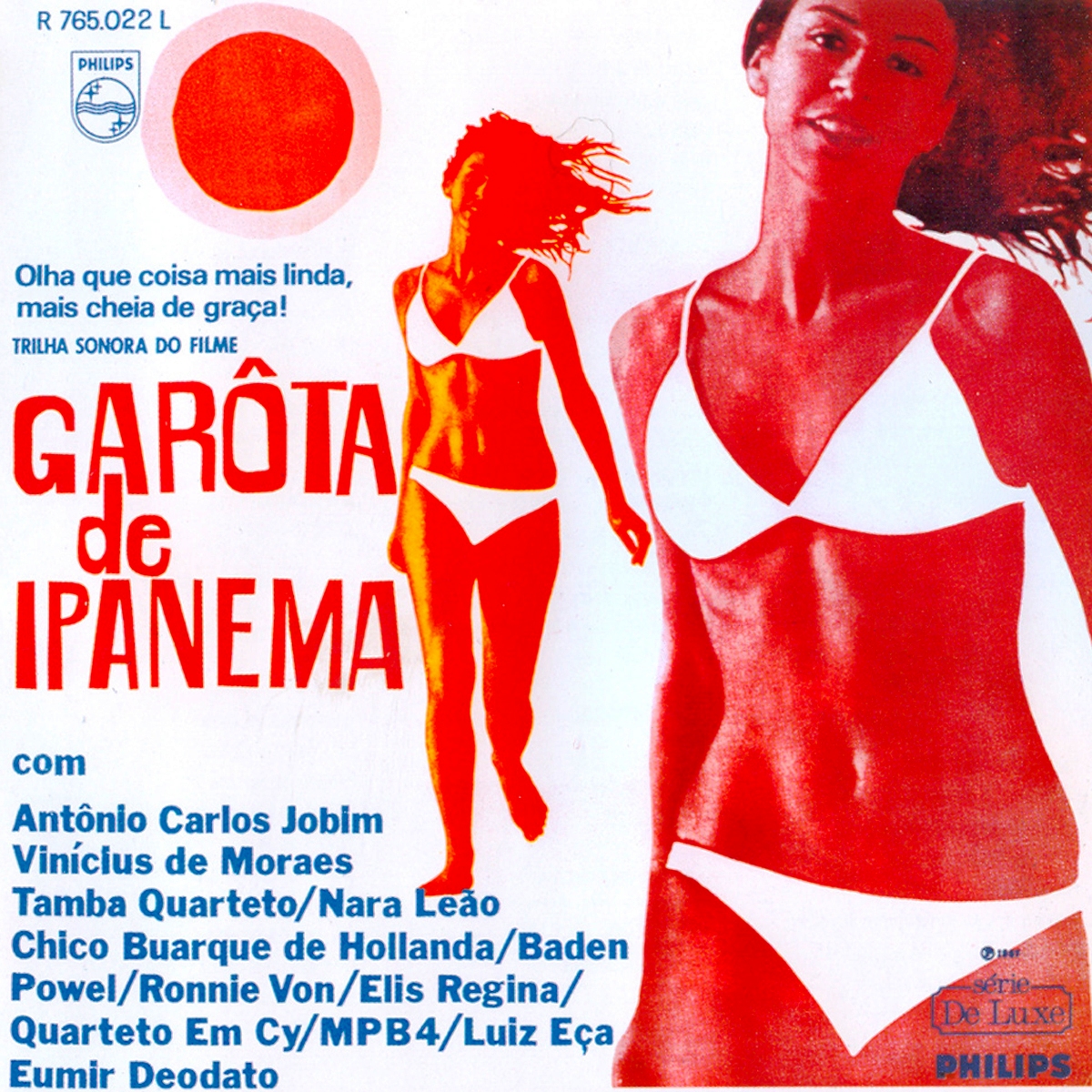
    The first time I’d ever hear this beautiful language was by vinyl record, as my father had a huge jazz collection, and even before I was born the Bossa Nova was played in my house often, so the first song I can remember, and first words in Portuguese are from the famous song: Garota de Ipanema (The Girl from Ipanema).

    The Girl from Ipanema is a well-known bossa nova song, a worldwide hit in the mid-1960s that won a Grammy for Record of the Year in 1965. It was written in 1962, with music by Antônio Carlos Jobim and Portuguese lyrics by Vinicius de Moraes. English lyrics were written later by Norman Gimbel.

    In Revelação: a verdadeira Garota de Ipanema (Revealed: The Real Girl from Ipanema) Moraes wrote she was:

    “o paradigma do broto carioca; a moça dourada, misto de flor e sereia, cheia de luz e de graça mas cuja a visão é também triste, pois carrega consigo, a caminho do mar, o sentimento da mocidade que passa, da beleza que não é só nossa—é um dom da vida em seu lindo e melancólico fluir e refluir constante.”

    Translation:

    “the paradigm of the young Carioca: a golden teenage girl, a mixture of flower and mermaid, full of light and grace, the sight of whom is also sad, in that she carries with her, on her route to the sea, the feeling of youth that fades, of the beauty that is not ours alone—it is a gift of life in its beautiful and melancholic constant ebb and flow.”

    The song was inspired by Heloísa Eneida Menezes Paes Pinto (now Helô Pinheiro), a nineteen-year-old girl living on Montenegro Street in the fashionable Ipanema district in Rio de Janeiro, Brazil. Daily, she would stroll past the popular Veloso bar-café, not just to the beach (“each day when she walks to the sea”), but in the everyday course of her life. She would sometimes enter the bar to buy cigarettes for her mother and leave to the sound of wolf-whistles.

    As the legend has it (which isn’t 100% accurate), in the winter of 1962, the composers watched the girl pass by the bar (now a restaurant, see footnote), and it is easy to imagine why they noticed her—Helô was a 173-cm (five-foot eight-inch) brunette, and she attracted the attention of many of the bar patrons. Since the song became popular, she has become a celebrity.

    While Helô inspired the song, it was another Carioca who carried it beyond Rio. Astrud Gilberto was just the wife of singing star João Gilberto when she entered a NYC studio in March 1963. João and Jobim were making a record with tenor saxman Stan Getz. The idea of cutting a verse on “Ipanema” in English came up, and Astrud was the only one of the Brazilians who spoke more than phrasebook English.


    The hit English language song; “The Girl from Ipanema” was the alchemy of Astrud’s child-like vocal, devoid of vibrato and singerly mannerisms, it was the perfect foil for her husband’s soft bumblebee voice. Jobim tinkled piano. Getz blew a creamy smooth tenor. Four minutes of magic went to tape.

    Note: One of my favorite places to eat and drink in Rio is the Garota de Ipanema, sure it’s a bit of a tourist trap because of the song “Girl from Ipanema” but seriously the restaurant is really excellent and it’s super casual being just a couple of blocks from Ipanema beach. You can grab a good window seat near the corner if your timing is good and then watch all the Cariocas trudging home from the beach at the end of the day. The draft beer is cold and frothy however the caipirinhas might be as good as you’ll find anywhere but the main attraction is the great food, especially the Picanha, which is thinly sliced beef rump that you grill yourself, right at your table, on a super-hot brazier, similar to a hibachi bar-b-que. (See: Garota de Ipanema Restaurant)

  • Born under a Lucky Star

    Born under a Lucky Star

    I was born under a lucky star, or so my Dear Old Mom tells me. She was born of Irish immigrants to Canada, who taught her to always look on the bright side of life, with a good dose of chin-up and carry-on when things didn’t go as planned. She and my Dad taught me to ski before I could walk, and how to teach skiing before I could drive (driving age is 16 in Canada).

    My lucky star was being able to teach, that meant I was able to earn money, then own my own pick-up truck. Every Canuck buck wants to own a truck but the thing is you need an income to be able to keep one, same as today. I may have changed my choice of car but still need the money to keep it.

    The Internet was how I managed to carve out a living, so that was another part of lucky star status. I saw the web really early and jumped all over it, had my first web design company before the mid 90’s. Mostly through consulting work and webmaster contracts I was able to support a nice lifestyle in South Florida, although it was up and down since we were all learning at the same time and the Industry was so new and unexplored.

    Nowadays the U.S. Expat has a major advantage throughout the world in the Internet niche because most of the rest of the world want U.S. Talent, knowledge and experience, especially as in the case of countries where allot of those people want to travel to USA, like China and Brazil for example, where it’s right of passing for middle class and up to make trips abroad.

    The key thing to know about becoming an Expat is that there’s more opportunity and often much bigger opportunities when you can provide a bridge between your culture and local knowledge and that of your new foreign home. The world is your oyster, when you’ve got a skill-set, that can help other people succeed.

    Mount Robson, Mount Robson Provincial, overseas living.
    ~~ Mount Robson, Mount Robson Provincial Park, ~~ British Columbia, Canada.

    When I first left Canada I was young and had serious wanderlust, funding my adventures was no easy feat. Several people I knew taught skiing and/or English, one friend that I admired in particular was Max, because he stayed in college to obtain an economics degree, then moved to Japan to teach English in a corporation.

    Max had a thing about him, aside from being very smart, he was an absolute freak for mountain sports and outdoor recreation of all kinds. Ace tennis player and great golfer but even before snow boards arrived, he loved heli-skiing and knew about these incredible areas in British Columbia because we had planted trees in these mountains (for summer jobs). That’s how Max and I met.

    Now that you have the backstory, while Max was in Japan teaching English to corporate execs, he was always talking about the back-country sports of BC. Next thing you know he’s opening an adventure guiding business in Canada, when Snow Boards arrived Max was among the first riding them, so he jumped all over the opportunity. Shortly thereafter it was Max throughout the mid 80’s that was showing Warren Miller and other ski film makers where to heli-ski. Max was the guide to the guides. To this day Max lives at Whistler, still involved in the hospitality industry and still helping Japanese people have an awesome experience in Canada.

    There are so many examples of the foreigner next door. Everyone can remember someone in their life, who had a funny sounding accent. My life growing up in Western Canada was all about sports and recreation.

    In the ski teaching business we would meet interesting people all the time, people from the farthest corner, end up at ski chalets. Especially common near ski resorts and water sports are Australian’s and Kiwi’s (New Zealanders). My young impressionable life was filled with great stories about “Down Under”, as my winters were filled with many weekends with my Oz and Kiwi mates, at our ski club. We loved to ski together, the deeper and steeper the better!

    These people were smart, sophisticated, experienced and very determined to live free and prosperous. Their timing made them appear to be Hippy but they were world-wise way beyond their youthful appearance. World travel had also taught them about cultural cuisine, and they loved to cook fabulous foreign dishes and entertain large groups of us, with music and wine from the various regions of the world, to match the meal.

    One winter we made our own Saki from rice, then at the end of the season, enjoyed an authentic 7 course Japanese dinner party with the homemade rice wine. It tasted great, as did incredible Mexican and my personal favorite Greek dinners, all of which were very novel to me, at 16 years old.

    English: WildVenture Volunteers Teaching Engli...
    WildVenture Volunteers Teaching English in Mongolia

    Teaching skiing taught me how to help people get what they wanted. This is what is so fundamental about our language, more than half of the world wants to learn English.

    All of the people I mentioned above, and just about anyone who has ever lived overseas, has at one time or another, taught English to someone. It’s part of humanity, to try to exchange languages. It is the most common principle of good-will, to show an interest in another person’s culture, to speak their words.

    The best thing about Teaching English is the people you meet, and that you are becoming an Ambassador of our language. You are helping someone else get what they want, that’s what creates value, and it’s the most common way to make money while living overseas.

    The greatest thing in today’s English teaching community is Internet video, as many people want to learn online but still the basis of the teaching starts with a book at a table, with the student sitting beside you. It’s a one-on-one style method, where the book does the work but you need to be taught how to teach.

    It’s highly recommended, that anyone embarking on a serious global Expat exploration being armed with more money making methods, than just teaching English. However, always be proud and happy to teach, it’s an excellent means of immersion into a foreign country.

    Remember it’s an honor to be invited to anyone’s kitchen table, to teach them how to speak English. You benefit in many more ways, for sharing your time with people, than just the money in your hand.

    Classroom teaching is another realm and above my pay-grade but I imagine that it’s the same in that your let the books do the teaching, just follow the words in the book and do the best that you to help people get what they want – and – if all else fails in the class – speak English!

  • Escape Artist Extraordinaire

    Escape Artist Extraordinaire

    Escape artist, PanamaWithout a doubt, the oldest and most well-recognized brand in the “Expat” niche is Escape Artist (see: EscapeArtist.com). I moved to South America in 2004, prior to that I lived in South Florida and Miami for 12 years, from where my career took me all over the Bahamas, Central America and the Caribbean. Back in those days, before embarking on any new destination, I would use Escape Artist for my research, to know what to expect on the ground, where I was going.

    I’m not just saying that. This is not a paid endorsement of Escape Artist because back in the 90’s there was no better resource for “boots-on-the-ground” information about the places I was planning to visit. See, I was the webmaster for the Bahamas Out Islands and founded a company called OffshoreNet, we helped people invest offshore. I was interested to learn about all the offshore tax havens and back then, as it remains to this day, there’s no place where as much practical, useful information, can be found about the overseas world around us.

    So it came as great (and pleasant) surprise today, when I read the following message from Escape Artist:

    [box]Escape Artist is a premiere online destination for information on living, working, playing, investing and retiring internationally. Readers enjoy the breadth and depth of country and lifestyle specific content Escape Artist is known for publishing. Our readers also appreciate personal stories and unique perspectives on living, working, playing, investing and retiring in foreign nations.

    If you have experience with living, working, playing, investing and / or retiring internationally, and would like to share your knowledge with others, becoming a Contributing Writer for Escape Artist could be an excellent opportunity for you. It will give you a chance to share your wisdom and personal experiences with a diverse community of people. It will give you exposure in the publication field. It will give you the satisfaction of knowing that your published works are helping someone who is making an important life decision in the area of international life.

    If you would like to become a Contributing Writer, please contact adam@escapeartist.com. Send any writings you have, and we will read it and get back to you quickly. We look forward to hearing all of your unique and valuable knowledge and experiences.[/box]

    The above message was posted today, to which I immediately responded, and to which they immediately replied: please submit a story for review.

    This is my first story for Escape Artist, hopefully I’ll pass the audition.

    Escape Artist in the Big Pineapple ~ Sao Paulo, Brasil

    If New York City is “The Big Apple”, then it justs stands to reason that Sao Paulo is “The Big Pineapple!” With a grid twice the size of the LA basin and a population nearly triple that of Manhattan, this fabulous megalopolis, which is ugly beyond description on the surface and sweet beyond your wildest dreams inside, truly deserves this distinction of “The Big Pineapple”. The extremely hard-to-peel outer layers of this place, will finally yield the reader into the sweet and sticky heart, of a fabulous city of incredible juice.

    This is the story of an Expat Canuck, an escape artist extraordinaire, living in the greatest city (in his opinion) on earth; Sao Paulo, Brasil.

    It’s not just the electricity, or juice of the Big Pineapple, it’s what you gain access to within a 200 mile radius, not to mention two excellent airports and one major, super-efficient bus depot, which is connected to the subway system and all forms of surface transportation, in other words; easy to get started traveling, to all or any part of Brasil. It’s like all roads lead to Rome, or in this case “Sampa”, the most common nick-name for the Cidade da Garoa (the city of drizzle) as it’s commonly known.

    Sampa is in the middle of a rainforest, not just any rainforest but the Floresta Atlantica (Atlantic Rainforest). The world’s most biologically diverse forest, not to be confused with the Amazon which is loaded with dangerous creatures, Floresta Atlantica has nothing that can hurt you, aside from the mud and water. Rain is a constant, except in the short dry season, or quasi-winter. Modern man in nature, describes Sao Paulo. This city exemplifies how 21 million people can live in a rainforest. Every street shows signs of the forest reclaiming what is her’s, everywhere you look you’re reminded that there’s something more powerful underneath you and every day you can feel, and often even smell, the juice from the power of nature.

    On the civilized side of the coin, you have a 60×60 km grid of human habitation, stretching towards the sky and spreading in every direction, like a plant of the rainforest. On this grid you can find every type of luxury, every creature comfort, every cuisine, ethnicity, religion, sport (except winter sports), style and fashion.

  • The Big Pineapple

    The Big Pineapple

    the Big PineappleHave you ever wondered, what was the best of the best city in the world, for night life?

    Wonder no-more, I’m going to tell you.

    [box type=”note” style=”rounded” border=”full”]There is no Bar-Culture on earth like Brazil. How do I know this? = Experience.[/box]

    I will admit, that Barcelona, Perth in Western Australia rocks and Hong Kong is cool but after 12 years living in Miami I set the bar very high, and having lived in, and or partied at, practically the best night-life spots on the planet, speaking from 55 years of experience and weighing it against California, which for me is the Mecca, I can honestly say that Sampa (Sao Paulo) is so far above and beyond those other night-life experiences as to warrant it’s own category.

    [box]Sampa, or as I prefer to call it, the “Big Pineapple” is in a league of it’s own, as the most fabulous city on earth – with no rivals.[/box]

    The “Big Pineapple” was the name my Amigo and attorney, Gustavo – (note: smokin-hot poker player) gave to place, as far as I  know, unless someone else had named it “the Big Pineapple” but from my limited research, Gustavo named it – “the Big Pineapple” and to me and, if Hunter S. Thompson was still alive, just like; Elvis has left the building, then he, Hunter, and actually both, would concur, that Sampa (Sao Paulo, Brasil) is the “the Big Pineapple”, without a doubt.

    Cidade da Garoa, is the moniker Sao Paulo wears – the city of drizzle, which is too true. This city is inside a rain-forest, the natives, or to be more politically correct, the indigenous people, called it a “forest of stone”  because of all the the concrete towers. Truly, it’s not like anything you’ve ever seen. Take for example the Los Angeles basin, of if you prefer; LA, it has a physical footprint, on mostly flat land, of 60km by 30km, pushed-up against the Pacific. This grid is 60km by 60km but realistically over twice the footprint of LA.

    So what makes it so sweet, to earn the Pineapple distinction? That’s the best question you could ever ask because like a Pineapple, you must not be fooled what you see on the surface. In order to taste the sweetness of Sampa, you must bite into what you do not see on the surface and sink your teeth into something that is beyond your (due to previous programming) ability to comprehend. That is, the sweetness, of what twenty-one million people living together, in an un-harmonic harmony, sounds and feel like – love!

  • Big Rock Brazil

    Big Rock Brazil

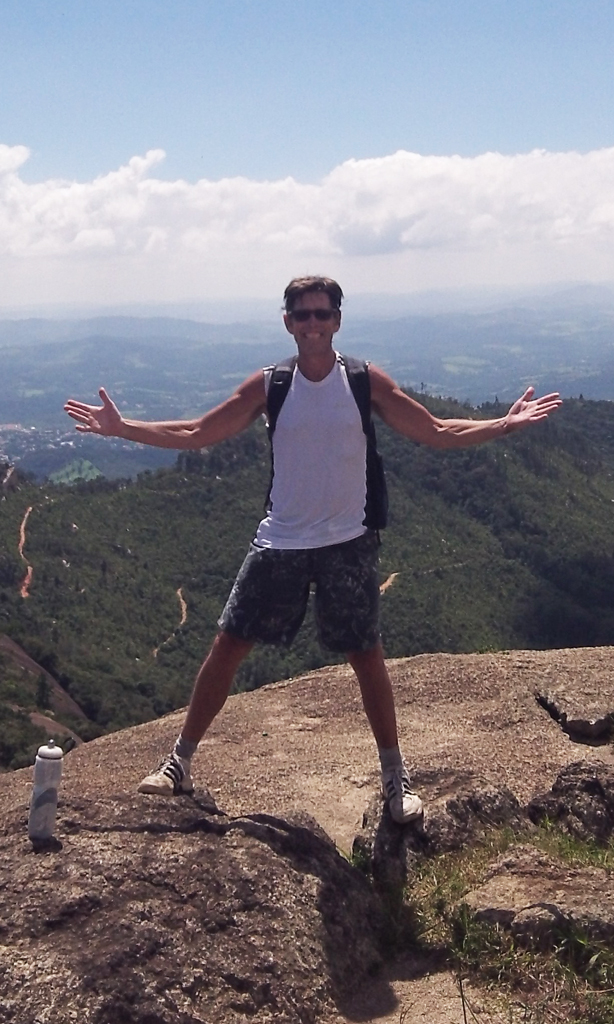
    Big Rock BrazilPedra Grande is actually the name of this magical place I discovered about 100km from Sao Paulo. Big Rock Brazil was a brand idea for creating a mountain bike resort on a private property in Pedra Grande. Btw: (by the way) Pedra translates to English as stone or rock and grande is large or big, well the name “Big Rock Brazil”, for marketing purposes, just seemed like a no-brainer.
    Aaron on Big Rock Brazil

    My friends that own the magical place called Pousada Pedra Grande Atibaia liked the Gringo brand idea, next we developed a website BigRockBrazil.com and started planning some ideas for helping them grow their business, as well as recruit a crew to build North American “style” downhill mountain bike trails. Check out the best mountain bike comparisons on NicheReviewed.com to help you choose a great bike for these trails. This Pousada/resort has the best natural terrain of anywhere in Brazil for building a mountain bike park, with a 7km public road access all the way to the top of Pedra Grand (Big Rock).

    A haven for those seeking challenging mountain bike terrain, for downhill, enduro and or free riding in a tropical mountain paradise, only 100 km from Sao Paulo. Located 15km from the city of Atibaia, occupies an area of 90 acres, with an average altitude of 1200 m.

    Founded in the 1970s, Pousada Pedra Grande Atibaia, offers you a unique service, one of the most beautiful regions, located on the mountain, near the tourist city of Pedra Grande, a place full of history and culture. Ever since the beginning, this family-owned operation has been designing, developing, building and grooming a network of walking, hiking and mountain-bike riding trails, as well as extreme and ultra sport courses, to provide wide variety of recreation and rainforest action/adventure sports, from the valley bottom, all the way to the top of the famous Pedra Grande.

    Being in touch with nature, with the fauna and the native flora of the Atlantic Forest, rest comfortably, have fun with family and friends, do business or attend events, training and sports.

    Pousada Pedra Grande Atibaia is a tropical paradise of tranquility and satisfaction.

  • Brazil is proof God wants us happy

    Brazil is proof God wants us happy

    I didn’t invent that slogan but I think that Ben Franklin would agree. Brazil is perfection, in it’s natural state. Comparing to Canada the distances are as vast but due to the climate and geography, much of the countryside is lush and verdant green.

    Tijuca National Park, Rio de Janeiro, Brazil
    Tijuca National Park, Rio de Janeiro, Brazil

    Brazil is the last greatest country left on earth (in my opinion). Canada once held this distinction but the problems of the neighbor country, infected the corporate and political culture, although it’s possible that the genetic flaws of the parent (Great Britain) left her susceptible to problems. None-the-less; Government grew out of control, until the free-spirit of the people was throttled by over-regulation. Now you need to buy a permit, to get a license, to negotiate for an approval. However, rules and regulations are the way of the world, it’s happening here in Brazil too. So, I’m curious to watch and learn how Brazil manages 200 million people, since the potential is boundless.

    [box type=”note”]The massive South American country is oozing with natural resources, this is the land of milk and honey. In the major cities of Brazil, of which there are 13, prosperity is evident everywhere.[/box]

    Brazil 13 cities with more than 1 million people (2007 Statistics):

    1. Sao Paulo (10,9 million)
    2. Rio de Janeiro (6,1 million)
    3. Salvador (2,9 million)
    4. Distrito Federal (2,5 million)
    5. Fortaleza (2,43 million)
    6. Belo Horizonte (2,41 million)
    7. Curitiba (1,8 million)
    8. Recife (1,5 million)
    9. Porto Alegre (1,42 million)
    10. Belem (1,41 million)
    11. Goiania (1,244 million)
    12. Guarulhos (1,236 million)
    13. Campinas (1,03 million)

    It’ not uncommon to see plates of fresh food abandon on the street, since the bar and restaurant owners (and others) feed the poor from take-away containers of rice, beans, produce, meat and bread. Produce grows so well in the fertile land and is so plentiful that no-one starves unless they choose.

    Yes, there are allot of poor people. Brazil has one of the worst ratios for distribution of wealth, and the mega-rich gap is growing wider. However, the middle class is expanding, one of the last places left on earth where the common man can rise up to become a prominent community leader. It is revered in Brazilian culture, to become a celebrity that once-upon-a-time lived in a favela.

    Everyday more people (per capita) become millionaires in Brazil, than any other country in the world. Now that’s a nice cup to hoist but better would be the education. If there’s one thing that it’s sadly lacking in Brazil, it’s that too many kids are raised without a good education. In a country that dominates in exports of so many commodities, for there to be one child left on the street is a mistake.

    Violent crime and gang corruption is the biggest negative you hear about living in Brazil, this is an issue for sure. There are some problems related to gun violence, in areas where the U.S. introduced their war on drugs, which has done zero to reduce the drug trade but certainly raised the stakes for corruption and gang operations. Therefore, the statistics are skewed to make things look much worse than they actually are. However, it’s a notoriously bad country, to be in the wrong place at the wrong time.

    My sincere hope is that the greatest future lays ahead because the people are demanding that Government spending on education be increased. Hence, we go back to talking about Government, where we started, and where Brasileiro’s always retreat to when the topic of the poor arises – oh it’s the Governo etc… everyone has been indoctrinated to expect the Government to be corrupt, another global condition. Meanwhile the power elite and old-guard establishment, which now includes the influence of innumerable multi-national conglomerates, that have leveraged their way into the gravy train, to supply the greatest culture driven, brand frenzy, credit laden, consumer product consumption orgy in history. The Romans pale in comparison, even America wasn’t completely plugged-in to stuff like these folks, this is shopoholic-central.

    The bottom line is that Brazil rocks! For allot of valid reasons, not least of which is the fun-loving people, living on thousands of miles of tropical beaches. Having said that; my number one reason for loving living here, is that aside from providing civil authority by military force in Haiti (with UN edict), we do not export our democracy with the barrel of a gun.

    Brazil has enough problems at home, and now we can all see that every country has it’s own problems at home, to preferably contend with. Therefore, since Brazil has no blood on it’s hands, I’m very willing and happy to contribute towards making it a better place for everyone. I’m glad to be a Brazilian citizen and love living here.

  • Wild Orchid Brazil

    Wild Orchid Brazil


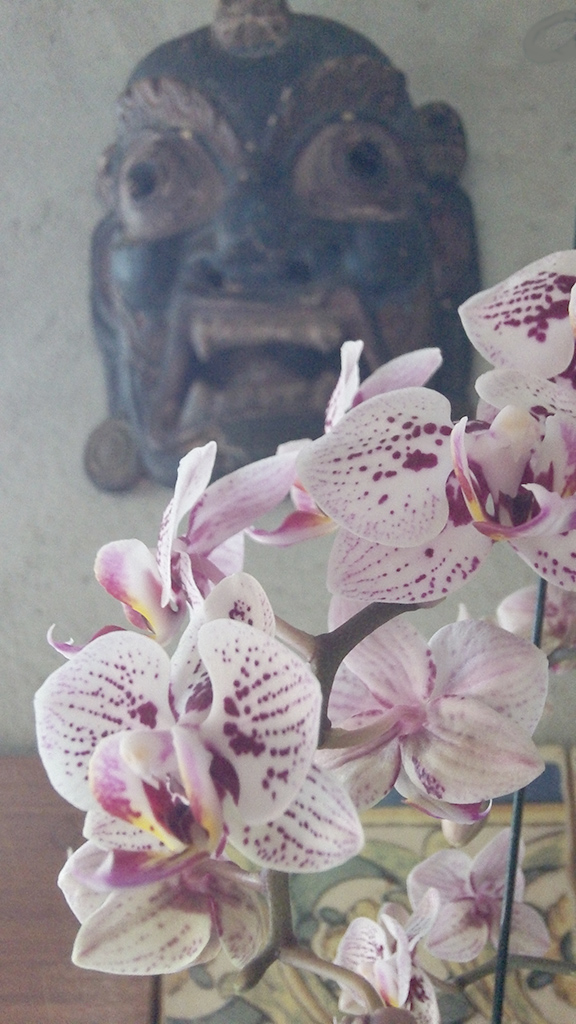
    Orchid Pornography - Orchid Porn
    Orchid Pornography

    Happy Birthday Canada! We stand on guard for thee…. here in Brazil (that is).  I will always love Canada but prefer living in Brazil.

    Silicon Palms is now working on something unique that I’d like to share with you.

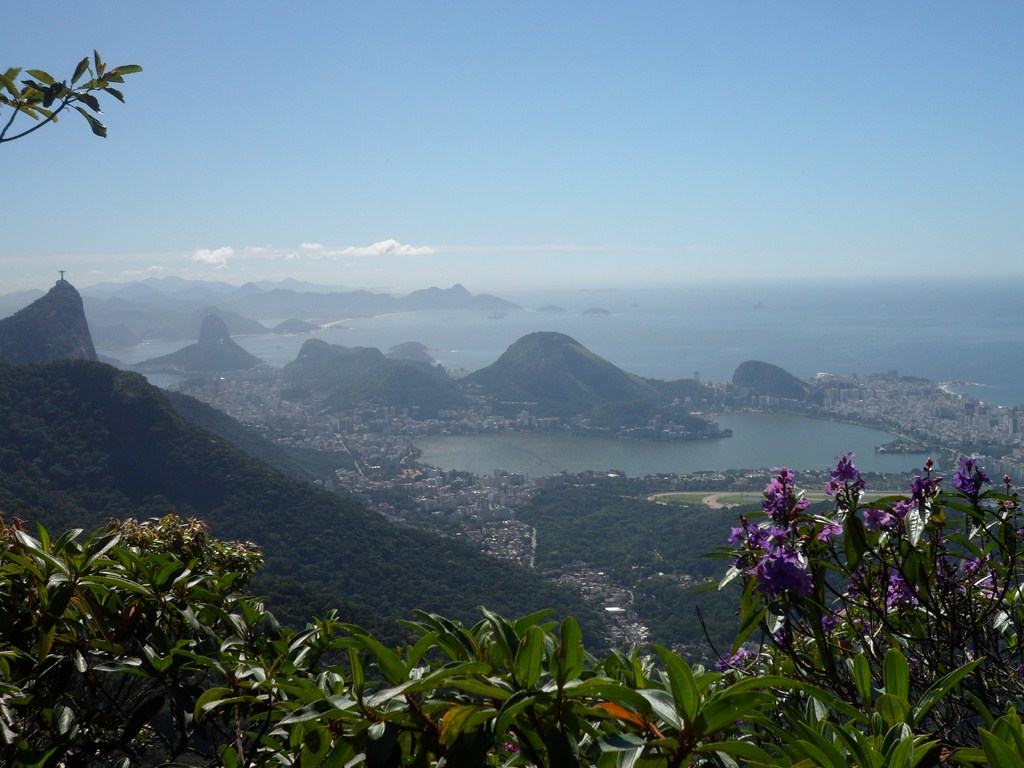
    Over a year ago, I was presented with an opportunity to design a resilient community project for a magnificent mountaintop property, on an organic farm in Aguas Mornas, Santa Catarina. That’s in the rain forest (Floresta Atlantica) of Southern Brazil (with a view of Florianopolis and the Sea).

    The property owner and I devised a strategy to focus on “Sustainable Forestry” for the revenue, to develop the project, simply because it’s the best use of the land but we stumbled upon an idea for disruptive innovation in the marketing.

    The idea is to take the best thing about the rainforest, use digital media methods to monetize it into online content, and social activism to bring it to life as an organization.

    The Plan is called Wild Orchid Brazil – Here’s the Orchid Idea Pitch

    A Canadian Expat connected with a USA Expat, both were living in Brazil for over a dozen years each and never previously met. Together they devised a plan so truly compelling that anyone that heard the pitch would immediately endorse the orchid idea and at the very least give a recommendation to every single friend and family, without thinking twice about it.

    Wild Orchid Brazil
    Wild Orchid Brazil

    The 2 Expats spent a year brainstorming and test pitching the orchid idea with big thinkers. It had to be sustainable revenue generated from the 10 acre property and embrace Social Activism for Environmental Protection and research into sustainable forestry projects. Amongst which is the conservation of Wild Orchid, which inhabit the property in healthy numbers. The orchid ides started flowing, which gave rise to the concept of “Orchid Porn” for Social Media (Facebook friendly) to fight the natural enemy of all flowers – Geo-Engineering and/or Chemtrail spraying (aka Solar Radiation Management).
    We are now building our launch team for crowd source funding, the proceeds of which will be used for Grant Writing.

    • Sustainable forestry in Brazil is our Plan
    • The Wild Orchid is our Meme
    • Social Activism is our Method
    • Save the Rainforest is our Message
    • Champion the Wild Orchid is our Mission.

    Promote the wild orchid as a Super Hero of air quality and the canary in the coal mine for planet earth.

    We need your help! Please join our campaign. Your name amongst our members makes a big difference. Since our goal is to reach 1 million members within 1 year but we need your help to tell other people. We want you to love the Wild Orchid Project, so you’ll gladly tell all your friends. Our hope is that you’ll add your energy into helping us grow the most unique resilient community on the Internet.

    You could own your own wild orchid in Brazil, with 24/7 web cam and dedicated web page (Facebook friendly), containing the Google Earth link co-ordinates, or visit the research facility as a special guest. Wild Orchid Brazil is a place and project like none other and membership has privilege.

    Open Source systems enable collaboration, management and reporting to the community.

    The orchid idea is pure innovation in the world of environmental protection projects.

    Please subscribe to this Channel and join or Community at Wild Orchid Info.

  • Brazil for Offshore IT Outsource

    Brazil for Offshore IT Outsource

    I recently returned to Sao Paulo, Brazil after 6 months in North America, if there were an economic downturn in the rest of the world, they forgot to mention it to Brasileiro’s. This country is drunk with economic excess, even the street vendors are upgrading equipment and spending more money than ever to build-up their businesses. The signs of growth are everywhere in this city, especially in the Event Planning and management Corporate Event Planner, which is sprouting new high-rise condominiums, like springtime grass on a newly seeded soccer pitch. The economic growth Rio, for a change, is even more accelerated than Sao Paulo.

    FIFA World Cup 2014
    FIFA World Cup 2014

    Brazil’s commitment to sport can be seen in the further venue investment that is already under way in Rio. The world-famous Maracanã stadium will close next year for two years of refurbishment. The areas around it will be renovated, with access and transport links improved as the entire neighborhood is reborn ready for host the final of the 2014 FIFA World Cup. Work is already underway on the ongoing development of the Olympic Training Center (OTC), which includes many of the state-of-the-art venues built for the 2007 Pan and Parapan American Games. The OTC will be at the heart of the Rio Games – and international sport for years afterward. Athletes and coaches from all over the world will be offered scholarships to what will be a new regional hub for sport.

    2016 Olympic Games
    Olympic Games, Rio 2016

    With a strong economy and now guaranteed funding, Brazil’s economy is now the tenth largest in the world – and predicted to be fifth by the 2016 Olympics. Brazil is the world’s second biggest food exporter, one of the world’s largest oil and ore producers and the fifth largest advertising market. This diverse economy is the engine that drives South America and one of the world’s top 10 consumer markets. Brazil has the highest levels of Internet use in the world and according to the Brazilian Association of Information Technology and Communication Companies (commonly known as BRASSCOM), Brazil’s offshore IT outsourcing market hit $1.4 billion in 2008, rising 75 percent in a single year, making this one of the best places in the world for a web development company.

    Experts predict that an additional $500M will be spent just on IT and web development for the FIFA World Cup of soccer in 2014. The overall Latin America market for outsourced services, is expected to grow 12 percent in 2010 to $8 billion, according to Forrester Research. That’s on top of the $19 billion that local companies spend on IT consulting services. However, Brazil has approximately 250,000 IT professionals, 23,000 annual IT graduates, and infrastructure capable of supporting double-digit growth, this places Brazil firmly at the heart of the IT services supply chain in the Southern Hemisphere.

    In October 2009, a report from Gartner claimed that “Brazil’s economic footprint combined with having the largest domestic IT consumption in all of Latin America, as well as international recognition as one of the most promising and rapidly emerging economies, makes it a natural destination to evaluate for IT services.

    Enhanced by Zemanta