Tag: Okanagan Valley

  • Wally Day and the Angel Over Okanagan

    Wally Day and the Angel Over Okanagan

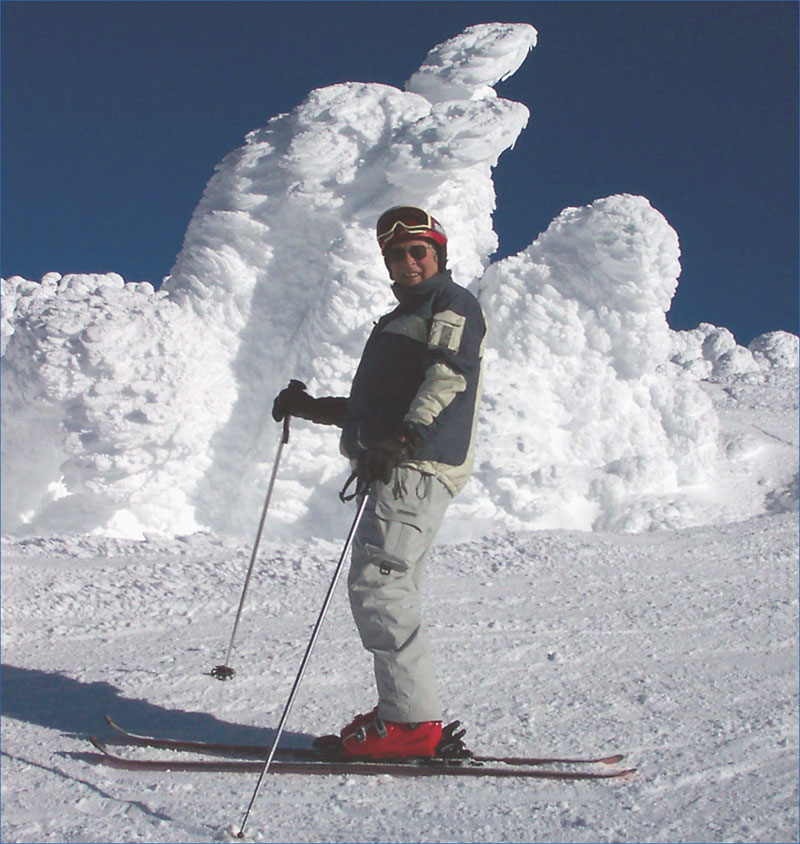
    Wally Day skiing

    My Dad died a week ago today, he went with love and some last words from my Mom. She said “Wally, if you lose your way on the other side, just say the name of Jesus and he’ll come and get you”. Well apparently he said those magic words, in the name of Yeshua he sent us a sign of his passage.

    My sister and I were astonished by what lit up the sky directly over the house of Wally Day. The Angel had a head and body with wings stretching over all of the city of Kelowna. Wally died peacefully, in the same hospital where he was born in 1931.

    Wally Day was a good man and led a blessed life, he loved his way through. Loved skiing, beaches, boating, sports and bar-b-ques but most of all he loved his friends and family. There’s so much more that I want to say but for now, I want people to marvel at the once in a millennium solar weather anomaly (above). The Northern Lights are extremely rare to be seen this far south.

    God is good!

    Photo Source: Friday night skies lit up bright as Northern Lights visible across the planet
    DAY, Wallace Arthur (Wally)

    January 9, 1931 – May 10, 2024

    Wally passed away peacefully, after a remarkable 93 years on this earth. He skied 81 of those years and was married to Mary Anne for almost 67 years. Wally is survived by Mary Anne, son, Aaron, daughters, Shannon, and Shelley, and grandchildren: Liam, Sam, Richard, and Lola. Wally and Mary Anne were true partners in life, sharing everything from building boats to being active and supportive in the lives of their children and grandchildren.

    Wally was born in Kelowna to Dr. Lloyd and Lola Day, members of a Pioneer family. Wally spent most of his life in the Okanagan. He had a long career with Okanagan Tel and BC Tel, retiring early enough to get lots of extra skiing and boating in.

    Wally and Mary Anne shared their passion for skiing, teaching at Mt. Baker and Apex Mountain prior to forming the ski school at Baldy in 1969. Wally also served on the board of the community association. Wally had fond memories of his time at Baldy, and his cabin. Those thoughts were never far from his mind.

    In his later years, Wally regularly skied Big White, golfed at Shannon Lake, and in recent times, continued to ride his e-bike.

    Wally was gentle, kind, and a true friend.

    No service by request.

    Condolences and memories can be shared with the family by visiting www.everdenrust.com.

    Link: www.everdenrust.com/obituaries/Wallace-Arthur-Day?obId=31507202
  • The Syilx People of the Okanagan Nation

    The Syilx People of the Okanagan Nation

    Syilx Chief, Charlie Swkn̓cut

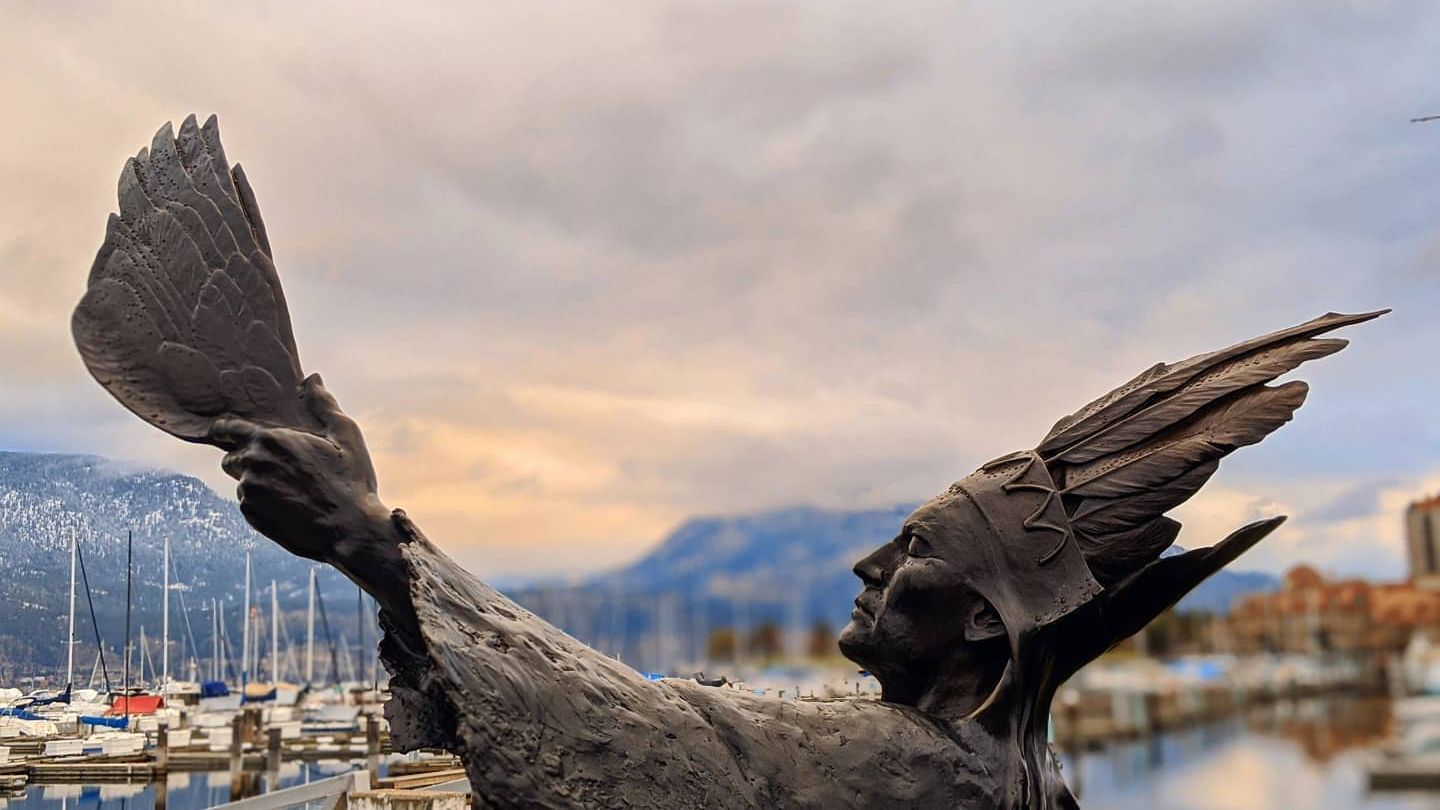
    Kelowna sits on the traditional, unceded territory of the Syilx/Okanagan people. This sculpture of historic Syilx Chief, Charlie Swkn̓cut, created by Crystal Przybille, features details signifying various aspects of Syilx culture.

    Kelowna, BC

    At the height of Syilx culture, about 3000 years ago, it is estimated that 12,000 people lived in this valley and surrounding areas. The Okanagan people employed an adaptive strategy, moving within traditional areas throughout the year to fish, hunt, or collect food, while in the winter months, they lived in semi-permanent villages of kekulis, a type of pithouse.

    When the Oregon Treaty partitioned the Pacific Northwest in 1846, the portion of the tribe remaining in what became Washington Territory reorganized under Chief Tonasket as a separate group from the majority of the Okanagan, whose communities remain in Canada. The Okanagan Tribal Alliance, however, incorporates the American branch of the Okanagan. The latter are part of the Confederated Tribes of the Colville, a multi-tribal government in Washington state.

    The bounds of Okanagan territory are roughly the basin of Okanagan Lake and the Okanagan River, plus the basin of the Similkameen River to the west of the Okanagan valley, and some of the uppermost valley of the Nicola River. The various Okanagan communities in British Columbia and Washington form the Okanagan Nation Alliance, a border-spanning organization which includes American-side Okanogans resident in the Colville Indian Reservation, where the Okanagan people are sometimes known as Colvilles.

    The today Upper Nicola Indian Band, an Okanagan group of the Nicola Valley, which was at the northwestern perimeter of Okanagan territory, are known in their dialect as the Spaxomin, and are joint members in a historic alliance with neighbouring communities of the Nlaka’pamux in the region known as the Nicola Country, which is named after the 19th-century chief who founded the alliance, Nicola. This alliance today is manifested in the Nicola Tribal Association.

    Sylix First Nation BC locator map

    The Syilx People of the Okanagan Nation

    Okanagan family, c. 1918

    The Syilx People of the Okanagan Nation are a trans-boundary tribe separated at the 49th parallel by the border between Canada and the United States. Our Nation is comprised of seven member communities in the Southern Interior of British Columbia: Okanagan Indian Band, Osoyoos Indian Band, Penticton Indian Band, Upper Nicola Band, Upper and Lower Similkameen Indian Bands, and Westbank First Nation; and in Northern Washington State, the Colville Confederated Tribes. Our members share the same land, nsyilxcən language, culture, and customs. We are a distinct and sovereign Nation.

    Today the Syilx/Okanagan People continue to assert their jurisdiction and responsibility over the stewarding of their land, resources and quality of life of their citizens. Our nsyilxcən language and our Syilx/Okanagan culture respectfully honour the natural laws of the tmixw that which gives us life.

    Source: About Syilx Nation

  • British Columbia in Winter

    British Columbia in Winter

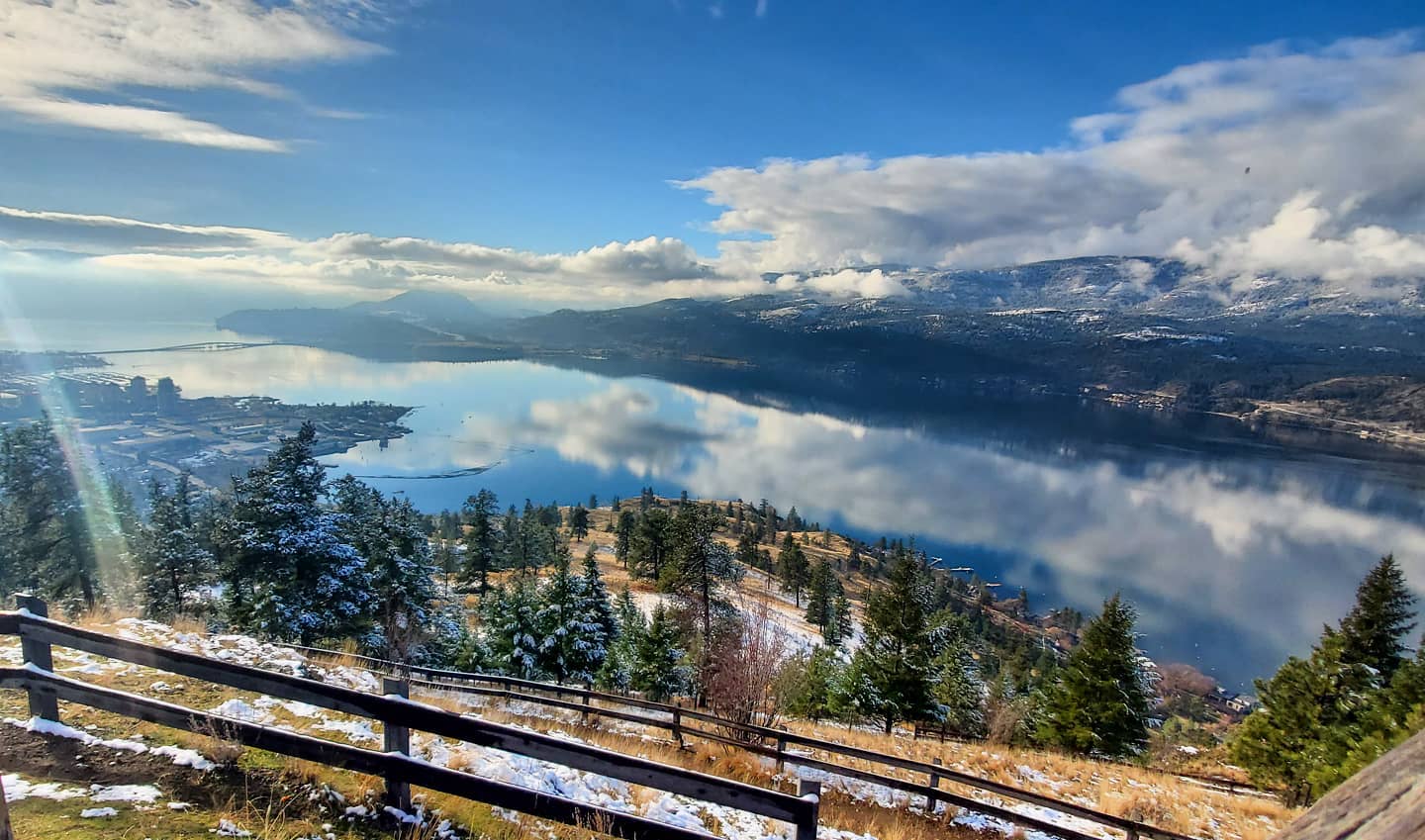
    Okanagan Lake in winter

    British Columbia in winter has a magic all of it’s own, not always sunshine and rainbows but when the combination of elements and weather conditions come together a majesty unfolds and wilderness becomes art.

    There is nothing quite like the “snow crater” that forms beneath Wells Gray Provincial Park’s Helmcken Falls in the winter.

    Helmcken Falls Snow Crater

    Wells Gray Provincial Park was first established in November 1939, which means it just celebrated its 80th birthday.

    The park is home to a beautiful waterfall that flows over a wide circular cliff during the warmer months of the year. According to Tourism Wells Gray, the drop is 141 meters.

    Chasing Iconic Winter Waterfalls of Wells Gray

    Uncover the mystical places that romantics, adventurers and photographers come here to find! With 41 named waterfalls (and counting!), and even more tucked into the wilds, discover why Wells Gray is also known as the land of waterfalls.

    Ancient volcanoes and slow-moving glaciers carved the rivers and lakes that fuel the Park’s waterfalls. You’ll hear the roar of the Falls, long before you can see cascading water tumbling over lichen-drenched boulders, making its way downstream. Almost half the named Falls are found in the Corridor , mere minutes from Clearwater Valley Road.

    Canada’s Waterfall Park Welcomes you in Every Season

    The Land of 41 Named Waterfalls- and counting!

    Imagine a place where the Clearwater, Thompson and Murtle Rivers roar and wildlife sightings are as common as sunrise and sunset. A place where it’s easy to get off the beaten path, and away from the crowds, immersing yourself in real and wild nature.  The place you imagine is Wells Gray Country, the mountain communities centered around Clearwater and Wells Gray Provincial Park. 5,250 square kilometres (1.3 million acres) of alpine wilderness, borne from volcanoes and carved by glaciers. It’s one of the most unique landscapes in all of B.C., where your days are measured in your steps hiked, wildlife sightings, and the number of waterfall shots on your camera. 

    It’s here, among old-growth inland rainforest and soaring mountain peaks that you’ll find your wild. During Spring, Summer and Fall you can hike through ancient forests, paddle pristine lakes, and raft on some of Canada’s fiercest rapids. In the winter, gaze upon frozen waterfalls and ski down untouched backcountry slopes.

    Winter Waterfall Photos by Carlo Borella on Unsplash

  • Sweet home Okanagan

    Sweet home Okanagan

    Aaron atop Knox Mountain, Kelowna, British Columbia, Canada

    Sweet home Okanagan title fits so well, borrowed from the famous rock anthem by Lynard Skynard, that it could very well have been written for the place where I grew up; the Okanagan Valley of British Columbia.

    Kelowna 1909

    My family legend is that my father’s grandfather left Salt Lake City in 1888 headed for Vancouver because of political upheaval in Utah and I suspect since he was a young man at that time (born in 1861) he migrated to Canada but on his way to the west coast boom town, he laid his eyes on Okanagan lake from the ridge pass and decided he’d found his new home.

    My father was born in Kelowna as was his father. I was born in Lions Gate Hospital in North Vancouver in 1961 and 100 years after Arthur Day, whose name is inscribed on the Mormon tabernacle in Salt Lake City. Although I live in Vancouver, my heart considers Kelowna my home.

    Kelowna 1920

    Now four generations later the once sleepy valley is home to three mature cities, Penticton, Kelowna and Vernon and the about a half million people that live in a four seasons playground that would be fit for a King.

    The Okanagan Lake is 97 miles long and 2 to 5 miles wide with a large provincial park covering a large swath of land, about in the middle of the lake to encompass the region that surrounds the lake, to preserve and protect that natural wilderness for generations to come.

    Most of the rest of Okanagan Lake has beautiful homes built upon it’s shore and thoughtful urban development has designed subdivisions spread along the mountainsides that gently slope to the waters edge. From a boat the spectacle is remarkable and wonderful to witness the integration of humanity in nature.

    Kelowna (/kəˈloʊnə/) is a city on Okanagan Lake in the Okanagan Valley in the southern interior of British Columbia, Canada. It serves as the head office of the Regional District of the Central Okanagan. The name Kelowna derives from an Okanagan language term for “grizzly bear“.

    The Kelowna metropolitan area has a population of 217,214; the third-largest metropolitan area in the province, behind only Vancouver and Victoria. Additionally, the City of Kelowna is the seventh-largest city in the province. It ranks as the 22nd-largest in Canada and is the largest inland city in British Columbia. Kelowna’s city proper contains 211.82 square kilometres (81.78 sq mi), and the census metropolitan area contains 2,904.86 square kilometres (1,121.57 sq mi). In 2019, it was estimated that Kelowna’s population had grown to 217,229 in the metropolitan area and 142,146 in the city proper.

    Nearby communities include the City of West Kelowna (also referred to as Westbank, Westside) to the west across Okanagan Lake, Lake Country and Vernon to the north, and Peachland to the southwest, and further to the south, Summerland and Penticton.

  • Smokanagan

    Smokanagan

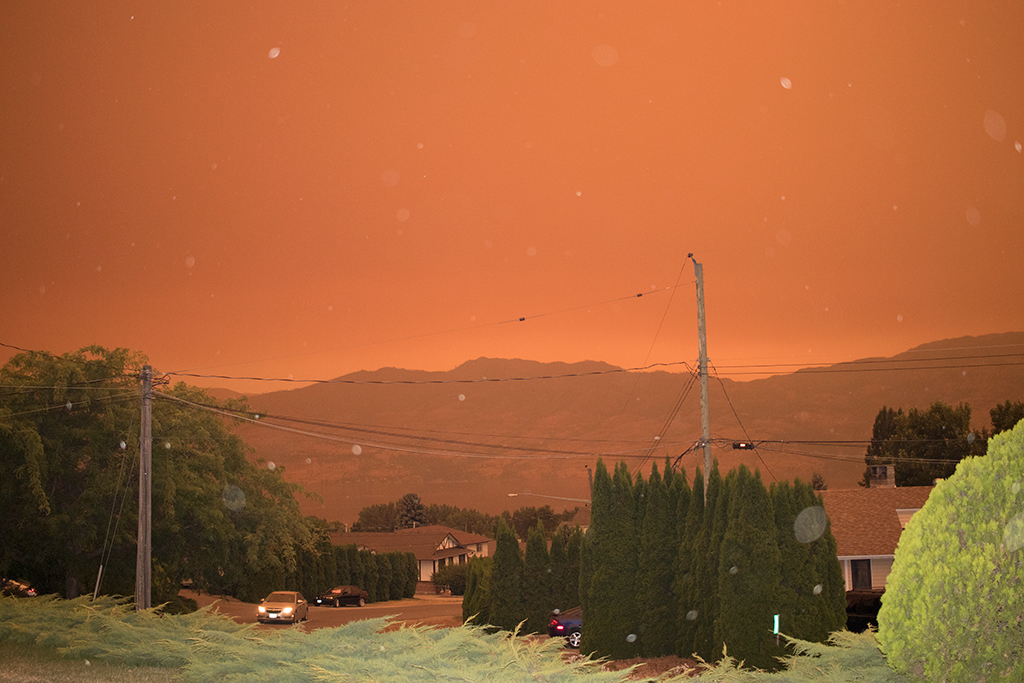
    Climate change has caused increasing amounts and intensity of forest fires in British Columbia and Washington State. This day we were experiencing smoke in the Okanagan Valley from Winthrop in Washington State, way down in the Cascade’s as we would say….

    The Columbia Gorge marks where the Columbia River splits the Cascade Range between the states of Washington and Oregon.
    The Columbia Gorge marks where the Columbia River splits the Cascade Range between the states of Washington and Oregon.
    Columbia River Gorge (3).jpg
    By Bala from Seattle, USA – Bleeding Skies
    Uploaded by X-Weinzar, CC BY 2.0, Link

    Cascade RangeCascaderangemap.jpg
    By Shannon – Background and river course data from http://www2.demis.nl/mapserver/mapper.asp, mountain elevation/location data from Wikipedia, GFDL, Link

    Smoke in the Okanagan
    Smoke in the Okanagan Valley, upon sunset August 29, 2017

    Alas, the next day I returned to Vancouver, which enjoys the cleansing effect of the Pacific Ocean.

    Vancouver in AugustMore  to come…