Tag: Artificial Intelligence

  • Looking Into Artificial Intelligence (AI)

    Looking Into Artificial Intelligence (AI)

    Unlocking Artificial Intelligence

    I am a web geek, always was (since the term was coined) and always will be. When I heard about Open AI and how successful the launch of ChatGPT, I had to see it for myself.

    Fear of Artificial Intelligence (AI) seems to be on high-alert, making me even more intrigued. A month ago I joined and opened a free Open AI account, liked the experience so much that I upgraded to Plus. Every day asking questions and publishing the answers on Invest Offshore, now readers can see the power of AI.

    For sure I understand the imaginary boundary we just crossed and was going to title this article “will we ever need to think again?” My vision is all the good that can come of having answers for everything, in the palm of our hand. I am also aware of the significant risks that AI may present. This is a terrifying moment in human evolution.

    Let’s hope humanity can master AI for good, that’s the upside in this debate. One thing is certain; there’s no putting the genie back in the bottle. Now that a record was broken, for the most popular online application in history. Since launch ChatGPT has sold millions of user subscription. After years of development without generating revenue, there’s no-way a tech company can un-do what has already been done. The consumer level AI chatbot is now available to the world.

    Human writers and the future of web content

    Personally, I posted one AI content article here (the previous post) and I promise not put any more on Silicon Palms. However, my work on Invest Offshore serves a dual-purpose, one is for me to learn AI and the other is to provide the gems of collective wisdom. Ultimately, machine learning of over 2 billion web pages is what makes-up the answers. Asking the right questions is the key to having valuable wisdom (content), as the written answers from AI are almost flawless. Clear, concise content.

    “The happiness of your life depends upon the quality of your thoughts.”

    Marcus Aurelius

    The happiness of your life depends upon the quality of your thoughts, is true. And, I would add; the success of your life depends upon the quality of questions you ask. Happiness depends on the thoughts and questions, success is arrived at by answering the question. What makes you happy? Life is a series of questions, we were born to find the answers. Now we have an oracle.

    Chatting with a Bot

    Among my first observations, when I started chatting with the chatbot, is that it was like an opponent. Not that I had a feeling of a person who was opposed to me but that the answers would be generalized and bland, unless I ask very precise questions. I other words… a dull question will illicit a dull answer. Now after almost a month of daily queries with the Chatbot, my communications are becoming even more rich. The user learns how to master the machine.

    The sheer vastness of scope is what is so impressive with AI, for the more you learn, the more you realize there is to learn. Already, I can see how this will forever change education. Unlike with computers and then the Internet, this time the education systems will not be able to adapt fast enough. Education will be the first place to show problems for AI.

    Future Trends of Artificial Intelligence

    I am no expert on future trends but AI is a game-changer for the workplace. Just imagine how many specialists, experts and consultant have their niche threatened. There are billions of jobs at risk, all over the world. AI can (in theory) provide excellent tech support, account management and all things to do with data management. Bureaucracy itself can be replaced.

    In the twinkling of an eye, genius thoughts may arise. We must believe in the human nature, enough to hold hope of miracles. That there is something innate in us that wants to do good and help other people.

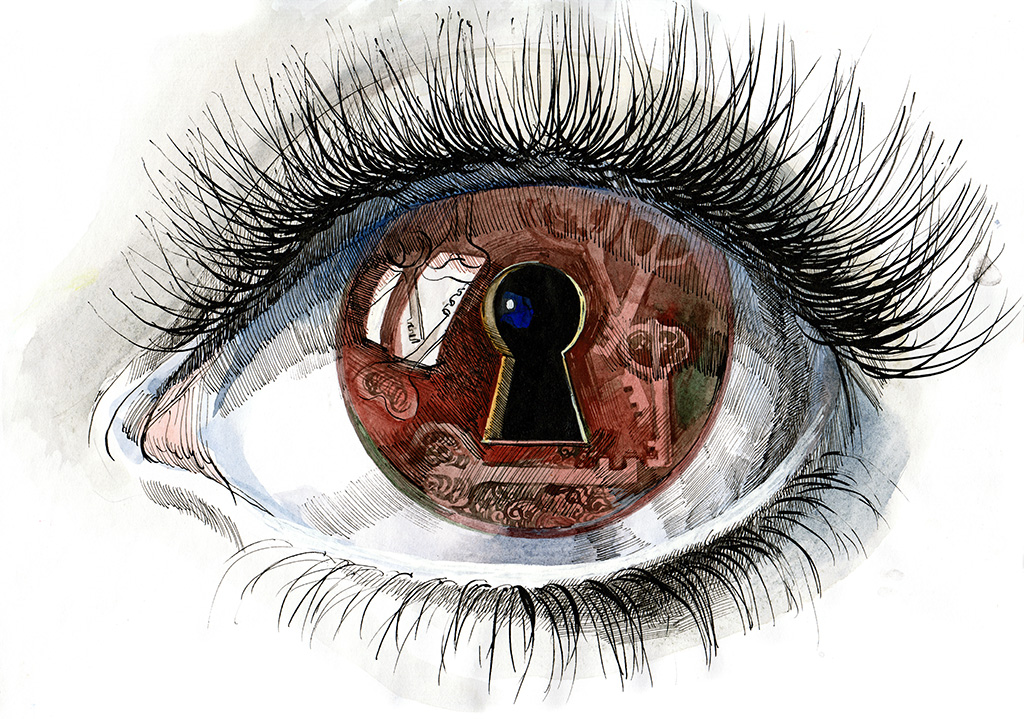
    A-eye Artificial Intelligence image by Silicon Forest

  • Brilliant Artificial Intelligence of “I write like”

    Language agnostic document processing: Finding relations using statistics, machine learning, and graphs. Artificial Intelligence.
    Finding relations using statistics, machine learning, and artificial intelligence.

    Not exactly sure how I found the website “I write like” but from the first moment I was mesmerized by the system. A simple idea in theory but very complicated in application. It’s a good example of where Artificial Intelligence (AI) has found a perfect application, to rapidly analyze language patterns, then make comparison of your writing style, to one of the more than 50 famous authors.

    The other thing that’s very compelling about the “I write Like” website is the list of famous authors. Extra bonus is that you can learn about great new writers because the current list of 50 are very diverse, some of whom you likely will not have heard of, this will encourage more follow-up.

    A great list of interesting writers, accompanied by thumb-nails of the Amazon linked books they’ve written. For example, my second and third random test of my writing (from this blog) returned the same result twice, that of a living legend, author, blog writer named Cory Doctorow.

    I Write Like

    From Wikipedia, the free encyclopedia
    I Write Like
    Owner Dmitry Chestnykh, Coding Robots
    Website http://iwl.me/
    Alexa rank 95,533
    Launched July 9, 2010
    Current status Active

    I Write Like is a website created by Russian software programmer Dmitry Chestnykh, founder of software company Coding Robots. The site analyzes users’ writing samples and, by looking for certain keywords, vocabulary, and style via a naive Bayes classifier returns the name of a popular writer the sample most closely resembles. It was launched on July 9, 2010 and, according to reports, has gone viral, getting over 100,000 visitors on July 13, 2010 and spreading quickly across other blogs and popular social-networking websites such as Facebook and Twitter.

    According to the Toronto Star, the website’s popularity soared as a result of a series of rants made by actor Mel Gibson; New York City-based blog Gawker submitted transcripts of Gibson’s rants to find that the site website compared them to writings by Canadian writer and feminist Margaret Atwood. Film critic Roger Ebert tried the site and said on a tweet that “I Write Like thinks I write like Margaret Atwood, she writes like H. P. Lovecraft, and he writes like James Joyce“. The Star also reported the result that Ontario premier Dalton McGuinty‘s Children’s hospital in Ottawa celebrates big expansion closely resembles Joyce’s A Portrait of the Artist as a Young Man. The Guardian reported that Atwood herself tried out the website, and it said that her writing resembles that of novelist Stephen King in one attempt and like Joyce on another try. William Gibson also tried the site, which said his writing resembles that of Vladimir Nabokov. A transcript of a speech made by U.S. President Barack Obama in June 2010 has been compared to author David Foster Wallace, while the lyrics to Lady Gaga‘s song “Alejandro” have been compared to William Shakespeare. Other bloggers, including author Teresa Nielsen Hayden, have expressed anger and frustration to find that the website has compared their writings to that by The Da Vinci Code author Dan Brown. Despite the website’s early success, Chestnykh was cautious to say that its accuracy still needs improvement, as he has only been able to upload “a few books by some 50 different authors” into its database. He says that he intends to include advanced features such as “probability percentages” that a user-submitted passage resembles a certain author.

    Below are the words copied from the About-page at “I write Like” official website:

    [hr]

    I Write Like checks which famous writer you write like by analyzing your word choice and writing style and comparing them with those of the famous writers. Analyze your text

    How does it work?

    The algorithm pretty simple, and you can find it on every computer today. It’s a Bayesian classifier, which is widely used to fight spam on the Internet. Take for example the “Mark as spam” button in Gmail or Outlook. When you receive a message that you think is spam, you click this button, and the internal database gets trained to recognize future messages similar to this one as spam. This is basically how “I Write Like” works on my side: I feed it with “Frankenstein” and tell it, “This is Mary Shelley. Recognize works similar to this as Mary Shelley.” Of course, the algorithm is slightly different from the one used to detect spam, because it takes into account more stylistic features of the text, such as the number of words in sentences, the number of commas, semicolons, and whether the sentence is a direct speech or a quotation.

    Do you want to learn more?

    It’s open source!

    We published our source code for everyone to review or reuse.

    Is it correct?

    It depends on your views on writing style. Certainly, you can’t rely on our analysis 100%. Try it and decide for yourself.

    Brilliant Artificial Intelligence photo credit: DigitalMajority on Visual Hunt / CC BY-NC-SA