Category: Places

  • Casa Dom Ignacio de Loyola

    Casa Dom Ignacio de Loyola

    Ignacio de Loyola
    Ignacio de Loyola

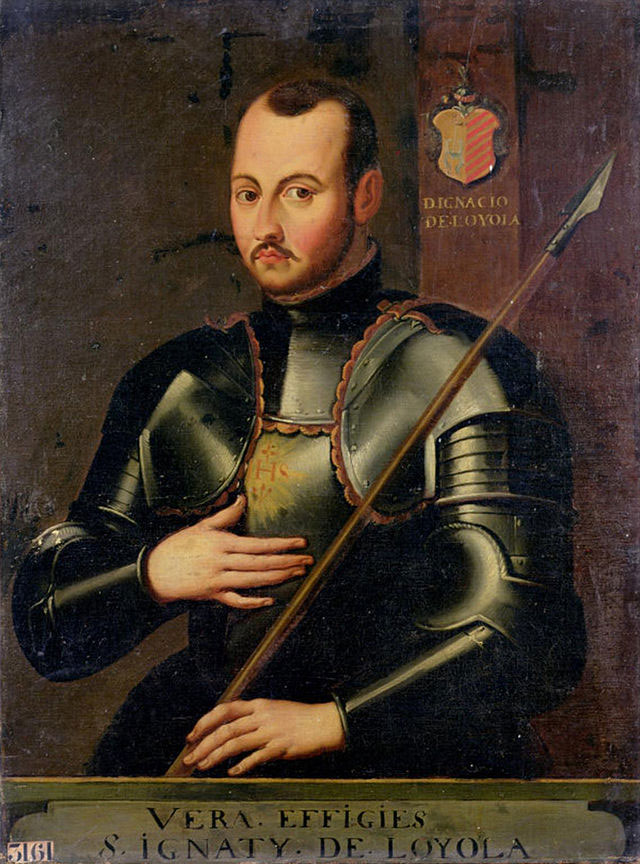
    Casa Dom Ignacio de Loyola is named after Ignatius of Loyola (Spanish: Ignacio de Loyola) (ca. October 27, 1491 – July 31, 1556) was a Spanish knight from a local Basque noble family, hermit, priest since 1537, and theologian, who founded the Society of Jesus (Jesuits) and, on 19 April 1541, became its first Superior General. Ignatius emerged as a religious leader during the Counter-Reformation. Loyola’s devotion to the Catholic Church was characterized by absolute obedience to the Pope.

    After being seriously wounded in the Battle of Pamplona in 1521, he underwent a spiritual conversion while in recovery. De Vita Christi by Ludolph of Saxony purportedly inspired Loyola to abandon his previous military life and devote himself to labour for God, following the example of spiritual leaders such as Francis of Assisi. After claiming to experience a vision of the Virgin Mary and the infant Jesus at the shrine of Our Lady of Montserrat in March 1522, he went to Manresa, where he began praying for seven hours a day, often in a nearby cave, and formulating the fundamentals of the Spiritual Exercises. In September 1523, Loyola reached the Holy Land to settle there, but was sent back to Europe by the Franciscans.

    Between 1524 and 1537, Ignatius studied theology and Latin in the University of Alcalá and then in Paris. In 1534, he arrived in the latter city during a period of anti-Protestant turmoil which forced John Calvin to flee France. Ignatius and a few followers bound themselves by vows of poverty, chastity, and obedience. In 1539, they formed the Society of Jesus, approved in 1540 by Pope Paul III, as well as his Spiritual Exercises approved in 1548. Loyola also composed the Constitutions of the Society. He died in July 1556, was beatified by Pope Paul V in 1609, canonized by Pope Gregory XV in 1622, and declared patron of all spiritual retreats by Pope Pius XI in 1922. Ignatius’ feast day is celebrated on July 31. Ignatius is a foremost patron saint of soldiers, the Society of Jesus, the Basque Country, and the provinces of Gipuzkoa and Biscay.

    Many of the concepts used in the work of John of God are based on some of the ideas discovered by Ignatius and that is where the idea come from, to put your right hand over your heart, on your chest. Also, the understanding that many people in prayer produce an unseen energy, which can be used for healing.

    Spiritual viewpoint

    In Ignatius’ Spiritual Exercises, The Trinitarian God (God the Father, God the Son Jesus Christ, and God the Holy Spirit) and Satan are active players in the world and in the human psyche (soul). The main aim of the Exercises is the development within the human psyche (soul) of “discernment” (discretio), the ability to discern between good and evil spirits. Discernment is achieved in order to act “with the Grace of God”. In other words, to act on the spiritual discernment one receives, by seeking Truth and listening in contemplative prayer with Jesus, on what is right.

    This is the context within which, during the exercises, and in continuing the process thereafter, one seeks from Jesus: the virtue of humility (to recognize and accept Truth), selflessness for the sake of Love, and the reflection on, self-awareness of, and termination of personal sin. There is an acknowledgment that the human soul is continually drawn in two directions: both drawn towards Godliness / goodness, and at the same time tempted towards sinfulness / evil. Accordingly, the Exercises provide several illustrations of how one might best be able to refrain from satiating one’s lower and evil desires and instead how one might find a means to redirect one’s energies towards the fulfillment of one’s higher and loving way of being and purpose in life.

    It also needs to be understood that at the heart of Ignatian thought “discernment”, while on the one hand being an act of mysticism, can also be understood as a method of subjective ethical thought. The Exercises emphasize the role of one’s own “discernment” in deciding what is the path to glorify God (the right path). “Discernment” attempts to make a direct connection between the individual exercitant’s thought and action and the Grace of God. Discernment is thereby an action which emphasizes the mystical experience of the believer. This aspect of the Spiritual Exercises is very much typical of the mystical trend in Catholic thought and practice which both preceded the reformation, beginning with the first 12 Apostles, and lived on within elements of counter-reformation Catholicism (cf. Theresa of Avila; François de Sales; Pierre de Bérulle).

    John of God in Abadiania, Brazil

    John of God is a faith healer, the most famous alive. He is said to channel the spirit of Ignacio-de-Loyola (amongst other entities), so I went there to seek treatment for my broken ankle and some personal issues. Immediately upon arriving in the enormous compound and fazenda I know that I’m in store for an interesting experience, to say the least and quite possibly something life-altering.


    I learned the steps, to get a ticket and wait in line for a chance to momentarily pass in front of John of God, and ask him to help improve my leg, he quickly tells me to return for a surgery the next morning at 8 am. When I stood in front of this man he was emanating energy like nothing I’ve ever experienced before, from his throne-like chair, surrounded by massive crystals. He has an innocence about him and vibration of benevolence, that made me instantly feel that he was very special and this was a most beneficial meeting. I am convinced that he is a man of Love and has nothing but good intentions.

    My surgery was promptly at 8, as I was led to the front of the room, past dozens of volunteers who were deep in prayer/meditation, to wait with my hand on heart and eyes closed, at the empty chair (beside enormous crystals) where I had met John of God (for 30 seconds) the previous day. I could sense the immense energy omitting from him before I even opened my eyes. The energy is like bright white light, behind closed eyes but anyone would be able to sense it. When the soft voice said to open my eyes, there he was beckoning me to approach him, then asking me to walk in front of him so he could look at my ankle. He then asked

      if I wanted it out

    and I replied yes please, then he said;

    it’s done, go ahead and walk now and keep on going.

    I walked out without pain or a limp.

    The assistants intercepted me and took me to an infirmary where I remained for 3 hours. Now I’m in a 24 hour period of sequestration, as the entities are still working on me and will come again in 6 nights for a check-up. John of God is the tool (he says), that God has allowed the entities to work through. I have been blessed with an amazing experience that will never leave me for the rest of my life, also I will be able to call upon these entities forever and when I ascend above this current plane, I will know them in person.

  • Vancouver Winter Olympics

    winter_olymic_pot.jpgOn this day 50 years ago I entered this world on a night that was so stormy in Vancouver that electricity was knocked out through much of the city and phone lines were down in North Vancouver. It was in the very early hours at Lions Gate Hospital, so I’m told, that my mother delivered me. Truthfully, she’s the person who deserves the congrats not me, and her and my Dad deserve a great many thanks for encouraging me to participate in sports. As a child I was taught to ski by my second birthday and since my parents were ski instructors at Mt. Baker in Washington State, I grew up “ski racing crazy”, so it was especially enjoyable for me to watch the various skiing events taking place on the slopes where I used to race.
    To say that I’m thankful for the 50 years of life (btw: I’m 49 years old today) is grossly understated. I’ve enjoyed the most marvelous lifestyle so far and it’s about to get even better. What a blessing to have spent so many days every winter, for the first half of my life, up in the mountain pursuing my own gold medals. Sure I’ve had my fair share of bad days too, everyone has got to, or we’d never recognize the good one’s but all things considered I’m content with my lot in life, I like who I’ve become and don’t regret the decisions I’ve made, although on blazing hot days in Brazil (like today) I sometimes miss the snow-covered mountains of British Columbia.
    Love is the key to a good life. Luck and love may have something to do with my own level of happiness but just like the famous quote: “The harder I work, the luckier I get” (either Gary Player or Samuel Goldwyn said that) when applied to my life, relates to the understanding that the more I learn to love life and the people in it, I luckier I get with love in return. In case you’re wondering; I think I’ve been very, very lucky in love and life and consider myself very fortunate just to have been born and raised in Canada.
    Vancouver Winter Olympics, from my perspective, as seen from the comfort of my home in Brazil, exemplifies everything that is wonderful and decent about Western Canada for the manifestation of the Olympic spirit. Peace on earth and goodwill towards mankind and may the best competitor win! Let the world bear witness that there is only one love, no-matter how many interpretations and expressions of beauty there may be for athletic perfection, in the end it’s all about harmony and forgetting our differences to work together for the common good of sport, to make something bigger and better than the sum total of all our parts and purposes. The people of British Columbia and the City of Vancouver have done an excellent job hosting the Winter Olympics and made us proud to be Canadian, even if we don’t win enough Gold medals.

  • Myrtle Beach

    MyrtleBeach_southview.jpgThe Redneck Riviera earns it’s nick name honestly and in my opinion it’s the Carolina Redneck’s that make this fabulous beach town so great. Having lived in South Florida for 12 years and only visited Myrtle Beach a couple of times, mostly just a drive-by kind of thing, I was under the impression that the people and the place would be more like Ft. Lauderdale, which can be described as a sunny place filled with shady people, but alas I was pleasantly surprised to learn that the two beach towns have very few similarities.
    Click on the photo for a larger picture.

    (more…)

  • Rio de Janeiro Sunrise

    Rio de Janeiro Sunrise

    Rio de Janeiro
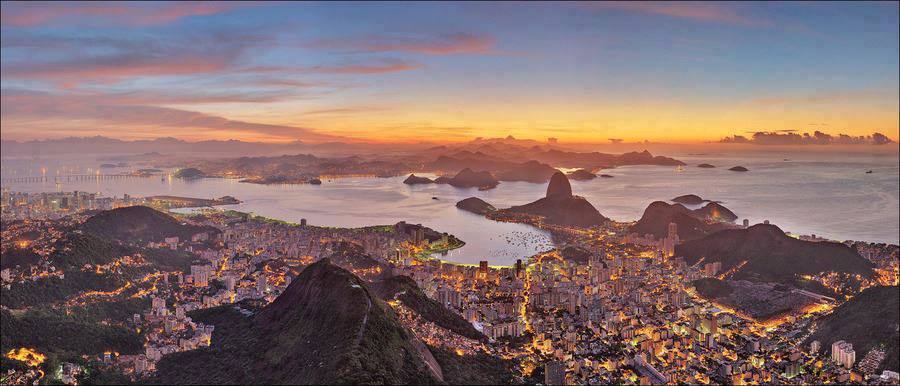
    The Marvelous City, as they call it, was all of that and more. We stayed in a nice hotel on the end of Copacabana, every day we explored new beaches and every night we discovered new restaurants. This was my third trip to Rio so I’m starting to get to know the lay of the land now, which is very challenging because of the position of the mountains that rise directly out of the Atlantic like giant pointed knobs, often rock faced on the steep sides or otherwise covered in jungle-like vegetation.

    The beaches are broad and curved with a cool Atlantic swell pounding in to relieve the masses of sun worshipers who flock here to enjoy the summer heat from all parts of the globe.

    The first time I stayed in Rio was between Christmas and New Years, on Barra da Tijuca in a condo across from the beach. All along the beach there are kiosks called Baraccas, and every morning before the sun comes up, the nightlife comes to the beach to watch the sun come up and finish off the party. Many people swim in the sea, take a shower, then have breakfast and go home to sleep off the alcohol. It’s a cool way to close the night and washes the soul with a most magical sunrise to start the next day.

    Kiosk da Tijuca - Barra da Tijuca, Rio de Janeiro
    Kiosk da Tijuca – Barra da Tijuca, Rio de Janeiro

    Planning to return to Rio de Janeiro very soon and most likely to stay in Barra da Tijuca, to once again enjoy the Rio de Janeiro sunrise ritual.

    Barra da Tijuca or simply known as Barra is the youngest neighborhood in Rio de Janeiro which was developed around 30 years ago. This neighborhood is famous for its Barra Shopping Mall which houses over 700 stores and restaurants and its 17 km long sandy beach. Barra is home to many luxury condominiums and large office complexes, making it an emerging spot for the rich and affluent. The neighborhood is also known for its American influenced lifestyle.

    Surfing, kite surfing and body surfing are popular sports here. It is one of the richest neighborhoods and is known for its public and private safety largely due to the lack of ghettos in the area. The name Barra da Tijuca roughly translates as “Swamp Sandbank”. The value of property in this region has steadily grown for the past 20 years as the neighborhood grew in stature. This region also is well frequented by business travelers as it is close to several convention centers.

    Many of the events for the 2016 Summer Olympics will be held at Macumba Beach, which is just down the road from Barra da Tijuca.

  • Barcelona for CapEuro

    CAP Euro: Barcelona is an exciting, interactive 4 day event taking place on the 4th, 5th, 6th & 7th October immediately following EIG the leading European iGaming trade event. CAP Euro is specifically designed to bring together the top affiliate minds in the internet gaming industry through intense networking and education, and best of all it is completely free of charge for all affiliates.

  • Carnival in Brazil

    We watch the Carnival on TV and follow the scoring and commentary like it were big league sports, the entire country talks about the competition and each day there are highlights on TV. The dancing keeps on going each night until Fat Tuesday (today). Then tomorrow the judges scores will be revealed to the huge and very anxious crowds, as they wait with their 4,000+ team members to know if they won. The winning team dances once more, down the 1 hour long Sambadrome to the roaring crowds in Rio de Janeiro.

    (more…)

  • Health Club

    Clube Paineiras do Morumby
    In June of 2006, almost the middle of winter here in Brazil, I brought a digital camera to my health club and captured some images of the facility and surrounding vistas. At least 3 days per week I drive for 15 minutes (each way) to visit this awesome recreational resource. On the weekends and holidays during the summer the pool areas are busy with people but there’s so much space that you can always find a lounge chair, tennis court, or enjoy the other great amenities.

    (more…)

  • Life in Sao Paulo

    I tend to get so caught-up in my day to day life that I often forget that I’m living in Brazil. This didn’t happen in the beginning, I remember waking up during the first few weeks here and thinking; wow! I’m in Brazil. Now after four years in this wonderful place I have to remind myself not to become complacent, or let my guard down.

    (more…)

  • Cuisine of Brazil

    In the city of Sao Paulo there are purported to be over 3,000 restaurants and featuring foods of every ethnicity you’d find in any world-class city. Certainly the beef is famous and many people have heard of churrasco (a Brazilian counterpart of the barbecue), especially since Brazilian restaurants are now popular throughout the world. What you may not have heard about is the cuisine of Minas Gerais, this Southeastern region is the industrial heart of Brazil, and is home to several distinctive cooking styles.

    (more…)

  • Macumba Beach

    Macumba Beach

    Macumba Beach

    The more that you read the more things you will know, the more that you learn the more places you’ll go.
    ~ Dr. Seuss

    The world’s record for most surfers riding the same wave simultaneously is 42 and was set at Rico’s Point, Macumba Beach, Rio de Janeiro, Brazil on the 18th of November 2005.

    Recreio translates in English to “school recess” and is an old town that used to be out of the way, from Rio. Favorite area of surfistas is now a prime zone for real estate development and becoming a bedroom community of Rio with Barra de Tijuca just 10 km up the road.

    There are 2 roads that connect Leblon and Ipanema (districts of Rio) to this open region of land called a “barra” (sand bar), one of those roads cuts straight through the mountain by 2 lane tunnel and the other is a twisty 1 lane cliff-hanger that circumnavigates the tall pointy mountain, above the sea. That single mountain is all the separates the big crowded city of Rio from the big, wide-open barra and ultimately from the bitter-end, where I find myself writing this travelogue today, at Macumba Beach.

    The contrast of leaving Ipanema and driving, either through or around the mountain to reach the barra is extreme, partly because when you get to the other side, to Sao Conrado, you arrive at the foot of the biggest, most famous favela (slum) of all Brazil, called Rocinha, where the shacks of some 160,000 inhabitants stretch up the steep mountain. Sometimes stone, sometimes dirt (often mud) roads go either straight-up or zig-zag back-n-forth like the nightmare of an urban planner but they say the view from the top is awesome.

    Nowadays you can rent a guide and take a tour of the massive slum (see: www.favelatour.com.br/ ) but I never felt compelled, since you can see enough from the base. Besides it doesn’t feel right to be gawking at the lives of the poor and then go back to living with the rich. Also, there is risk because frequently gun fights break-out as there’s no law in Rocinha, except that which is enforced by the trafficantes (drug traffickers) that control the place.

    After you pass Sao Conrado (home to Rocinha) the area opens up to create a wide open plain which is the barra, the road is a modern highway that whisks you past new shopping malls and high-rise apartment buildings. Every where there is signs of development and growth. I was surprised by how much had been built in the 10 years since my last visit. All the way along the highway there are signs to mark the exits which will lead you to the long, wide, clean and popular beaches of Barra de Tijuca but we keep driving until the mountains move back in to close out the barra and then form the spit of land where Recreio sits.

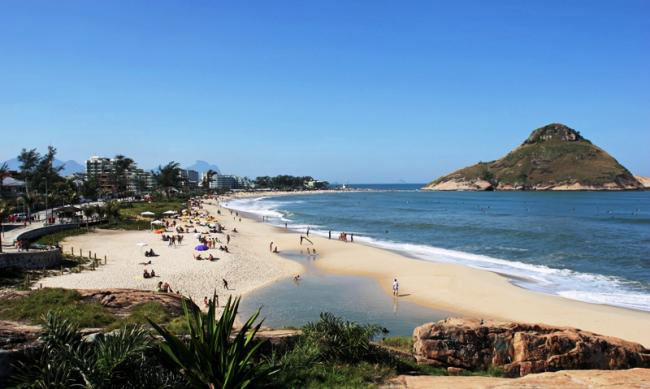
    To mark the spit and end of the barra there’s a most unusual geographical formation. It’s a small mountain 50 meters off the beach, all by itself, connected to the land by a narrow isthmus. Perfectly round and jutting up from the sea to form what looks like the nipple of a woman’s breast or “bico de seio” (in Portuguese). The main street of the town Recreio aligns with the spit of land and comes to an end, with the small mountain like the dot of an exclamation point. On one side of the isthmus you can face towards Rio and even see the city way up the coast. On the other side of the isthmus you face south and towards Macumba Beach, which is a fairly short beach and divided almost in half by a rock formation that juts out to create Rico’s Point, this point causes a nice surf break for surfers when the Atlantic swells are favorable.

    Recreio and Macumba BeachIf you walk down Macumba Beach and follow the path up and over Rico’s Point, from the top of the hump of the rock formation, you’ll be looking at what I call “the bitter end”, as the mountains rise-up sharply to define an abrupt end to the beaches of Rio de Janeiro. On the side of the hill a narrow twisty road cuts precariously into the rock, surrounded by vegetation, curves out of sight, up and around the cornice. This road is one of the best I’ve ever driven but that’s another story.

    One other thing you’ll need to know about this beach is that the word “macumba” is frequently used in Brazil to refer to any ritual or religion of African origin (similar to Voodoo in Jamaica). In several places around the rock formation at Rico’s Point and at the bitter-end of the beach, where a small river estuary can be found, you’ll see signs like ritual offerings, from the modern-day practice of Macumba. Don’t be alarmed but also don’t touch.