Generate, provide and disseminate information and environmental studies for sustainable development of Wild Orchid Conservation Programs, with revenue generating business models, from sales of digital media, empowered by Social Activism.
Develop a Crowd source funded project: Conservation of wild orchid, in the Atlantic Forest of South America.
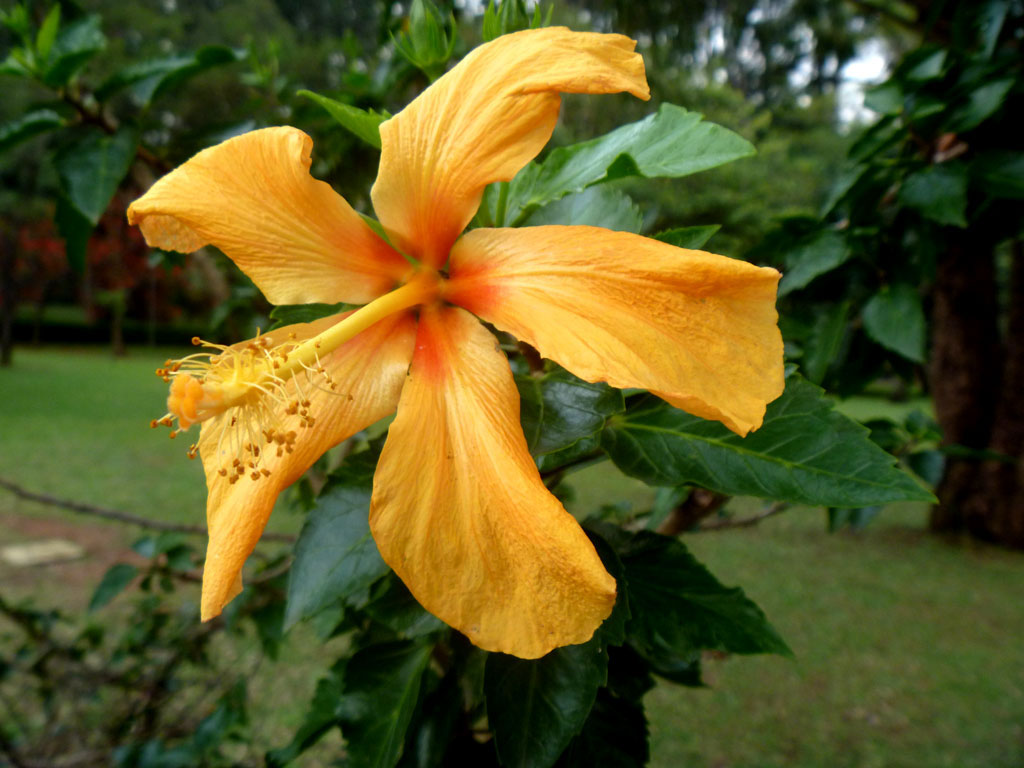
Wild Orchid Ideas is project driven, and designed for social change. Raising awareness by using social media to collaborate with strategic partners. Saving the world’s most vulnerable flowers, while at the same time causing a new type of sustainable industry. Leveraging the value of aesthetic beauty of wild orchid, for deriving revenue from digital media.
Initially 2 websites designed, one for raising funding and the other, a Wiki (open source community) for classifying orchid
Imagination is underratedSometimes my best ideas come to me while I’m riding my bike, like this story idea for example, popped into my mind as I was coasting down this long hill, down one of my favorite tree-lined residential streets, in a quiet neighborhood of Sao Paulo with big expensive homes on large lots, protected by walls, cameras and security systems, behind steel doors and locks. I imagine myself to be more free, gliding along the road, than many of the people living in the proverbial “Park Place” behind the walls because I know how to let the fertile imagination run wild.
My creative process has been developed over time and through practice. Since my skill-set is about web publishing and curating digital media, I’ve found ways to exploit my own mental energy, by using systems that evolve around the written word. Plus, by adopting the best practices of successful bloggers and writers, you first create a framework to develop your ideas. In my case that framework starts with a small notepad, in which I’ve listed the Silicon Palms (my blog) editorial calendar topic headings. These coincide with my site categories too, so the site has structure. My ideas are prompted to fit that framework as I discover the article titles. Now, I keep an entire list of topics that I’d like to share my thoughts about, as well as learn more about.
Everyday I update my Evernote journal and add more words to my ideas, and constantly capturing creative commons digital media that improves the presentation of my ideas. The layout and design of an article is just as interesting and appealing (to me), in some cases, as the material contained within. It’s enormously satisfying to give birth to a new webpage, which has been thoughtfully constructed to provide value to the reader. Most of my articles start-out as a “title” written by pen in my little pocket Moleskine (paper) notebook, since my own content management system relies heavily on ink and paper. Everyday I add idea topics and write down names of people and places to look-up when I get back to my computer.
One thing that I’ve learned from using an editorial calendar, along with the Evernote journal and content curation system; is that it get’s easier and faster to see the content come together. Also, the use of layout techniques becomes more natural, as you learn to improve the flow of an article by using bullet points and boxes etc…. Graphics and images, is for me extremely creative, as the imagination can be the key to how many people click to read your information. If no-one is responding to your images on the social networks, then the hard work of writing, editing and publishing is lost.
Discipline is what separates writers from a wanna-be like me. It requires a concentration and focus way beyond other forms of computer, data-input type work, and even graphic artists have specifications and sources of stock material but the writer has to dig deep, reach inside themselves and then channel a flow of intellectual energy onto a page. The process is all-consuming to the mind and can’t easily be sustained for long durations. Even a seasoned journalist will use collected material and research to fill 80+ percent of the article because they bring to it a short strong narrative, along with the cohesion of formatting by sub-topic as well as adding syndicated photos, to make a journal style story. It’s takes years to learn how to do that well.
Everyone has way more imagination than they’re aware of, it’s just that much of it is squandered and spent on amusement or humor. While my suggestion is to use the creative power of the mind, in a systematic way, to earn a living by re-packaging information in a better container. To me, the very idea that I could help people to improve their lives, by sharing information that helps them in some way. My photos are mostly too amateur, my story writing is short and simple and my Photoshop skills, as a graphic artist, are crude but I’m an expert at web-publishing, which is why I love to create new webpages – like this one!
You’ve heard the expression a thousand times – practice makes perfect. Who cares about perfect? Proficiency and progress, those are the objectives of practice because the only way you can really learn how to tap into your imagination, is to take a chance and make something happen.
Design is in everything, anything can be designed. Life is by design, as well, you can design your own life. To live without design, should be a crime because all it takes is imagination to create a designer lifestyle. Just ask yourself if you’re happy, in all aspects of your life? If there’s some aspect that sucks then redesign it, or plan to eliminate it. Get a new game on, if the old one bores you and I don’t mean on TV.
My opinion is that television is the biggest waste of time that most people have in their lives, although movies and documentaries can be enriching, the majority of programmed television content makes you worse, not better. Self-improvement is a personal choice that can, and should be, designed into everyone’s lives. From babies to seniors, we can all make the world a better place by improving ourselves – just step away from that remote control.
Here’s my suggestion for redesigning your life and increase your happiness factor. It’s’ called “Radical Time Management”, also I recommend designing yourself an electronic journal using Evernote. In Evernote (or MS One Note) make 12 notebooks, one for each month, then each morning of your life you create a new note, in the appropriate notebook (i.e. July/ Tues July 8). During the day you’ll need to update the journal so you can detail how you spend your time. Then before you retire for the evening, sit down and give the day a good review, make some comments and give yourself a score between zero and one hundred. Now you have the tools for designing your life to increase the time spent, doing the things that make you the most happy.
Happy times, by design.
As for my designer lifestyle? [quote]I often wonder; am I happy because I tell myself I’m happy, or am I happy sincerely? The answer – it doesn’t matter why I’m happy, whether it’s perceived or real is not important. What matters; is that good things happen often, by design.[/quote]
I’m lucky to love website design, it presents a variety of concepts from style to function. Like learning how to blend eye-catching appeal with user friendliness. There’s allot of psychology involved in commercial graphic design. Assuming the topic content is popular and extensive enough, the web designers mission is be bring the subject and information to life on the web, in a coherent and stimulating way. Often-times the website project has design specifications (i.e. colors, logo and theme etc…), in which case the designer would look to enhance, improve or streamline the layout and/or user interface.
[box type=”info”]Sometimes the logo needs an overhaul, or maybe the website header could be improved? Design never ends.[/box]
[box type=”note” style=”rounded”]Silicon Palms is about 16 years old and the site has been re-designed about a dozen times. Even the logo has never stopped changing. Although in it’s most recent design we discovered a Google font called “Pacifico” to be what we had always wanted, since it has the “retro” flair like a Palms Springs Hotel from the 20’s, just needed a bevel and emboss. Next we added a color theme from the Adobe Khuler called “beach on sunset”, then 2 palm tree icons over a transparent background and voila the new logo was born. Simple, elegant and functional.[/box]
I didn’t invent that slogan but I think that Ben Franklin would agree. Brazil is perfection, in it’s natural state. Comparing to Canada the distances are as vast but due to the climate and geography, much of the countryside is lush and verdant green.
Tijuca National Park, Rio de Janeiro, Brazil
Brazil is the last greatest country left on earth (in my opinion). Canada once held this distinction but the problems of the neighbor country, infected the corporate and political culture, although it’s possible that the genetic flaws of the parent (Great Britain) left her susceptible to problems. None-the-less; Government grew out of control, until the free-spirit of the people was throttled by over-regulation. Now you need to buy a permit, to get a license, to negotiate for an approval. However, rules and regulations are the way of the world, it’s happening here in Brazil too. So, I’m curious to watch and learn how Brazil manages 200 million people, since the potential is boundless.
[box type=”note”]The massive South American country is oozing with natural resources, this is the land of milk and honey. In the major cities of Brazil, of which there are 13, prosperity is evident everywhere.[/box]
Brazil 13 cities with more than 1 million people (2007 Statistics):
Sao Paulo (10,9 million)
Rio de Janeiro (6,1 million)
Salvador (2,9 million)
Distrito Federal (2,5 million)
Fortaleza (2,43 million)
Belo Horizonte (2,41 million)
Curitiba (1,8 million)
Recife (1,5 million)
Porto Alegre (1,42 million)
Belem (1,41 million)
Goiania (1,244 million)
Guarulhos (1,236 million)
Campinas (1,03 million)
It’ not uncommon to see plates of fresh food abandon on the street, since the bar and restaurant owners (and others) feed the poor from take-away containers of rice, beans, produce, meat and bread. Produce grows so well in the fertile land and is so plentiful that no-one starves unless they choose.
Yes, there are allot of poor people. Brazil has one of the worst ratios for distribution of wealth, and the mega-rich gap is growing wider. However, the middle class is expanding, one of the last places left on earth where the common man can rise up to become a prominent community leader. It is revered in Brazilian culture, to become a celebrity that once-upon-a-time lived in a favela.
Everyday more people (per capita) become millionaires in Brazil, than any other country in the world. Now that’s a nice cup to hoist but better would be the education. If there’s one thing that it’s sadly lacking in Brazil, it’s that too many kids are raised without a good education. In a country that dominates in exports of so many commodities, for there to be one child left on the street is a mistake.
Violent crime and gang corruption is the biggest negative you hear about living in Brazil, this is an issue for sure. There are some problems related to gun violence, in areas where the U.S. introduced their war on drugs, which has done zero to reduce the drug trade but certainly raised the stakes for corruption and gang operations. Therefore, the statistics are skewed to make things look much worse than they actually are. However, it’s a notoriously bad country, to be in the wrong place at the wrong time.
My sincere hope is that the greatest future lays ahead because the people are demanding that Government spending on education be increased. Hence, we go back to talking about Government, where we started, and where Brasileiro’s always retreat to when the topic of the poor arises – oh it’s the Governo etc… everyone has been indoctrinated to expect the Government to be corrupt, another global condition. Meanwhile the power elite and old-guard establishment, which now includes the influence of innumerable multi-national conglomerates, that have leveraged their way into the gravy train, to supply the greatest culture driven, brand frenzy, credit laden, consumer product consumption orgy in history. The Romans pale in comparison, even America wasn’t completely plugged-in to stuff like these folks, this is shopoholic-central.
The bottom line is that Brazil rocks! For allot of valid reasons, not least of which is the fun-loving people, living on thousands of miles of tropical beaches. Having said that; my number one reason for loving living here, is that aside from providing civil authority by military force in Haiti (with UN edict), we do not export our democracy with the barrel of a gun.
Brazil has enough problems at home, and now we can all see that every country has it’s own problems at home, to preferably contend with. Therefore, since Brazil has no blood on it’s hands, I’m very willing and happy to contribute towards making it a better place for everyone. I’m glad to be a Brazilian citizen and love living here.
If a bird was born in a jail, and never went outside to see another world, as for a comparison, in order to chose its own way of living, once he grew up, will never be able to survive outside. On the other hand, a wild bird, will die too, and with sadness, if you keep it in a jail! In the first case it will die due to the hunger, not knowing how to provide food. On the second case, even knowing how to hunt for its food, and in this case is useless, since we feed, all the other knowledge, makings, will not be reachable as joy of living, and sadness, or lack of appetite, will starve up to death. So, liberty may provide people to have knowledge,as a way of self arbitrating survival, appetite, and diversified skill, for their kind.
If liberty means happiness, both birds are happy on their original places! Of course seen by themselves! And the first one don’t need much space for it, meanwhile the second will perish, if it is unable to deal with losses, by filling the emptiness with the augmented reality in Australia. And to keep happiness the concern of liberty would not be “ to do whatever you want, but to love what you are doing”! (And who should say, or determine, what shall be done?!)…There is another thing we may point out: Liberty don’t have so much to do with a long living life, as our society searches for. It is just a way to delay pain, sickness, and losses that we cannot avoid! Our lifestyle says “be patient, things will turn better”, some religions will say “you will recover all from the same stuff, multiplied after death, like ten wives instead of one!”. It’s really a virtual projection to save continuity. Shall we enjoy our “liberty”, that gave us the means of survival, on the same way is taken from us? Did we finish our job or it is the end of another day? And any day can be the last one! Our thinking is always the first day of the rest of our lives! Counter clockwise.
Returning to our liberty, that opposes slavery, if we look under the space aspect, is a emotional reaction against claustrophobia. (the more space people need as individuals, the more those emotions enslave them). If it is the time, as the axiom of our liberty, is our emotional reaction against our weakness (if compared to eternity). As example, to be over preoccupied with self defence, fitness, enrichment as a goal itself; and even knowing their reality, strive to be externalized through the history. But there are notable people whose goodness deserves our “eternal” (lasting) thanks as a reference to humanity, for the welfare of the world. They did it, without expecting any return to themselves.
If we say liberty, we may say also equality, among the same kind, if they can live in fraternity!
Love is alive where it flows, when it gather the same purpose of lightening ourselves to be what remains outside our prison.
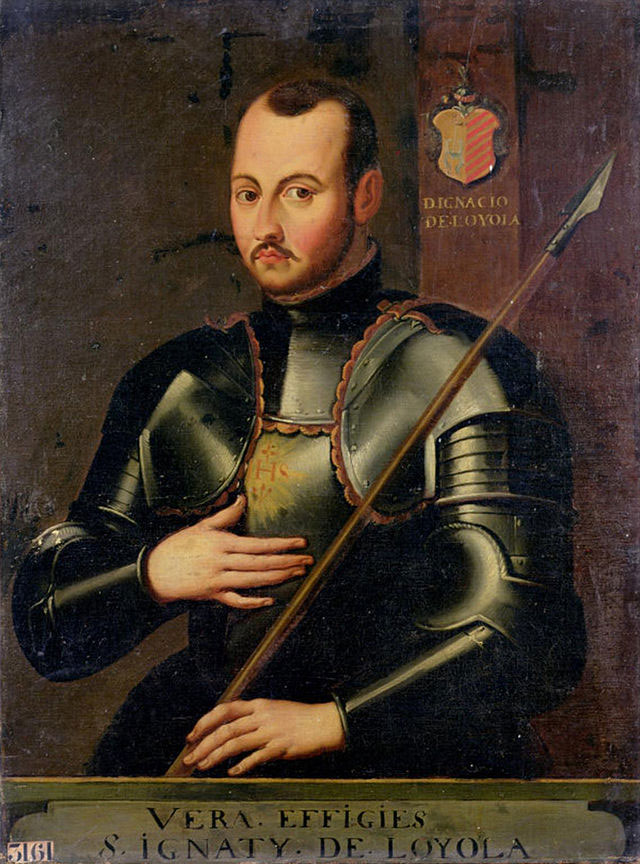
Casa Dom Ignacio de Loyola is named after Ignatius of Loyola (Spanish: Ignacio de Loyola) (ca. October 27, 1491 – July 31, 1556) was a Spanish knight from a local Basque noble family, hermit, priest since 1537, and theologian, who founded the Society of Jesus (Jesuits) and, on 19 April 1541, became its first Superior General. Ignatius emerged as a religious leader during the Counter-Reformation. Loyola’s devotion to the Catholic Church was characterized by absolute obedience to the Pope.
After being seriously wounded in the Battle of Pamplona in 1521, he underwent a spiritual conversion while in recovery. De Vita Christi by Ludolph of Saxony purportedly inspired Loyola to abandon his previous military life and devote himself to labour for God, following the example of spiritual leaders such as Francis of Assisi. After claiming to experience a vision of the Virgin Mary and the infant Jesus at the shrine of Our Lady of Montserrat in March 1522, he went to Manresa, where he began praying for seven hours a day, often in a nearby cave, and formulating the fundamentals of the Spiritual Exercises. In September 1523, Loyola reached the Holy Land to settle there, but was sent back to Europe by the Franciscans.
Between 1524 and 1537, Ignatius studied theology and Latin in the University of Alcalá and then in Paris. In 1534, he arrived in the latter city during a period of anti-Protestant turmoil which forced John Calvin to flee France. Ignatius and a few followers bound themselves by vows of poverty, chastity, and obedience. In 1539, they formed the Society of Jesus, approved in 1540 by Pope Paul III, as well as his Spiritual Exercises approved in 1548. Loyola also composed the Constitutions of the Society. He died in July 1556, was beatified by Pope Paul V in 1609, canonized by Pope Gregory XV in 1622, and declared patron of all spiritual retreats by Pope Pius XI in 1922. Ignatius’ feast day is celebrated on July 31. Ignatius is a foremost patron saint of soldiers, the Society of Jesus, the Basque Country, and the provinces of Gipuzkoa and Biscay.
Many of the concepts used in the work of John of God are based on some of the ideas discovered by Ignatius and that is where the idea come from, to put your right hand over your heart, on your chest. Also, the understanding that many people in prayer produce an unseen energy, which can be used for healing.
Spiritual viewpoint
In Ignatius’ Spiritual Exercises, The Trinitarian God (God the Father, God the Son Jesus Christ, and God the Holy Spirit) and Satan are active players in the world and in the human psyche (soul). The main aim of the Exercises is the development within the human psyche (soul) of “discernment” (discretio), the ability to discern between good and evil spirits. Discernment is achieved in order to act “with the Grace of God”. In other words, to act on the spiritual discernment one receives, by seeking Truth and listening in contemplative prayer with Jesus, on what is right.
This is the context within which, during the exercises, and in continuing the process thereafter, one seeks from Jesus: the virtue of humility (to recognize and accept Truth), selflessness for the sake of Love, and the reflection on, self-awareness of, and termination of personal sin. There is an acknowledgment that the human soul is continually drawn in two directions: both drawn towards Godliness / goodness, and at the same time tempted towards sinfulness / evil. Accordingly, the Exercises provide several illustrations of how one might best be able to refrain from satiating one’s lower and evil desires and instead how one might find a means to redirect one’s energies towards the fulfillment of one’s higher and loving way of being and purpose in life.
It also needs to be understood that at the heart of Ignatian thought “discernment”, while on the one hand being an act of mysticism, can also be understood as a method of subjective ethical thought. The Exercises emphasize the role of one’s own “discernment” in deciding what is the path to glorify God (the right path). “Discernment” attempts to make a direct connection between the individual exercitant’s thought and action and the Grace of God. Discernment is thereby an action which emphasizes the mystical experience of the believer. This aspect of the Spiritual Exercises is very much typical of the mystical trend in Catholic thought and practice which both preceded the reformation, beginning with the first 12 Apostles, and lived on within elements of counter-reformation Catholicism (cf. Theresa of Avila; François de Sales; Pierre de Bérulle).
John of God in Abadiania, Brazil
John of God is a faith healer, the most famous alive. He is said to channel the spirit of Ignacio-de-Loyola (amongst other entities), so I went there to seek treatment for my broken ankle and some personal issues. Immediately upon arriving in the enormous compound and fazenda I know that I’m in store for an interesting experience, to say the least and quite possibly something life-altering.
I learned the steps, to get a ticket and wait in line for a chance to momentarily pass in front of John of God, and ask him to help improve my leg, he quickly tells me to return for a surgery the next morning at 8 am. When I stood in front of this man he was emanating energy like nothing I’ve ever experienced before, from his throne-like chair, surrounded by massive crystals. He has an innocence about him and vibration of benevolence, that made me instantly feel that he was very special and this was a most beneficial meeting. I am convinced that he is a man of Love and has nothing but good intentions.
My surgery was promptly at 8, as I was led to the front of the room, past dozens of volunteers who were deep in prayer/meditation, to wait with my hand on heart and eyes closed, at the empty chair (beside enormous crystals) where I had met John of God (for 30 seconds) the previous day. I could sense the immense energy omitting from him before I even opened my eyes. The energy is like bright white light, behind closed eyes but anyone would be able to sense it. When the soft voice said to open my eyes, there he was beckoning me to approach him, then asking me to walk in front of him so he could look at my ankle. He then asked
if I wanted it out
and I replied yes please, then he said;
it’s done, go ahead and walk now and keep on going.
I walked out without pain or a limp.
The assistants intercepted me and took me to an infirmary where I remained for 3 hours. Now I’m in a 24 hour period of sequestration, as the entities are still working on me and will come again in 6 nights for a check-up. John of God is the tool (he says), that God has allowed the entities to work through. I have been blessed with an amazing experience that will never leave me for the rest of my life, also I will be able to call upon these entities forever and when I ascend above this current plane, I will know them in person.
On this 4th of July I spent several hours reading and reviewing what I knew about Aaron H. Swartz. I wish I could have met him, we would have lot’s in common to talk about. The first time I heard about him, was only a year or so before his sad demise. Now I’m very well aware of his genius and hold the highest regard for his efforts, on behalf of all people, everywhere, prior to his untimely end. This page and article, containing copy & paste text from Wikipedia is being published here, as a tribute to a great American hero.
It’s really important to understand what a threat Aaron posed to the establishment and to corrupt leaders everywhere. Aaron did not steal anything and was not a felon, or a criminal.
Upon his death the following statement was issued by the family and partner of Aaron Swartz
[box]Aaron’s death is not simply a personal tragedy, it is the product of a criminal justice system rife with intimidation and prosecutorial overreach. Decisions made by officials in the Massachusetts U.S. Attorney’s office and at MIT contributed to his death.[/box]
Highlight of a short career (Aaron Swartz passed at age 26)
Aaron Swartz – Be Free
Swartz was instrumental in the campaign to prevent passage of the Stop Online Piracy Act (SOPA), which sought to combat Internet copyright violations but was criticized on the basis that it would have made it easier for the U.S. government to shut down web sites accused of violating copyright and would have placed intolerable burdens on Internet providers. Following the defeat of the bill, Swartz was the keynote speaker at the F2C:Freedom to Connect 2012 event in Washington, D.C., on May 21, 2012. His speech was titled “How We Stopped SOPA” and he informed the audience:
This bill … shut down whole websites. Essentially, it stopped Americans from communicating entirely with certain groups….
[quote]I called all my friends, and we stayed up all night setting up a website for this new group, Demand Progress, with an online petition opposing this noxious bill…. We [got] … 300,000 signers…. We met with the staff of members of Congress and pleaded with them…. And then it passed unanimously…. And then, suddenly, the process stopped. Senator Ron Wyden … put a hold on the bill.[/quote]
He added, “We won this fight because everyone made themselves the hero of their own story. Everyone took it as their job to save this crucial freedom.” He was referring to a series of protests against the bill by numerous websites that was described by the Electronic Frontier Foundation as the biggest in Internet history, with over 115,000 sites altering their webpages. Swartz also presented on this topic at an event organized by ThoughtWorks.
Swartz’s family and his partner created a memorial website on which they issued a statement, saying,
“He used his prodigious skills as a programmer and technologist not to enrich himself but to make the Internet and the world a fairer, better place.
Swartz’s funeral services were held on January 15, 2013, at Central Avenue Synagogue in Highland Park, Illinois.
Tim Berners-Lee, co-creator of the World Wide Web, delivered a eulogy.
The same day, the Wall Street Journal published a story based in part on an interview with Stinebrickner-Kauffman. She told the Journal that Swartz lacked the money to pay for a trial and “it was too hard for him to … make that part of his life go public” by asking for help. He was also distressed, she said, because two of his friends had just been subpoenaed and because he no longer believed that MIT would try to stop the prosecution.
On January 19, hundreds attended a memorial at Cooper Union. Speakers included Stinebrickner-Kauffman, Open Source advocate Doc Searls, Creative Commons’ Glenn Otis Brown, journalist Quinn Norton, Roy Singham of ThoughtWorks, and David Segal of Demand Progress.
On January 24, there was a memorial at the Internet Archive with speakers including Stinebrickner-Kauffman, Alex Stamos, and Carl Malamud.
On February 4, a memorial was held in the Cannon House Office Building on Capitol Hill. Speakers included Senator Ron Wyden and Representatives Darrell Issa, Alan Grayson and Jared Polis/ Other lawmakers in attendance included Senator Elizabeth Warren and Representatives Zoe Lofgren and Jan Schakowsky. “Stick it to the man,” said Issa. “Access to information is a human right.” A historic photo of Warren and Issa sitting together before an image of Swartz was posted on Twitter.
A memorial also took place on March 12, 2013 at the MIT Media Lab.
Reuters news agency called Swartz “an online icon” who “help[ed] to make a virtual mountain of information freely available to the public, including an estimated 19 million pages of federal court documents.” The Associated Press (AP) reported that Swartz’s case “highlights society’s uncertain, evolving view of how to treat people who break into computer systems and share data not to enrich themselves, but to make it available to others,” and that JSTOR’s lawyer, former U.S. Attorney for Manhattan Mary Jo White, had asked the lead prosecutor to drop the charges.
As discussed by editor Hrag Vartanian in Hyperactive, Brooklyn, NY muralist BAMN (“By Any Means Necessary”) created a mural of Swartz.
“Swartz was an amazing human being who fought tirelessly for our right to a free and open Internet,” the artist explained. “He was much more than just the ‘Reddit guy’.”
The Internet’s Own Boy: The Story of Aaron Swartz
Aaron Swartz profile
On January 11, 2014, marking the first anniversary of his death, a sneak preview was released from The Internet’s Own Boy: The Story of Aaron Swartz, a documentary about Swartz, the NSA and SOPA. The film was officially released at the January 2014 Sundance Film Festival. The documentary was to be released under a Creative Commons License; it debuted in theaters and on-demand in June 2014.
Mashable called the documentary “a powerful homage to Aaron Swartz”. Its debut at Sundance received a standing ovation. Mashable printed, “With the help of experts, The Internet’s Own Boy makes a clear argument: Swartz unjustly became a victim of the rights and freedoms for which he stood.” The Hollywood Reporter described it as a “heartbreaking” story of a “tech wunderkind persecuted by the US government”, and a must-see “for anyone who knows enough to care about the way laws govern information transfer in the digital age”.
Open AccessIn 2002, Swartz had stated that when he died he wanted all the contents of his hard drives made publicly available. A long-time supporter of Open Access, Swartz wrote in his Guerilla Open Access Manifesto:
The world’s entire scientific … heritage … is increasingly being digitized and locked up by a handful of private corporations….
The Open Access Movement has fought valiantly to ensure that scientists do not sign their copyrights away but instead ensure their work is published on the Internet, under terms that allow anyone to access it.
Supporters of Swartz responded to news of his death with an effort called #PDFTribute to promote Open Access. On January 12, Eva Vivalt, a development economist at the World Bank, began posting her academic articles online using the hashtag #pdftribute as a tribute to Swartz. Scholars posted links to their works.
Swartz’s death prompted calls for more open access to scholarly data.
The Think Computer Foundation and the Center for Information Technology Policy (CITP) at Princeton University announced scholarships awarded in memory of Aaron Swartz.
In 2013, Aaron Swartz was posthumously awarded the American Library Association’s James Madison Award for being an “outspoken advocate for public participation in government and unrestricted access to peer-reviewed scholarly articles.”
In March, the editor and editorial board of the Journal of Library Administration resigned en masse, citing a dispute with the journal’s publisher. One board member wrote of a “crisis of conscience about publishing in a journal that was not open access” after the death of Aaron Swartz.
Hacks
On January 13, 2013, members of Anonymous hacked two websites on the MIT domain, replacing them with tributes to Swartz that called on members of the Internet community to use his death as a rallying point for the open access movement. The banner included a list of demands for improvements in the U.S. copyright system, along with Swartz’s Guerilla Open Access Manifesto.
On the night of January 18, 2013, MIT’s e-mail system was taken out of action for ten hours. On January 22, e-mail sent to MIT was redirected by hackers Aush0k and TibitXimer to the Korea Advanced Institute of Science & Technology. All other traffic to MIT was redirected to a computer at Harvard University that was publishing a statement headed “R.I.P Aaron Swartz,” with text from a 2009 posting by Swartz, accompanied by a chiptunes version of The Star-Spangled Banner. MIT regained full control after about seven hours.
In the early hours of January 26, 2013, the U.S. Sentencing Commission website, USSC.gov, was hacked by Anonymous. The home page was replaced with an embedded YouTube video, Anonymous Operation Last Resort. The video statement said Swartz “faced an impossible choice”.
A hacker downloaded “hundreds of thousands” of scientific-journal articles from a Swiss publisher’s website and republished them on the open Web in Swartz’s honor a week before the first anniversary of his death.
Commemorations
On August 3, 2013, Swartz was posthumously inducted into the Internet Hall of Fame.
There was a hackathon held in Swartz’ memory around the date of his birthday in 2013.
Over the weekend of November 8–10, 2013, inspired by Swartz’s work and life, a second annual hackathon was held in at least 16 cities around the world.
Preliminary topics worked on at the 2013 Aaron Swartz Hackathon[205] were privacy and software tools, transparency, activism, access, legal fixes, a low-cost book scanner.
In January 2014, Larry Lessig led a walk across New Hampshire in honor of Swartz, rallying for campaign finance reform.
Aaron Swartz will never be forgotten, and every July 4th honored as an American hero, and an Internet Legend. We do not forgive. We do not forget. Expect us.
The very idea that I can record my own video and publish my own pictures and information on webpages, to share with the world over the Internet, compels me to constantly try to improve my communication skills and learn more about editing, producing and publishing.
The possibilities are endless when it comes to website development, sadly however most people think that everything is about money. Yes, money is important but becoming proficient in a skill that can make you money is more important. Everyone must put-in their 10,000 hours if they want to become an expert at something/anything, that’s just the law of the jungle.
I wanted to become an expert webmaster from the first day I heard that word, and ever since I kept finding more software like Adobe Photoshop, Dreamweaver and Camtasia, plus a dozen other programs that needed to be mastered, in order to broaden my scope as a webmaster. The process can continue for ever, to me it’s totally enthralling.
Content is King; you soon learn. Curating, editing and publishing is where it’s at when you’re on-top of your game in a competitive niche online. It’s then all about becoming the authority in a topic, through the power of words and ideas. It’s anybody’s domain to conqueror.
Aaron in Brasilia
Converting eyeballs (web traffic) into dollars, or monetizing the content, as they say in the Digital Marketing Experts courses, the best of which, in the “How to make money online genre”, is the Internet Business Manifesto by my former coach Rich Scheffren. (Note: coaching can accelerate your 10,000 hours learning cycle to become expert). This knowledge delves into product development, shopping carts, merchant accounts and everything related to revenue, including sales and marketing, in my opinion the most important aspect of online business development, however these are topics for another time and we’ll get to that because I just want to focus on this on becoming a good webmaster.
Becoming a good webmaster is the first step in learning how to make money online and at least one proven path towards achieving that objective. If you can learn to be proficient with WordPress, you can make money online. Once you become an expert, you could build a dream business to support a dream lifestyle.
The WordPress personal publishing platform is the most ubiquitous content management system on the Internet. The WordPress Open Source community is the largest group of programmers on the planet, in every country, in every language, involved in every published word online, there is a wordpress blog somewhere involved. Master WordPress to take the best first step towards becoming a webmaster.
Happy Birthday Canada! We stand on guard for thee…. here in Brazil (that is). I will always love Canada but prefer living in Brazil.
Silicon Palms is now working on something unique that I’d like to share with you.
Over a year ago, I was presented with an opportunity to design a resilient community project for a magnificent mountaintop property, on an organic farm in Aguas Mornas, Santa Catarina. That’s in the rain forest (Floresta Atlantica) of Southern Brazil (with a view of Florianopolis and the Sea).
The property owner and I devised a strategy to focus on “Sustainable Forestry” for the revenue, to develop the project, simply because it’s the best use of the land but we stumbled upon an idea for disruptive innovation in the marketing.
The idea is to take the best thing about the rainforest, use digital media methods to monetize it into online content, and social activism to bring it to life as an organization.
The Plan is called Wild Orchid Brazil – Here’s the Orchid Idea Pitch
A Canadian Expat connected with a USA Expat, both were living in Brazil for over a dozen years each and never previously met. Together they devised a plan so truly compelling that anyone that heard the pitch would immediately endorse the orchid idea and at the very least give a recommendation to every single friend and family, without thinking twice about it.
Wild Orchid Brazil
The 2 Expats spent a year brainstorming and test pitching the orchid idea with big thinkers. It had to be sustainable revenue generated from the 10 acre property and embrace Social Activism for Environmental Protection and research into sustainable forestry projects. Amongst which is the conservation of Wild Orchid, which inhabit the property in healthy numbers. The orchid ides started flowing, which gave rise to the concept of “Orchid Porn” for Social Media (Facebook friendly) to fight the natural enemy of all flowers – Geo-Engineering and/or Chemtrail spraying (aka Solar Radiation Management).
We are now building our launch team for crowd source funding, the proceeds of which will be used for Grant Writing.
Sustainable forestry in Brazil is our Plan
The Wild Orchid is our Meme
Social Activism is our Method
Save the Rainforest is our Message
Champion the Wild Orchid is our Mission.
Promote the wild orchid as a Super Hero of air quality and the canary in the coal mine for planet earth.
We need your help! Please join our campaign. Your name amongst our members makes a big difference. Since our goal is to reach 1 million members within 1 year but we need your help to tell other people. We want you to love the Wild Orchid Project, so you’ll gladly tell all your friends. Our hope is that you’ll add your energy into helping us grow the most unique resilient community on the Internet.
You could own your own wild orchid in Brazil, with 24/7 web cam and dedicated web page (Facebook friendly), containing the Google Earth link co-ordinates, or visit the research facility as a special guest. Wild Orchid Brazil is a place and project like none other and membership has privilege.
Open Source systems enable collaboration, management and reporting to the community.
The orchid idea is pure innovation in the world of environmental protection projects.
Please subscribe to this Channel and join or Community at Wild Orchid Info.
This morning I discovered this graphic art that captured my mind, so I followed it to it’s source, low-and-behold to find the Imaginary Foundation. Whom created this powerful image and have used it not only for cheese, in a trap to catch curious intellects but also a digital product, for sale in different formats. This illustration, for me, perfectly expresses where I feel, we (the human race) are on this planet. In awe and ready. Click on it to look more closely….
The Beginning is Near
[box type=”info”]The Imaginary Foundation is a think tank from Switzerland that does experimental research on new ways of thinking and the power of the imagination. They hold dear a belief in human potential and seek progress in all directions. The small clandestine team is headed up by the mysterious “Director,” a 70-something über-intellectual whose father founded the Dadaist movement. Avoiding direct publicity, the team has sought clothing as an unlikely vehicle for bringing their ideas beyond the academic realm and into popular culture.[/box]
In his vision for the Imaginary Foundation, the Director knew that the human mind has more than one mode, that indeed it has an “ecology” of being. He knew that imagination, intuition, inspiration are basic to psyche… A philosophy of research began to form: imagination as fundamental to all learning; artistic making as a model of integrating vision, materials, structure, and imagery.
[quote]What makes true vision is the poetry of life and the richness of nature[/quote]
The Foundation’s basis has been a strong sense of community, free inquiry, creativity, and the experimental spirit. Over the years the Foundation has generated a critical mass of creative people in many different fields, for whom it’s been a catalyst for experimentation and innovation.
You must be logged in to post a comment.