Cannabis Education at the University of British Columbia, almost oxymoron if it weren’t for the degree of science and the seriousness of the pursuit of the magic bi-product that the cannabis plant can render; money!
We’re witness to an amazing spectacle, the industrialization, commercialization and stock market exploitation of weed.
Vancouver has regained her crown as the pump and dump penny stock capital once again, to draw-out of retirement the biggest players in the stock promotion game. Bay Street of Toronto is a step ahead with many listings on TSX and many funds are buying them up.
CannTrust Holdings Inc. (TRST) Through CannTrust’s subsidiary, CannTrust Inc., the Company is in the business of producing and selling medical cannabis in Canada in accordance with the Access to Cannabis for Medical Purposes Regulations (Canada) (“ACMPR”). The Company’s strategy is to produce highest quality, standardized, pharmaceutical-grade products for the medical cannabis market.
Vancouver was once famous for it’s penny stock market called the VSE and it was instrumental for getting gold mines funded with start-up capital, so that the company could grow to meet the qualifications of NASDAQ or the American Stock Exchange, or even maybe become an NYSE listed titan like Wheaton Precious Metals from Vancouver.
It is estimated that 70 percent of silver production comes as a by-product from base metal and gold mines. This characteristic, along with the Company’s bullish sentiment for long-term silver prices, was the basis for creating Vancouver-based Silver Wheaton in 2004. Starting in 2013, the Company started to see more opportunities in the market for by-product gold. By 2017, revenue was roughly evenly balanced between the two precious metals, forming the basis to change the Company’s name from Silver Wheaton to Wheaton Precious Metals. The new name, Wheaton Precious Metals, better aligns with the Company’s diverse asset base of silver, gold, palladium and cobalt streams with a primary focus on precious metals
With the Internet the stock exchanges have become less and less relevant and with Blockchain exchanging asset exchange making real-time trades of anything, anywhere, any time, with low risk of fraud. However, to get mass investors to take the risk on almost anything, a company still needs to be listed on an exchange. Now that this new stock market boom is happening, it means that the greatest stock promoters, those that earned their stripes by raising capital for silver and gold mines in BC, are now in a footrace to make a last ballyhoo, create a Cannabis Empire conglomerate, by raising millions and millions of dollars via stock markets.
VANCOUVER, BC / ACCESSWIRE / April 12, 2019 / EVITRADE Health Systems Corp. (CSE: EVA, OTCQB: EVAHF). Dr. Ricardo E Rivera-Acevedo member of EViTRADE’s scientific advisory board and renowned cannabinologist is leading the way for cannabis education in Canada.
In a recent article published in El Nuevo Día, one of Puerto Rico’s most important newspapers, Dr. Ricardo-Acevedo discussed his passion for cannabis science and his support for the education of the general public. “One of my goals is to educate the people about the health benefits of the cannabis plant and the important role that our research will play in a greater understanding of how we treat and use this plant for the betterment of our health” commented Dr. Rivera-Acevedo.
Dr. Rivera-Acevedo is an Adjunct Professor in the Department of Anesthesiology, Pharmacology & Therapeutics at the University of British Columbia in Vancouver and consultant for various pharmaceutical companies around the world. In his spare time, he co-hosts the Cannabis Science Podcast and El Bus De Las 7 radio show on Vancouver Coop Radio 100.5 FM CFRO (http://cannabisconciencia.org).
With David Frum, Sue Gardner, and Christopher Wylie
This event will be live webcast. Visit our YouTube channel to set a reminder.
SFU Public Square and Vancity are proud to co-present Confronting the Disinformation Age, featuring Canadians David Frum, Senior Editor at The Atlantic; Sue Gardner, Executive Director of The Markup and former Executive Director of the Wikimedia Foundation; and Christopher Wylie, Cambridge Analytica whistleblower, in a conversation moderated by the CBC’s Ian Hanomansing.
Information, though fundamental to our existence, has always been vulnerable to manipulation. Today, in what many are calling the “post-truth” era, we’re witnessing an epidemic of disinformation. How did we get here? To what extent has instantaneous access to facts and data eroded, rather than enhanced, our ability to trust others and make informed decisions?
Leading thinkers Frum, Gardner and Wylie will discuss how information is being co-opted, monetized, and polluted in our current context and the impacts on our society. Join us for an informative evening during which we will consider the distortion of our information landscape and how we can all work together to confront it.
Information is fundamental to our existence. Without it, we cannot understand or effectively respond to the events that shape our world. Throughout history, campaigns to deliberately spread false information to influence public opinion or obscure the truth have been launched by individuals, organizations, and governments. But today, we’re living in a new age of information facilitated primarily by digital technology. These advancements offer us extraordinary access to facts and data but also allow for harmful, inaccurate, and manipulated information to be created and disseminated at an unprecedented speed, scope, and scale. Falsehoods are pitted against facts in competition for our attention and technology is used to exploit our cognitive functioning without repercussion. In what is being called the “post-truth” era, the distortion of our information landscape is eroding our trust in institutions, political systems, the media, and each other.
SFU Public Square’s 7th Community Summit will consider how the proliferation of disinformation is impacting society and challenging our capacity to make informed decisions about our economic, social, and political lives. Together, we will co-create strategies to ensure stronger and healthier information ecosystems and stimulate more connected and resilient communities. Join us April 10-18, 2019 in Confronting the Disinformation Age. Learn more at http://www.sfu.ca/publicsquare/commun…
Julian Assange is not making up stories to cause mayhem in people’s lives, or to enrich himself from paparazzi, he’s just an electronic messenger, of information that other people created. Once upon a time this was known as journalism, now it’s classified as conspiracy theory by the people who used to be journalists and have now become news reporters.
The News Reports of modern day are not meant to expose two sides of an argument and present facts supporting both sides. The reporting is very bias towards a strictly monitored narrative, like a war of words and the enemy is truth. Facts are soldiers of the truth that news reporters kill.
There’s a Japanese proverb that says; Fear is often greater than the danger. This is a case when the truth is the opposite. Yes, people are really afraid about what Julian Assange knows, since there’s irrefutable evidence that he has all the dirt on all the dirtiest people in human history but in his case the danger of not disclosing the evidence, is far greater than silence.
Today Julian Assange was working on behalf of the best interests of all people who want peace on earth. Truth and Peace are connected.
President John F. Kennedy to the American Newspaper Publishers Association. April 27th, 1961
The very word “secrecy” is repugnant in a free and open society; and we are as a people inherently and historically opposed to secret societies, to secret oaths and to secret proceedings. We decided long ago that the dangers of excessive and unwarranted concealment of pertinent facts far outweighed the dangers which are cited to justify it. Even today, there is little value in opposing the threat of a closed society by imitating its arbitrary restrictions. Even today, there is little value in insuring the survival of our nation if our traditions do not survive with it. And there is very grave danger that an announced need for increased security will be seized upon by those anxious to expand its meaning to the very limits of official censorship and concealment. That I do not intend to permit to the extent that it is in my control. And no official of my Administration, whether his rank is high or low, civilian or military, should interpret my words here tonight as an excuse to censor the news, to stifle dissent, to cover up our mistakes or to withhold from the press and the public the facts they deserve to know.
But I do ask every publisher, every editor, and every newsman in the nation to reexamine his own standards, and to recognize the nature of our country’s peril. In time of war, the government and the press have customarily joined in an effort based largely on self-discipline, to prevent unauthorized disclosures to the enemy. In time of “clear and present danger,” the courts have held that even the privileged rights of the First Amendment must yield to the public’s need for national security.
Today no war has been declared–and however fierce the struggle may be, it may never be declared in the traditional fashion. Our way of life is under attack. Those who make themselves our enemy are advancing around the globe. The survival of our friends is in danger. And yet no war has been declared, no borders have been crossed by marching troops, no missiles have been fired.
If the press is awaiting a declaration of war before it imposes the self-discipline of combat conditions, then I can only say that no war ever posed a greater threat to our security. If you are awaiting a finding of “clear and present danger,” then I can only say that the danger has never been more clear and its presence has never been more imminent.
John F. Kennedy
Julian Paul Assange born Julian Paul Hawkins; 3 July 1971) is an Australian computer programmer and the founder and director of WikiLeaks. He is currently in police custody in London after having been arrested on 11 April 2019 by the Metropolitan Police Service for breaching his bail conditions in December 2010. Immediately before his arrest, he had been under the protection of Ecuador as an asylum seeker, and had been living in the Ecuadorian Embassy in London since 2012.
Assange founded WikiLeaks in 2006 and came to international attention in 2010 when WikiLeaks published a series of leaks provided by Chelsea Manning. These leaks included the Collateral Murder video (April 2010), the Afghanistan war logs (July 2010), the Iraq war logs (October 2010), and CableGate (November 2010). Following the 2010 leaks, the federal government of the United States launched a criminal investigation into WikiLeaks and asked allied nations for assistance.
Julian Assange is a modern day super-hero and now his super-power is going to be on display for the entire world to see. The power of truth. God Bless Julian Assange for sacrificing his freedom to help protect what little freedom the rest of us have left. Never forget that he is working for you, your country, your friends and your family, to have a free future.
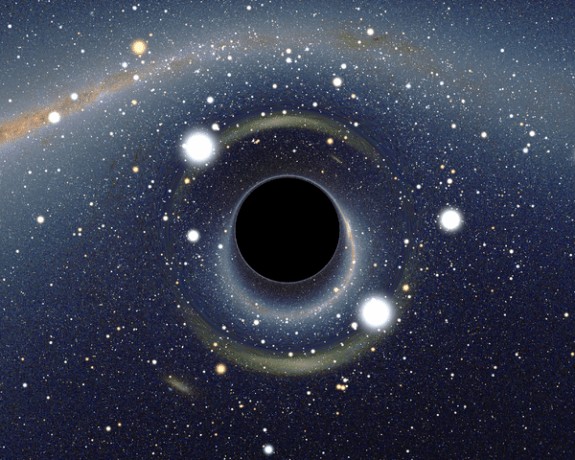
Simulated view of a black hole in front of the Large Magellanic Cloud. Note the gravitational lensing effect, which produces two enlarged but highly distorted views of the Cloud. Across the top, the Milky Way disk appears distorted into an arc.
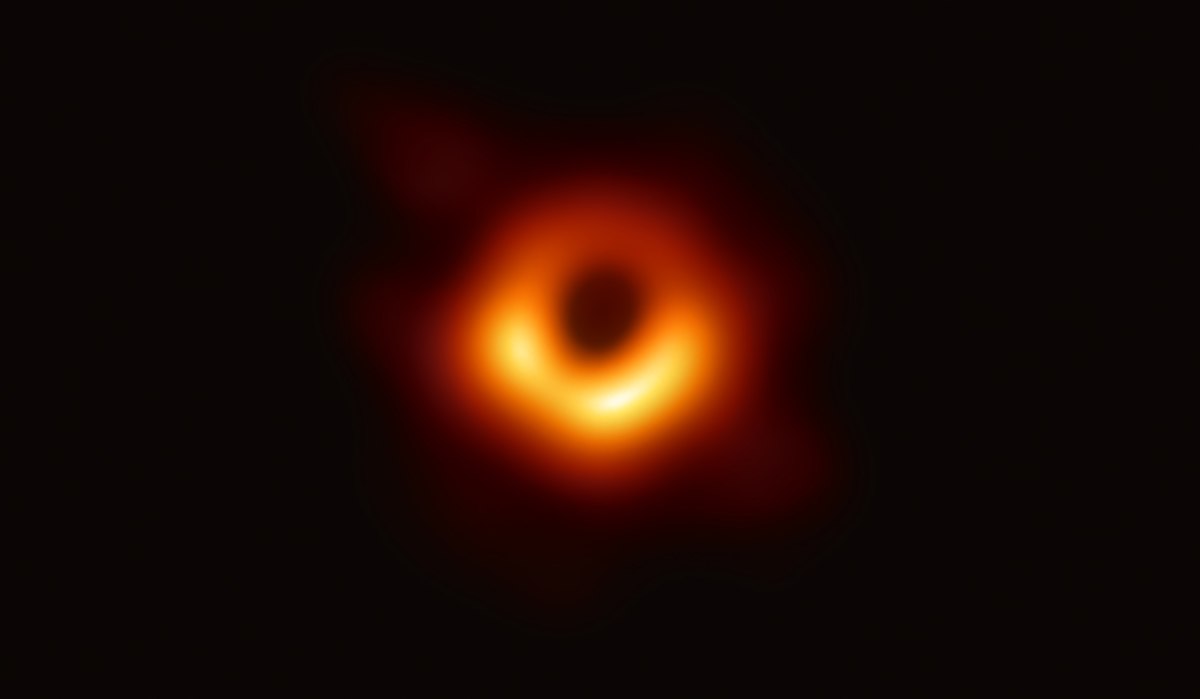
Astronomers have found and taken a photo of a black hole and yet there’s no live cams from the moon to earth. Typical, we should not be surprised, especially since there’s evidence of life on the bottom of the sea that we’ve not explored on earth, so why should it be a surprise that there’s no live streams coming from the moon, of earth. (Naughty Beaver asks)
Seriously this is incredible science to be able to get an imagine of something so far away from earth, with so many separate devices, all of which send a signal all that way back to various different research Astronomers, who then sort, interpret and collate massive amounts of data, into a cohesive picture of something, that up until now (if we’re to accept this science) has been entirely theoretic. A picture tells a thousand words, black holes are not fun.
The supermassive black hole at the core of supergiant elliptical galaxy Messier 87, with a mass ~7 billion times the Sun’s, as depicted in the first image released by the Event Horizon Telescope (10 April 2019). Visible are the crescent-shaped emission ring and central shadow, which are gravitationally magnified views of the black hole’s photon ring and the photon capture zone of its event horizon. The crescent shape arises from the black hole’s rotation; the shadow is about 2.6 times the diameter of the event horizon.
The science behind this black hole snap shot is really amazing, I’m not negating the incredible scientific achievement this deep space probing represents, certainly we need to learn about our universe and this presentation is astounding and mind-boggling.
A black hole is a region of spacetime exhibiting such strong gravitational effects that nothing—not even particles and electromagnetic radiation such as light—can escape from inside it. The theory of general relativity predicts that a sufficiently compact mass can deform spacetime to form a black hole. Wikipedia
Indra’s Net created using Blender 3D (blender.org)
Bodhisattva is a level of enlightenment to understand fractal patterns in the vibration of the universe as well as Indra’s Net and the very nature of the source but not the source itself, which is impossible, like seeing your own eyes with your eyes, it theoretically can’t be done.
In the Early Buddhist schools as well as modern Theravada Buddhism, a bodhisattva (Pali: bodhisatta) refers to anyone who has made a resolution to become a Buddha and has also received a confirmation or prediction from a living Buddha that this will be so.
“Imagine a multidimensional spider’s web in the early morning covered with dew drops. And every dew drop contains the reflection of all the other dew drops. And, in each reflected dew drop, the reflections of all the other dew drops in that reflection. And so ad infinitum. That is the Buddhist conception of the universe in an image.”
Indra’s Net: This image was designed by Stress Engineering Services in Cincinnati, OH to illustrate the need for an integrated, holistic approach to design that can anticipate the enormous and interconnected repercussions of change in a complex system. It depicts a sea of infinitely faceted jewels reflecting each other – change one jewel and its reflection is repeated in every other jewel.
The of study of Cymatics helps us visualize this concept in sound vibrations that everything has a pattern. Then imagine what is the substance in which the frequency wave is travelling, compared to the ocean except infinite and mathematically identical and repetitive like a fractal pattern.
Cornstarch and water solution under the influence of sine wave vibration
Cymatics, from the Ancient Greek: κῦμα, meaning, “wave”, is a subset of modal vibrational phenomena. The term was coined by Hans Jenny (1904-1972), a Swiss follower of the philosophical school known as anthroposophy. Typically the surface of a plate, diaphragm, or membrane is vibrated, and regions of maximum and minimum displacement are made visible in a thin coating of particles, paste, or liquid. Different patterns emerge in the excitatory medium depending on the geometry of the plate and the driving frequency.
A Bodhisattva would become aware of these concepts from meditation and by exploring the depths of consciousness, in a method of attaining awareness of the awareness. And realizing that there is only one consciousness.
Then the way to awaken oneself, is to awaken all beings. One’s imperfections are inexhaustible, vow to overcome them. The Dharma unknowable, vow to know it, and the way to enlightenment unattainable so vow to attain it. Such is the way of the Bodhisattva.
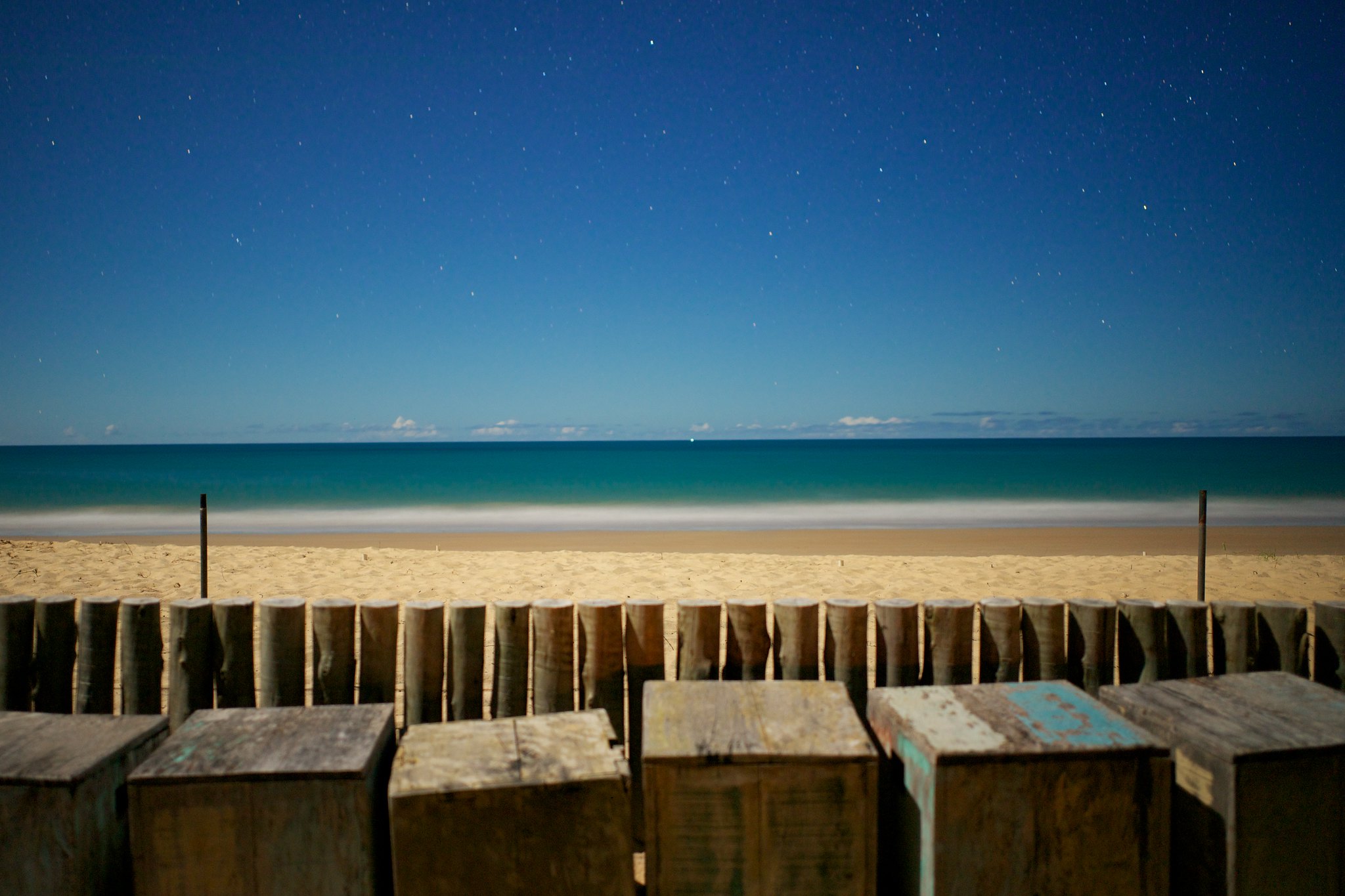
I’ve been missing Brazil lately and then while searching the public domain for a Brazil image came across this photo called Trancoso Night, in that moment I was inspired me to make this post because it’s one place I was not able to see yet and the best way I can remember to go back, is to do this make a new page about this magical place called Trancoso.
Trancoso is a district in the municipality of Porto Seguro in the state of Bahia, Brazil. The region was the landing point of the Portuguese explorer, Pedro Alvares Cabral onto Brazil, on April 22, 1500. It was founded by Jesuit Priests in 1583, with the name São João Baptista dos Indios. Wikipedia
Trancoso – Porto Seguro – Bahia – Brazil, by Michel Y.G. Meunier
Trancoso is famous for its white, semi-deserted beaches. Most of them are protected by reefs and form natural swimming pools at low tide.
Praia do Espelho (Mirror Beach)
This is the most famous beach of Trancoso, with powder white beaches and natural warm swimming pools created by reefs at low tide. Praia do Espelho is situated about a half an hour from Trancoso, following a winding dirt road that is only accessible during sunny weather.
Praia dos Coqueiros (Palmtree Beach)
Praia dos Coqueiros, or Palmtree Beach, is a small beach with medium waves and most of the time protected by coral reefs. This beach has the nickname Palmtree beach because of the more than hundred beautiful palmtrees that are typical for this region of Bahia.
Praia da Pedra Grande (Big Rock Beach)
This beach is about a kilometer away from Praia Coqueiros, it’s narrower than the other beaches and with fewer tourists. Praia Dos Coqueiros is the last beach where you will find restaurants, beachbars and some beach hotels. The more distant beaches are deserted and known locally as beaches to practice surfing and topless sunbathing.
Praia dos Nativos (Local beach)
Praias dos Nativos is one of the most famous beaches of Trancoso where you will find most of the beachbars and beach hotels
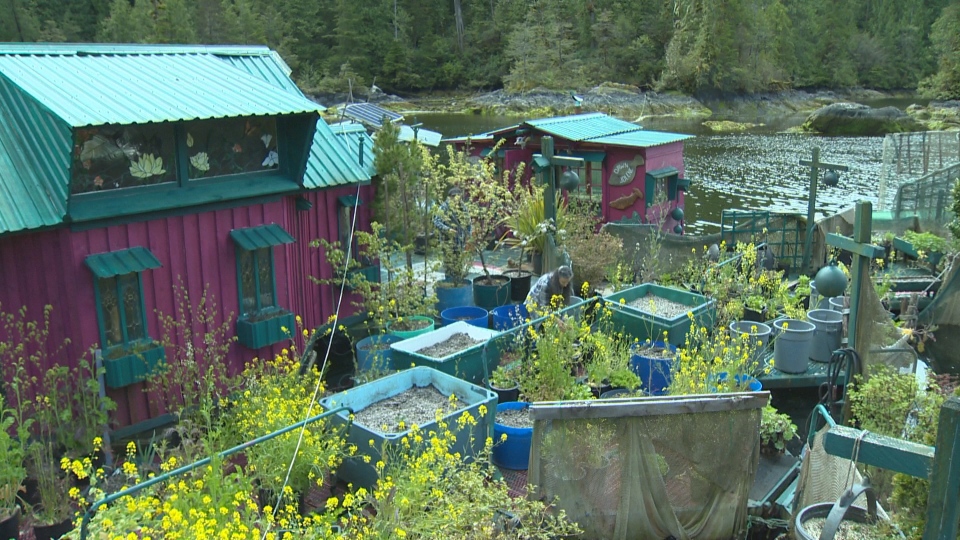
British Columbia is so vast that you constantly learn about or discover new incredible off-the-grid homesteads, such as Freedom Cove, Tofino, where the owners enjoy a holistic and balanced lifestyle and have flourished, right alongside Super Natural British Columbia.
For the over 25 years, B.C. couple Wayne Adams and Catherine King have been living on an artificial island that they created themselves. The island property floats majestically at the end of an isolated cove that is located a 30-minute boat ride away from Tofino.
Freedom Cove Tour: Magical Living on a Floating World
Deep in the remote wilderness of Clayoquot Sound, in the little bay called Freedom Cove live the artists Catherine and Wayne Adams.
Visit Freedom Cove with Browning Pass Charters and immerse yourself in a world of creative energy and good spirits.
Freedom Cove Float House, Tofino BC. Catherine & Wayne Adams live in the remote wilderness off Vancouver Island, BC, Canada on a floating “farm”. They sustain their lifestyle by growing most of their own food, including all their fruit and selling their art. Wayne is a carver and is constantly creating and recreating their home as a form of expression art. Catherine is also a carver who is the master mind behind the gardening and is also a painter and a writer.
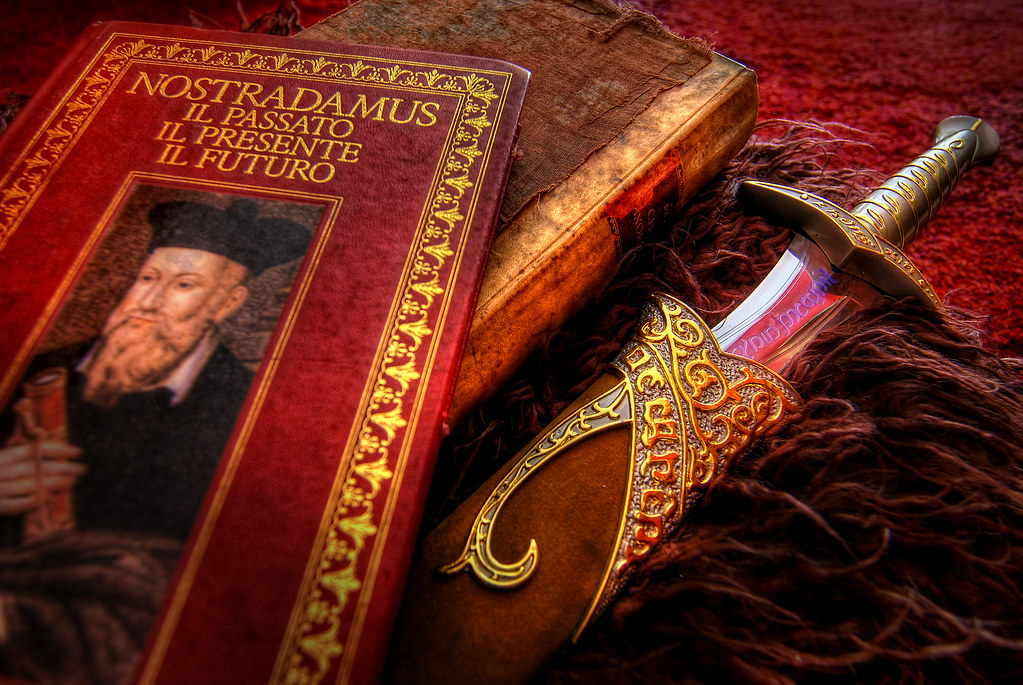
Naughty Beaver and the Nostradamus Prophecies is the very best logic of all the information on Youtube. Over the years I’ve consumed vast quantities of fresh video content, with a taste for truth from real people, or people whom I could relate to, whether I believed what they were saying or not, the list is long and the purveyors of ideas and information, very diverse. The Beaver’s story is clearly laid-out, with interpretations of prophecy, deciphering the mystery of all mysteries and weaves in Bible verse and current events to state his case.
If more people would hear what he is saying and consider that everything is backed with reason and prophecy. All this amazing story because Mr. Beaver was triggered by seeing images from the lost book of Nostradamus that was discovered in the Vatican, and then he sees a documentary about the discovery of the lost manuscript of Nostradamus, which exposed never before seen sketches and drawings, many of which were improved with artist rendering and clearly Nostradamus is telling a story using symbols.
Nostradamus had one clue written in English, a language that he did not know or use, it was written; “One man will know” and the corresponding drawing is of a man/beast with a scar on his face. In other symbols related to the “one man identity” he’s using the coat of arms of Nova Scotia, where Naughty Beaver was born and several other distinctive precognition that just can’t be explained, unless you accept that it is Naughty Beaver and he just explained to us all, what Nostradamus was saying.
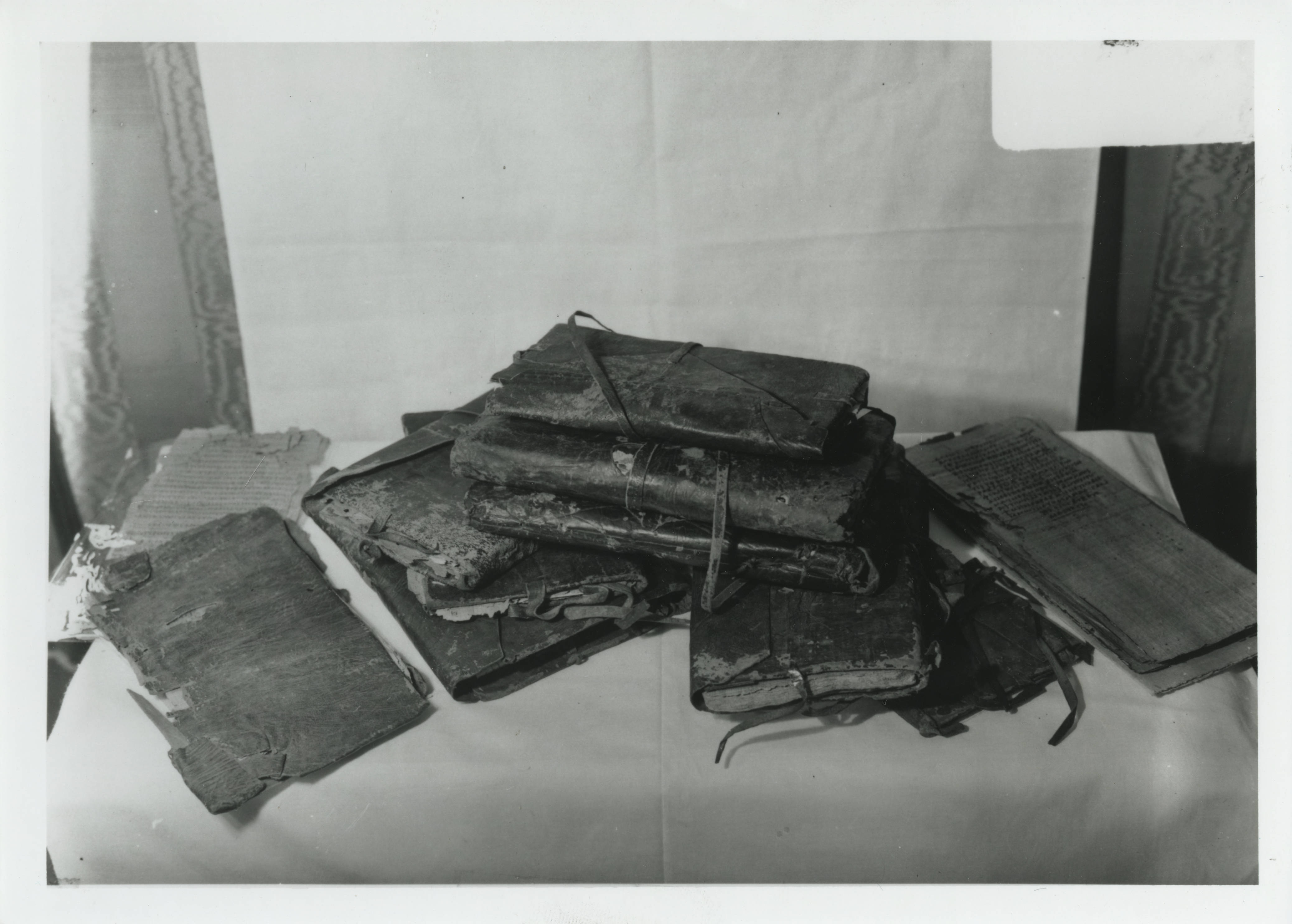
The Nag Hammadi Codices from Claremont Colleges Digital Library
Nag Hammadi library or the codices are they are called is, in my mind, the greatest untold story in modern history. Sure, it’s been revealed and somewhat released to the public but the entire truth has not been heard. The Gospel of Thomas for example is by itself miraculous.
The story of the discovery of the Nag Hammadi library in 1945 has been described as ‘as exciting as the contents of the find itself’. In December of that year, two Egyptian brothers found several papyri in a large earthenware vessel while digging for fertilizer around the Jabal al-Ṭārif caves near present-day Hamra Dom in Upper Egypt. Neither originally reported the find, as they sought to make money from the manuscripts by selling them individually at intervals. The brothers’ mother burned several of the manuscripts, worried, apparently, that the papers might have ‘dangerous effects’ (Markschies, Gnosis, 48). As a result, what came to be known as the Nag Hammadi library (owing to the proximity of the find to Nag Hammadi, the nearest major settlement) appeared only gradually, and its significance went unacknowledged until some time after its initial discovery.
In 1946, the brothers became involved in a feud, and left the manuscripts with a Coptic priest. His brother-in-law in October that year sold a codex to the Coptic Museum in Old Cairo (this tract is today numbered Codex III in the collection). The resident Coptologist and religious historian Jean Doresse, realizing the significance of the artifact, published the first reference to it in 1948. Over the years, most of the tracts were passed by the priest to Phokion J. Tanos. a Cypriot antiques dealer in Cairo, thereafter being retained by the Department of Antiquities, for fear that they would be sold out of the country. After the revolution in 1952, these texts were handed to the Coptic Museum in Cairo, and declared national property. Pahor Labib, the director of the Coptic Museum at that time, was keen to keep these manuscripts in their country of origin.
Nag Hammadi Codex IV papyrus page 26
Meanwhile, a single codex had been sold in Cairo to a Belgian antiques dealer. After an attempt was made to sell the codex in both New York City and Paris, it was acquired by the Carl Gustav Jung Institute in Zurich in 1951, through the mediation of Gilles Quispel. It was intended as a birthday present to the famous psychologist; for this reason, this codex is typically known as the Jung Codex, being Codex I in the collection.
Jung’s death in 1961 resulted in a quarrel over the ownership of the Jung Codex; the pages were not given to the Coptic Museum in Cairo until 1975, after a first edition of the text had been published. The papyri were finally brought together in Cairo: of the 1945 find, eleven complete books and fragments of two others, ‘amounting to well over 1000 written pages’ are preserved there.
Bamboo has been used in China, India and throughout the tropics around the globe for centuries. As a construction material once you understand it’s superior qualities and it’s suitability for certain jobs, why use anything else? Maybe it’s because we don’t have bamboo growing naturally in Europe and North America and bamboo is being used in a major populated areas but often for the wrong purpose (scaffolding) and not as a design feature.
Crazy cool fact about flowering bamboo is that all plants of one species develop flowers at the same time, no matter where they are located in the world.
Bamboo is not well suited for mass producing apartment buildings, or cookie cutter box style houses en mass, since everything to do with Bamboo is custom, one stick at a time but that’s what makes it so great and unique for building with but it’s the superior quality construction material that makes it one of the most Super-Awesome plants on earth.
Bamboos seldom and unpredictably flower, and the frequency of flowering varies greatly from species to species. Once flowering takes place, a plant declines and often dies entirely. In fact, many species only flower at intervals as long as 65 or 120 years.
Any plant derived through clonal propagation from this cohort will also flower regardless of whether it has been planted in a different location. The longest mass flowering interval known is 130 years, and it is for the species Phyllostachys bambusoides (Sieb. & Zucc.). In this species, all plants of the same stock flower at the same time, regardless of differences in geographic locations or climatic conditions, and then the bamboo dies.
The lack of environmental impact on the time of flowering indicates the presence of some sort of “alarm clock” in each cell of the plant which signals the diversion of all energy to flower production and the cessation of vegetative growth. This mechanism, as well as the evolutionary cause behind it, is still largely a mystery.
Interesting facts about bamboo:
There are 1,500 species of bamboo that can be found in Asia, Australia, North and South America and Sub-Saharan Africa.
Bamboo is the fastest growing plant on the planet. Bamboo grows at 2 inches an hour. Some species grow one and a half meters a day.
Bamboo strands release 35% more oxygen than equivalent stands of trees.
Some bamboo even sequester up to 12 tons of carbon dioxide from the air per hectare.
Bamboo can also lower light intensity and protects against ultraviolet rays.
Bamboo is a pioneering plant and can be grown in soil damaged by overgrazing and poor agricultural techniques.
Bamboo’s tensile strength is 28,000 pounds per square inch versus 23,000 pounds per square inch for steel.
One clump can produce 200 poles in the three to five years.
Bamboo can be harvested in 3-5 years versus 10-20 years for most softwoods.
The largest species of bamboo can reach 130 feet in height.
Some species of bamboo develop flowers after 65 or 120 years.
A wonderful resource for understanding bamboo and bamboo treatment is Bamboo Central, founded by Linda Garland and her son, Arief Rabik.
Bamboo U and Ibuku Design from Indonesia
Bamboo U is for you if your mind is ready for the coolest school for learning bamboo construction techniques on earth. And see firsthand the work of the company Ibuku which is the bespoke luxury home designers that grew as an entrepreneurial off-shoot of Bamboo U.
Bamboo Distribution
Most bamboo species are native to warm and moist tropical and warm temperate climates, However, many species are found in diverse climates, ranging from hot tropical regions to cool mountainous regions and highland cloud forests.
In the Asia-Pacific region they occur across East Asia, from north to 50 °N latitude in Sakhalin, to south to northern Australia, and west to India and the Himalayas. China, Japan, Korea, India and Australia, all have several endemic populations. They also occur in small numbers in sub-Saharan Africa, confined to tropical areas, from southern Senegal in the north to southern Mozambique and Madagascar in the south.
In the Americas, bamboo has a native range from 47 °S in southern Argentina and the beech forests of central Chile, through the South American tropical rainforests, to the Andes in Ecuador near 4,300 m (14,000 ft). Bamboo is also native through Central America and Mexico, northward into the Southeastern United States, Canada and continental Europe are not known to have any native species of bamboo. As garden plants, many species grow readily outside these ranges, including most of Europe and the United States.
Recently, some attempts have been made to grow bamboo on a commercial basis in the Great Lakes region of east-central Africa, especially in Rwanda. In the United States, several companies are growing, harvesting, and distributing species such as Phyllostachys nigra (Henon) and Phyllostachys edulis (Moso).
Bamboo, like true wood, is a natural composite material with a high strength-to-weight ratio useful for structures.
In its natural form, bamboo as a construction material is traditionally associated with the cultures of South Asia, East Asia, and the South Pacific, to some extent in Central and South America, and by extension in the aesthetic of Tiki culture. In China and India, bamboo was used to hold up simple suspension bridges, either by making cables of split bamboo or twisting whole culms of sufficiently pliable bamboo together. One such bridge in the area of Qian-Xian is referenced in writings dating back to 960 AD and may have stood since as far back as the third century BC, due largely to continuous maintenance.
Bamboo has also long been used as scaffolding; the practice has been banned in China for buildings over six stories, but is still in continuous use for skyscrapers in Hong Kong. In the Philippines, the nipa hut is a fairly typical example of the most basic sort of housing where bamboo is used; the walls are split and woven bamboo, and bamboo slats and poles may be used as its support. In Japanese architecture, bamboo is used primarily as a supplemental and/or decorative element in buildings such as fencing, fountains, grates, and gutters, largely due to the ready abundance of quality timber.
Various structural shapes may be made by training the bamboo to assume them as it grows. Squared sections of bamboo are created by compressing the growing stalk within a square form. Arches may similarly be created by forcing the bamboo’s growth into the desired form, costing much less than it would to obtain the same shape with regular wood timber. More conventional forming methods, such as the application of heat and pressure, may also be used to curve or flatten the cut stalks.
Bamboo can be cut and laminated into sheets and planks. This process involves cutting stalks into thin strips, planing them flat, and boiling and drying the strips; they are then glued, pressed, and finished. Long used in China and Japan, entrepreneurs started developing and selling laminated bamboo flooring in the West during the mid-1990s; products made from bamboo laminate, including flooring, cabinetry, furniture, and even decorations, are currently surging in popularity, transitioning from the boutique market to mainstream providers such as Home Depot. The bamboo goods industry (which also includes small goods, fabric, etc.) is expected to be worth $25 billion by 2012. The quality of bamboo laminate varies among manufacturers and varies according to the maturity of the plant from which it was harvested (six years being considered the optimum); the sturdiest products fulfill their claims of being up to three times as hard as oak hardwood while others may be softer than standard hardwood.
Bamboo intended for use in construction should be treated to resist insects and rot. The most common solution for this purpose is a mixture of borax and boric acid. Another process involves boiling cut bamboo to remove the starches that attract insects.
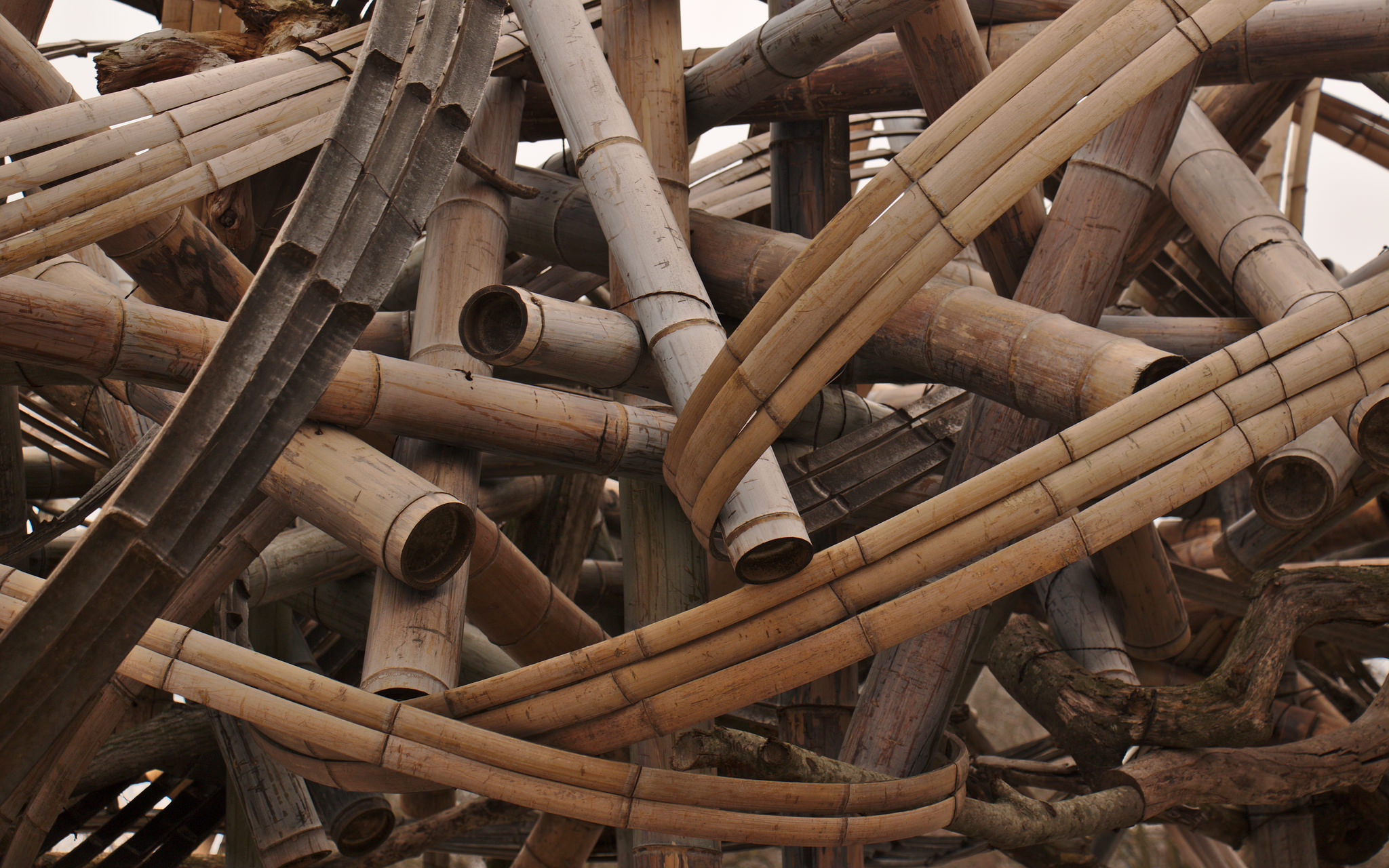
Bamboo pavilion in the Shenzhen Biennale 2009
Bamboo has been used as reinforcement for concrete in those areas where it is plentiful, though dispute exists over its effectiveness in the various studies done on the subject. Bamboo does have the necessary strength to fulfil this function, but untreated bamboo will swell with water absorbed from the concrete, causing it to crack. Several procedures must be followed to overcome this shortcoming.
Several institutes, businesses, and universities are researching the use of bamboo as an ecological construction material. In the United States and France, it is possible to get houses made entirely of bamboo, which are earthquake- and cyclone-resistant and internationally certified. Three ISO standards are given for bamboo as a construction material.
In parts of India, bamboo is used for drying clothes indoors,
both as a rod high up near the ceiling to hang clothes on, and as a
stick wielded with acquired expert skill to hoist, spread, and to take
down the clothes when dry. It is also commonly used to make ladders,
which apart from their normal function, are also used for carrying
bodies in funerals. In Maharashtra, the bamboo groves and forests are called Veluvana, the name velu for bamboo is most likely from Sanskrit, while vana means forest.
Furthermore, bamboo is also used to create flagpoles for saffron-coloured, Hindu religious flags, which can be seen fluttering across India, especially in Bihar and Uttar Pradesh, as well as in Guyana and Suriname in South America.
Bamboo was used for the structural members of the India pavilion at Expo 2010 in Shanghai. The pavilion is the world’s largest bamboo dome, about 34 m (112 ft) in diameter, with bamboo beams/members overlaid with a ferro-concrete slab, waterproofing, copper plate, solar PV panels, a small windmill, and live plants. A total of 30 km (19 mi) of bamboo was used. The dome is supported on 18-m-long steel piles and a series of steel ring beams. The bamboo was treated with borax and boric acid as a fire retardant and insecticide and bent in the required shape. The bamboo sections were joined with reinforcement bars and concrete mortar to achieve the necessary lengths.





![The supermassive black hole at the core of supergiant elliptical galaxy Messier 87, with a mass ~7 billion times the Sun's,[1] as depicted in the first image released by the Event Horizon Telescope (10 April 2019).[2][3][4] Visible are the crescent-shaped emission ring and central shadow, which are gravitationally magnified views of the black hole's photon ring and the photon capture zone of its event horizon. The crescent shape arises from the black hole's rotation; the shadow is about 2.6 times the diameter of the event horizon.[3]](https://i0.wp.com/www.siliconpalms.com/wp-content/uploads/2019/04/1200px-Black_hole_-_Messier_87.jpg)












You must be logged in to post a comment.