Author: Aaron

  • The Coquihalla: 20 Months Through the Mountains

    The Coquihalla: 20 Months Through the Mountains

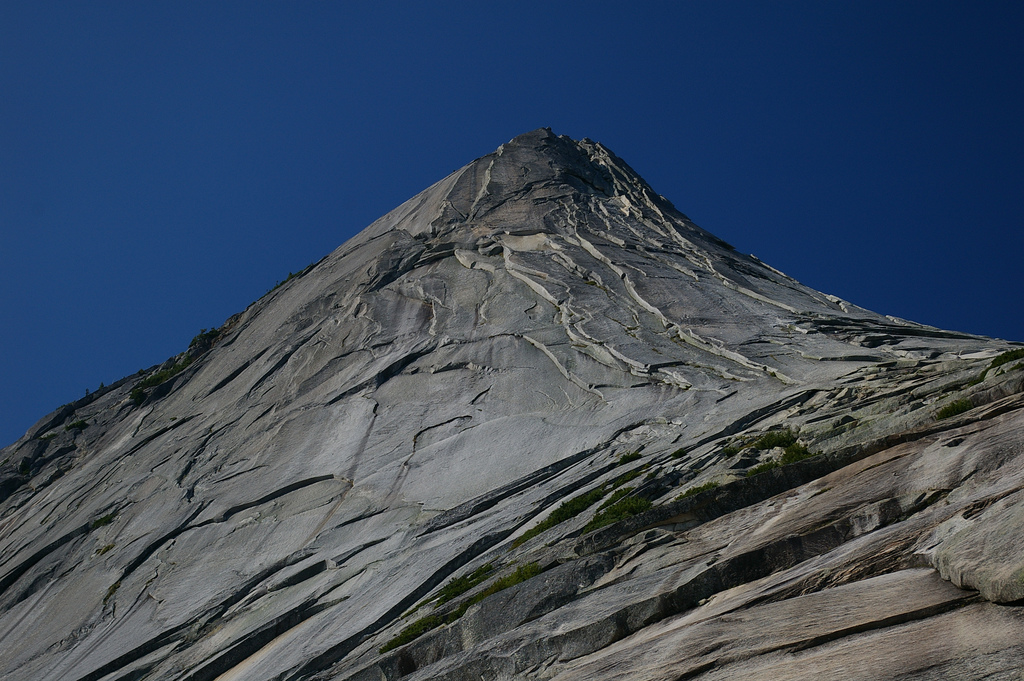
    Yak Peak on the Coquihalla Pass

    The Coquihalla is the name of the highway that connects Vancouver to the Okanagan Valley, an absolute marvel of road building and maintenance, there’s even been a show created around winter time problems on that road. I like the video called The Coquihalla: 20 Months Through the Mountains – a 1985 film about the construction of the highway.

    The film above was created in 1985 and depicts some of the jobs I was working back in that day, such as operating earth moving equipment and drilling and blasting, this was work I was involved in as a young man. Growing up in British Columbia, the Coquihalla was a really big deal.

    Highway Thru Hell is a Canadian reality TV show that follows the operations of Jamie Davis Motor Trucking, a heavy vehicle rescue and recovery towing company based in Hope, British Columbia. Quiring Towing, Aggressive Towing and Mission Towing are also big players in the series. The show focuses on the hardships of operating along the highways of the BC Interior, especially the Coquihalla Highway (Coq).

    Coquihalla Summit Recreation Area. Zoa Peak Trail

    Coquihalla Summit Rest Area (el. 1,244 m or 4,081 ft) is a highway summit along the Coquihalla Highway in British Columbia, Canada. It is the highest point on the highway between the cities of Hope and Merritt. It is located just south of the former toll booth plaza on the Coquihalla Highway, about 50 km (31 mi) north of Hope, and 65 km (40 mi) south of Merritt and is the divide between the Coquihalla River and the Coldwater River.

    Coquihalla Summit is the Surrey Lake Summit at 1444 m (4738) and is the highest point on the Coquihalla which goes from Hope to the highway 1 interchange outside of Kamloops.

    The ascent to the Coquihalla Summit is very steep, especially from the south, and is particularly steep north of the Great Bear snow shed. The pass is named after the Coquihalla River, from which the highway also derived its name. The Coquihalla Summit Recreation Area is located at the top of the pass on the Coquihalla Highway, approximately 45 km (28 mi) north of Hope.

    Coquihalla Box Canyon Chain Up Area
    Coquihalla Box Canyon Chain Up Area

    History

    Kw’ikw’iya:la (Coquihalla) in the Halq’emeylem language of the Stó:lō, is a place name meaning “stingy container.” It refers to a fishing rock near the mouth of what is now known as the Coquihalla River. This rock is a good platform for spearing salmon. According to Sto;lo oral history, the skw’exweq (water babies or naiads, underwater people) who inhabit a pool close by the rock, would swim out and pull the salmon off the spears, allowing only certain fisherman to catch the salmon.

    Coquihalla
    Coquihalla

    The Coquihalla Valley has long been a major transportation route from the coast to the interior. in 1876, the Hope-Nicola Trail was built. The area retains some remnants of the Kettle Valley Railway which travelled this route from early 1900s until 1961. Modern use of the pass began in 1986 after construction of the first phase of the Coquihalla Highway (from Hope to Merritt). Construction of this part of the Coquihalla Highway was spearheaded by Tom Waterland as MLA for Yale-Lillooet. His “conviction that the route provided important benefits and an essential link to B.C.’s Interior… helped to convince reluctant Cabinet members of the necessity of the third route to the Interior”.  After 10 years in office, Waterland retired from the Cabinet in 1986 a few months after seeing this part of the project through to its completion. Some of the old railroad grade is now part of the Trans-Canada Trail network, including the Othello Tunnels of the Coquihalla River section, which are accessible via exits from the Coquihalla Highway. A series of protected areas were established along the route in 1986.

    Following nine days of snowfall in February 2014, there was a Class 4 avalanche across the Coquihalla Highway, 33 kilometres (21 mi) north of Hope on February 20, 2014 which required the use of explosives, dropped from helicopters, and took three days to clear.

    Yak Peak Photo credit: Tim Gage on Visualhunt.com / CC BY-SA – Zoa Peak Trail Photo credit: Sworldguy on VisualHunt / CC BY-NC-SA – Box Canyon Photo credit: TranBC on VisualHunt / CC BY-NC-ND Coquihalla Photo credit: Murray Foubister on Visualhunt.com / CC BY-SA

  • Slack Chat for Collaboration

    Slack Chat for Collaboration

    Slack

    Sometime ago I began testing Slack Chat or just Slack as it’s called, for collaboration on projects with people from different parts of the world. By far the best system for aggregating documents and media related to projects and it has a snappy messenger but I want to learn how to integrate Slack Chat into my wordpress websites, for communication with readers.

    This post is dedicated to my experience with Slack Chat and also I should say that I have tried and tested most every Instant messenger and and always seeking the best tools for collaboration, most recently I’m enjoying Discord and have been learning Teelgram. In the past Skype has been my main tool but Google Hangouts and Zoom are in t here too.

    On mobile phone I think that WeChat is superior but I like the ease of WhatsApp and again Skype is a main go-to, but also tried many others and even like an encrypted secure platform of Signal.

    What an octopus of online services, recently I saw a site to help manage remote storage overload. This didn’t surprise me because I was wondering how much redundant useless media I have on Dropbox, One Drive and Google Drive, plus a couple others I have but those 3 are huge spaces that I need another app to manage the duplicate removal and stop waste.

    My hope was that Slack Chat would become capable of solving a variety of communication, management and collaboration challenges that could always be improved to increase efficiency and save time.

    UPDATE: Now that I’ve done the integration of Slack Chat into this WordPress platform and learned how it works and how easy it is to install, I realized that my purpose for Slack is collaboration, not customer support chat, which is more descriptive of how Slack Chat is connected, which is outstanding for that task.

    Slack for project collaboration is excellent, just as it is. : )

  • Luo Brothers  – Welcome to the world’s famous brands

    Luo Brothers – Welcome to the world’s famous brands

    Luo Brothers - Welcome to world's famous brands
    Luo Brothers – Welcome to the world’s famous brands

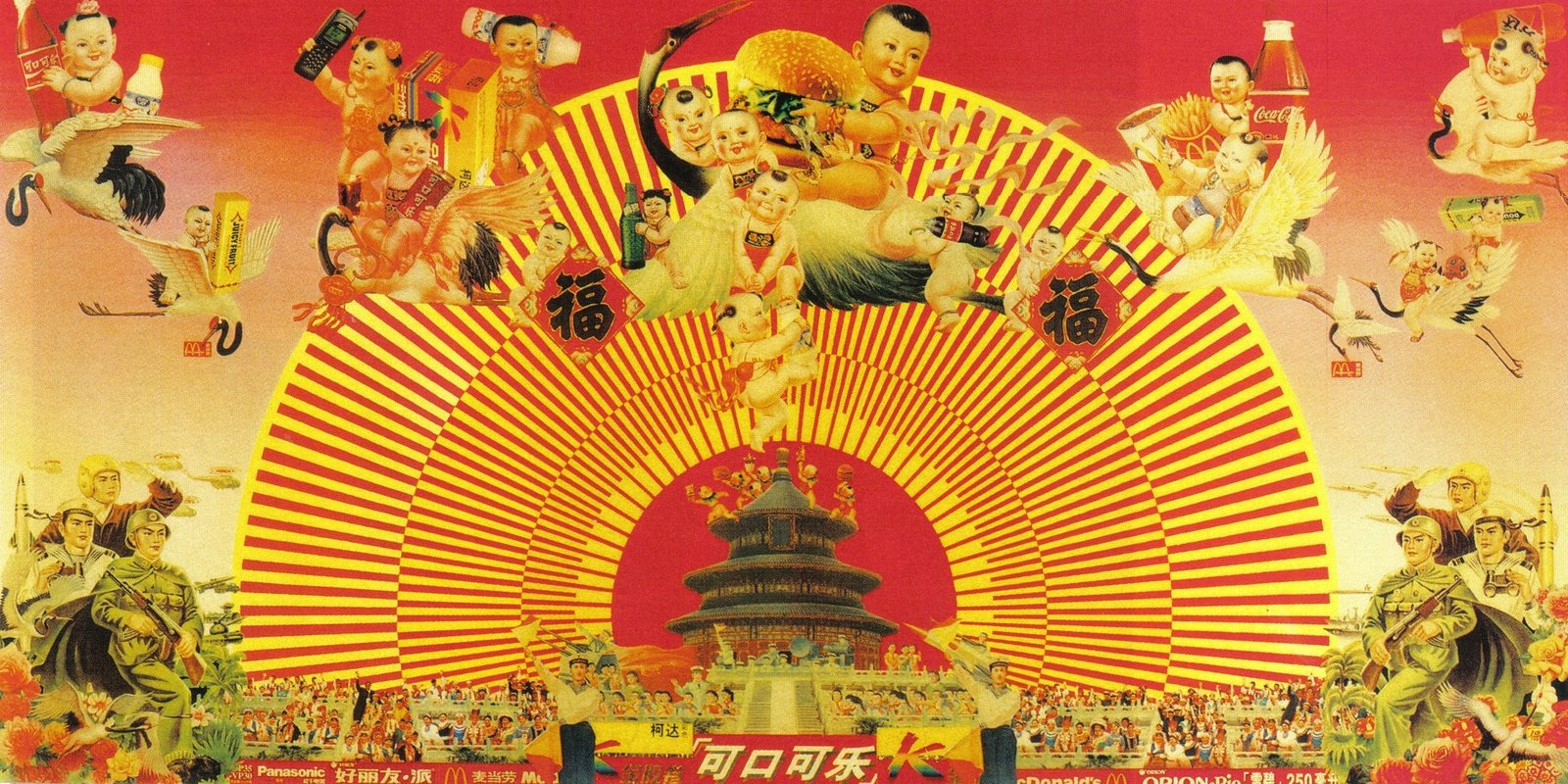
    While waiting to meet a colleague in Hong Kong, I was served an espresso, chocolate wafer and sparkling water in small conference room of UBS, on the wall was an original Luo Brothers piece from the collection called “Welcome to the world’s famous brands. The Swiss bank UBS are the owners of a collection of paintings, photographs, drawings, sculptures and video art by some of the world’s major artists from 1960 onward and are recognized as having one of the most important corporate collections of contemporary art in the world.

    Luo Brothers are a Chinese artist trio best known for their Pop Art take on propaganda and kitsch items produced during the Cultural Revolution in China. They often create collaged images in rich reds replete with flowers, chubby babies, fish, and fruit, which are then screenprinted and lacquer painted. The Luo Brothers also create painted fiberglass sculptures of children which are figures from Chinese advertisements. Consisting of three brothers, Luo Wei Dong (b. 1963), Luo Wei Bing (b. 1964), and Luo Wei Guo (b. 1972) from Nanning, China, they went on to attend the Guangxi Academy of Art, the Guangzhou Academy of Fine Art, and the Central Academy of Applied Arts.

    The artists began their collaboration during the mid-1990s, and their work is meant to serve as a barometer of the socio-economic and cultural change in China rather than a critique of either Communism or Capitalism. The visibility of art by Robert Rauschenberg and Jeff Koons in China in the late 1980s proved to be a powerful influence on the Luo Brothers’ development of yansu, or “gaudy,” art. Their works are in the collections of the Denver Art Museum, the San Francisco Museum of Modern Art, and the Fukuoka Art Museum in Japan, among others. The brothers live and work in Beijing, China. Source: Artnet

    Photo credit: Orion Martin on Visualhunt.com / CC BY-NC-SA

  • iBankEX Mobile App is Live

    iBankEX Mobile App is Live

    Downtown Vancouver Sunset as iBankEX Mobile App is Live
    Downtown Vancouver Sunset

    VANCOUVER, BC / ACCESSWIRE / March 15, 2019 / iBank Digital Asset L.P. (“iBank Digital”, “iBankEX” or the “Company”) announced the launch of the new iBankEX app now available on iOS and Android mobile devices. This new mobile app will give users access to 150+ crypto assets to trade with USDT, BTC and ETH.

    The iBankEX mobile app and website are both supported by Huobi Cloud Technology, making it safe, secure and hassle free. (Download the App at https://www.ibankex.io/en-us/download/)

    “Users these days are tech savvy and are constantly on their mobile devices. The launch of the iBankEX mobile app allows our sophisticated users easy access to their accounts and to trade cryptocurrencies whenever they want,” said David Yoo, Managing Director of iBank Digital. “Our continued partnership with Huobi Cloud Technology gives our users the assurance of a safe, secure and convenient platform to manage their digital assets.”

    About iBankEX

    iBankEX, one of Vancouver’s very first peer to peer (P2P) over the counter (OTC) crypto and bitcoin exchange that has been supported by Huobi Cloud Technology, was officially launched on February 6, 2019 . The iBankEX platform has been based in Vancouver, Canada, and it was launched to ensure it is able to facilitate the proper underwriting of crypto trading that has been supported by the Huobi Cloud. And from this, they have been able to lend through the very first global lending network within the open decentralized platforms. iBankEX have established an efficient and intuitive new trading platform that can be explored by their digital currency users spread across the globe. www.ibankex.io

    About Huobi Cloud

    Huobi Cloud is owned by Huobi Group, the world’s leading blockchain company and one of world’s largest digital asset trading platforms. Established in 2013, Huobi Group’s accumulative turnover exceeds US $1 trillion. It proudly provides safe, secure, and convenient cryptocurrency trading and asset management services to millions of users in 130+ countries. “Bring more efficiency to finance and more freedom to wealth” is the mission of Huobi Group. It always follows the management theory of putting the customer first.

    Risk Warning: Digital assets are a higher-risk investment method. Investors should be cautious in purchasing and pay attention to investment risks.

    For further information, please contact:

    Fanny (Ly) Travis

    Corporate Secretary 
    Phone: 604-689-0618
    Email: info@ibankex.io 
    LinkedIn: https://www.linkedin.com/company/ibankdigitalasset/ 
    Facebook: https://www.facebook.com/ibankdigitalasset/ 
    Twitter: https://twitter.com/iBank_Digital 
    Instagram: https://www.instagram.com/ibankdigital/ 
    Telegram: https://t.me/joinchat/AAAAAEX9MnpJwwyaOFf5_w 
    Medium: https://medium.com/@iBank_Digital 
    Weibo: https://weibo.com/ibankdigital

    SOURCE: iBank Digital Asset L.P.

    iBankEX Mobile App Photo credit: MagnusL3D on Visualhunt / CC BY-SA

  • Superfoods and Medium Chain Triglycerides

    Superfoods and Medium Chain Triglycerides

    Nature, Macro, Blueberry, Blue Superfood

    A blueberry can be defined as a “superfood” however that’s not it alone, the idea is to extract the raw energy fluids from organically grown food and combine them into a concoction that maximizes the benefits of each and every ingredient, boost absorption by ingesting MCT oils that have been derived from natural sources, then add Ormus for superfood dessert.

    blueberries superfood

    Medium chain triglycerides (MCTs) are partially man-made fats. The name refers to the way the carbon atoms are arranged in their chemical structure. MCTs are generally made by processing coconut and palm kernel oils (superfood) in the laboratory. Usual dietary fats, by comparison, are long-chain triglycerides.

    Along comes Ormus, a naturally occurring elemental state of matter. Ormus itself is not a material; every element and mineral has an “Ormus state” which exhibits nanoscale properties and phenomena, including: increased membrane permeability, higher melting point, altered electrical potentials, and different atomic structures.The word “Ormus” is not ours and does little to explain the true nature of these minerals. The word “Ormus” is a corruption of the acronym ORME’s, a term coined by David Radius Hudson which stands for “Orbitally Rearranged Monatomic Elements”.

    Monatomic blueberry superfood

    Atomically Separated Inductive Natural Elements

    A.S.I.N.E. Ocean Minerals are extracted from the West Coast of British Columbia through our patented Atomic Separation® process which isolates inductive material. After being extensively filtered and sterilized, our superfood products consist of naturally occurring elements that can revitalize the body and mind. See: A.S.I.N.E. Ocean Mineral Substrate

    Photo credit: PMillera4 on Visualhunt.com / CC BY-NC-ND

  • Quantum Jumping to Enlightenment

    Quantum Jumping to Enlightenment

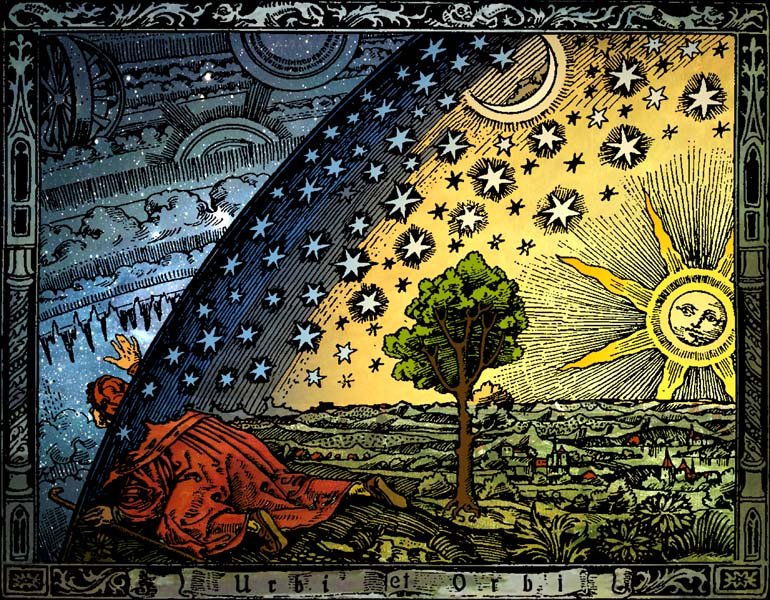
    L'Atmosphere: Météorologie Populaire (Paris, 1888) - Quantum jumping
    Colour adaptation of the original by Camille Flammarion (1842-1925).- L’atmosphère : météorologie populaire, Hachette, Paris, 1888

    Today the magic of the Internet fed me some new food for thought, as I stumbled on a video I had been watching a video called “Enlightenment” on Youtube so several weeks ago, and just today got back to it and after only 5 minutes it expanded my mind with the terminology “Quantum Jumping”.

    Random searching that keyword phrase and the word Gnosis when I noticed the thumbnail for this image from 1888 that completely captured my senses, perfect for an illustration of the impossible to explain, which when colour was added became a Quantum Jump poster (in my opinion). Hope this triggers you to jump.

    The Flammarion engraving is a wood engraving by an unknown artist that first appeared in Camille Flammarion‘s L’atmosphère: météorologie populaire (1888). The image depicts a man crawling under the edge of the sky, depicted as if it were a solid hemisphere, to look at the mysterious Empyrean beyond. The caption translates to “A medieval missionary tells that he has found the point where heaven and Earth meet…”

    What does quantum jumping mean? An abrupt transition of a system described by quantum mechanics from one of its discrete states to another, as the fall of an electron in an atom to an orbit of lower energy. any sudden and significant change, advance, or increase.

  • Bosnian Valley of the Pyramids

    Bosnian Valley of the Pyramids

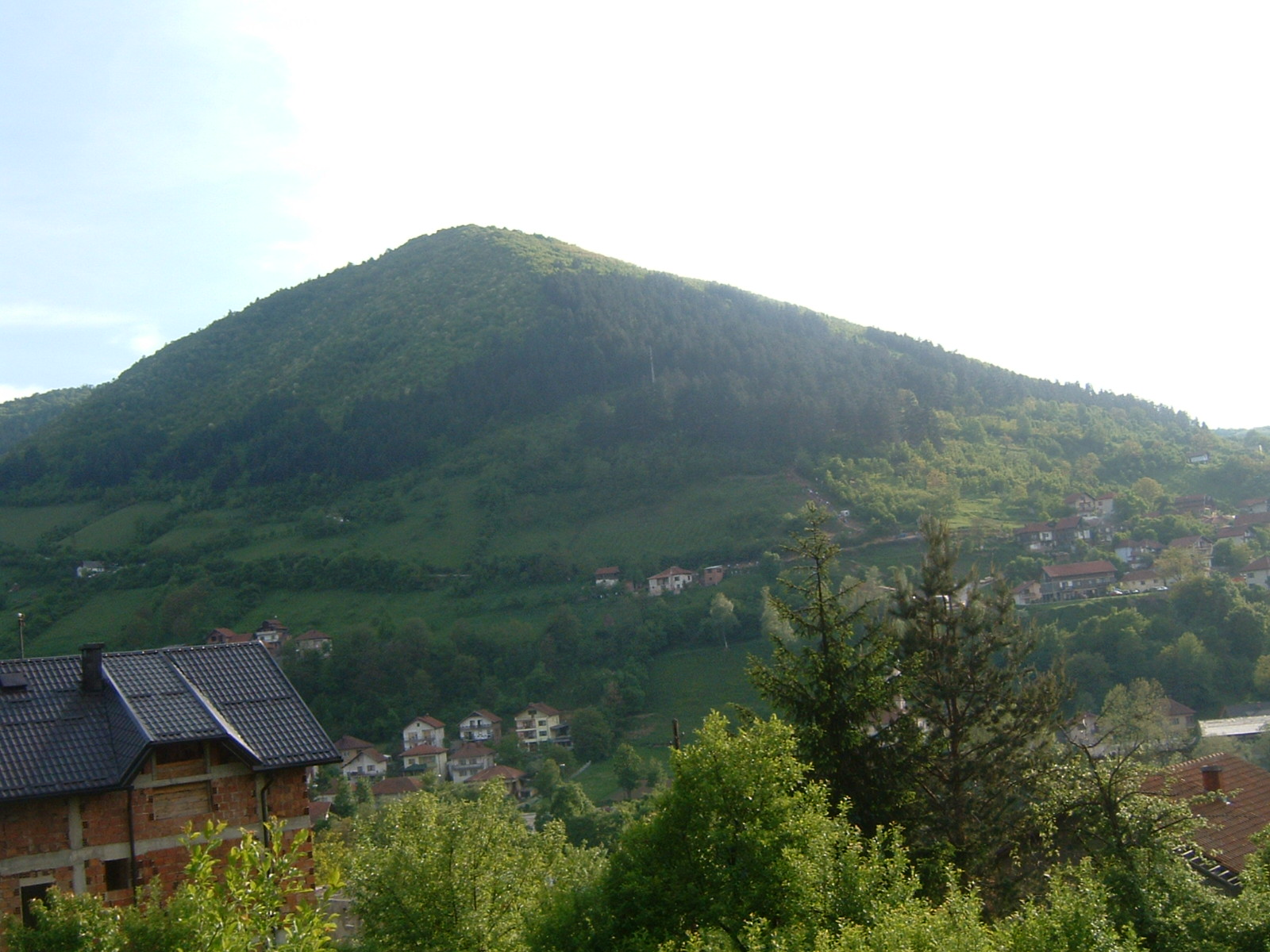
    Bosnian Pyramid
    Visoko, Bosnia-Herzegovina

    Surprising how even with the Internet a story like a the Bosnian Pyramid discovery could have skipped my attention. My entire life I’ve been fascinated with pyramids and for as long as I can remember knew instinctively that the Egyptian Pyramid history (his story) was myth but recently I first learned about this amazing 2005 discovery, that everyone on earth should be talking about, the Bosnian valley of the pyramids.

    Sam Osmanagich, Ph.D. Discovered

    Bosnian Valley of the Pyramids

    Sam Osmanagich, Ph.D., Anthropology Professor and director of Center for Anthropology and archaeology at the American University in Bosnia-Herzegovina. Foreign Member of the distinguished Russian Academy of Natural Sciences (2010), with dozens of Nobel Prize winners in its membership.

    Discoverer of the Bosnian Pyramid complex in central Bosnia (2005). Member of the Archaeological Society of Alexandria (2006). Author of 13 books on ancient history and pyramids.  Renowned pyramid researcher on five continents. “Almost everything they teach us about the ancient history is wrong”, has became his famous lecture-opener.

    Media appearances: CNN (breaking news in 2006), 30-minute special  about his work on ABC, BBC, National Geographic, History Channel, most of the European TV channels.

    Author and narrator of 12-epizode documentary “Search for the Lost Civilizations” based on his book Civilizations before beginning of the official history and filmed in Peru, Easter Island, Bolivia, Costa Rica, Mexico, Germany, France, UK, Malta, Bosnia, Egypt, Lebanon and Jordan. “Ancient megalithic sites can be understood only if viewed through the physical, energy and spiritual realms at the same time”, claim Osmanagich.

    Principal investigator of inter-disciplinary scientific project “Bosnian Valley of the Pyramids” (2005 – to Present) which has become the most active archaeological site in the World. Established non-profit “Archaeological Park: Bosnian Pyramid of the Sun” Foundation for archaeological research (2005). Hundreds of volunteers, from six continents, come every summer to help uncover the biggest pyramids on the Planet.” Project is open to everyone, no elite science”. Osmanagich lectures all over the world.

    Discovery of Bosnian Valley of the Pyramids forever changes our view of ancient history: (1) these are the first pyramids in Europe, (2) they have the most precise orientation to the cosmic north, (3) pyramid is covered by the most quality concrete, (4) these pyramids are the largest on the Planet, (5) radiocarbon dating confirmed them to be the oldest. Recent measurements on top of the Bosnian Pyramid of the Sun (2010-2102) have confirmed existence of energy beam, electromagnetic and ultrasound fields, proving the pyramid to be energy emitter and receiver.

    Osmanagich has been a president of the Met Company, Inc. a manufacturing plant in Houston with 100 employees since 1995. Osmanagich has become a first “honorary citizen” of the Town of Visoko in 2006. Daily newspaper „San” from Sarajevo awarded Osmanagich title „Man of the Year 2007 in Bosnia-Herzegovina” for his research project Bosnian Valley of the Pyramids and affirmative promotion of Bosnia-Herzegovina in the world.

    His personal official web site: www.samosmanagich.com

    Foundation’s official web site: www.bosnianpyramidofthesun.com

    Photo credit: EmxBA on Visualhunt / CC BY-SA

  • Sounds Like I want to hear more Angus & Julia Stone

    Sounds Like I want to hear more Angus & Julia Stone

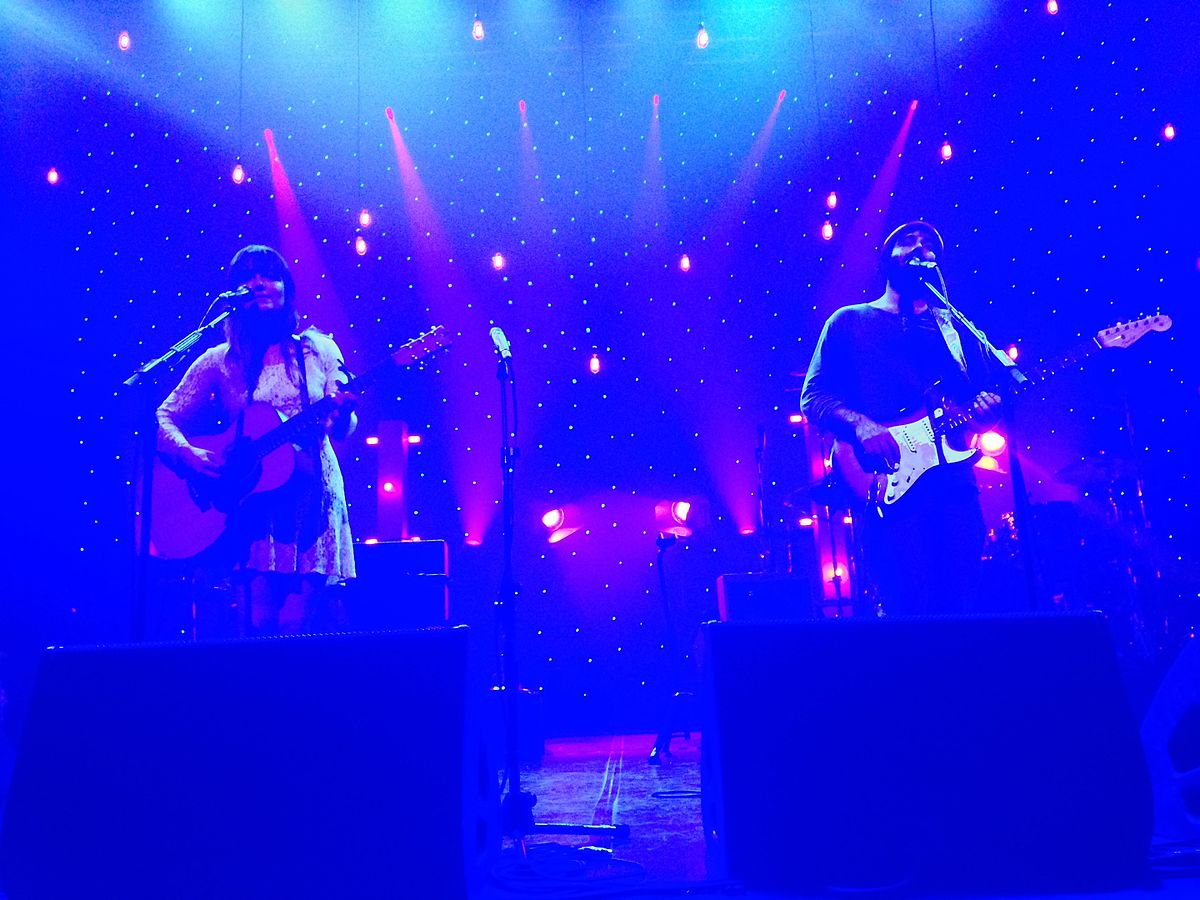
    Angus & Julia Stone performing at Casino de Paris in 2014. Sounds great
    Angus & Julia Stone performing at Casino de Paris in 2014.

    I found Angus and Julia Stone by chance when the algorithm for youtube introduced me, as soon as I heard them I wanted to hear more, now I’ve listened to their entire catalogue and enjoy every song. Sounds like I want to hear more of these great Australian artists, please,encore!

    Angus & Julia Stone are an Australian folk and indie pop group, formed in 2006 by brother and sister Angus and Julia Stone. Angus & Julia Stone have released four studio albums: A Book Like This (2007), Down the Way (2010), Angus & Julia Stone (2014), and Snow (2017). At the ARIA Music Awards of 2010, they won five awards from nine nominations: Album of the Year, Best Adult Alternative Album, Best Cover Art and Producer of the Year for Down the Way, and Single of the Year for “Big Jet Plane“. The siblings have issued two solo albums each.

    Sounds like, was the name of an algorithm I learned about many years ago, now that’s what causes the introduction, as I was listening to something similar in genre, perhaps Ben Harper or Michael Kiwanuka, both favourites of mine, so sounds like works great!

    The brother and sister duo made an excellent video that is haunting and beautiful about the life and times of a rock star, maybe it was written as a sister to a brother or a woman to her love but whichever it’s very sweet

  • Lions Gate Bridge, Vancouver

    Lions Gate Bridge, Vancouver

    2017 - Vancouver - Lions Gate Bridge South Pier
    2017 – Vancouver – Lions Gate Bridge South Pier

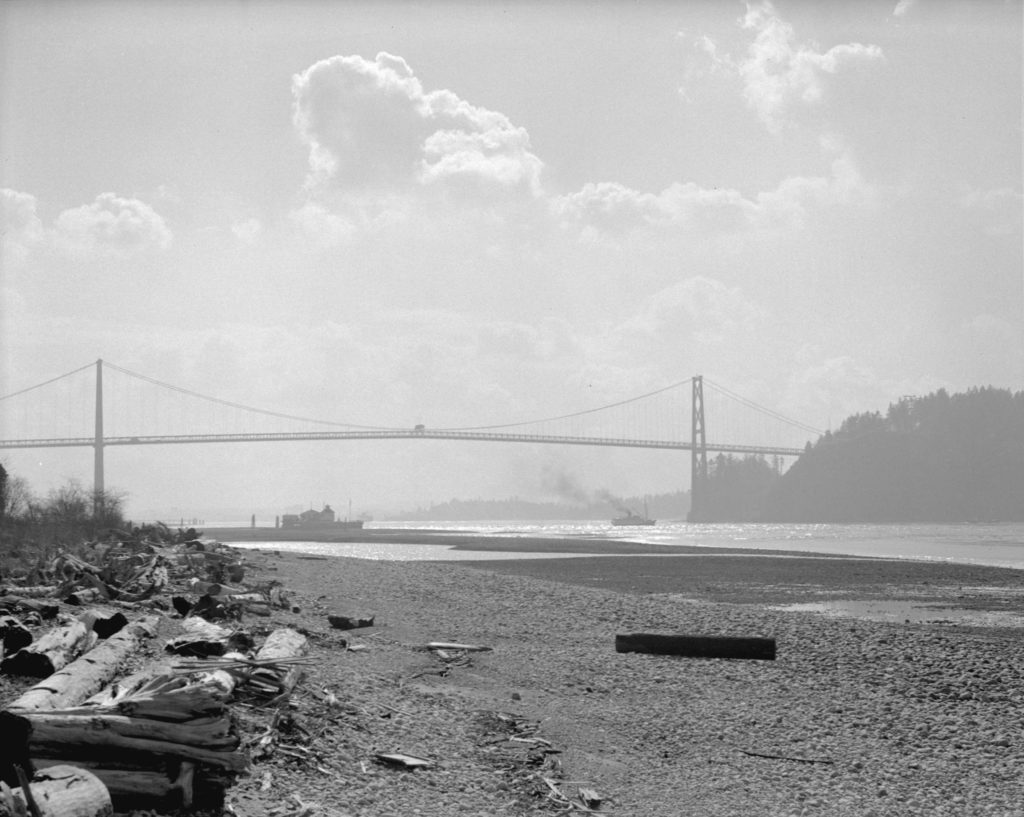
    I was riding my bicycle across the overpass in Stanley Park and stopped in the middle to admire the perfect view of Lions Gate Bridge, when I noticed a little plaque that said the following:

    The Guinness brewing family built the Lions Gate Bridge which opened in 1938 to provide access to its British Properties lands in West Vancouver. Ownership was transferred to the Province in 1955. Tolls were removed in 1963 and the bridge was restored in 1998 after a long debate about its heritage value and capacity.

    Vancouver Heritage Foundation

    The most beautiful bridge north of San Francisco’s Golden Gate, Lions Gate Bridge brought Vancouver into the automobile age and heralded the era of auto-dependent suburbs when it opened in 1938. The Guinness brewing company was the primary financier, intent on providing access to its British Properties development in West Vancouver. Bisecting Stanley Park for the bridge’s causeway was the most controversial issue, but the proponents’ promise of jobs was too good to turn down, as the city was mired in the Great Depression. In 1933, the Park Board voted in favour of it, with only one commissioner opposed.

    "Lady Cecilia" under the Lions Gate Bridge 1939. City of Vancouver Archives, CVA 99-2951, photographer Start Thomson
    “Lady Cecilia” under the Lions Gate Bridge 1939. City of Vancouver Archives, CVA 99-2951, photographer Start Thomson

    The idea to build a bridge across First Narrows was investigated as early as the 1890s, but it wasn’t until the 1920s that plans began to take shape. In December 1933, approval for the building of the bridge was reached through a city wide vote. Construction began on March 31, 1937 by clearing ten acres of Stanley Park to create the right-of-way. Upon completion in November 1938, the Lions Gate Bridge was recognized as the longest suspension bridge in the British Empire and one of the biggest construction projects undertaken in Canada during the 1930s. Despite its great size, the open steelwork of the twin towers gives the structure a weightless quality that blends well with its picturesque setting.

    The bridge was remarkable because of its length and the technical innovations in cable use and construction. Alfred J.T. Taylor, a prominent engineering contractor and industrialist who had substantial land holdings on the North Shore and who assembled the financing for the project has been called the visionary behind the project. The Guinness brewing company acted as the primary financier, intent on providing access to its British Properties development in West Vancouver.

    2017 - Vancouver - The Lions

    Named in honour of a pair of pointed peaks along the North Shore mountain range known as ‘The Lions’, the south entrance to the bridge is graced by two monumental Art Deco lion figures which were the last great public work of Vancouver’s foremost sculptor, Charles Marega.

    The provincial government purchased it in 1955, its “Year of Bridges”. Other projects in the region included the Second Narrows and Oak Street bridges plus Highway 99 and the south arm crossing that became George Massey Tunnel. A third lane was squeezed onto Lions Gate Bridge to accommodate the increasing traffic volume. It ceased to be a toll bridge in 1963. Overcrowded for decades, the bridge narrowly avoided demolition in the 1990s, instead being refurbished by the provincial government. Its retention indicated the city was beginning to move beyond the automobile age.

    Sources

    Photo credit: Ted’s photos – For Me & You on Visual Hunt / CC BY-NC-SA

  • The Worship of Mammon

    The Worship of Mammon

    1909 painting The Worship of Mammon by Evelyn De Morgan.
    1909 painting The Worship of Mammon by Evelyn De Morgan.

    The word Mammon really fell from our lexicon, wonder why too, as it’s such a descriptive word and has such a long history. It’s as though the the meaning is ugly or distasteful, so it’s been cast aside.

    For the longest time I read and re-read Luke Chapter 16 and especially verse 8 , where Jesus say’s in the parable of the Unjust Steward;

    for the children of this world are in their generation wiser than the children of the light.

    Luke 16:8

    Mammon Etymology

    The word Mammon comes into English from post-classical Latin mammona ‘wealth’, used most importantly in the Vulgate Bible (along with Tertullian’s mammonas and pseudo-Jerome’s mammon). This was in turn borrowed from Hellenistic Greek μαμωνᾶς, which appears in the New Testament, borrowed from Aramaic מָמוֹנָא māmōnā, an emphatic form of the word māmōn ‘wealth, profit’, perhaps specifically from the Syriac dialect. However, it is not clear what the earlier history of the Aramaic form is.

    The word may have been present throughout the Canaanite languages: the word is unknown in Old Testament Hebrew, but has been found in the Qumran documents; post-biblical Hebrew attests to māmōn; and, according to St Augustine of Hippo, Punic included the word mammon ‘profit’. It has been suggested that the Aramaic word māmōn was a loanword from Mishnaic Hebrew ממון (mamôn) meaning money, wealth, or possessions; although it may also have meant “that in which one trusts”.

    According to the Textus Receptus of the New Testament, the Greek word translated “Mammon” is spelled μαμμωνᾷ in the Sermon on the Mount at Matt. 6:24, and μαμωνᾶ (from μαμωνᾶς) in the parable of the Unjust Steward at Luke 16:9,11,13.

    The 27th edition of the popular Critical Text of the New Testament has μαμωνᾶ in all four places with no indication of any textual variances, thereby ignoring the Textus Receptus reading at Matt. 6:24. The Liddell and Scott Lexicon has a listing for each spelling, indicating that each occurs only in the New Testament, nowhere else in ancient and Hellenistic Greek literature. The spelling μαμμωνᾷ refers to “a Syrian deity, god of riches; Hence riches, wealth”; μαμωνᾶς is transliterated from Aramaic [ממון] and also means “wealth.” The Authorised Version uses “Mammon” for both Greek spellings; John Wycliffe uses richessis.

    The Revised Standard Version of the Bible explains it as “a Semitic word for money or riches”. The International Children’s Bible (ICB) uses the wording “You cannot serve God and money at the same time”.

    Christians began to use mammon as a pejorative, a term that was used to describe gluttony, excessive materialism, greed, and unjust worldly gain.

    I can attest to the this being a tough test, especially in an age when a billion dollars can be made in a single year, by a single soul, connected to the right people, at the right time, with the right ideas. Which is why tech incubators are located on university campuses. Silicon Valley is comprised of thousands of companies that were a bright idea just a few years ago.

    Passion for web publishing and love of the Internet and this brave new information age world we live in, is what empowers me to keep chasing my own Mammon but for sure I am guilty of the sin of the worship of Mammon and recognize that my self-conditioning, cultural programming and total naivety, sadly; pursuit of Success has been the hallmark of my life.

    I’m a Technocrat but at least not a snob about it. Forgive me, as I forgive myself and forgive you too but let’s try to get over it, worship of Mammon sucks, having it is sweet but what is best is a dough flow, thick and rich, started from a trickle and nurtured to a steady, consistent cash-flow.

    The prayer to ask for, rather than a boatload of Mammon, is to find a useful niche that helps others benfit, from which to extract sustainable prosperity.