Author: Aaron

  • My Office in the Imagination Factory

    My Office in the Imagination Factory

    My office in the Imagination Factory[box]It’s the middle of winter in British Columbia, as I write this story about imagination, the most valuable commodity in cyber space.[/box]

    Bitcoin was born of imagination, almost like a John Lennon lyric; imagine a world with no central bank governance? Imagine a way to digitize money and share or send it across borders without any hassle, simple and easy, pier-to-pier transfers? Imagine an electronic network of digital money that everyone can trust and everyone, everywhere, wants and prefers?

    In my mind, this is a new way of developing our world, that is primarily online and creates entire new industries and eco-systems, as we pioneer new ideas and create new language to describe our advancement.

    This blockchain bonanza is bigger and growing much faster into a larger wave of development than the web, especially since the web had the wind knocked-out of it’s sails in 2000, even 1999 with Y2K, when there should have been tremendous innovation the investment capital stopped flowing into Internet related projects. None the less, entrepreneurs trudged onward to continue building better systems, connecting every inch of the planet, increasing the speeds and developing the infrastructure and software to transition onto mobile devices and make an app for everything imagination could discover, plus sell digital products to a new generation who use a mobile phone to compute and communicate in a totally new way.

    [box size=”large”]Blockchain improves every aspect of the web infrastructure and makes the use of information technology a quantum leap better.[/box]

    We live in a brave new space and time for the human race. We have the opportunity to imagine our way out of the dire circumstances we find ourselves in, however it can only happen collectively. There is an awakening happening and the Internet is partly responsible, as it’s innate in humans that we need to know our own truth, about the nature of things that happen in our world. Being connected to all parts of the planet and having empathy for all people, everywhere, is peace revolution.

  • Fear and Loathing in California

    Fear and Loathing in California

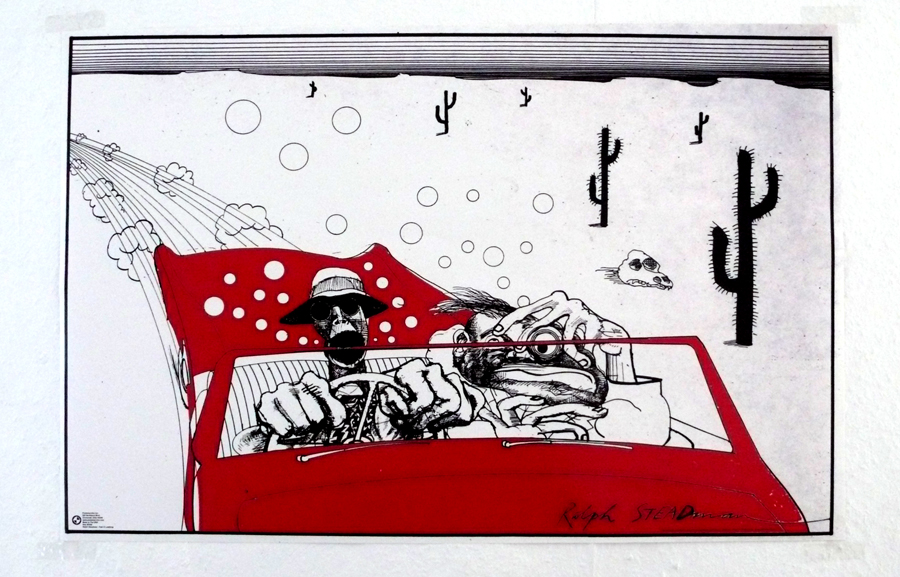
    Raoul Duke and Dr. Gonzo en route to California
    Raoul Duke and Dr. Gonzo en route

    California was like being in a movie, every day a new scene from Gonzo script writer. I was nomadic between Las Vegas, Los Angeles and Malibu in rented U.S. sports cars (late model Camaros mostly but also Mustang, Charger and 1 Corvette). At that time, I had no permanent U.S. address because I was renting hotel rooms too, via Priceline. I would park the car on the roof of the Beverly Hills Hotel and use the guest computers in the lobby, near the front desk, to log in and bid for my next muscle car (with GPS for under $20/day). Back then 4 star rooms could be won by bidding for 3 night stays but L.A. was much cheaper on the weekend due to business travel on weekdays, and Vegas was $50 for the Hilton, plus I would stay one night each week in Malibu and one night in Beverly Hills, so I drove back and forth, across the desert to Vegas each week for about 6 months.

    Malibu was the center of my focus as that’s where my best prospects were living, so I returned weekly to stay on the fabulous estate where poker parties were being held weekly, and on another night in Beverly Hills, at a mansion belonging to a friend named Jack (from Vegas) that I had met in Miami. Jack held amazing three table, all-night poker tournaments in his leased mansion and was a celebrity poker player in Malibu or L.A. also Jack was trying to help me find investors for a start-up online poker company. Meanwhile, every time I would return to Vegas it was in pursuit of strategic partners for online gambling affiliates and to meet gaming company operators, which was always very interesting (to me), as I enjoy the operations of casinos more than playing.

    I only ever played in one poker tournament, the one that I was hosting in New York City, as a founder of Reefer Poker, we were in a joint-venture with High Times Magazine for the cover of the magazine issue; “Toker Poker” for which we awarded a quarter pound of “Sour Diesel” as the prize.

    Reefer Poker Tournament Prize

    The entire time I was in California I never once played poker or wagered a bet in Vegas. My poker skills are not worthy of wasting money on and for some odd reason, some say it’s because I’ve never really had the money to lose, I have never found a thrill or rush from gambling, although I admit that it does feel nice to win money. It’s just that I was on a mission to land investment funding for Reefer Poker and the money I was spending on weed, food, rental cars, gas and hotel rooms was money (i.e. expenses) that was being paid for by investors because the poker site was not generating enough positive cash flow (at that time) and we didn’t have much investment capital, or never enough is often the story with start-ups.

    One thing about Reefer Poker that was impressive, was our organizational structure and how we communicated. Excellent leadership from a seasoned pro that loved poker and knew every nuance of both the game and the online operation/management systems but more importantly the CEO was able to inspire team members and motivate everyone involved through consistent conference calls, instant messaging, constant updates and an almost super-human effort with attention to detail, all the way from investor relations with multi-millionaires about stringent investor demands to a disgruntled poker player disputing a fifty cent losing hand and everything in between. We had assembled an ace team and even recruited outstanding talent and at the end of our first year we were gaining traction in building a brand, with 40,000 registered players and over $100,000 on deposit and growing. Reefer Poker was ready rock and roll.

    MasterCard and Visa both acted simultaneously to deal a death blow to the Internet Gaming industry. Reefer Poker would never recover from the loss of payment systems, it was the one thing we had no solution for. The players were kind and didn’t panic and we did the right thing and made sure that every single player was paid out in full and all of our affiliates and channel partners, a network which we had expended enormous effort to develop and something we had the most pride in was; Reefer Partners were all paid. Never the less, the entire operation had to be liquidated and the assets (players) sold to another operator.

    Reefer Poker was the most exciting business I ever launched and the lesson I am told; is that nothing is a failure, just a step along the way to success.

    California Photo credit: vinnie bezoomny on Visualhunt.com / CC BY-NC-ND

  • The Third Industrial Revolution: A Radical New Sharing Economy

    The Third Industrial Revolution: A Radical New Sharing Economy


    The global economy is in crisis. The exponential exhaustion of natural resources, declining productivity, slow growth, rising unemployment, and steep inequality, forces us to rethink our economic models. Where do we go from here? In this feature-length documentary, social and economic theorist Jeremy Rifkin lays out a road map to usher in a new economic system.

    A Third Industrial Revolution is unfolding with the convergence of three pivotal technologies: an ultra-fast 5G communication internet, a renewable energy internet, and a driverless mobility internet, all connected to the Internet of Things embedded across society and the environment. This 21st century smart digital infrastructure is giving rise to a radical new sharing economy that is transforming the way we manage, power and move economic life. But with climate change now ravaging the planet, it needs to happen fast. Change of this magnitude requires political will and a profound ideological shift.

    Click here to subscribe to VICE: http://bit.ly/Subscribe-to-VICE
    Check out our full video catalog: http://bit.ly/VICE-Videos
    Videos, daily editorial and more: http://vice.com
    More videos from the VICE network: https://www.fb.com/vicevideo
    Click here to get the best of VICE daily: http://bit.ly/1SquZ6v
    Like VICE on Facebook: http://fb.com/vice
    Follow VICE on Twitter: http://twitter.com/vice
    Follow us on Instagram: http://instagram.com/vice
    Download VICE on iOS: http://apple.co/28Vgmqz
    Download VICE on Android: http://bit.ly/28S8Et0
  • Drudge Report, Zero Hedge and Youtube

    Drudge Report, Zero Hedge and Youtube

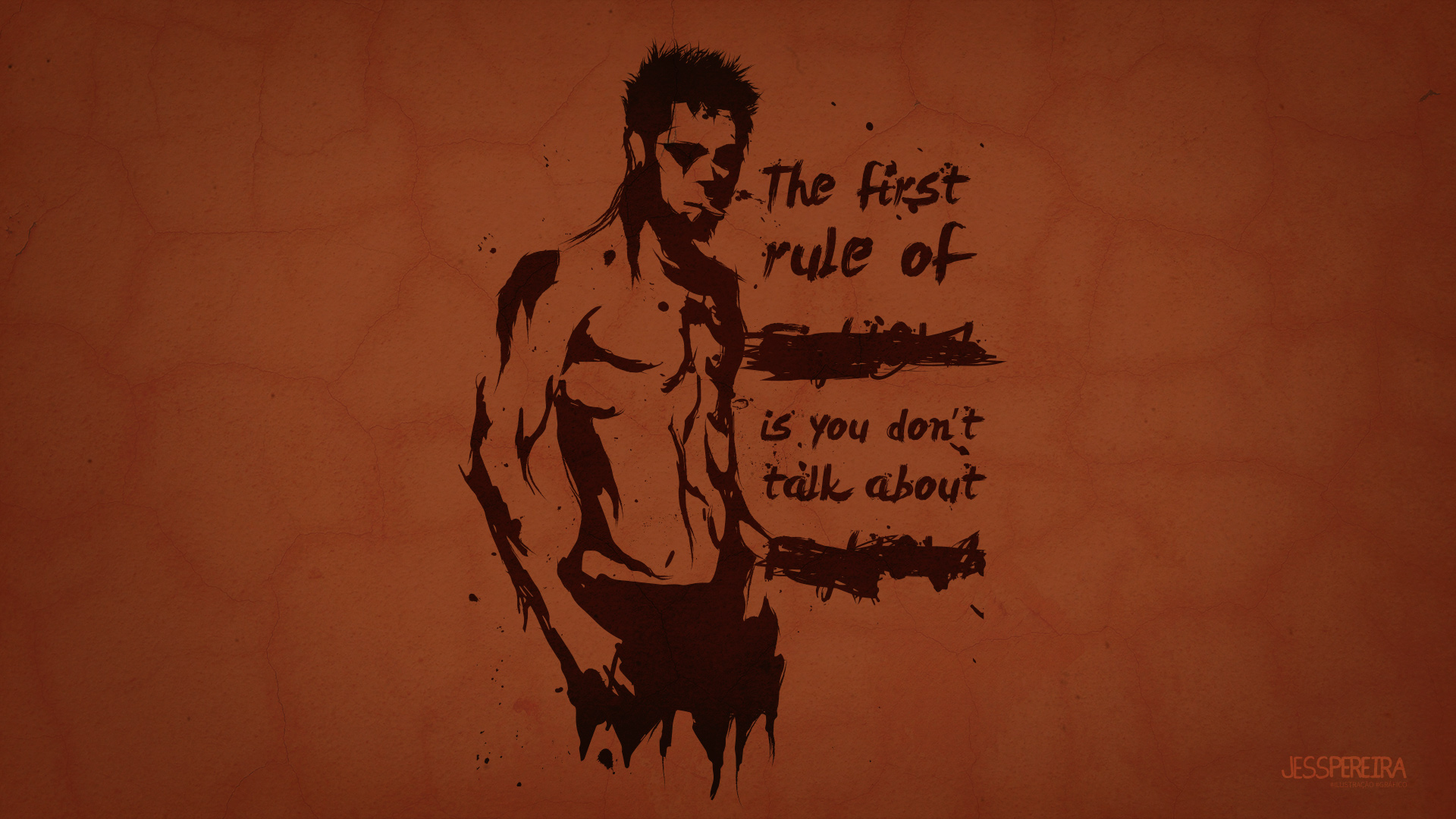
    Fight Club and Tyler Durden from Zero Hedge

    At the risk of sounding redundant, as I know I’ve said this somewhere before but because it’s worth repeating, I’ll say again; the first things I read online every morning and the last thing I look at online every night, in the same order is Drudge Report, Zero Hedge and Youtube and here’s why you should too. Always knowing the hot topics and trending videos enables the reader valuable insight into what other people are thinking and reading about, simply because Drudge Report has over 1 billion readers per month, or over 25 million people per day.

    Machiavellian reasoning written to give you an edge in these days of information overload, also provide enough hot topics to keep you dialed-in to the major world events. Imagine the influence of the collective consciousness the Drudge Report has over the technocrats on the planet?

    Appreciate the format and enjoy the simple, straight-forward way Matt Drudge has laid out the the content, all of which is open source.

    Zero Hedge plays by new rules

    “You’re not your job or the editor of ZH…” Tyler DurdenThe power of Zero Hedge is even more impressive than Drudge because Tyler Durden is a nom de plume that has earned enormous respect, one reader at a time, for a very simple reason, in that it’s superb reporting and professional journalism. What Zero Hedge does that no-other website does, is report all the stories that are effecting the financial markets to aggregate a much broader picture of the global markets, from a Wall Street insiders perspective. Coverage of topics and issues that commercially sponsored (MSM) websites would be unable to expose.

    The notion of Tyler Durden being the ZH editor, if you’ve ever seen the movie the Fight Club, is very compelling. Tyler played by Brad Pitt, is the alter-ego of Edward Norton as he experiences some type of deranged dual-personality, loss of identity, inner-struggle, which is the key theme to the story, the point of which is that Tyler knows that eventually he’s going to get destroyed but he doesn’t care because the thrill of the winning is so powerfully addicting and the complete total defiance of normalcy, rules and regulations takes control, just like anarchy.

    Youtube is a different matter because it’s a search engine and has predictive programming, so whatever you’ve been watching lately it will send you more of the same. Plus, most of us who watch more than an hour of Youtube per day have an account and have it set-up in the best way to present the selection that will be most related. In recent times there’s been a behind the scenes battle happening, to censor the channels and videos that promote topics that may be controversial, according to some small group of people who feel they need to protect the world, from knowing too much information about crimes committed by people in high places, dare I say any of these names, or topic titles, for the search engines to begin categorizing me, in with truth seeking activists.

    I love Youtube for how it’s revolutionized the web and created the most amazing platform for sharing ideas and developing communities etc… In my mind, for every bad intention or hate video uploaded to youtube, there’s 1,000 with good intentions and love. People really put their heart and soul into video, not all, however unfortunately the vast majority of video is of such poor production quality and/or without any reason or purpose, just like the spoken word in the real world.

    Where the problem is, as I see it, if youtube continue to censor video creators, the people will find a new place where the concept of “free speech” is the mission statement.

    Zero Hedge Photo credit: pejess on Visual Hunt / CC BY
    Tyler Durden quote photo credit: junaidrao on VisualHunt.com / CC BY-NC-ND

  • On This Day in History the Communist Manifesto was Published

    On This Day in History the Communist Manifesto was Published

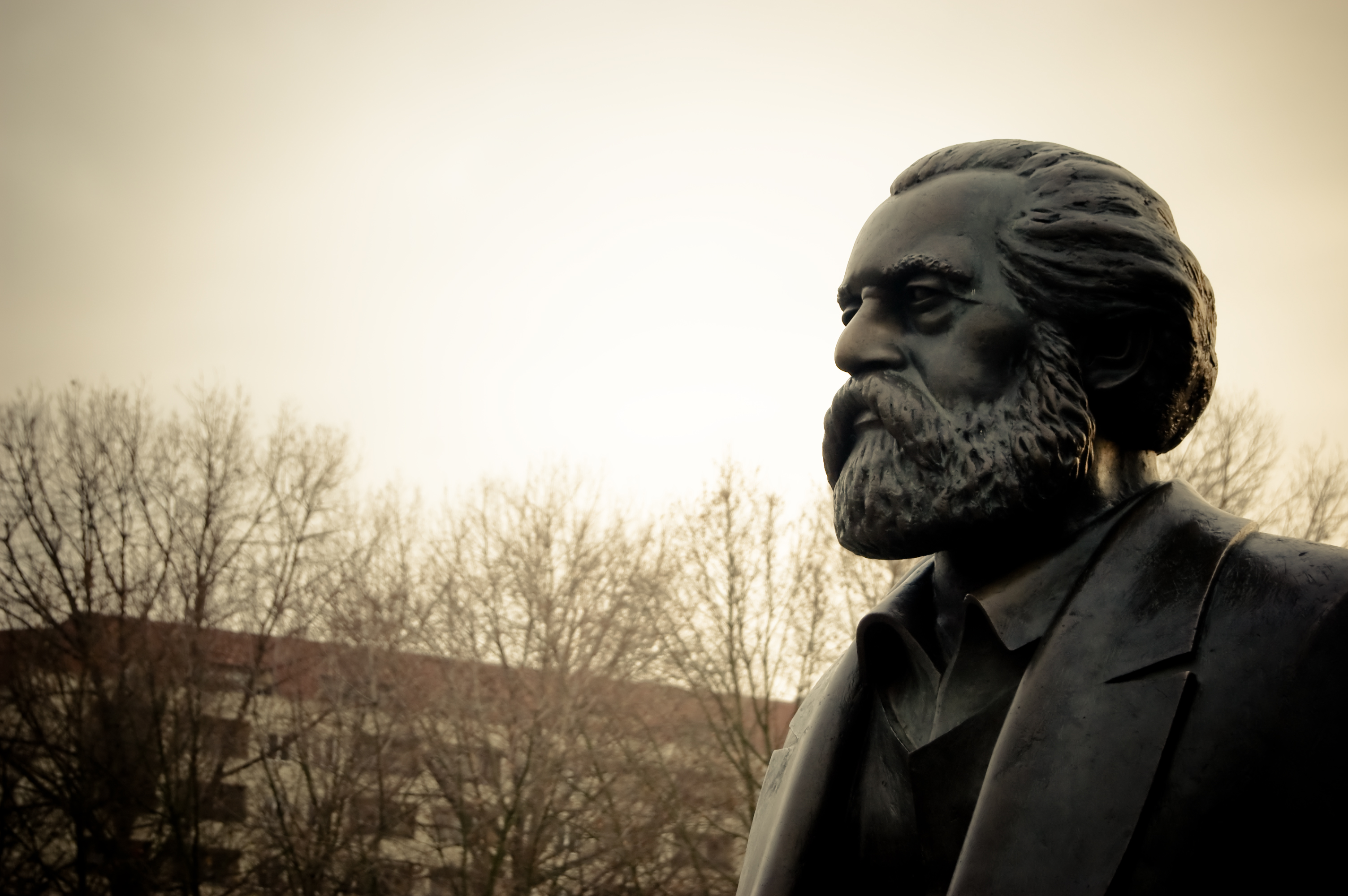
    Karl Marx in WinterOn February 21, 1848, The Communist Manifesto, written by Karl Marx with the assistance of Friedrich Engels, is published in London by a group of German-born revolutionary socialists known as the Communist League. The political pamphlet–arguably the most influential in history–proclaimed that “the history of all hitherto existing society is the history of class struggles” and that the inevitable victory of the proletariat, or working class, would put an end to class society forever. Originally published in German as Manifest der Kommunistischen Partei (“Manifesto of the Communist Party”), the work had little immediate impact. Its ideas, however, reverberated with increasing force into the 20th century, and by 1950 nearly half the world’s population lived under Marxist governments.

    Karl Marx was born in Trier, Prussia, in 1818–the son of a Jewish lawyer who converted to Lutheranism. He studied law and philosophy at the universities of Berlin and Jena and initially was a follower of G.W.F. Hegel, the 19th-century German philosopher who sought a dialectical and all-embracing system of philosophy. In 1842, Marx became editor of the Rheinische Zeitung, a liberal democratic newspaper in Cologne. The newspaper grew considerably under his guidance, but in 1843 the Prussian authorities shut it down for being too outspoken. That year, Marx moved to Paris to co-edit a new political review.

    Paris was at the time a center for socialist thought, and Marx adopted the more extreme form of socialism known as communism, which called for a revolution by the working class that would tear down the capitalist world. In Paris, Marx befriended Friedrich Engels, a fellow Prussian who shared his views and was to become a lifelong collaborator. In 1845, Marx was expelled from France and settled in Brussels, where he renounced his Prussian nationality and was joined by Engels.

    During the next two years, Marx and Engels developed their philosophy of communism and became the intellectual leaders of the working-class movement. In 1847, the League of the Just, a secret society made up of revolutionary German workers living in London, asked Marx to join their organization. Marx obliged and with Engels renamed the group the Communist League and planned to unite it with other German worker committees across Europe. The pair were commissioned to draw up a manifesto summarizing the doctrines of the League.

    Back in Brussels, Marx wrote The Communist Manifesto in January 1848, using as a model a tract Engels wrote for the League in 1847. In early February, Marx sent the work to London, and the League immediately adopted it as their manifesto. Many of the ideas in The Communist Manifesto were not new, but Marx had achieved a powerful synthesis of disparate ideas through his materialistic conception of history. The Manifesto opens with the dramatic words, “A spectre is haunting Europe–the spectre of communism,” and ends by declaring: “The proletarians have nothing to lose but their chains. They have a world to win. Workers of the world, unite!”

    In The Communist Manifesto, Marx predicted imminent revolution in Europe. The pamphlet had hardly cooled after coming off the presses in London when revolution broke out in France on February 22 over the banning of political meetings held by socialists and other opposition groups. Isolated riots led to popular revolt, and on February 24 King Louis-Philippe was forced to abdicate. The revolution spread like brushfire across continental Europe. Marx was in Paris on the invitation of the provincial government when the Belgian government, fearful that the revolutionary tide would soon engulf Belgium, banished him. Later that year, he went to the Rhineland, where he agitated for armed revolt.

    The bourgeoisie of Europe soon crushed the Revolution of 1848, and Marx would have to wait longer for his revolution. He went to London to live and continued to write with Engels as they further organized the international communist movement. In 1864, Marx helped found the International Workingmen’s Association–known as the First International–and in 1867 published the first volume of his monumental Das Kapital–the foundation work of communist theory. By his death in 1884, communism had become a movement to be reckoned with in Europe. Twenty-three years later, in 1917, Vladimir Lenin, a Marxist, led the world’s first successful communist revolution in Russia.

    Source: History.com

    Article Details:

    Marx publishes Manifesto

    • Author

      History.com Staff

    • Website Name

      History.com

    • Year Published

      2010

    • Title

      Marx publishes Manifesto

    • URL

      http://www.history.com/this-day-in-history/marx-publishes-manifesto

    • Publisher

      A+E Networks

    Karl Marx Photo credit: fhwrdh on Visual Hunt / CC BY

  • Release the Kracken on the Blockchain of Cryptocurrency

    Release the Kracken on the Blockchain of Cryptocurrency

    Release the KrackenMy adventure in cryptocurrency started recently, despite having joined Steemit a few years ago I did not start purchasing Bitcoin until 2017 but began investing and trading in February of 2018. This is the beginning of my cryptocurrency love affair, the evolution of which became heated with the combination of an excellent buying opportunity and the introduction to Kraken for exchange and Exodus for wallet and cyber asset management system. All of a sudden I found myself enraptured by the allure of power, control and simplicity.

    Cryptocurrency market timing knowledge is the only missing ingredient, for which we have found a guru on Youtube with a Channel called the “Arcane Bear”. There are others too, as well as Clif High the predictive linguistics prognosticator, that has developed a habit of being correct about the future of the crypto market, the climax of his analysis is that Bitcoin is here to stay and could reach $1 million dollar valuation in 3 years and will find itself above $84,000 by the end of 2018 – very impressive upside, even if these predictions were 10% accurate and Bitcoin was worth $100,000 each by 2020.

    For several years I’ve been promoting cryptocurrency because I sincerely believe in the concept. I also think that the old system was rigged, corrupt and bankrupt so why wait for the banksters to try to fix the system, the next time it crashes, let’s take the future into our own hands. This is exactly what is described in the  famous Bitcoin white paper by Satoshi Nakamoto.

    Satoshi Nakamoto is the name used by the unknown person or people who designed bitcoin and created its original reference implementation. As part of the implementation, they also devised the first blockchain database. In the process they were the first to solve the double-spending problem for digital currency. They were active in the development of bitcoin up until December 2010.

    Bitcoin: A Peer-to-Peer Electronic Cash System

    Bitcoin Abstract

    A purely peer-to-peer version of electronic cash would allow online payments to be sent directly from one party to another without going through a financial institution. Digital signatures provide part of the solution, but the main benefits are lost if a trusted third party is still required to prevent double-spending. We propose a solution to the double-spending problem using a peer-to-peer network. The network timestamps transactions by hashing them into an ongoing chain of hash-based proof-of-work, forming a record that cannot be changed without redoing the proof-of-work. The longest chain not only serves as proof of the sequence of events witnessed, but proof that it came from the largest pool of CPU power. As long as a majority of CPU power is controlled by nodes that are not cooperating to attack the network, they’ll generate the longest chain and outpace attackers. The network itself requires minimal structure. Messages are broadcast on a best effort basis, and nodes can leave and rejoin the network at will, accepting the longest proof-of-work chain as proof of what happened while they were gone.

    Source: Bitcoin.org

    Release Kracken Photo credit: aforonda on Visual Hunt / CC BY-SA

  • Social Media Madness and Predictable Revenue

    Social Media Madness and Predictable Revenue

    social media madness

    In the beginning there was Word, decades before social media madness. Once upon a time being a master of MS Word and Excel Spreadsheets (which still confounds me) was enough of a skill-set to provide you with value in business. Now it’s not enough to be proficient in every app of MS Office but be able to manage and operate content management systems (CMS) as well as Customer Relationship Management (CRM) like a boss.

    If you’re an entrepreneur the road to success is laid out in the book, which is a user manual called “Predictable Revenue” by Aaron Ross and Marylou Tyler. The online marketing best advice you can get. Predictable Revenue: Turn Your Business Into a Sales Machine with the $100 Million Best Practices of Salesforce.com

    Not mentioned very much in the book “Predictable Revenue” is how important important Social Media systems are to working with your online marketing strategy. It takes years with a new brand, to build-up enough followers and develop enough influence to make any meaningful marketing metrics. However, you virtually don’t exist without Twitter and Facebook, plus people check-out LinkedIn for due-diligence and others want to see your Instagram feed to get an idea of your lifestyle.

    [box]So what’s an aspiring Internet marketing maven supposed to do?[/box]

    Some people like Hootsuite or other Social Media Management systems, while others prefer to mainly focus on Twitter and have it be the primary platform for sharing news, ideas and updates. Twitter has a certain learning-curve to understand a good ratio of followers to how many people you follow and your media marketing. Plus it’s very important to be consistent with messaging on Twitter but be aware of how that’s going to look on your Facebook and LinkedIn pages, so it’s a good idea to have dedicated content for your company or project on both Facebook and LinkedIn.

    Instagram also posts to Facebook, then if you manage WordPress blogs, as any good marketing maven would be, these are most likely set to post on Twitter and Facebook, which starts to be redundant. It’s recommended to fix your settings to make sure that Twitter posts a format with text only (unless you post an image to Twitter) because WordPress does such a nice job (automatically) of formatting and posting an article with the main image for that story. These functions and instructions can be found inside the Jet Pack bundle provided free as a Plugin on WordPress.

    My word to the wise on how to avoid Social Media Madness, is to have a plan and use a pencil and paper to design the connecting of all social media accounts to and from your CMS or Blog, then make sure your Twitter is blasting correctly by looking from someone else’s perspective, ask for opinions from friends, if you’re posting too much to Facebook or LinkedIn, as there’s a risk of driving people away or just become annoying to your friends, so use some discretion.

    Lastly, never ever succumb to the temptation to buy followers or follow for follow-backs. It takes time to develop a solid network in the real world, so imagine it’s just as hard and just as important to make decent, intelligent friends and have real followers in Cyber Space.

    Predictable Revenue

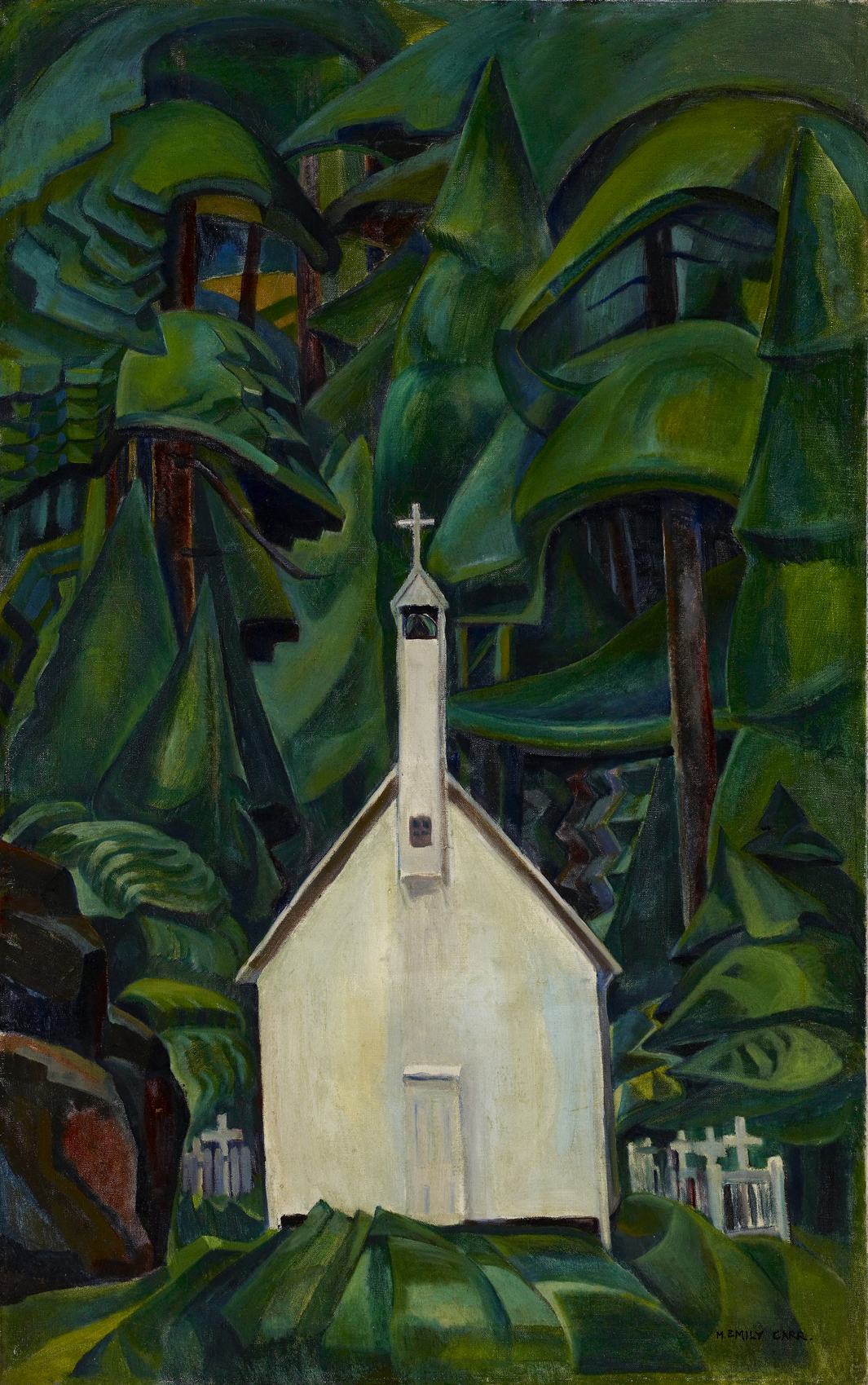
  • Indian Church by Emily Carr

    Indian Church by Emily Carr

    Emily Carr Indian Church 1929
    Emily Carr Indian Church 1929

    Mar is short for Mary Anne, or so my Mom tells me so. Mar was born in 1935 and became my mother in 1961. She’s the most amazing soul, always seeking things that others have overlooked. Recognizing value in art with an eye for style and a natural tendency to discover treasures. Mar finds art and second hand goods that improve or enhance the houses of her friends and family. A constant source of new used furniture, equipment and art, or the person to discover appliance or furniture for someone who needs something for home improvement. If there’s a “Restore or Value Village” she knows where but it’s her art collection that’s impressive containing a mix of original painting and sketches, plus several prints from Canadian artists including Emily Carr.

    Mar keeps an entire collection of Emily Carr books and reviews of her large collection. Emily Carr has always been Mar’s favorite and reminds us of the story of Emily Carr’s life, before she became a famous artist. Recently Mar had to replace one of her favorite prints, of the painting that made Emily Carr famous; The Indian Church

    Emily Carr – Wikipedia

    The Indian Church is a 1929 painting by Canadian artist Emily Carr. Group of Seven artist Lawren Harris bought the painting to showcase it in his dining room, and called it Carr’s best work. In 1930, the work was shown in the Fifth Annual Exhibition of Canadian Art organised by the National Gallery of Canada. In 1938, the painting was chosen for an exhibition titled A Century of Canadian Art, at the Tate Gallery. The exhibition was described by Vincent Massey as “a most representative showing of Canadian painting and sculpture, including all schools and all periods.” It is considered a “transitional” painting because it reflects the transition of Carr’s artistic work from purely depicting Native Art to shifting her focus toward the land.

    In her autobiography, Carr wrote that she “felt the subject deeply”. She painted it at Friendly Cove, near a lighthouse. When Carr saw her painting in Harris’s home, she exclaimed: “The house must have bewitched this thing! It was better than I had thought.” However she could not look at it, because she could not accept praise from other people, and felt embarrassed when others complimented her about her work. The painting is one of Carr’s most reproduced works, and was eventually donated to the Art Gallery of Ontario by Charles Band.

    Creation

    In the spring of 1929, Carr travelled by train through Vancouver Island to Port Alberni from where she went by steamer to Nootka Island. There she sketched, among other subjects, a white church that was in the area. When she returned to Victoria, she started painting crosses around the church, creating the impression of a graveyard. In the painting, she omitted adding any other buildings near the church, as was the case with the actual church, to emphasise the isolation of the church within its green environment. She also added an element of danger in the form of wavy dark green undergrowth erupting in front of the church.

  • The Art of Writing and Purpose of this Blog

    The Art of Writing and Purpose of this Blog

    The Art of WritingThe best way to learn to write, is to write. It is said that the best way to get started is to just begin writing. These are the steps towards the Art of Writing.

    Some of us have always wanted to be writers and some of were naturally gifted in this expression, while others were educated in writing by having to write, then there were those others that needed to write to make a living, especially as we transition into the information-age. In each and every case, the quality of the written word is most valued when it succinctly describes and idea. The fewer words the better and the key to success is the emotion the writer is able to convey. We can see beauty in everything in our world, even the depths of hell can be described but can we describe the things we see daily, or visualize throughout the day, in an articulate style that can illicit some feelings and deliver some meaning to the reader?

    To write well, it has to become art. The very symmetry of the letters as they slash into the empty white space of the page, is akin to a dance with the music from an orchestra. I can envision the conductor, in my own mind as I free-form these thoughts onto this page. We’ve been told to write whatever comes to mind, if you’re unsure about what to write about and that’s a little of what this is about. Today, for example I set-out to write about my new format for blogging and video production. This article “The Art of Writing” is the first of my new format, which is designed to; blog about the things I’m working on for the Youtube channel “Invest Offshore”, as well as the people and projects I’m meeting and learning about.

    Over the years, I’ve come to realize that I’m in a position to share a unique perspective. That of a tech evangelist who recommends moving offshore and living as a sovereign individual.

    Here and from now on, I wish to express my ideas and write about anything and everything that either amuses me, or bothers me. Despite the fact that I’m interested in conspiracy theory and complete believer/proponent in digital currency and blockchain, I’ll try not to saturate this stream with crypto news or conspiracy theory. Also, I’m very interested in digital photography, cameras and video production, plus obsessed advocate of Adobe Creative Cloud Suite of products including Photoshop, Premier Pro, Light Room, Dreamweaver and others, having said all that, this blog is where I wish to post my photography and video, therefore often times the photos may not be entirely relevant to the blog post but that’s because they’re the shots that are in my Light Room.

    The strategy with my use of the Art of Writing is to use it to improve the quality and meaning of Invest Offshore videos by researching the topics, ideas, people and places.

    [hr]

    A week ago there was a story about a skier, who was a Toronto firefighter visiting White Face in upstate New York near Lake Placid. He went missing and a massive manhunt ensued. His street clothes and backpack were found in the lodge at the ski hill but he was disappeared for 3 days, until he appears in Sacramento California in his ski clothes but doesn’t know how he got there.

    Here’s the link – Toronto Star

    Danny Filippidis called his wife shortly after noon Tuesday — roughly 4,500 kilometres from where the 49-year-old Toronto fire captain vanished six days earlier, prompting a massive search.

    He was last seen making an afternoon run at a New York ski resort at Whiteface Mountain in Lake Placid, N.Y., on Feb. 7.

    She told him to call 911 and get help. So he did — and the Sacramento County Sheriff’s Department responded.

    Filippidis was found alone near the rental car terminal of Sacramento International Airport, still wearing his snow pants, jacket and had his goggles and ski helmet.

    “We don’t know how he got there,” said Sacramento police Sgt. Shaun Hampton.

    How or why Filippidis travelled across the United States without telling anyone remains a mystery.

    “He wasn’t able to give those answers,” said Frank Ramagnano, president of the Toronto Professional Fire Fighters’ Association, who added that Filippidis seemed confused and needed medical help.


  • Chinese New Year

    Chinese New Year

    Chinese New YearChinese New Year, also known as the Spring Festival (simplified Chinese: 春节; traditional Chinese: 春節; pinyin: Chūn Jié) in modern China, and one of the Lunar New Years in Asia, is an important Chinese festival celebrated at the turn of the traditional lunisolar Chinese calendar. Celebrations traditionally run from the evening preceding the first day, to the Lantern Festival on the 15th day of the first calendar month. The first day of the New Year falls on the new moon between 21 Jan and 20 Feb. In 2018, the first day of the Lunar New Year is on Friday, 16 February, initiating the year of the Dog.

    It is one of the world’s most prominent and celebrated festivals, with the largest annual mass human migration in the world. It is a major holiday in China and has had strong influence on the lunar new year celebrations of its geographic neighbours, including Taiwan, Hong Kong, Macau, Singapore, Indonesia, Malaysia, Korea, Thailand, Vietnam, Cambodia, Mauritius, Australia, and the Philippines.

    The New Year festival is centuries old and associated with several myths and customs. Traditionally, the festival was a time to honour deities as well as ancestors. Within China, regional customs and traditions concerning the celebration of the Lunar New Year vary widely. Often, the evening preceding Lunar New Year’s Day is an occasion for Chinese families to gather for the annual reunion dinner. It is also traditional for every family to thoroughly clean the house, in order to sweep away any ill-fortune and to make way for incoming good luck. Windows and doors are decorated with red colour paper-cuts and couplets with popular themes of “good fortune” or “happiness”, “wealth”, and “longevity”. Other activities include lighting firecrackers and giving money in red paper envelopes. In about one third of the Mainland population, or 500 million Northerners, dumplings (especially those of vegetarian fillings) feature prominently in the meals celebrating the festival.

    Photo credit: DrPhotoMoto on Visualhunt.com / CC BY-SA