As a devoted QAnon follower and hardcore Digital Soldier for Trump, I was totally impressed with the attorney Lin Wood when he appeared on the scene. So that you know, in case you don’t, there is no single person behind Q and when we achieved the primary objective it was “Game Over”.
After November 3rd 2020 landslide election victory for Trump there was no further need of Q (at this time). Plus, the corrupt politicians and deep state actors were planning to attack QAnon supporters, so we dissipated as that’s the nature of an insurgency.
Yes, we used an insurgency to defeat an insurgency, now we enter the “Mop-up phase” of the operation. Now comes the hard work of cleaning up the mess left behind by the draining of the swamp. It’s easily a 4 year task to root out the turncoats but the evidence trail is now paved with names and deeds. There will be more surprises and holdouts discovered, as that’s the nature of sinking ships, some rats will wait until there’s no other option.
QAnon Digital Soldiers adopt the creed of the Navy Seals
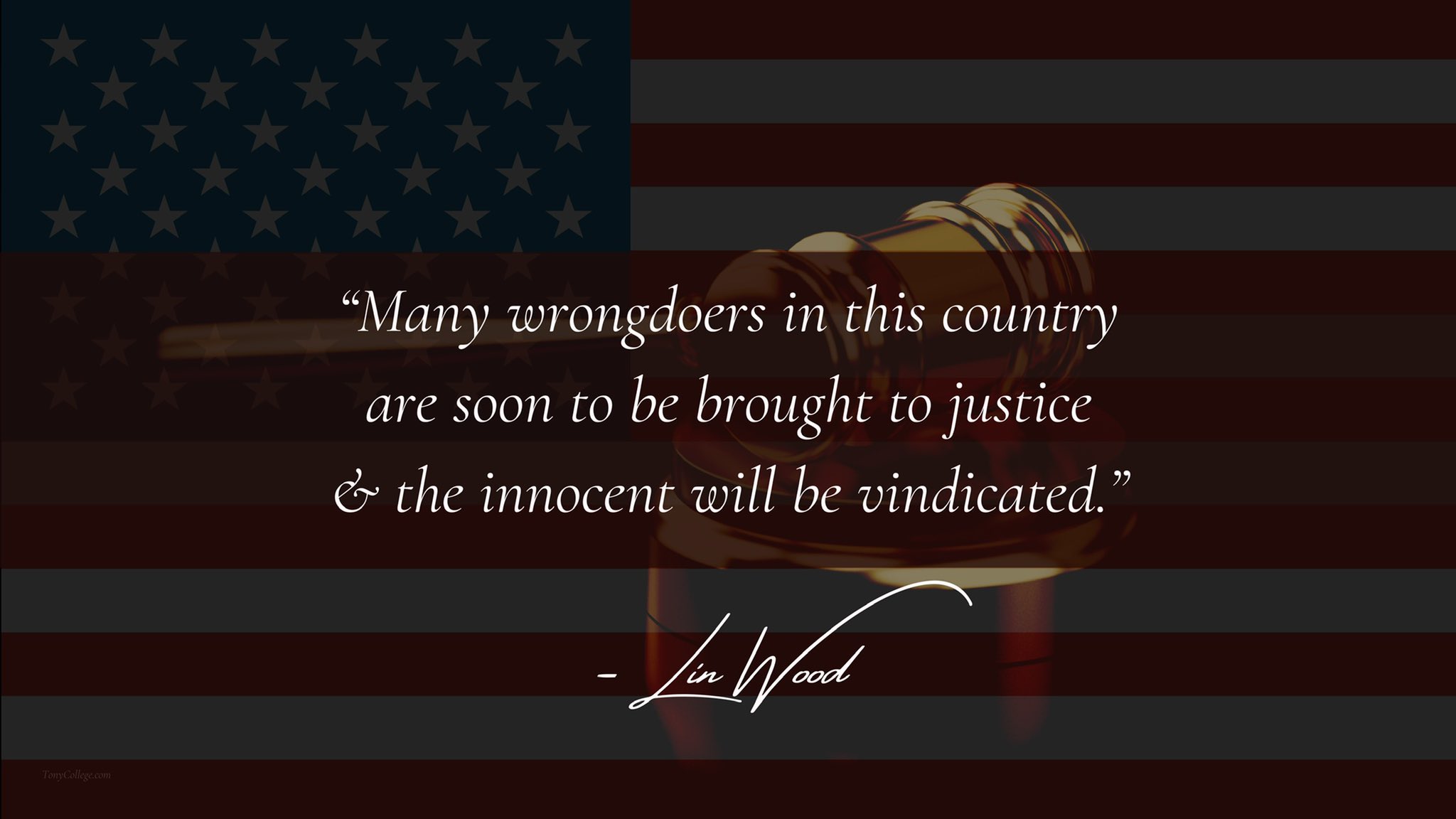
Lin Wood is easy for me to admire, not just because he’s a man of God but also because of his conviction to truth. He doesn’t need permission from sheep, since he’s a lion and will do whatever he decides to do. Lin Wood knows where he’s been, knows where he’s going. This resolve is the mindset that will lead us out of Babylon. Follow Lin Wood here.
Lin Wood inspires other lions and could care less about asking the sheep for permission to defend the flock.
For far too long the notion of “political correctness” has subdued the truth that needed to be said. In many cases the revulsion to sex crimes against children and other horrific acts of sinister malfeasance has gone unchecked out of fear for speaking truth against evil. Lin Wood shows us to drop the fear and face the facts; we have a huge problem to clean up.
Asking for a friend; what is a Deus ex Machina?
Lin Wood
Deus ex machina; plural: dei ex machina; English ‘god from the machine’ is a plot device whereby a seemingly unsolvable problem in a story is suddenly and abruptly resolved by an unexpected and unlikely occurrence. Its function can be to resolve an otherwise irresolvable plot situation, to surprise the audience, to bring the tale to a happy ending, or act as a comedic device.
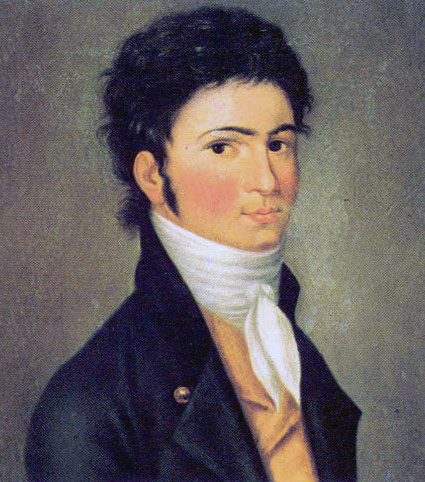
Ludwig van Beethoven was baptized 17 December 1770 – 26 March 1827 was a German composer and pianist. Beethoven remains one of the most admired composers in the history of Western music; his works rank amongst the most performed of the classical music repertoire. His works span the transition from the classical period to the romantic era in classical music. His career has conventionally been divided into early, middle, and late periods. The “early” period, during which he forged his craft, is typically considered to have lasted until 1802. From 1802 to around 1812, his “middle” period showed an individual development from the “classical” styles of Joseph Haydn and Wolfgang Amadeus Mozart, and is sometimes characterized as “heroic”. During this time he began to suffer increasingly from deafness. In his “late” period from 1812 to his death in 1827, he extended his innovations in musical form and expression.
Portrait of Beethoven as a young man, c. 1800, by Carl Traugott Riedel (1769–1832)
Born in Bonn, Beethoven’s musical talent was obvious at an early age, and he was initially harshly and intensively taught by his father Johann van Beethoven. Beethoven was later taught by the composer and conductor Christian Gottlob Neefe, under whose tutelage he published his first work, a set of keyboard variations, in 1783. He found relief from a dysfunctional home life with the family of Helene von Breuning, whose children he loved, befriended, and taught piano. At age 21, he moved to Vienna, which subsequently became his base, and studied composition with Haydn. Beethoven then gained a reputation as a virtuoso pianist, and he was soon courted by Karl Alois, Prince Lichnowsky for compositions, which resulted in his three Opus 1piano trios (the earliest works to which he accorded an opus number) in 1795.
His first major orchestral work, the First Symphony, appeared in 1800, and his first set of string quartets was published in 1801. During this period, his hearing began to deteriorate, but he continued to conduct, premiering his Third and FifthSymphonies in 1804 and 1808, respectively. His Violin Concerto appeared in 1806. His last piano concerto (No. 5, Op. 73, known as the ‘Emperor’), dedicated to his frequent patron Archduke Rudolf of Austria, was premiered in 1810, but not with Beethoven as soloist. He was almost completely deaf by 1814, and he then gave up performing and appearing in public. He described his problems with health and his unfulfilled personal life in two letters, his “Heiligenstadt Testament” (1802) to his brothers and his unsent love letter to an unknown “Immortal Beloved” (1812).
In the years from 1810, increasingly less socially involved, Beethoven composed many of his most admired works including his later symphonies and his mature chamber music and piano sonatas. His only opera, Fidelio, which had been first performed in 1805, was revised to its final version in 1814. He composed his Missa Solemnis in the years 1819–1823, and his final, Ninth, Symphony, one of the first examples of a choral symphony, in 1822–1824. Written in his last years, his late string quartets of 1825–26 are amongst his final achievements. After some months of bedridden illness, he died in 1827. Beethoven’s works remain mainstays of the classical music repertoire.
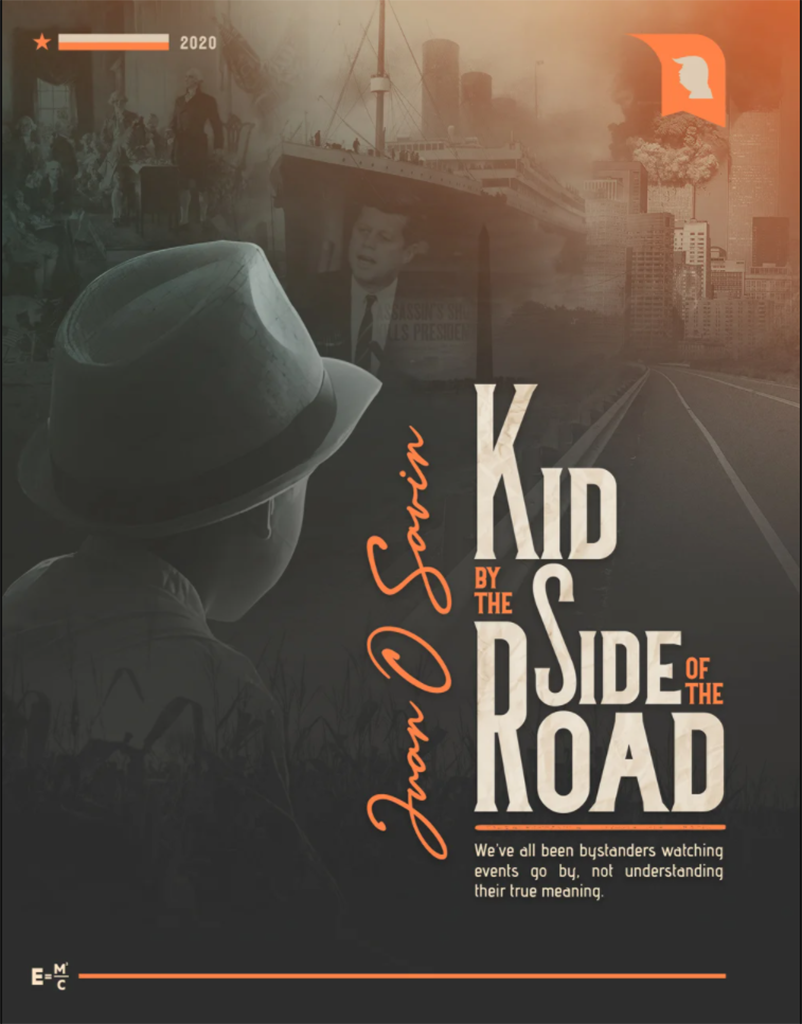
Kid by the Side of the Road is a 68 page booklet by Juan O’Sovin can be purchased for download from Gum Road – Kid by the Side of the Road
George magazine
John Fitzgerald Kennedy Jr. is the Kid, often referred to as John-John or JFK Jr., is an American lawyer, journalist, and magazine publisher. He was a son of President John F. Kennedy and First LadyJacqueline Kennedy, and still is the younger brother of Caroline Kennedy.
In 1995, Kennedy and Michael Berman founded George, a glossy, politics-as-lifestyle and fashion monthly, with Kennedy controlling 50 percent of the shares. Kennedy officially launched the magazine at a news conference in Manhattan on September 8, and joked that he had not seen so many reporters in one place since he failed his first bar exam.
Each issue of the magazine contained an editor’s column and interviews written by Kennedy, who believed they could make politics “accessible by covering it in an entertaining and compelling way” which would allow “popular interest and involvement” to follow. Kennedy did interviews with Louis Farrakhan, Billy Graham, Garth Brooks, and others.
The first issue was criticized for its image of Cindy Crawford posing as George Washington in a powdered wig and ruffled shirt. In defense of the cover, Kennedy stated that “political magazines should look like Mirabella.”
In July 1997, Vanity Fair had published a profile of New York City mayor Rudy Giuliani, claiming that the mayor was sleeping with his press secretary (which both parties denied). Although tempted to follow up on this story, Kennedy decided against it. The same month, Kennedy wrote about meeting Mother Teresa, declaring that the “three days I spent in her presence was the strongest evidence this struggling Catholic has ever had that God exists.”
Kennedy in 1998
The September 1997 issue of George centered on temptation, and featured two of Kennedy’s cousins, Michael LeMoyne Kennedy and Joseph P. Kennedy II. Michael had been accused of having an affair with his children’s underaged babysitter, while Joe had been accused by his ex-wife of having bullied her. John declared that both his cousins had become “poster boys for bad behavior” – believed to be the first time a member of the Kennedy family had publicly attacked another Kennedy. He said he was trying to show that press coverage of the pair was unfair, due to them being Kennedys. But Joe paraphrased John’s father by stating, “Ask not what you can do for your cousin, but what you can do for his magazine.”
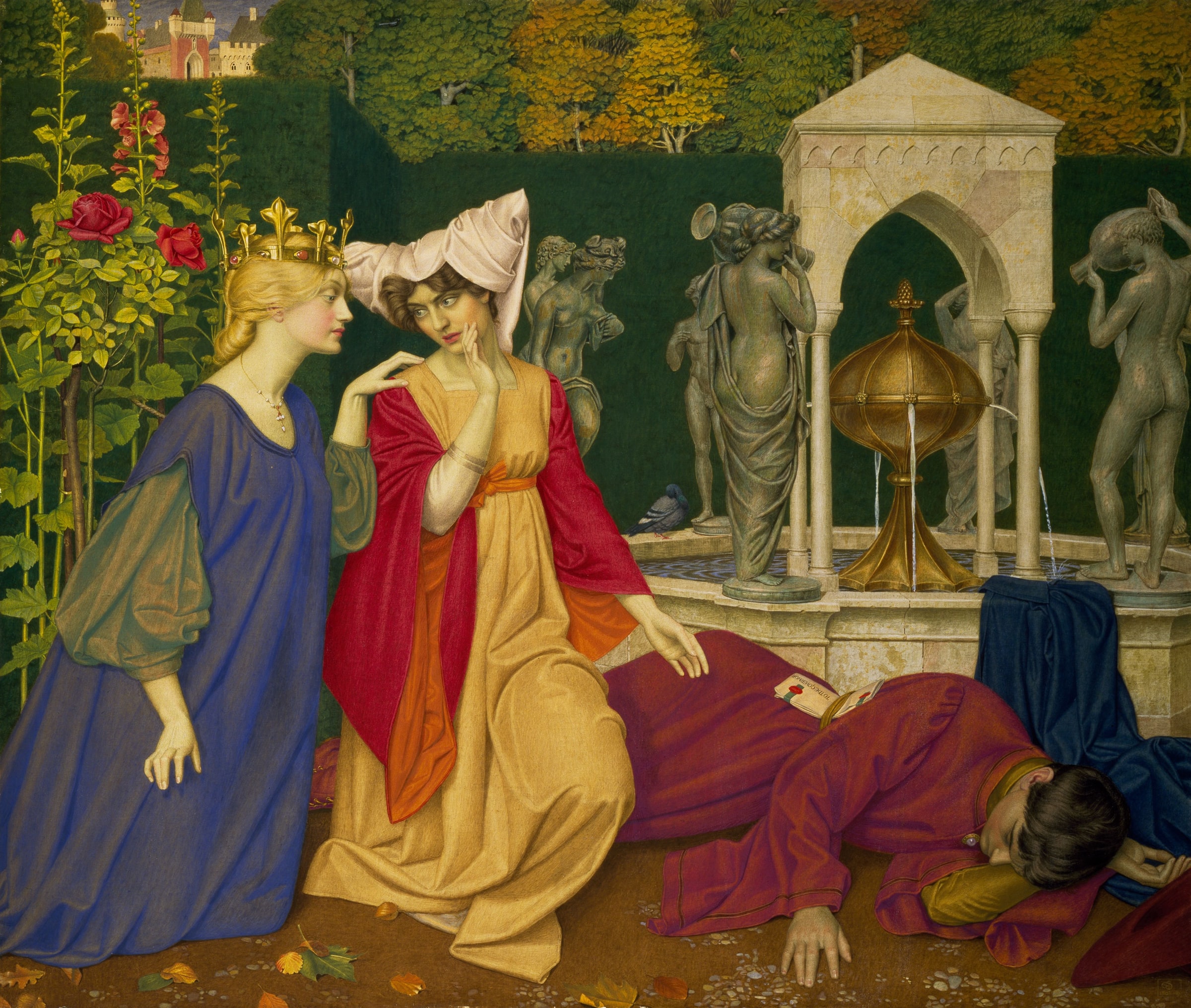
Changing the Letter, 1908, by Joseph Edward Southall. The subject is taken from the poem ‘The Man Born to be King’ from William Morris’s ‘The Earthly Paradise’. The sealed letter is addressed ‘To The Governor’
The Hidden King of England is one of the most important stories of our time because it challenges the truth as we know it and introduces a theory that if true, effects almost every single person living on the planet and many that have deceased. History itself, as we know it, would be effected. Human affairs would be effected, as currency and government stand trial.
The Hidden King of England overview from Amazon
Queen Victoria had a legitimate firstborn son, Marcos Manoel, from her first marriage to Blind Prince George of Cumberland in 1834. Marcos Manoel was exiled to Portugal, presented with the Royal Marks in 1850, trained as the King from 1850 to 1855, then made King of England in 1869, as King John II of England, a title that can only be held by the Sangreal – the Blood Royal. Queen Victoria celebrated this by opening Blackfriars Bridge and the Holborn Viaduct on the same day in October 1869. This was the Royal Mark. Marcos Manoel’s ancestry is traced back to the Two Jesuses and presents the Keys to London and Temple Bar. King John II Marcos Manoel is also descended from the Roman Caesars. His descendant today is H.R.H. Francisco Manoel. Queen Victoria sent in motion codes for her Great-Great-Great-Great Grandson Francisco Manoel that would only be realised from his birth and during his lifetime. The Hidden King reveals how the real Deus-Desponsyni family record their history so that it can unveil The Rose and reveal ‘The Family’.
Joseph Gregory Hallett declares Queen Anne Boleyn’s Royal lineage registered in the Common Law Court
Published on Dec 31, 2019
Joseph Gregory Hallett declares Queen Anne Boleyn’s Royal lineage, registered in the Common Law Court, 31 December 2019 Queen Anne Boleyn survived her execution and lived to breed again. This created the Royal Holy Grail lineage – a continuation of the Christian Mysteries established by Eleanor of Aquitaine, Queen of France and Queen of England, mother of King John of England (Magna Carta). Their descendants include Sir Walter Raleigh, ‘Prince’ Samuel Bellamy, and Joseph Gregory Hallett.
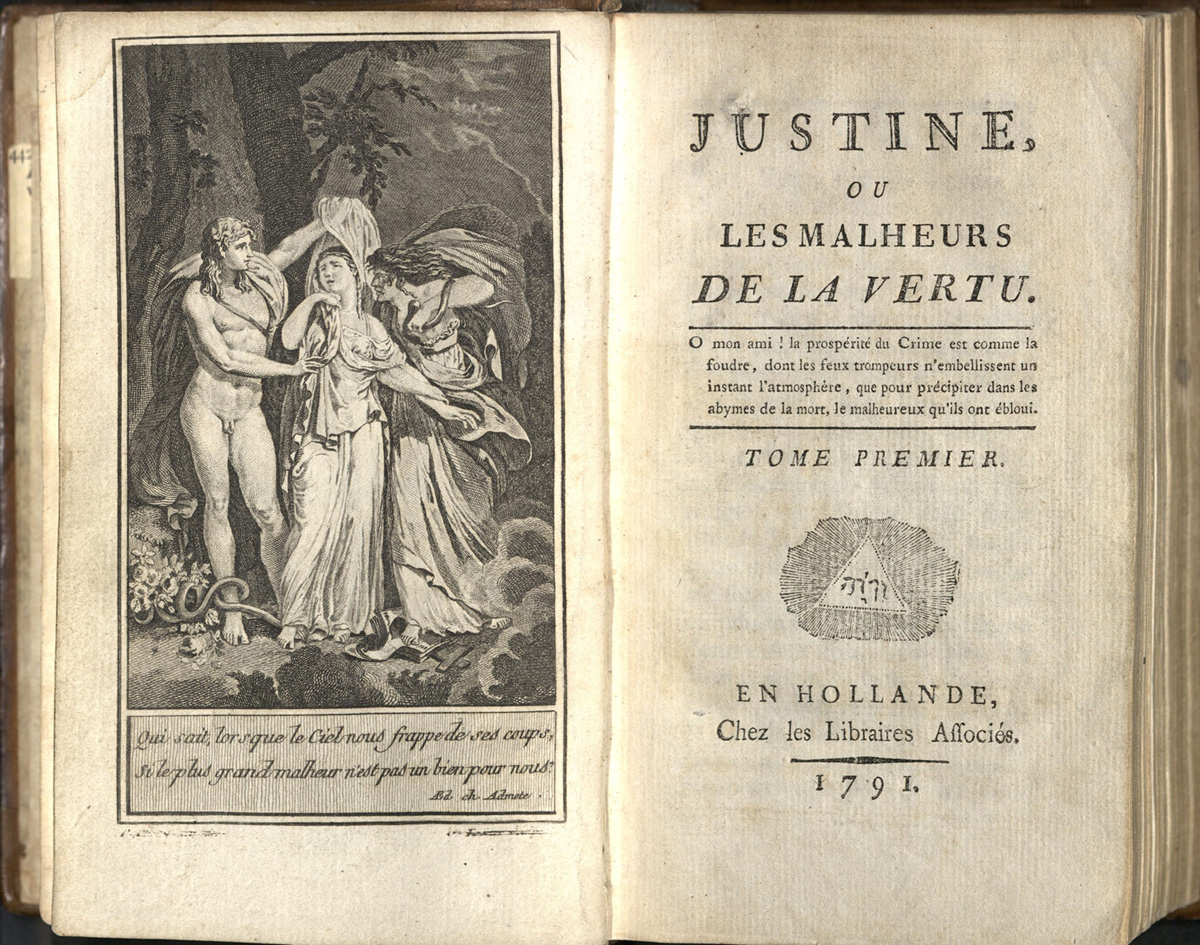
The first page of Sade’s Justine, one of the works for which Marquis de Sade was imprisoned. The dark work of a madman but offers insight into the depths of depravity and how there’s no joy in pain. Sade proves there always were people who take pleasure in abuse.
There’s nothing new under the sun but the Marquis De Sade explored every inch of the ugliest corners of darknesst and revealed the journey in graphic detail, the readers were astounded then and now.
The Following is from The Marquis De Sade, in a letter to his wife:
My manner of thinking, so you say, cannot be approved. Do you suppose I care? A poor fool indeed is he who adopts a manner of thinking for others! My manner of thinking stems straight from my considered reflections; it holds with my existence, with the way I am made. It is not in my power to alter it; and were it, I’d not do so.
This manner of thinking you find fault with is my sole consolation in life; it alleviates all my sufferings in prison, it composes all my pleasures in the world outside, it is dearer to me than life itself. Not my manner of thinking but the manner of thinking of others has been the source of my unhappiness. The reasoning man who scorns the prejudices of simpletons necessarily becomes the enemy of simpletons; he must expect as much, and laugh at the inevitable.
A traveler journeys along a fine road. It has been strewn with traps. He falls into one. Do you say it is the traveler’s fault, or that of the scoundrel who lays the traps? If then, as you tell me, they are willing to restore my liberty if I am willing to pay for it by the sacrifice of my principles or my tastes, we may bid one another an eternal adieu, for rather than part with those, I would sacrifice a thousand lives and a thousand liberties, if I had them.
These principles and these tastes, I am their fanatic adherent; and fanaticism in me is the product of the persecutions I have endured from my tyrants. The longer they continue their vexations, the deeper they root my principles in my heart, and I openly declare that no one need ever talk to me of liberty if it is offered to me only in return for their destruction.
Donatien Alphonse François, Marquis de Sade (French: [dɔnasjɛ̃ alfɔ̃z fʁɑ̃swa, maʁki də sad]; 2 June 1740 – 2 December 1814), was a French nobleman, revolutionary politician, philosopher, and writer, famous for his libertinesexuality. His works include novels, short stories, plays, dialogues, and political tracts. In his lifetime some of these were published under his own name while others, which de Sade denied having written, appeared anonymously. De Sade is best known for his erotic works, which combined philosophical discourse with pornography, depicting sexual fantasies with an emphasis on violence (particularly against women and children), suffering, anal sex, crime, and blasphemy against Christianity.
He became infamous for his numerous sexual crimes and abuse against young men, women and children. He claimed to be a proponent of absolute freedom, unrestrained by morality, religion, or law. The words sadism and sadist are derived from his name
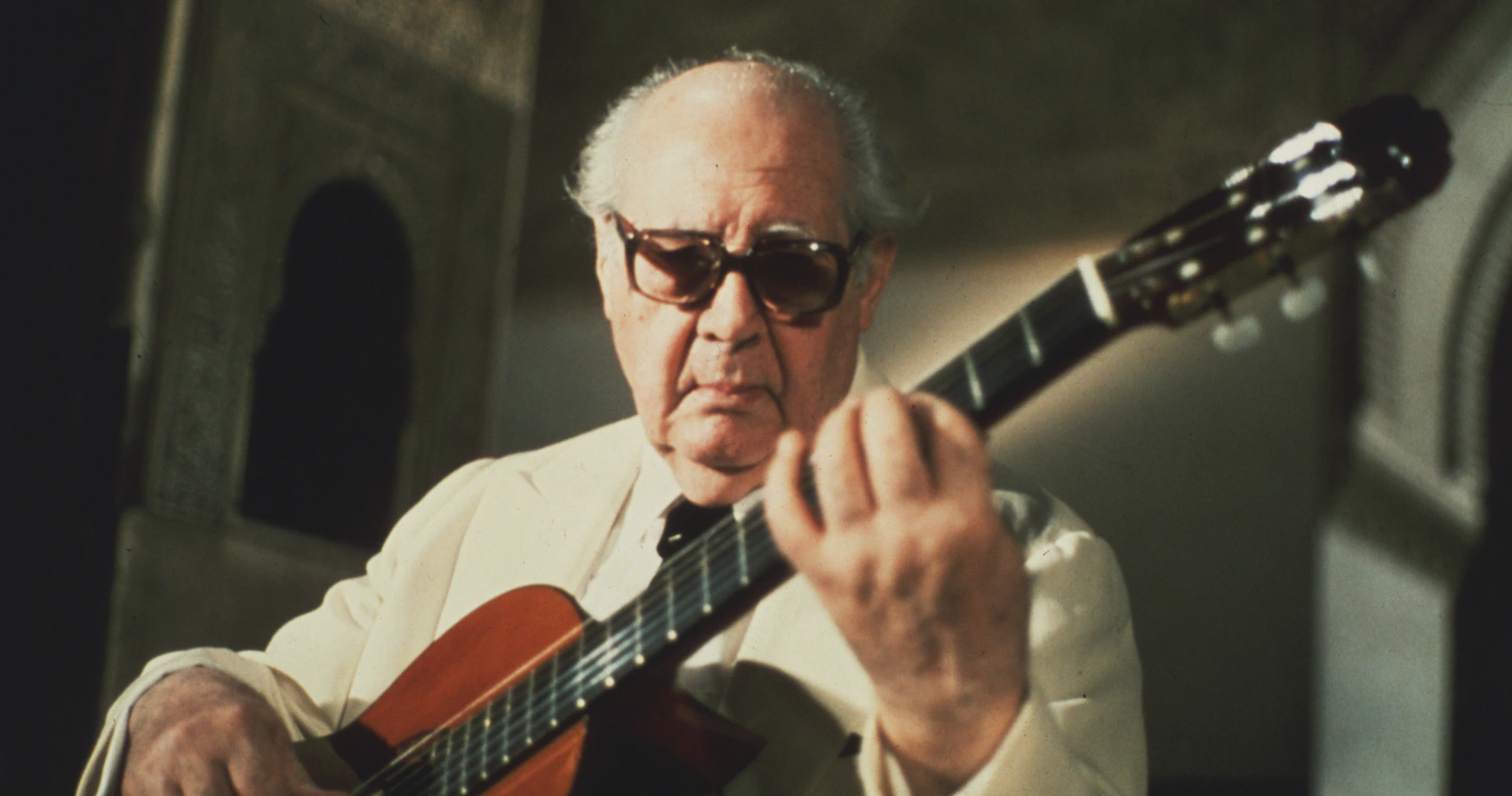
Andrés Segovia was the original rock star, flamboyant and bold. His genius is understanding the guitar to be an entire orchestra unto itself able to mimic or replace all sounds of any of the sections and even emit the chords of a concert, with a single instrument that was previously not considered important.
Andrés Segovia at a recital in the “Concerts Ysaye” in Brussels, 15 December 1932
The Most Illustrious Andrés Segovia as big as Elvis Presley in his day and toured the world until the ripe old age of 75 when he retired to Andulusia Spain to work for another 20 years from a fabulous home overlooking the Mediterranean, very near to his beloved Grenada.
The Most Illustrious Marquis of Salobreña, Andrés Segovia, was most illustrious
The Most Illustrious Marquis of Salobreña, was fascinated with the work of the great composer; Johann Sebastian Bach, as he was able to re-interpret orchestra arrangements into guitar ballads. He would play Bach covers, as part of his repertoire to concert halls around the world. It was he and small number of other virtuoso’s that made the guitar world famous for classic music… hence: classical guitar.
Guitar by Hermann Hauser, 1937, Munich, Germany. Concert guitar of Andrés Segovia’s from 1937 until 1962. Gift of Emilita Segovia, Marquesa of Salobreña, 1986 (1986.353.1). Housed in the Metropolitan Museum of Art.
Andrés Segovia can be considered a catalytic figure in granting respectability to the guitar as a serious concert instrument capable of evocativeness and depth of interpretation. It was Federico Moreno Torroba who said: “The musical interpreter who fascinates me the most is Andrés Segovia”. He can be credited to have dignified the classical guitar as a legitimate concert instrument before the discerning music public, which had hitherto viewed the guitar merely as a limited, if sonorous, parlor instrument.
Andres Segovia in Concert, November 1962
Throughout his life, if you were to compare the amount of work that Segovia produced, my guess it would be similar to 100 albums.
Segovia’s repertoire consisted of three principal pillars: first, contemporary works, including concertos and sonatas, usually specifically written for Segovia himself by composers with whom he forged working relationships, notably Spaniards such as Federico Moreno Torroba, Federico Mompou, and Joaquín Rodrigo, the Mexican composer Manuel Ponce, the Italian composer Mario Castelnuovo-Tedesco, and the great Brazilian composer Heitor Villa-Lobos; second, transcriptions, usually made by Segovia himself, of classical works originally written for other instruments (e.g., lute, harpsichord, piano, violin, cello) by Johann Sebastian Bach, Isaac Albéniz, Enrique Granados, and many other prominent composers; third, traditional classical guitar works by composers such as Fernando Sor and Francisco Tárrega. Segovia’s influence enlarged the repertoire, mainly as a commissioner or dedicatee of new works, as a transcriber, and to a far lesser extent as a composer with such works as his Estudio sin luz.
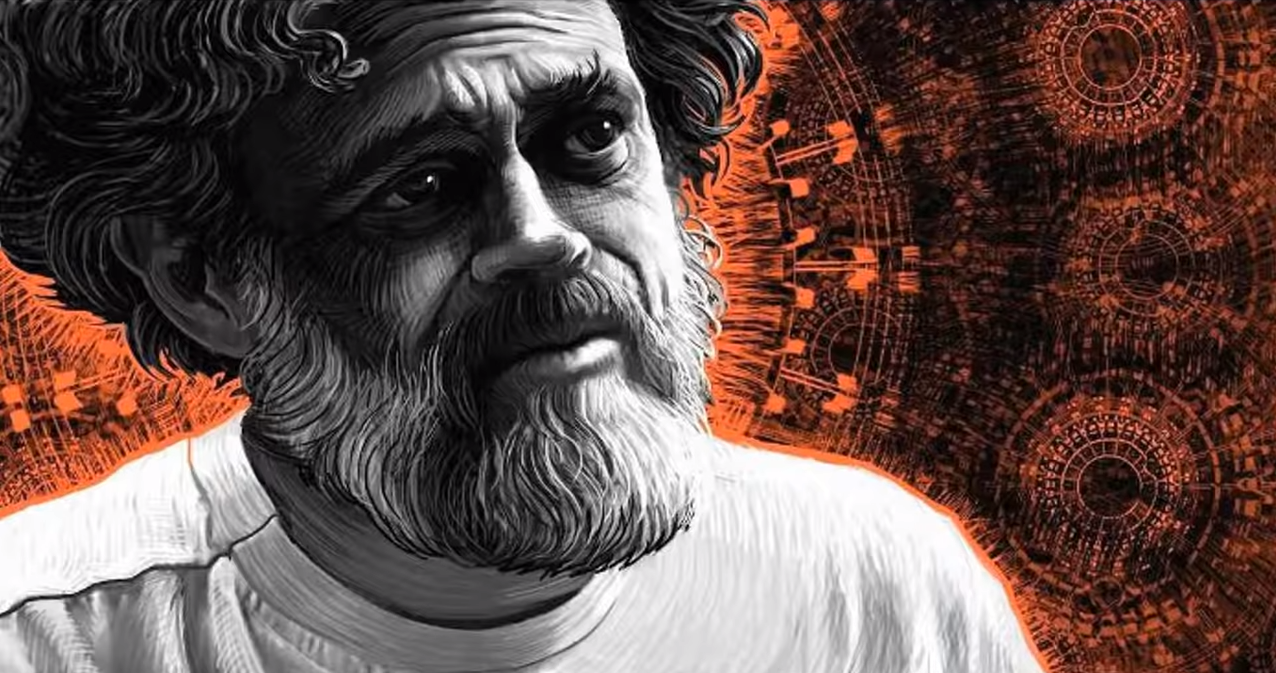
Terrence McKenna blazed a trail so far and wide that twenty years later thinkers can’t see to the end of it. He remarked in his last interview that the Omega Point is to science what the Eshcaton is to Theology and maybe it’s the same thing. If he he could only see the world now, in the year that the Mayan Calendar had as 2012, using Gregorian Calendar is actually 2020 using the Julian Calendar since 1582 (corrected difference is 8 years).
Terrence McKenna opened the mind of the world and still expands the thinking of anyone who learns what he was investigating. To categorize him with the Merry Pranksters that were dropping acid and dropping out, is to ignore the fact; Terrence McKenna changed how we thought about time and space, plus made us recognize and appreciate the I Ching.
McKenna was opposed to Christianity and most forms of organized religion or guru-based forms of spiritual awakening, favouring shamanism, which he believed was the broadest spiritual paradigm available, stating that:
What I think happened is that in the world of prehistory all religion was experiential, and it was based on the pursuit of ecstasy through plants. And at some time, very early, a group interposed itself between people and direct experience of the ‘Other.’ This created hierarchies, priesthoods, theological systems, castes, ritual, taboos. Shamanism, on the other hand, is an experiential science that deals with an area where we know nothing. It is important to remember that our epistemological tools have developed very unevenly in the West. We know a tremendous amount about what is going on in the heart of the atom, but we know absolutely nothing about the nature of the mind.
Terrence McKenna
Either philosophically or religiously, he expressed admiration for Marshall McLuhan, Alfred North Whitehead, Pierre Teilhard de Chardin, Carl Jung, Plato, Gnostic Christianity and Alchemy, while regarding the Greek philosopher Heraclitus as his favorite philosopher.
The I Ching or Yi Jing, usually translated as Book of Changes or Classic of Changes, is an ancient Chinese divination text and among the oldest of the Chinese classics.
The Philosophical debate of the Omega Point remains until this day to be at the crux of critical thinking and it was Terrence McKenna who brought new understanding and more discussion to the topic of the “Omega Point”, he brought it back into vogue.
The Omega Point is the subject of a belief that everything in the universe is fated to spiral towards a final point of unification. The term was coined by the French Jesuit Catholic priest Pierre Teilhard de Chardin (1881–1955).
Eschaton or End End Time description from Wikipedia
The end time (also called end times, end of time, end of days, last days, final days, doomsday, or eschaton) is a future described variously in the eschatologies of several world religions (both Abrahamic and non-Abrahamic), which teach that world events will reach a climax.
In Islam, the Day of Judgement is preceded by the appearance of the al-Masih al-Dajjal, and followed by the descending of Isa (Jesus). Isa will triumph over the false messiah, or the Antichrist, which will lead to a sequence of events that will end with the sun rising from the west and the beginning of the Qiyamah (Judgment day).
Non-Abrahamic religions tend to have more cyclical world-views, with end-time eschatologies characterized by decay, redemption, and rebirth. In Hinduism, the end time occurs when Kalki, the final incarnation of Vishnu, descends atop a white horse and brings an end to the current Kali Yuga. In Buddhism, the Buddha predicted his teachings would be forgotten after 5,000 years, followed by turmoil. A bodhisattva named Maitreya will appear and rediscover the teaching of dharma. The ultimate destruction of the world will then come through seven suns.
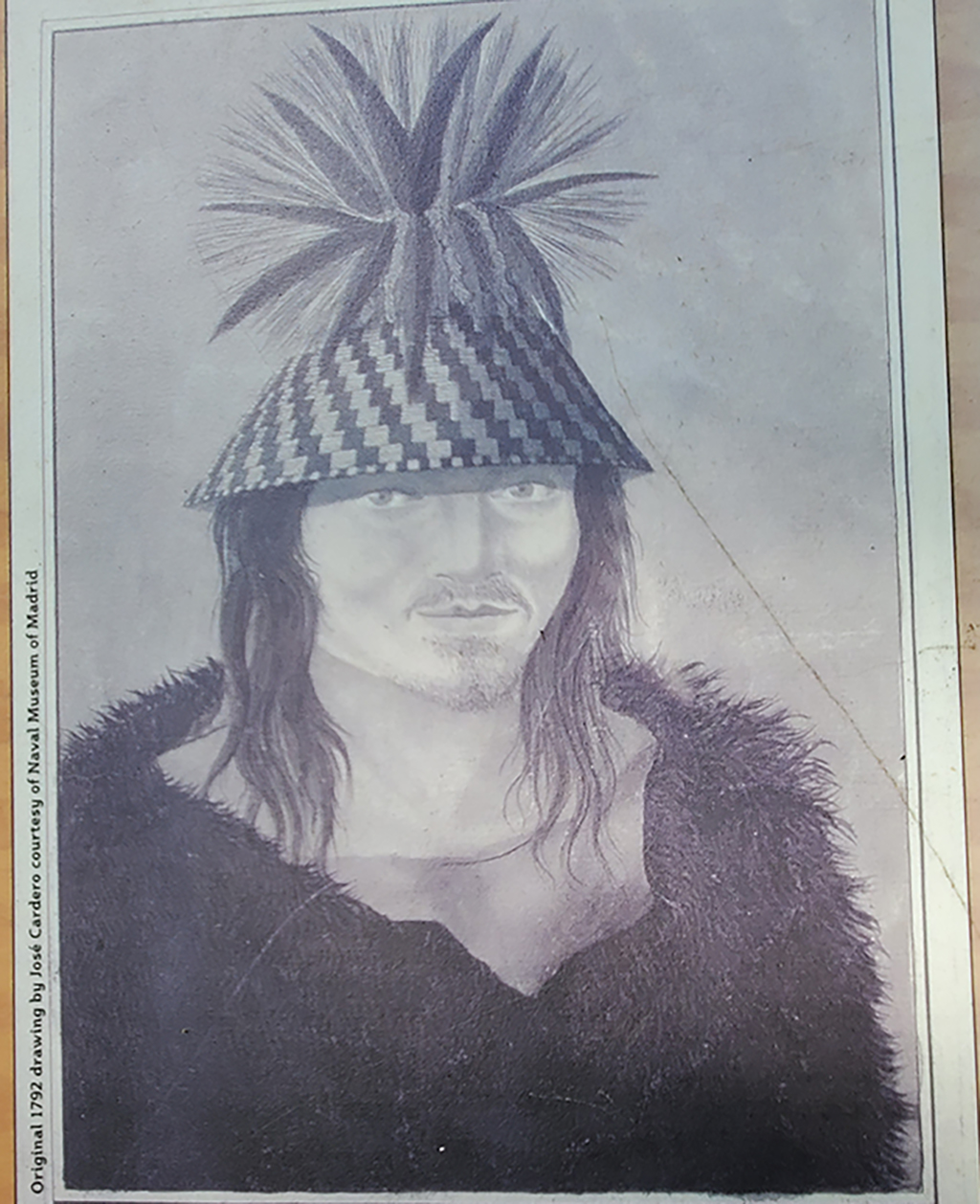
Qeyapaplanewx demands respect and deserves to be honored. Over 300 years ago Vancouver was his Kingdom, he was the Chief of the Musqueam Nation.
His place marker overlooks the Pacific from a perch above the cliffs and if it were not for a memorial he’d be all but forgotten. Not anymore because I will always have this page to remind me, and anyone else who stumbles upon it, that a man’s face tells an important story and this chief’s tale is epic.
So I searched out Qeyapaplanewx online and found a story of his European vacation and subsequent return to Canada, via Toronto, after 280 years.
Centuries-old sketch comes home
Little-known work showing Musqueam chief made in 1792 by Spanish cabin boy
VANCOUVER — He stares at us from centuries past, a clear, unflinching gaze attesting to his status as a great warrior chief of the Musqueam. Strands of long, dark hair curl past his shoulders and he wears a stylish conical cedar hat adorned with feathers.
Call him Qeyapaplanewx. That we know about him at all is thanks to a young Spanish cabin boy with an agile sketch pen who drew the Musqueam chief during a visit by his country’s navy to the waters off Point Grey in June of 1792.
As such, he is the first identified resident of what has long been Canada’s third-largest city, on lands once fished and hunted solely by the Musqueam.
Yet Jose Cardero’s remarkable drawing, squirrelled away for years in a dark storage area of the Naval History Museum in Madrid, is virtually unknown in Vancouver.
This image of Qeyapaplanewx has sat for years in the storage area of a Madrid museum.
Not any more. Yesterday, the portrait came back – or at least a version of it.
In a ceremony on Qeyapaplanewx’s old stomping grounds (aka Vancouver City Hall) that stirred bittersweet native emotions, Spain’s ambassador to Canada presented vivid, framed replicas of Mr. Cordero’s historic sketch to the city and to the Musqueam band.
Struck by the majesty of the little-seen portrait, viewers hoped that the Musqueam chief might now achieve some of the prominence of the city’s non-native namesake, Captain George Vancouver, who was in the harbour on his own ship at the same time as Mr. Cordero made his drawing.
“Capt. Vancouver had artists, too, but they ignored the natives,” said historian Robin Inglis.
Musqueam lawyer Jim Reynolds suggested the portrait be used on the front of the city’s tourist brochures. “It’s a reminder that we have a tremendous history that all of us should cherish. I’m surprised it’s so little known.”
Band councillor Howard Grant, wearing a business suit with no conical cedar cap in sight, claimed to be a descendant of the Musqueam leader from long ago.
“I remember meeting my great-uncle who was 106 when he died in 1954. So he’d have been born in 1848, and his grandfather would have been there when the Spanish came,” said Mr. Grant, 62.
“So the warrior chief would have been my great, great ancestor.
“Now, we can loop it all back to 2008. The drawing has a dramatic significance for us. Is this not clear evidence that we used to own all our territory? It makes me proud.”
Former chief Delbert Guerin called the replica an amazing depiction of the 18th-century Musqueam warrior.
“It makes me very happy to have this. I only even heard about this picture a couple of years ago. To me this a very honourable day.”
But Mr. Guerin said his joy is tempered by the portrait’s unspoken indication of how much the band has lost since the Spaniards and British arrived.
“It’s a reminder of all that has taken place, so there’s a strong sense of loss. This is still our unceded territory, and I think our chief would have been very disappointed at what has happened.”
The gift from Spanish Ambassador Mariano Alonso-Buron was also a reminder of the almost-forgotten presence of Spain in the early days of West Coast exploration.
While Capt. Vancouver and Captain James Cook, who first met B.C. natives at Nootka on Vancouver Island in 1778, are celebrated by local historians and residents alike, few know that most of the early charting of the West Coast was carried out by Spanish mapmakers.
During June of 1792, for instance, there was perhaps the city’s first traffic jam, as Capt. Vancouver’s vessel was joined by two Spanish naval ships in Burrard Inlet.
But the British had staying power, as reflected by Capt. Vancouver’s immediate renaming of the point where the University of B.C. and many mansions are today as Point Grey.
The Spanish had called the imposing peninsula Langara, a name that lives on in a few city locations, including Langara Community College.
Not many know that such well-known place names as the city’s Spanish Banks, Tofino, Port Alberni, Galiano, Valdes Island and Malaspina stem from the early Spanish naval explorers who prowled up and down the coast for the last 50 years of the 18th century.
Even Jose Cordero, the cabin boy-turned-artist, is remembered by the Strait of Cordero, which runs between the north of Vancouver Island and the mainland.
“With this drawing, he will always have a local significance,” said Mr. Inglis, the historian. “His subject, the Musqueam chief, is the first known citizen of what is now Vancouver.”
Austin Steinbart is recent to me And to be clear, I have followed QAnon from it’s inception and always had the feeling that the information was useful and from a benevolent source. The posts were military style and evidently code written by an intelligence agency, or experts in that field. These are signals, to use the correct jargon and I wanted to learn them.
Austin Steinbart has helped me learn more about the quantum Internet and the future of information warfare by the use of “drip nurture” strategic marketing. Whether or not he is actually Q is not for debate, he doesn’t say he is and is guarded about telling the exact truth. Machiavellian for sure and if he were not, then he would be fake. If he can’t follow orders, then he wouldn’t win the position, which is to make the Q movement go public.
Q has an obsession with zero delta and time stamps to a level of precision that I’d never seen before. Having a background in online poker software, random number generators and systems to detect card cheating, it became clear, early on to me, that Q was super sophisticated and I could sense that these signals were not meant for me specifically but were aiming at an equally lethal, sophisticated enemy.
My impression as I was drawn into the content was that we are witnessing a high-stakes game of war, being conducted by AI running on quantum computers. I knew this tech was in use and heard about the release of Tyler, so it was intriguing to imagine that good versus evil was happening via quantum computing and an insane form of time-warp tactics, where the future proves the past. Austin Steinbart calls it “drip nurture”.
Part 3 of the series
Knowing as we know now, that Google is working with China and have Andreno the Quantum and Chrome the worlds most popular web browser. Therefor if the two giants team up, as it appears they have, then all the data vacuumed up by Jack Ma with Alibaba Quantum (the world’s most powerful super computer). The marriage is Andreno Chrome on Alibaba steroids when NEW AI is deployed on the top of that massive twin platform.
Elon Musk is the wildcard in the game and as hard as it may be to understand; Julian Assange and together the promise of unleashing the Nikola Tesla treasury trove of anti-gravity, free energy and frequency medicine. The man to lead us towards the disclosure is Austin Steinbart and he has a plan that includes bringing QAnon movement into the light and normalize the strategy. This is the great awakening.
Austin Steinbart is bringing the Defence Intelligence Agency (DIA) into the light and promises to represent us with honesty and integrity. The hope and promise is that Space Force will have a civilian division where a new type of keyboard warrior can help defend America from threats foreign and domestic online and that these people will have authority and support of military strike force units that can put boots at the door of a crime.
Austin Steinbart Rocks as QAnon! Give him a chance and re-think how Space Force can be a force of good in the future. Peace!
Alameda, CA – June 23, 2020: Aunt Jemima pancake mix next to a bottle of original syrup. The pancake mix debuted in 1889, the first ready mix, and became one of the most recognized names in US history
The world knew her as “Aunt Jemima,” but her given name was Nancy Green and she was a true American success story. She was born a slave in 1834 Montgomery County, KY, and became a wealthy superstar in the advertising world, as its first living trademark
Green was 56-yrs old when she was selected as spokesperson for a new ready-mixed, self-rising pancake flour and made her debut in 1893 at a fair and exposition in Chicago. She demonstrated the pancake mix and served thousands of pancakes… and became an immediate star. She was a good storyteller, her personality was warm and appealing, and her showmanship was exceptional.
Her exhibition booth drew so many people that special security personnel were assigned to keep the crowds moving. Nancy Green was signed to a lifetime contract, travelled on promotional tours all over the country, and was extremely well paid.
Her financial freedom and stature as a national spokesperson enabled her to become a leading advocate against poverty and in favour of equal rights for folks in Chicago. She was one of the very first black millionaires when she died.
General Mills bought her name and likeness from her. She maintained her job until her death in 1923, at age 89. I would bet most protesters know absolutely nothing about Nancy Green. Nancy Green was a remarkable woman… and she has just been ERASED.
You must be logged in to post a comment.