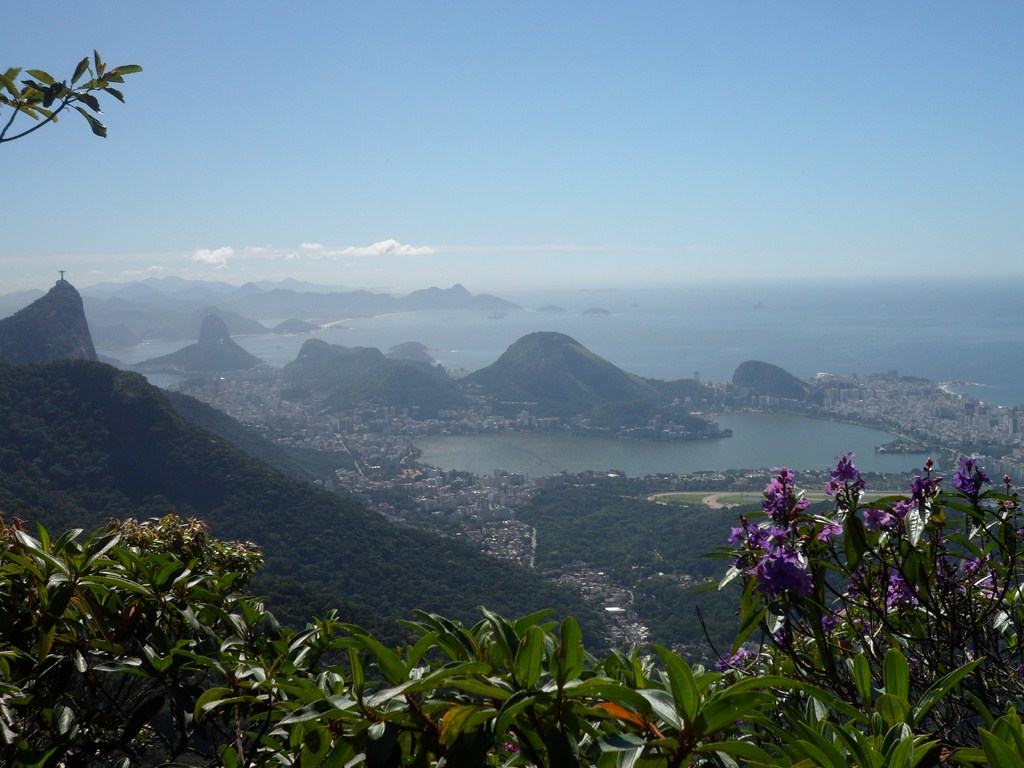
I didn’t invent that slogan but I think that Ben Franklin would agree. Brazil is perfection, in it’s natural state. Comparing to Canada the distances are as vast but due to the climate and geography, much of the countryside is lush and verdant green.

Brazil is the last greatest country left on earth (in my opinion). Canada once held this distinction but the problems of the neighbor country, infected the corporate and political culture, although it’s possible that the genetic flaws of the parent (Great Britain) left her susceptible to problems. None-the-less; Government grew out of control, until the free-spirit of the people was throttled by over-regulation. Now you need to buy a permit, to get a license, to negotiate for an approval. However, rules and regulations are the way of the world, it’s happening here in Brazil too. So, I’m curious to watch and learn how Brazil manages 200 million people, since the potential is boundless.
[box type=”note”]The massive South American country is oozing with natural resources, this is the land of milk and honey. In the major cities of Brazil, of which there are 13, prosperity is evident everywhere.[/box]
Brazil 13 cities with more than 1 million people (2007 Statistics):
- Sao Paulo (10,9 million)
- Rio de Janeiro (6,1 million)
- Salvador (2,9 million)
- Distrito Federal (2,5 million)
- Fortaleza (2,43 million)
- Belo Horizonte (2,41 million)
- Curitiba (1,8 million)
- Recife (1,5 million)
- Porto Alegre (1,42 million)
- Belem (1,41 million)
- Goiania (1,244 million)
- Guarulhos (1,236 million)
- Campinas (1,03 million)
It’ not uncommon to see plates of fresh food abandon on the street, since the bar and restaurant owners (and others) feed the poor from take-away containers of rice, beans, produce, meat and bread. Produce grows so well in the fertile land and is so plentiful that no-one starves unless they choose.
Yes, there are allot of poor people. Brazil has one of the worst ratios for distribution of wealth, and the mega-rich gap is growing wider. However, the middle class is expanding, one of the last places left on earth where the common man can rise up to become a prominent community leader. It is revered in Brazilian culture, to become a celebrity that once-upon-a-time lived in a favela.
Everyday more people (per capita) become millionaires in Brazil, than any other country in the world. Now that’s a nice cup to hoist but better would be the education. If there’s one thing that it’s sadly lacking in Brazil, it’s that too many kids are raised without a good education. In a country that dominates in exports of so many commodities, for there to be one child left on the street is a mistake.
Violent crime and gang corruption is the biggest negative you hear about living in Brazil, this is an issue for sure. There are some problems related to gun violence, in areas where the U.S. introduced their war on drugs, which has done zero to reduce the drug trade but certainly raised the stakes for corruption and gang operations. Therefore, the statistics are skewed to make things look much worse than they actually are. However, it’s a notoriously bad country, to be in the wrong place at the wrong time.
My sincere hope is that the greatest future lays ahead because the people are demanding that Government spending on education be increased. Hence, we go back to talking about Government, where we started, and where Brasileiro’s always retreat to when the topic of the poor arises – oh it’s the Governo etc… everyone has been indoctrinated to expect the Government to be corrupt, another global condition. Meanwhile the power elite and old-guard establishment, which now includes the influence of innumerable multi-national conglomerates, that have leveraged their way into the gravy train, to supply the greatest culture driven, brand frenzy, credit laden, consumer product consumption orgy in history. The Romans pale in comparison, even America wasn’t completely plugged-in to stuff like these folks, this is shopoholic-central.
The bottom line is that Brazil rocks! For allot of valid reasons, not least of which is the fun-loving people, living on thousands of miles of tropical beaches. Having said that; my number one reason for loving living here, is that aside from providing civil authority by military force in Haiti (with UN edict), we do not export our democracy with the barrel of a gun.
Brazil has enough problems at home, and now we can all see that every country has it’s own problems at home, to preferably contend with. Therefore, since Brazil has no blood on it’s hands, I’m very willing and happy to contribute towards making it a better place for everyone. I’m glad to be a Brazilian citizen and love living here.



 One of the great benefits of mastering


You must be logged in to post a comment.