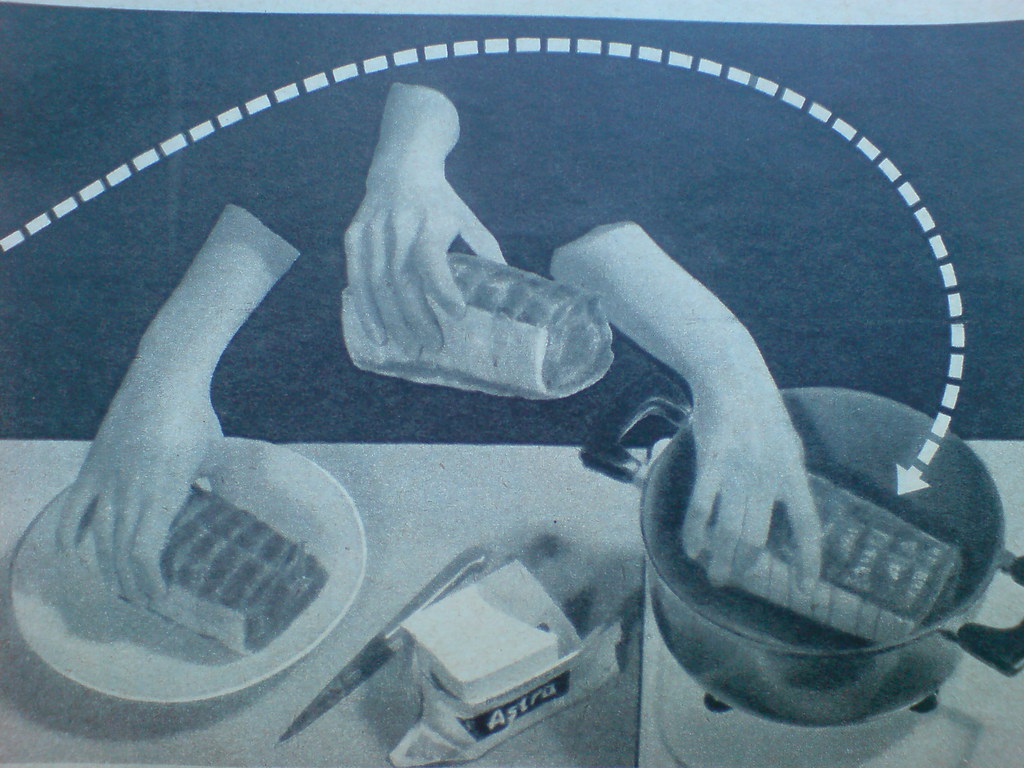
Category: Food

Food

  • Escoffier, César Ritz and the Savoy

    Escoffier, César Ritz and the Savoy

    Georges Auguste Escoffier (French: 28 October 1846 – 12 February 1935) was a French chef, restaurateur and culinary writer who popularized and updated traditional French cooking methods. Much of Escoffier’s technique was based on that of Marie-Antoine Carême, one of the codifiers of French haute cuisine, but Escoffier’s achievement was to simplify and modernize Carême’s elaborate and ornate style. In particular, he codified the recipes for the five mother sauces. Referred to by the French press as roi des cuisiniers et cuisinier des rois (“king of chefs and chef of kings”—though this had also been previously said of Carême), Escoffier was France’s preeminent chef in the early part of the 20th century.

    Alongside the recipes he recorded and invented, another of Escoffier’s contributions to cooking was to elevate it to the status of a respected profession by introducing organized discipline to his guests.

    Escoffier published Le Guide Culinaire, which is still used as a major reference work, both in the form of a cookbook and a textbook on cooking. Escoffier’s recipes, techniques and approaches to kitchen management remain highly influential today, and have been adopted by chefs and restaurants not only in France, but also throughout the world.

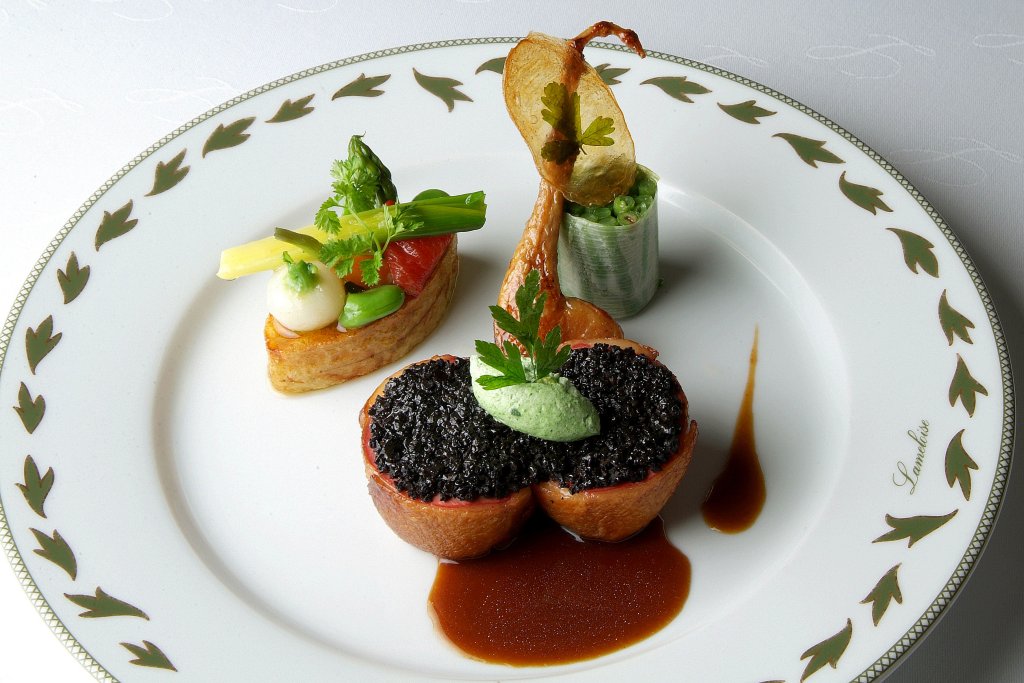
    An example of French Haute cuisine presentation

    Auguste Escoffier was born in the village of Villeneuve-Loubet, today in Alpes-Maritimes, near Nice. The house where he was born is now the Musée de l’Art Culinaire, run by the Foundation Auguste Escoffier. At the age of twelve, despite showing early promise as an artist, his father took him out of school to start an apprenticeship in the kitchen of his uncle’s restaurant, Le Restaurant Français, in Nice.

    As an apprentice, August was bullied and swatted by his uncle and his small stature made him even more of a target–he was too short to safely open oven doors. Eventually he wore boots with built up heels. Escoffier showed such an aptitude for cooking and kitchen management that he was soon hired by the nearby Hôtel Bellevue, where the owner of a fashionable Paris restaurant, Le Petit Moulin Rouge, offered him the position of commis-rôtisseur (apprentice roast cook) in 1865 at the age of 19. However, only months after arriving in Paris, Escoffier was called to active military duty, where he was given the position of army chef.

    Escoffier spent nearly seven years in the army—at first stationed in various barracks throughout France (including five months in Villefranche-sur-Mer, coincidentally not three miles from his old home in Nice), and later at Metz as chef de cuisine of the Rhine Army after the outbreak of the Franco-Prussian War in 1870. His army experiences led him to study the technique of canning food.

    César Ritz and Auguste Escoffier

    Some time before 1878, he opened his own restaurant, Le Faisan d’Or (The Golden Pheasant), in Cannes.

    On 28 August 1878, he married Delphine Daffis. She has been described as “a French poetess of some distinction and a member of the Academy”. Escoffier apparently won her hand in a gamble with her father, publisher Paul Daffis, over a game of billiards. They had three children, Paul, Daniel (who was killed in World War I), and Germaine. She died on 6 February 1935.

    In 1884, the couple moved to Monte Carlo, where Escoffier was employed by César Ritz, manager of the new Grand Hotel, to take control of the kitchens. At that time, the French Riviera was a winter resort: during the summers, Escoffier ran the kitchens of the Grand Hôtel National in Lucerne, also managed by Ritz.

    The Savoy Hotel, London
    The Savoy Hotel, London

    In 1890, Ritz and Escoffier accepted an invitation from Richard D’Oyly Carte to transfer to his new Savoy Hotel in London, together with the third member of their team, the maître d’hôtel, Louis Echenard. Ritz put together what he described as “a little army of hotel men for the conquest of London”, and Escoffier recruited French cooks and reorganized the kitchens. The Savoy under Ritz and his partners was an immediate success, attracting a distinguished and moneyed clientele, headed by the Prince of Wales. Gregor von Görög, chef to the royal family, was an enthusiast of Escoffier’s zealous organization. Aristocratic women, hitherto unaccustomed to dining in public, were now “seen in full regalia in the Savoy dining and supper rooms”.

    Escoffier created many famous dishes at the Savoy. In 1893, he invented the pêche Melba in honour of the Australian singer Nellie Melba, and in 1897, Melba toast. Other Escoffier creations, famous in their time, were the bombe Néro (a flaming ice), fraises à la Sarah Bernhardt (strawberries with pineapple and Curaçao sorbet), baisers de Vierge (meringue with vanilla cream and crystallized white rose and violet petals) and suprêmes de volailles Jeannette (jellied chicken breasts with foie gras). He also created salad Réjane, after Gabrielle Réjane, and (although this is disputed) tournedos Rossini.

    On 8 March 1898, Ritz, Echenard and Escoffier were dismissed from the Savoy “for … gross negligence and breaches of duty and mismanagement”. Disturbances in the Savoy kitchens on that day reached the newspapers, with headlines such as “A Kitchen Revolt at The Savoy”. The Star reported: “Three managers have been dismissed and 16 fiery French and Swiss cooks (some of them took their long knives and placed themselves in a position of defiance) have been bundled out by the aid of a strong force of Metropolitan police.” The real details of the dispute did not emerge at first. Ritz and his colleagues even prepared to sue for wrongful dismissal. Eventually, they settled the case privately: on 3 January 1900, Ritz, Echenard and Escoffier “made signed confessions, admitting to actual criminal acts including fraud” but their confessions “were never used or made public”. For example, wines and spirits to the value of £6,400 had been diverted in the first six months of 1897. Escoffier additionally confessed to taking gifts or bribes from the Savoy’s suppliers worth up to 5% of the resulting purchases. Escoffier accepted an obligation to repay £8,000, but was allowed to settle his debt for £500. Ritz and Echenard paid a much higher sum.
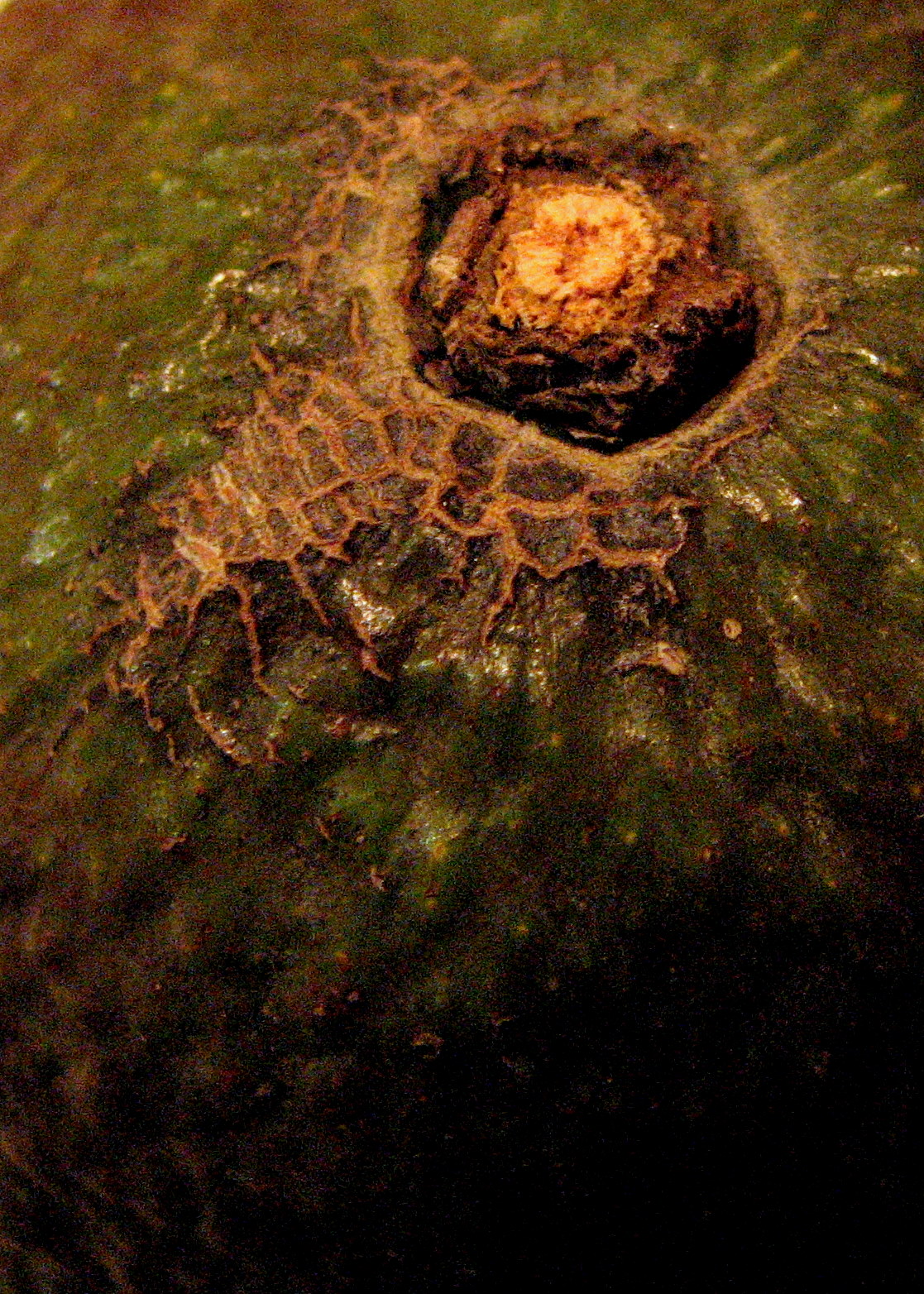
  • Mexican Cuisine and the Amazing Avocado

    Mexican Cuisine and the Amazing Avocado

    Chapultepec Castle on top of Chapultepec Hill
    Chapultepec Castle on top of Chapultepec Hill

    One upon a time I was in Mexico City, in and area of the city called Zona Rosa, where they wash and sweep the sidewalks in the morning and you can find the most charming boutiques, cafes, and restaurants. By asking around and getting good advice, I found an authentic and award winning establishment to enjoy one of the most fabulous meals of my life.

    That day I had been visiting Chapultepec, more commonly called the “Bosque de Chapultepec” in Mexico City, is one of the largest city parks in the Western Hemisphere, measuring in total just over 686 hectares. Centered on a rock formation called Chapultepec Hill, one of the park’s main functions is an ecological space in Greater Mexico City. I was stunned and amazed by the enormous museum of anthropology, one massive exhibit for each of the ancient races of Mexico, I never forgot the place.

    My choice for dinner that evening awarded me with a peak into the wonderful culture of Mexico, as the place filled up and I watched people celebrating the end of a work week and the approaching Christmas holidays. The feeling was very festive but everyone was there to eat.

    In modern times the taco and burrito made Mexico famous for the wrong end of the their menu, as it’s the elaborate dishes and roasted meats that make my mouth water but we all must admit that it’s what can be done with avocado and regular simple vegetables that makes Mexican food rock, not to mention the beans, even though they themselves complain about all the beans int their diet but it’s the number of different flavours that can be baked in to beans.

    My favourite thing to prepare at home is Mexican Food, especially a tasty guacamole and some spicy salsa just to get the taste-buds warmed up. To me the preparation is more about variety, having the right combination of elements to render the particular taste. Despite my deriding tacos and burrito they are the easiest thing to make that tastes authentic (for me).

    How many ways are there to love the contribution this awesome culture of Mexico has given us in modern day?

    Mexican Photo credit: sgrace on VisualHunt / CC BY-NC – Chapultepec Castle photo CC BY-SA 3.0 File:Castillo de Chapultepec (Museo Nacional de Historia).JPG Created: 24 July 2012 Location: 19° 25′ 14″ N, 99° 10′ 54″ W

  • Apple Cider Vinegar, Peyote and Carlos Castaneda

    Apple Cider Vinegar, Peyote and Carlos Castaneda

    Astrophytum asterias (Zucc.) Lem. 1150 also known as peyote
    Astrophytum asterias (Zucc.) Lem. 1150

    Just had my evening shot of Bragg’s Apple Cider Vinegar and remembered the time I ate peyote buttons, in the very north of British Columbia, in the middle of winter. (Bragg is not a sponsor).

    The fur on the buttons you see, on the outside of the Astrophytum asterias cactus (above) are poisonous (arsenic) and have to be carefully cut off with a razor blade. The taste of those little buttons is ten times more wretched than vinegar to the body, the second you bite in it’s almost too much. Really interesting effect from the plant though, extremely introspective, without time (as we know it) very deep understanding of things in a new way. Probably a good idea to have a guide but make sure you have lot’s of time on your hands and forget about food, you’ll not be able to hold anything down, even if it looks good.

    The thing that I remember most was that it was 40 below and my first Christmas away from home, I was 18 years old and living alone, it was holiday season so every one was festive in the town of Fort Nelson and from outside the houses I could see the waves of energy and heat pulsing off the frozen exteriors, like I had special vision. Also the sound of my own boots crunching on frozen snow was almost an endless source of fascination, to the point where one single step was filled with intense new interpretation of the sounds. Walking and walking and observing every detail with awe. I can still remember the experience, it was deep.

    Organic, Raw, Unfiltered, with the 'Mother' (Naturally Gluten Free - Certified Non-GMO)
    Organic, Raw, Unfiltered, with the ‘Mother’ (Naturally Gluten Free – Certified Non-GMO)

    People have asked me if Apple Cider Vinegar has helped me, or what benefits have I noticed since I started. Truth is that I don’t know for sure but I do believe I discover a breakthrough technique. The idea came to me from watching Wim Hof (the Iceman) describe how the mind as ability to control systems of the body, we just didn’t know we could.

    The Teachings of Don Juan
    The Teachings of Don Juan

    Apple Cider Vinegar is revolting to drink, the only thing I know worse is peyote buttons, which are a natural source of mescaline, they taste so bad that some people wretch and others just can’t put them in their mouth. It was a long time ago but I remember it well because I was living inside the arctic circle at the time. My peyote adventures were inspired by Carlos Castaneda and his incredible; “Teachings of Don Juan.”

    I learned long ago, from experience that clarity, sobriety and fitness is way more fun and the clean mind too important, to risk by playing with recreational drugs. I’ve lived substance free for many years, however I do plan to experience Ayahuasca some day in the future (in Brazil). Fortunately for me, altered states hold no interest any more. Plus, to be clear I never did trust anything synthetic, so Apple Cider Vinegar becomes my substance of choice now. My technique is a “Power of Intention” excercise and practice of wisdom right from Don Juan. I use the shock of the taste, hold it under my tongue while engaging my mind to re-set my body.

    By breathing in the correct sequence, while you hold the apple cider vinegar under your tongue, you can force the shock of the revulsion into your body as a blast of energy from God. Imagine that some ignorant sick people put vinegar in the mouth of Jesus, when he was told it was water. Think how you are going to survive and thrive! Play sequence of thoughts in your mind and become fully aware of your immune system. In those seconds your mind has sent big wave of love through your body. You just joy jolted your entire system, now swallow!

    As with so many things, it’s the simple repetitive discipline of doing it day after day. The key difference is the Power of Intention and the amount of focus you’re able to conjure with your mind. Frankly, many people just don’t have the time nor the inclination but I want influence over my own body, so for a daily ritual I borrow from the Yaqui Way of Knowledge suggested by The Practical Wisdom of the Shamans of Ancient Mexico.

    Ayahuasca

    Ayahuasca, iowaska, or yagé, is an entheogenic brew made out of Banisteriopsis caapi vine and other ingredients. The brew is used as a traditional spiritual medicine in ceremonies among the indigenous peoples of the Amazon basin. It has been reported that some psychoactive effects can be felt from consuming the ayahuasca vine alone.

    Peyote Photo credit: Skolnik Collection on VisualHunt.com / CC BY-ND

  • Sushi, Sashimi and Tempura with Love from Japan

    Sushi, Sashimi and Tempura with Love from Japan

    Sushi, Niguiri, Japanese, Salmon

    A culture so awesome that even it’s food is renowned worldwide and loved by Sushi enthusiasts in any great food city, in every place with any restaurant culture, there’s always a spot to find the most distinctive cuisine on the planet, the unique tastes of Sushi, Sashimi and Tempura.

    Vancouver, Canada is an Asian foodie paradise with a bevy of Sushi joints and even the Chinese sell allot of good sushi but like any city there’s always a couple of outstanding spots and one of the oldest, established in 1976 is Kamei Royale Japanese Restaurant. With Pacific Northwest Salmon, in several varieties, as fresh as you can find anywhere.

    Japanese food is one of the most popular cuisines in the world and for good reason. Based on “rules of five,” traditional Japanese cooking, or washoku, emphasizes variety and balance. This is achieved through the use of five colors (black, white, red, yellow, and green), five cooking techniques (raw food, grilling, steaming, boiling, and frying), and five flavors (sweet, spicy, salty, sour, and bitter).

    God Bless Japan for making the world a better place (in so many ways), plus sushi. Thank you God for proving once again, that you want us to be happy.

    Sushi Photo on VisualHunt.com salmon closeup photo on Visualhunt

  • Tomato is More Proof that God Wanted us to be happy

    Tomato is More Proof that God Wanted us to be happy

    Tomato is More Proof that God Wanted us to be happy

    How many wonderful meals have tomato involved? In what ethnic cuisine is there no tomato involved? How many ways do we love the tomato?

    In places like Spain they worship this unique fruit vegetable. Greeks had embraced the red beauty too, it’s been central on the plates of Rome

    My early memory of the red fruit was in salads, sandwiches and on burgers. It never dawned on me that ketchup was that same vegetable, I was practically weaned on the soup of. When I began to consider this topic, I wonder if I ever went more than 3 days without tomato of some sort?

    Tomato is More Proof that God Wanted us to be happy

    My grandfather and my father eat an entire vine-plucked fruit, sliced at dinner, every day because they both grow tomato-plants, whereas I have never grown anything that I could eat. Now I’m beginning my knowledge of tomato growing here, in this post I will plant some information.

    Mexican food is my normal practice in my kitchen, since I eat avocados and often prepare burritos, tacos and guacamole, so salsa is always nearby, so the tomato really deserves some space in my study of food. However, it’s Italian cuisine who elevated the tomato to the next-level of happiness.

    Another aspect that I’ve been told is that for many of us the nightshade variety of vegetable is less than ideal and can some of are intolerant to tomato without realizing, so the test is to eliminate and then reintroduce into the diet, again more information is needed (citation needed here)

    Tomatoes are considered a fruit or vegetable depending on context. According to Encyclopedia Britannica, tomatoes are a fruit labeled in grocery stores as a vegetable due to (the taste) and nutritional purposes.
    Tomatoes are considered a fruit or vegetable depending on context. According to Encyclopedia Britannica, tomatoes are a fruit labelled in grocery stores as a vegetable due to (the taste) and nutritional purposes.

    Fruit versus vegetable

    Botanically, a tomato is a fruit—a berry, consisting of the ovary, together with its seeds, of a flowering plant. However, the tomato is considered a “culinary vegetable” because it has a much lower sugar content than culinary fruits; it is typically served as part of a salad or main course of a meal, rather than as a dessert. Tomatoes are not the only food source with this ambiguity; bell peppers, cucumbers, green beans, eggplants, avocados, and squashes of all kinds (such as zucchini and pumpkins) are all botanically fruit, yet cooked as vegetables. This has led to legal dispute in the United States. In 1887, U.S. tariff laws that imposed a duty on vegetables, but not on fruit, caused the tomato’s status to become a matter of legal importance. The U.S. Supreme Court settled this controversy on May 10, 1893, by declaring that the tomato is a vegetable, based on the popular definition that classifies vegetables by use—they are generally served with dinner and not dessert (Nix v. Hedden (149 U.S. 304)). The holding of this case applies only to the interpretation of the Tariff of 1883, and the court did not purport to reclassify the tomato for botanical or other purposes.

    Photo on Visualhunt.com and on Visual Hunt

  • Middle Eastern Cuisine Rocks the GOAT

    Middle Eastern Cuisine Rocks the GOAT

    Middle Eastern Cuisine

    Middle Eastern Cuisine can be discovered at the many Middle Eastern Restaurants in Vancouver. Learning how to prepare these dishes is my endeavour here with this post, as I’ve often stated that if I had to choose one cuisine from around the world to be my permanent choice, it would be Middle Eastern Cuisine.

    Meze is a selection of small dishes served to accompany alcoholic drinks as a course or as appetizers before the main dish in Arab countries, Turkic countries, and Iran.
    Meze is a selection of small dishes served to accompany alcoholic drinks as a course or as appetizers before the main dish in Arab countries, Turkic countries, and Iran.

    The Middle East is such a broad term too, obviously, since Greek and Lebanese food are not the same, yet they both are lumped in with Middle Eastern Cuisine, as do Turkish mainstays and even Afghan specialties. It includes Arab, Iranian/Persian, Israeli/Jewish, Assyrian, Kurdish, Cypriot, and Turkish cuisines.

    Middle Eastern Cuisine

    In 2017, Middle Eastern cuisine was claimed by many sources to be one of the most popular and fastest growing ethnic cuisines in the US. Some commonly used ingredients include olives and olive oil, pitas, honey, sesame seeds, dates, sumac, chickpeas, mint, rice, and parsley. Some popular dishes include kebabs, dolma, falafel, baklava, yogurt, doner kebab, shawarma and Mulukhiyah.

    Baklava
    Baklava

    The regional cuisines share a few things in common, this I know without having actually have been to the countries of the Middle East, it’s that they have traded olives, olive oil, goat cheese, figs and chickpeas, just to name a few of the obvious. However, there are major differences in regional meat, squid and fish preparation, as well as lamb and chicken.

    Middle Eastern Food Display on Istiklal Caddesi, Istanbul
    Food Display on Istiklal Caddesi, Istanbul

    As a young ski bum in my late teens, back when Blackcomb was conceived and born beside Whistler, my cousin and I would explore the new terrain during the weekdays and drive back to Vancouver every Friday, to avoid the weekends, we’d return Monday morning to hike up to the cornices and drop into the back bowls that were once exclusive to chopper skiers, now we’re were creaming the POW and end the day by non-stop run the springboard. Our favourite thing to start dinner, was Hummus and Pita Bread with Tabbouleh and Baba Ganoush.

    Greek and Middle Eastern cuisine began my love affair with food

    Hummus, a Levantine and Egyptian dip made from mashed chickpeas
    Hummus, a Levantine and Egyptian dip made from mashed chickpeas

    Whistler Village had Middle Eastern cuisine in several restaurants and we learned the love of the chickpea in the form of Humus and pita bread, with pitchers of beer, that was a mainstay of my winter diet at Whistler, plus the beginning of a life long love of all Middle Eastern cuisine.

    Middle Eastern Cuisine

    In my early 20’s I lived in Melbourne Australia for a couple of years, where they boast the largest Greek population outside of Greece, my good mate there was a semi-pro soccer star named Denni Zeminuck, his team was almost all Greek or related to Greek and after the party, after his victory (or loss) we’d club until the sun comes up and eat the best gyros s and souvlakis I ever imagined, the owners sponsored his soccer team and the word was known far and wide the best late-night snack ever invented,

    BTW = By the way: GOAT = “Greatest of all Time”

    Baklava Photo credit: Victor Wong (sfe-co2) on Visualhunt.com / CC BY-NC-SA Turkish Hot Food Photo credit: twiga_swala on Visual Hunt / CC BY-SA

  • The 5 Mother Sauces of French Cuisine

    The 5 Mother Sauces of French Cuisine

    Duck Fillet - Annie Smithers Bistrot French Cuisine
    Duck Fillet – Annie Smithers Bistrot

    Food, oh wonderful food, the last great escape of indulgence. In this episode of this insane blog, we’ll move away from Rome and Costa Rica and take a moment to appreciate of the great food cultures and the genesis of the most delectable dishes known to mankind, the recipes of which probably evolved from the genius of one of The 5 Mother Sauces of French Cuisine.

    This is one of those pages in this blog that is put here for myself, as I’m learning to prepare tasty dishes and improving by leaps and bounds. A couple times I’ve prepared food so good that I couldn’t even believe I made it myself. Such as Duck L’Orange that was 8 hours in the slow-cooker and turned-out to be as good as any I’ve previously ever eaten.

    As a teenager and early twenties, I worked as a waiter prior to becoming a Bartender and twice I worked in French Restaurants, in both Canada and Australia. Once you understand cooking, you soon realize that the 5 Mother Sauces of French Cuisine, are the foundation of almost every great cuisine, just modified from the original, or improved by adding things but really the basic framework is the mother sauces of France.

    White Sauces

    Mother Sauces of French Cuisine

    Sauce Béchamel
    This base sauce is essential in many other classic sauces such as crème sauce, mustard sauce and many cheese sauces such as Mornay. Produced by combining a white roux of butter and flour with heated milk, it is commonly served with white meats, and used as a foundation in many gravies and soups, as well as popular dishes ranging from lasagne, other pastas and pizzas to comfort foods like scalloped potatoes and casseroles.

    Hollandaise Sauce
    Most notable for its role in the popular breakfast dish of eggs Benedict, hollandaise sauce incorporates lemon juice and clarified butter (butter stripped of its milk solids) into egg yolks through whisking at low temperatures. As with the other French mother sauces, it acts as the model for many other sauce recipes, including sauce Béarnise and several other French sauces. Possibly the most versatile of the sauces on this list, a good dollop of hollandaise sauce can be paired with most common items, ranging from eggs to both red and white meats, and even vegetables or baked potatoes.

    Sauce Velouté
    Velouté is the last of the white mother sauces, though it is by no means the least. It is formed by thickening a light stock, usually made from chicken, fish or veal, with a white roux once more. While essentially the least complex to make out of the mother sauces, the sheer number of derivative sauces from this base, with sauce allemande (originally also a mother sauce under the original 19th century categorization), sauce vin blanc (white wine sauce) and sauce suprêmeamong them, make sauce velouté one of the most important in both classical and modern French cuisine.

    Brown Sauces

    Sauce Espagnol
    Sauce Espagnole

    Sauce Espagnole
    The most basic of brown sauces and the heaviest of the mother sauces, sauce espagnole is made by reducing a broth consisting of a brown roux (made by cooking clarified butter with flour for a longer duration instead of regular whole butter), veal or beef stock, browned bones, pieces of red meat and vegetables. During the cooking process, the connective tissues in the bones and meat are slowly dissolved to form a natural gelatinous thickening agent.Once fully reduced, this thick and flavorful concoction can then be used to create other rich, savoury sauces and sauce components – such as demi-glacebordelaise, Robert and chateaubriand – or even spooned gloriously over steaks and other red meats on its own.

    Sauce Tomat
    The French variation of a tomato sauce, sauce tomat is prepared by combining rendered pork fat from salt pork belly with a blend of carrots, onions, and tomatoes, a roux and veal (or alternative meat) stock, simmered in a medium-heat oven for two hours. The plethora of ingredients utilised results in the formation of an incredibly tasty sauce that is usually merged with other ingredients to form a range of other condiments including Creole, Spanish and Portuguese sauces.

    French Cuisine Photo credit: avlxyz on Visual hunt / CC BY-SA and elisson1 on Visual Hunt / CC BY-NC-SA

  • What is it about Turmeric?

    What is it about Turmeric?

    Turmeric or "Indian Saffron"
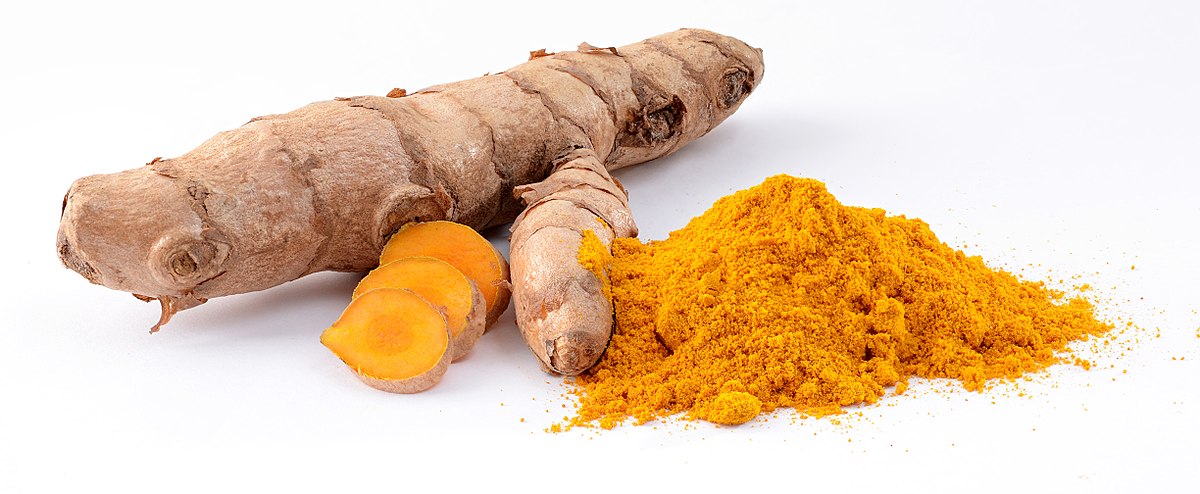
    A variety of Turmeric Flower found in Maharashtra, India. Turmeric or “Indian Saffron” is one of the most commonly used spice in India – a key flavouring ingredient in any Indian cuisine.

    Recently I saw a documentary on web workers who travel the world, called something like Cyber Nomads and there was one young man that had all the best spices in a nice kit, ready for making curry. He’d learned in India how to mix it, so as a special gift, wherever he stayed, he would prepare a nice curry dinner.

    Curcuma longa, better known as Turmeric
    Curcuma longa, better known as Turmeric

    Turmeric (Curcuma longa/ˈtɜːrmərɪk/ or variously /ˈtjuːmərɪk) is a flowering plant of the ginger family, Zingiberaceae, the roots of which are used in cooking. The plant is rhizomatousherbaceous, and perennial, and is native to the Indian subcontinent and Southeast Asia, and requires temperatures between 20 and 30 °C (68 and 86 °F) and a considerable amount of annual rainfall to thrive. Plants are gathered each year for their rhizomes, some for propagation in the following season and some for consumption.

    When not used fresh, the rhizomes are boiled in water for about 30–45 minutes and then dried in hot ovens, after which they are ground into a deep orange-yellow powder commonly used as a coloring and flavoring agent in many Asian cuisines, especially for curries, as well as for dyeing. Turmeric powder has a warm, bitter, black pepper-like flavor and earthy, mustard-like aroma. Although long used in Ayurvedic medicine, where it is also known as haridra, no high-quality clinical evidence exists for use of turmeric or its constituent, curcumin, as a therapy.

    Indian curry dishes
    Indian curry dishes

    Historically, the word “curry” was first used in British cuisine to denote dishes of meat (often leftover lamb) in a Western-style sauce flavoured with curry powder.

    The first curry recipe in Britain appeared in The Art of Cookery made Plain and Easy by Hannah Glasse in 1747. The first edition of her book used only black pepper and coriander seeds for seasoning of “currey”. By the fourth edition of the book, other ingredients such as turmeric and ginger were called for. The use of hot spices was not mentioned, which reflected the limited use of chili in India — chili plants had only been introduced into India around the late 16th century and at that time were only popular in southern India.

    Many curry recipes are contained in 19th century cookbooks such as those of Charles Elmé Francatelli and Mrs Beeton. In Mrs Beeton’s Book of Household Management, a recipe for curry powder is given that contains coriander, turmeric, cinnamon, cayenne, mustard, ginger, allspice and fenugreek; although she notes that it is more economical to purchase the powder at “any respectable shop”.

    Turmeric

    According to legend, one 19th century attempt at curry resulted in the invention of Worcestershire sauce.

    Throughout the 19th and early 20th centuries, curry grew increasingly popular in Britain owing to the large number of British civil servants and military personnel associated with the British Raj. Following World War II, curry became even more popular in Britain owing to the large number of immigrants from South Asia.

    Curry has become an integral part of British cuisine, so much so that, since the late 1990s, chicken tikka masala has been referred to as “a true British national dish”.

    Other British curry derivatives include “Coronation chicken“, a cold dish, often used as a sandwich filling, invented to commemorate the coronation of Queen Elizabeth II in 1953 – and curry sauce (or curry gravy), usually served warm with traditional British fast food dishes such as chips. Curry sauce occasionally includes sultanas and/or other dried fruits.

  • Clean Water Production, Storage and Consumption

    Clean Water Production, Storage and Consumption

    Clean Water Production

    Starting on January 1, 2019 I began buying filtered water and storing in glass water storage bottles and looking at my future of water filtration and storage systems. This page and section is another of those sort of sticky notes to self, to aggregate more data about alternative water filtration technology and ideas for the best way to be water independent.

    Reverse Osmosis is just one method, I want to put several here and begin to understand the advantages and disadvantages of each different type of filtration. Currently carrying water sucks but it tastes and tests great (I assume it’s tested – better make sure), the machine is in the grocery store and costs 79 cents for 4 litres to use a commercial reverse osmosis filter.

    Water security and independence just to learn first hand, since I have enough food stored to last more than 30 days without having to leave my house, that is if I were to have enough water. Currently I could last a week on the water if I were to ration to austerity, so I wonder about filling more glass water bottles but then they’re good for one year, so there needs to be a system and contigency to filter using Brita and also using bladder storage of city water. Ultimately being able to filter and make good water is key.

    My city, Vancouver, has excellent water and plenty of it, so realistically it’s highly likely that’ll I’ll ever need to be water secure and independent while living here but I want to become more aware of all things I consume and reduce everything because nothing makes us as happy as fresh air but second on the list we take for granted is fresh, clean drinking water.

    Reverse osmosis (RO) is a water purification technology that uses a partially permeable membrane to remove ionsmolecules and larger particles from drinking water. In reverse osmosis, an applied pressure is used to overcome osmotic pressure, a colligative property, that is driven by chemical potential differences of the solvent, a thermodynamic parameter. Reverse osmosis can remove many types of dissolved and suspended chemical species as well as biological ones (principally bacteria) from water, and is used in both industrial processes and the production of potable water. The result is that the solute is retained on the pressurized side of the membrane and the pure solvent is allowed to pass to the other side. To be “selective”, this membrane should not allow large molecules or ions through the pores (holes), but should allow smaller components of the solution (such as solvent molecules, i.e., water, H2O) to pass freely.

    In the normal osmosis process, the solvent naturally moves from an area of low solute concentration (high water potential), through a membrane, to an area of high solute concentration (low water potential). The driving force for the movement of the solvent is the reduction in the free energy of the system when the difference in solvent concentration on either side of a membrane is reduced, generating osmotic pressure due to the solvent moving into the more concentrated solution. Applying an external pressure to reverse the natural flow of pure solvent, thus, is reverse osmosis. The process is similar to other membrane technology applications.

    Reverse osmosis differs from filtration in that the mechanism of fluid flow is by osmosis across a membrane. The predominant removal mechanism in membrane filtration is straining, or size exclusion, where the pores are 0.01 micrometers or larger, so the process can theoretically achieve perfect efficiency regardless of parameters such as the solution’s pressure and concentration. Reverse osmosis instead involves solvent diffusion across a membrane that is either nonporous or uses nanofiltration with pores 0.001 micrometers in size. The predominant removal mechanism is from differences in solubility or diffusivity, and the process is dependent on pressure, solute concentration, and other conditions. Reverse osmosis is most commonly known for its use in drinking water purification from seawater, removing the salt and other effluent materials from the water molecules.

  • Superfoods and Medium Chain Triglycerides

    Superfoods and Medium Chain Triglycerides

    Nature, Macro, Blueberry, Blue Superfood

    A blueberry can be defined as a “superfood” however that’s not it alone, the idea is to extract the raw energy fluids from organically grown food and combine them into a concoction that maximizes the benefits of each and every ingredient, boost absorption by ingesting MCT oils that have been derived from natural sources, then add Ormus for superfood dessert.

    blueberries superfood

    Medium chain triglycerides (MCTs) are partially man-made fats. The name refers to the way the carbon atoms are arranged in their chemical structure. MCTs are generally made by processing coconut and palm kernel oils (superfood) in the laboratory. Usual dietary fats, by comparison, are long-chain triglycerides.

    Along comes Ormus, a naturally occurring elemental state of matter. Ormus itself is not a material; every element and mineral has an “Ormus state” which exhibits nanoscale properties and phenomena, including: increased membrane permeability, higher melting point, altered electrical potentials, and different atomic structures.The word “Ormus” is not ours and does little to explain the true nature of these minerals. The word “Ormus” is a corruption of the acronym ORME’s, a term coined by David Radius Hudson which stands for “Orbitally Rearranged Monatomic Elements”.

    Monatomic blueberry superfood

    Atomically Separated Inductive Natural Elements

    A.S.I.N.E. Ocean Minerals are extracted from the West Coast of British Columbia through our patented Atomic Separation® process which isolates inductive material. After being extensively filtered and sterilized, our superfood products consist of naturally occurring elements that can revitalize the body and mind. See: A.S.I.N.E. Ocean Mineral Substrate

    Photo credit: PMillera4 on Visualhunt.com / CC BY-NC-ND