I was born under a lucky star, or so my Dear Old Mom tells me. She was born of Irish immigrants to Canada, who taught her to always look on the bright side of life, with a good dose of chin-up and carry-on when things didn’t go as planned. She and my Dad taught me to ski before I could walk, and how to teach skiing before I could drive (driving age is 16 in Canada).
My lucky star was being able to teach, that meant I was able to earn money, then own my own pick-up truck. Every Canuck buck wants to own a truck but the thing is you need an income to be able to keep one, same as today. I may have changed my choice of car but still need the money to keep it.
The Internet was how I managed to carve out a living, so that was another part of lucky star status. I saw the web really early and jumped all over it, had my first web design company before the mid 90’s. Mostly through consulting work and webmaster contracts I was able to support a nice lifestyle in South Florida, although it was up and down since we were all learning at the same time and the Industry was so new and unexplored.
Nowadays the U.S. Expat has a major advantage throughout the world in the Internet niche because most of the rest of the world want U.S. Talent, knowledge and experience, especially as in the case of countries where allot of those people want to travel to USA, like China and Brazil for example, where it’s right of passing for middle class and up to make trips abroad.
The key thing to know about becoming an Expat is that there’s more opportunity and often much bigger opportunities when you can provide a bridge between your culture and local knowledge and that of your new foreign home. The world is your oyster, when you’ve got a skill-set, that can help other people succeed.
~~ Mount Robson, Mount Robson Provincial Park, ~~ British Columbia, Canada.
When I first left Canada I was young and had serious wanderlust, funding my adventures was no easy feat. Several people I knew taught skiing and/or English, one friend that I admired in particular was Max, because he stayed in college to obtain an economics degree, then moved to Japan to teach English in a corporation.
Max had a thing about him, aside from being very smart, he was an absolute freak for mountain sports and outdoor recreation of all kinds. Ace tennis player and great golfer but even before snow boards arrived, he loved heli-skiing and knew about these incredible areas in British Columbia because we had planted trees in these mountains (for summer jobs). That’s how Max and I met.
Now that you have the backstory, while Max was in Japan teaching English to corporate execs, he was always talking about the back-country sports of BC. Next thing you know he’s opening an adventure guiding business in Canada, when Snow Boards arrived Max was among the first riding them, so he jumped all over the opportunity. Shortly thereafter it was Max throughout the mid 80’s that was showing Warren Miller and other ski film makers where to heli-ski. Max was the guide to the guides. To this day Max lives at Whistler, still involved in the hospitality industry and still helping Japanese people have an awesome experience in Canada.
There are so many examples of the foreigner next door. Everyone can remember someone in their life, who had a funny sounding accent. My life growing up in Western Canada was all about sports and recreation.
In the ski teaching business we would meet interesting people all the time, people from the farthest corner, end up at ski chalets. Especially common near ski resorts and water sports are Australian’s and Kiwi’s (New Zealanders). My young impressionable life was filled with great stories about “Down Under”, as my winters were filled with many weekends with my Oz and Kiwi mates, at our ski club. We loved to ski together, the deeper and steeper the better!
These people were smart, sophisticated, experienced and very determined to live free and prosperous. Their timing made them appear to be Hippy but they were world-wise way beyond their youthful appearance. World travel had also taught them about cultural cuisine, and they loved to cook fabulous foreign dishes and entertain large groups of us, with music and wine from the various regions of the world, to match the meal.
One winter we made our own Saki from rice, then at the end of the season, enjoyed an authentic 7 course Japanese dinner party with the homemade rice wine. It tasted great, as did incredible Mexican and my personal favorite Greek dinners, all of which were very novel to me, at 16 years old.
WildVenture Volunteers Teaching English in Mongolia
Teaching skiing taught me how to help people get what they wanted. This is what is so fundamental about our language, more than half of the world wants to learn English.
All of the people I mentioned above, and just about anyone who has ever lived overseas, has at one time or another, taught English to someone. It’s part of humanity, to try to exchange languages. It is the most common principle of good-will, to show an interest in another person’s culture, to speak their words.
The best thing about Teaching English is the people you meet, and that you are becoming an Ambassador of our language. You are helping someone else get what they want, that’s what creates value, and it’s the most common way to make money while living overseas.
The greatest thing in today’s English teaching community is Internet video, as many people want to learn online but still the basis of the teaching starts with a book at a table, with the student sitting beside you. It’s a one-on-one style method, where the book does the work but you need to be taught how to teach.
It’s highly recommended, that anyone embarking on a serious global Expat exploration being armed with more money making methods, than just teaching English. However, always be proud and happy to teach, it’s an excellent means of immersion into a foreign country.
Remember it’s an honor to be invited to anyone’s kitchen table, to teach them how to speak English. You benefit in many more ways, for sharing your time with people, than just the money in your hand.
Classroom teaching is another realm and above my pay-grade but I imagine that it’s the same in that your let the books do the teaching, just follow the words in the book and do the best that you to help people get what they want – and – if all else fails in the class – speak English!
The missing information is what Bob Frissell was writing about in his famous book Nothing in This Book Is True, But It’s Exactly How Things Are, 15th Anniversary Edition in it’s 15th edition since 2009 and originally published in 1994. A major part of the book is about sacred geometry. Sacred geometry is in everything, everywhere. Once you start to see it, you see it often but it probably never crossed your mind that it could be used as code, or software to unlock your mind. The core idea of “Nothing to something” (the original title) is to accelerate our planetary ascent into higher consciousness.
In practice the merkaba meditation taught by Drunvalo Melchizedek and adopted by Bob Frissell is the most tedious, long-term (5 – 12 years for results) commitment of anything I’ve ever heard of, however the explanation in both the book and the video, make it clear “why” it eventually works. Also, it’s important to note that other practitioners use similar methods, for other types of healing and therapy, in other words, merkaba meditation can’t cause you any harm. In my humble (and unprofessional) opinion, it’s worth a try to see how it feels – I did.
Nothing in This Book Is True, But It’s Exactly How Things Are, 15th Anniversary Edition
Sacred geometry and the merkaba are just plain cool to look at anyway, so it’s good to know that these neat patterns that we can find in nature, are very good for us.
Nothing in This Book Is True, But It’s Exactly How Things Are is an account of humankind’s function within the grand celestial battle between internal and external knowledge. Author Bob Frissell gives a compelling account of our planetary ascent into higher consciousness, presenting a big-screen view of the Earth through the experience of the Ascended Masters, Thoth, Babaji, and Drunvalo Melchizedek.
Pulling in all manner of conspiracy theories from the Secret Government to the Philadelphia Experiment, Frissell proposes both a core transdimensional shift based on the Mayan calendar and a personal Rapture mediated through the connected, affirmed breaths of rebirthing that his teacher Melchizedek used to travel from the other side of the universe to here—breathing your own spacecraft (merkaba) out of and around your aura in order to travel through the astral realms.
The 15th anniversary edition of this cult classic is revised and expanded with new illustrations and 50 pages of important new information on the Lucifer Rebellion, the solar storm, and the final three breaths of the merkaba meditation.
An excellent introduction to sacred geometry by Bob Frissell, a noted author and workshop leader.
Three years ago this May I broke my foot off. When I say “off”, I’m not exaggerating. It’s amazing to me, that I’m able to write about it, which is also part of the reason that “I am” writing about it because I can. Supposedly, I’m still getting over it.
For sure it was one of those things of such monumental drunken stupidity, that the psychological scars will take a lifetime to heal, and maybe then some….
Up until that fateful day in May, I had never spent a night in a hospital and then in one moment of altered-mind ignorance, I earned my first ten. Someday I’ll write more about that unbelievable experience (as I recover from it) but suffice it to say, that I was forever changed by it, in more ways than one smashed ankle with eleven new parts and pieces. My humble pie had been served.
To make matters worse, for the first time in my life I was an invalid. Just take a look at that word – in=un “valid” – it’s not a good distinction to wrap your head around. There’s a significant amount of shock involved with what I had done to myself. This new reality, for me, required large doses of patience with triple doses of self-reflection. Whenever I hear the name or voice of Alan Watts, I forever will be reminded of that period of my life because listening to his recorded lectures became a daily action of my mental therapy.
The first six months of physiotherapy was nothing compared to the intense self-analysis, the crushing reality of not being able to walk (at all at first), plus a guarantee, at best, of a club-foot for the rest of my life. This was a mighty blow for an alpha male ego. The depths of my depression hit all-time record levels, despite the fact that the healing and recovery starting happening at the same moment that the bones broke. It’s true, whatever doesn’t kill you, makes you stronger.
One thing prompted me to tell my “humble pie” story, is that I’ve been recording allot of video and producing a daily VLOG on YouTube and in my films you can notice my limp, or perhaps me more that the audience. None the less, I’ll embed the video below and you can see for yourself, when I walk through the street fair in Sao Paulo, it’s difficult for me to carry the camera smoothly because of the limp, a daily reminder, of my humble pie.
Felt Mountain Bike by the Tomsk River Bridge, Siberia
The bike is a modern day horse, the right bike can be a workhorse, and if you add a skateboard, you now have an urban, tactical ground transport system (your ground game). Bikes sometimes go on buses, and often on trains but many times you don’t want to have to deal with the bike at your destination, like in the case of going into a busy downtown core for a business meeting. Or perhaps you’re going to an airport, or renting a car at the other end of the train ride. These occasions are when you lock your bike in the safest place you can find, extract your skateboard and proceed to the train. The combination of bike and skateboard provides an Expat with a rapid, light weight, transportation strategy, that can’t be matched in it’s diversity of uses and cost to implement vs. benefits.
At 55 years old, it may sound childish (to some), that I’m such an advocate of the bike and board transport system. However, when I was a backpacker in Australia in my early 20’s, I owned 4 surfboards (at a time, sold each), 1 skateboard (lasted me years, then I mailed it to Canada) and a forgotten number of bikes. Once I was living in a youth hostel in Freemantle, Western Australia, up on the hill with a view towards Perth and out to the Indian Ocean. I made a bet with a brash young Dude in a flashy new car, that I could beat him to the train station, where we were catching a train into Perth. The girls rode with him and I set off on my skateboard, knowing that I could use the momentum of the hill we lived on to gain enough speed to cruise down the pedestrian mall, which runs block after block through the very center of Freemantle, all the way to the train station. I won that bet because the car could not go where I could go, however I got lucky and timed the stop light at the bottom of the hill, whereas the car had to wait at more than 1 stop-light.
Skateboard benefits worth their weight in gold, is how a skateboard can be used to move heavy objects like boxes of books. Then, when strapped to your backpack with the wheels facing out, the first roll-aboard was born years before Travelpro patented the design we know today. Plus, have you ever seen how children love them? Everywhere in the world, kids want to ride on skateboards. If the environment is right and there’s a safe place to learn, then it’s almost impossible to damage a skateboard, however you do need to be aware that learning means falling and sometimes falling means pain, which can lead to crying. Always use caution and protective gear when learning to skateboard. It’s also not the best type of sport to take-up if you’re not in decent physical shape, as for me, I’d been riding the bikes and boards for my my entire life. I’d also been around boats and skis since before I could walk, however I’ve never lived anywhere that a boat would be more of an advantage, although many places I lived, like Sydney and Hong Kong where I would have had one if I had more time to get my hands on one.
Getting your hands on a bike is the easiest thing, since there are used bikes in garages everywhere on the planet. Often times a person will give, or lend you there a bike, just because it’s been sitting so long that the tires need replacing. Once an elderly couple in South Florida gave me a perfect-condition Peugeot 10 Speed that had been in the closet of their closet for decades, the only thing I had to do was buy new tires because the old ones had dried out to the point of rotting off the bike. The guy at bike shop was in shock at the condition that this antique road bike was in, as for me I loved it and rode it by the old man’s place after to tell him about all the fun he’d missed out on. Riding home on that bike, down the beach on sunset, after a hot day of swimming and laying-out in the sun with my girl, remain some of my fondest memories.
My current bike, which I just now came back from riding, is a stealth (matte black [dull]) urban mountain bike, I call the Canadian Mongoose (my ground game). The previous bike was a Snake by Caloi (Brazilian bike maker), so the Mongoose followed the Snake, and Canadian because it’s tricked out with kit from my favorite gear store in Vancouver the World (Mountain Equipment Co-op), to be as good or better than my Dad’s mountain bike in Canada (which I mooch while there)
December bike ride (Photo credit: siliconpalms)
, but also I have an awesome street racing, 18 speed Trek that was given to me by my Dad’s best friend, he kept it in excellent condition and it rides beautifully. Having said all that, my passion is urban mountain bike riding here in Sampa (Sao Paulo, Brazil), which is a sport I feel I’m part of pioneering. This city has the most challenging riding of any city I’ve seen, part of the challenge is the danger of crossing major roads and hiways because of potential crime/violence. The risks of urban riding here are much more related to cars, motor-bikes and people, this adds a whole new dimension to the sport of regular mountain bike riding – which btw: where I come from in Western Canada is not only perilously dangerous, if you screw up on some trails, you are dead for sure.
Anyone who doesn’t own a bike, is because they don’t want one and that’s normally because they forgot how much fun they are. Now in every city in the world there are bike rentals, get your gusto back on, improve your ground game and get out there and take a peddle. Also, never go to Amsterdam and not rent a bike (unless it’s snowing), that is the one city in the world where no other transportation system can compare. The bike lanes go towards the on-coming traffic but on the safety of the sidewalk. Dutch people revere the bicycle and it’s the most fun of any city to ride a bike in, although China is no slouch on bike lanes and many other places have more people moving around on 2 wheels, under their own power, than people in cars.
Canadian Mongoose, custom made mountain bike
So i leave this review of one of the best lightweight jogging stroller on sale right now as i promised the other day.
Here in Brazil it’s expensive to buy imported bikes, and although my custom made bike cost me about $500 USD because it was made with KHS frame and imported parts. The Kona I like would set you back $5,000 USD but it’s available because they sell. Sadly though the Brazil government increases prices for a bicycle profile that Brazilian manufacturers are not able to manufacture. Brands like KHS, Specialized, Trek, Cannondale, Kona, Scott and others represent no more than 3 percent of the total volume of bicycles sold in Brazil. However, they’ve been selling here for a long time, so there’s always used ones somewhere, that someone wants to unload. Realistically I’d say you just walk into a busy bike shop and buy the best used bike that comes closest to your needs, and ride by the shop every month to see if there’s a used Kona come in for sale. My friend that owns Moema Bikes in Sao Paulo speaks perfect English, can build any type of bike, has every accessory, and sees Gringoes ride up and sell a bike (with tears in their eyes) because they’re going back Stateside, or moving overseas, those bikes sell really fast but there’s always a bike for the right price, ready to ride away on – just make sure you know where you’re going and how to get there, especially in Sampa.
The bike is irrefutably the best method of sight-seeing too, what are you waiting for? Just pick up a local newspaper, or better still, find the classifieds online and search your scene for “used bike for sale”. Or walk into a bike with a MasterCard and ride out on my favorite, a brand new Kona (Deep Cove, BC, Bike Maker). Just remember to buy a bigger lock, and that you can’t leave it parked anywhere for very long – even the big locks get jacked in under 30 seconds. A fancy looking bike attracts the thieves, dull it down and don’t leave it tied-up outside super-busy areas, like at bus stations etc…. Get yourself the best helmet you can find, not some sissy Tour de France looking racing helmet – a full-blown Extreme-sports helmet and the correct gloves. Wear excellent footwear, never flip-flops (unless it’s to the corner store) and always, always “ride to arrive alive”! Click here to learn how to make backup for power cuts.
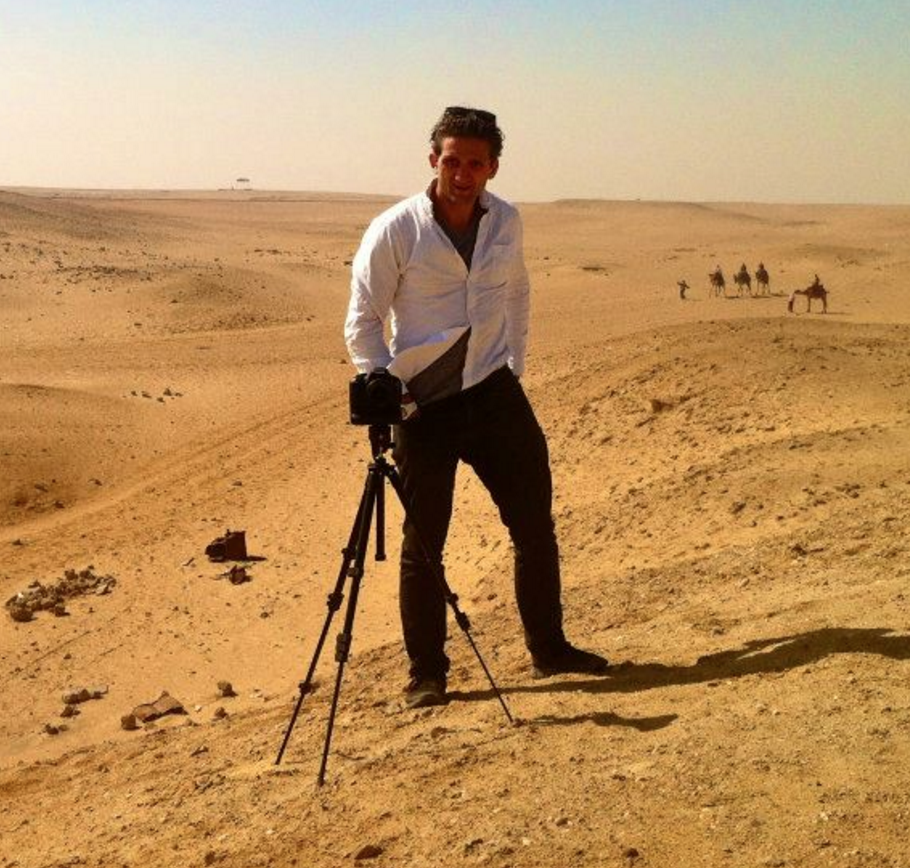
Self-portrait of Casey Neistat standing in front of a camera on a tripod atop a sand dune in the desert with camels in the background. Apparently taken during filming “Make It Count” for Nike.
Casey Neistat is a Game-Changer
The back-story, in case you’ve never heard of Casey Neistat, is that he was an accomplished filmmaker who also had created YouTube videos that had gone viral (over one million views). His YouTube channel grew in popularity, so he started making videos more often.
Other people started making videos about Casey because he has won several film awards, plus the word got around about his New York City “Wildly Functional Studio“. Then on his birthday last year, March 25th, he announces on his YouTube channel that from that day forward he’s going to produce one new film per day, to be released as a daily VLOG (video log), his channel started growing, faster and faster, first to one million subscribers, then rapidly to two million, as of this writing he’s at 2,274,587. His new daily videos (VLOG) can reach a half million views in the first twenty-four hours, this is a completely new phenomenon. Casey Neistat is becoming the first YouTube celebrity to go mainstream.
About one week ago Casey Neistat drops a hint in his daily VLOG that he’s in discussion with Samsung in New York City, then a few days later he drops the “Huge Announcement” that Samsung, the main sponsor for this year’s Academy Awards in Los Angeles, California, is sending Casey Neistat to the Oscars, with all-access back-stage and red-carpet pass. Plus, they set him up in a rock-star hotel room, big enough and stocked enough, to throw the biggest after-party in LA. And, on top of that they present him with a James Bond looking briefcase, that when opened has fiber optic lights to showcase 3 new Samsung gadgets that rival anything in the current hi-tech gadget market, including: 1) Galaxy phone 2) VR Headset 3) 3D camera.
Samsung made sure Casey Neistat had the coolest opportunity ever given to any web geek, they put the best person they could have ever imagined, in a position, with the best equipment, supreme film editing skills and keen sense of curiosity, where he could do something never done before. Take the audience (us) backstage and in the theater, of the 88th Academy Awards.
Casey Owen Neistat; born March 25, 1981 is an American film director, producer, creator of popular YouTube videos, and co-founder of social media company, Beme. Neistat and his brother, Van, are the creators of the HBO series, The Neistat Brothers.
Early life
Neistat was born and raised in New London, Connecticut. He dropped out of Ledyard High School in the 10th grade at age 15 and did not return to school or graduate. From age 17 until 20 he lived in a trailer park with his girlfriend, Robin, and their son, Owen. It was during this time Neistat was on welfare, a detail cited by Neistat when delivering his own biography. In 2001 Neistat moved to New York City.
Early career
Prior to moving to New York City, Neistat worked as a dishwasher and short order cook in Mystic, Connecticut. His first job in New York City was as a bike messenger.
Tom Sachs Films
In mid-2001 Neistat and his brother Van began working with the artist Tom Sachs, ultimately making a series of films about the artist’s sculptures and installations. This was the earliest work done by the brothers as a collective.
iPod’s Dirty Secret
Neistat first gained international exposure in 2003 for a three-minute film titled iPod’s Dirty Secret, criticizing Apple’s lack of a battery replacement program for the iPod. The film received national media attention and brought broad attention on Apple’s policy towards iPod battery replacements. The video clip begins with a phone call to the Apple Support 800 number, and a conversation between Casey Neistat and an operator named Ryan. Casey explains that after 18 months of use his iPod battery is dead. Ryan suggests that for the cost of labor and shipping to replace the battery Casey is better off buying a new iPod. To the music of NWA’s rap song “Express Yourself” the brothers begin a “public service announcement” campaign to inform consumers about the batteries. Using a stenciled sign reading “iPod’s Unreplaceable Battery Lasts Only 18 Months”, they spray paint the warning over iPod advertisement posters on the streets of Manhattan.
The film was posted to the Internet on September 20, 2003 and within six days was viewed over a million times. The film quickly attracted media attention and the controversy was covered worldwide by over 130 sources including The Washington Post, Rolling Stone Magazine, Fox News, CBS News, and BBC News. The film was praised as “wonderfully renegade” by the Washington Post.
Apple officially announced a battery replacement policy on November 14, 2003 and also announced an extended iPod warranty program on November 21. The Washington Post incorrectly stated that both programs were announced “days after” the movie became public. Fox News set the date of the policy change at “two weeks” after the posting of the clip and Neil Cavuto called it a “David and Goliath story” on Fox News Your World. Apple spokeswoman Natalie Sequeira denied any connection between the film and the new policy, stating the policy revision had been in the works for months before the film was released.
Science experiments
In 2004 Neistat and his brother created a film series titled Science Experiments. The 15 minute series featured a number of short films documenting various experiments. The series was included in the 26th Sao Paulo Biennial in São Paulo, Brazil. The work was popular and was eventually featured in Creative Time’s59th Minute program showing a one-minute excerpt from Neistat’s film every 59 minutes on the Panasonic Time Square Astrovision.
Television and film
HBO series
In July 2008, Home Box Office HBO purchased an eight-episode television series, “The Neistat Brothers”, for just under $2 million. The series was created by Casey Neistat, Van Neistat, Mason Daugherty and Tom Scott. Independent film producer Christine Vachon served as consulting producer. Written and directed by Casey and Van, the show is autobiographical and told in the first person. Each of the eight episodes is made up of short stories about the brothers’ lives. The show premiered June 4, 2010 at midnight on HBO.
The Hollywood Reporter said ‘the Neistat Brothers are to film what Dr. Seuss is to literature’. Hank Stuever of the Washington post noted ‘the Neistats exhibit an enthusiasm for life that you can’t help but love’. The show was not without detractors. The blog The Zeitgeisty Report called the show ‘A cutesy, hipster-y, pretentious mess’ and went on to suggest it was “the most irritating show in HBO’s history.”
The Pleasure of Being Robbed
Casey Neistat served as Executive Producer on the 2008 film The Pleasure of Being Robbed. The film premiered at the 2008 Cannes Film Festival.
Daddy Longlegs
Neistat along with Tom Scott was the producer of Josh and Benny Safdie’ssecond feature film, which premiered at Cannes under an alternate title Go Get Some Rosemary in 2009. Film critic A.O. Scott praised its “loose, intimate shooting-style,” and the film’s star Ronald Bronstein’s performance. He called it a “lovely, hair-raising film”. Neistat and Scott alongside director’s Josh and Benny Safdie won the Cassavetes Award at the 2011 Independent Spirit Awards for the film, under its American title: Daddy Longlegs.
Internet videos
Neistat has released 430 (as of February 6th, 2016) short movies on YouTube since the account was opened on February 15, 2010. The subject matter of the movies varies greatly and most feature Neistat. On August 24, 2015, Neistat reached 1 million subscribers on his YouTube channel.
As of February 2016, Casey has 2.2 million subscribers on YouTube.
Free $2 Bill Stickers
Casey Neistat made a video on February 14, 2012 that is almost 3 minutes long. He talks about how he made “a bunch of $2 bill stickers” and that he will give them away free to anyone who sends him a self-addressed stamped envelope to his address and he would send you stickers back. It also shows him in New York City putting them on various objects around the city.
Chatroulette
On February 23, 2010 Neistat released a 5-minute movie about the internet site Chatroulette on Vimeo. The film was described as a 6-minute video that explains what the Chatroulette site is, how it works, and why people use it. Various experiments are conducted in the video with the findings presented in stop frame animations. One experiment found that people on Chatroulette are much more likely to talk to a woman. While 95% “nexted” Neistat, his female friend Genevieve was clicked away by only 5%.
Subway emergency brakes
In 2010 Neistat made a video about when, and when not, to use the emergency brake cord on train cars in the New York City Subway. According to the video, one should only use the emergency brake when the motion of the train poses an imminent threat to life or limb.
Bike lanes
In 2011 Neistat made a video critical of the New York City Police Department‘s ticketing of cyclists in New York City for riding outside of the marked bike lanes. In the video Neistat films an encounter with an officer wherein he receives a $50 summons for not riding within the marked lanes. Neistat then proceeds to comically ride his bike in the lane crashing into various obstructions to highlight his argument that the lanes are not always the safest place for cyclists to ride. As described in a June 24, 2011 article in the New York Times, “[Neistat] followed the officer’s order to the letter, keeping to the bike lane even when the way was blocked. And he had a friend record his painful-looking pratfalls as he crashed into obstructions, including a moving truck and a police cruiser, like a modern-day Buster Keaton.” The Guardian said that “within 24 hours, [the Bike Lanes video] has gone beyond viral and is getting him huge mainstream media attention.”
In response, New York Magazine called Neistat a “Bike-Lane Vigilante” and the film was covered by most main stream media outlets.Additionally, TIME named Bike Lanes number 8 on their Top 10 Creative Videos of 2011 list.
Neistat’s grandmother
Louise Neistat (Born Louise Celice Grossman), Casey Neistat’s grandmother, was a tap dancer and one of the Radio City Music Hall’sRockettes during World War II. In 2004, Casey directed a video in which his grandmother made the “world’s greatest french toast” and delivered it to his son, Owen. This video can be found on Casey’s “Casey Neistat Classics” YouTube channel.
On October 31, 2011 Casey Neistat posted a 4-minute short film on YouTube about her. The video opens with Casey asking his grandmother how many more years she thinks she will put on her annual tap dance show then inter-cuts various press clippings from her accomplished life with footage from her most recent tap dance show, the focus of her accomplishments being the money her tap dancing has raised for cancer research-related charities. The video was tweeted by YouTube’s official Twitter handle and appeared on numerous news and viral video websites including the Huffington Post. 22 days after the video was released Louise Neistat died of natural causes; Casey wrote her obituary and delivered the eulogy.
Make It Count
Make It Count is a video written, directed and starring Casey Neistat for Nike. The video begins with scrolling text that reads;
“Nike asked me to make a movie about what it means to #makeitcount Instead of making their movie I spent the entire budget traveling around the world with my friend Max. We’d keep going until the money ran out. It took 10 days.”
The video then begins in earnest with Neistat and his collaborator Max Joseph traveling to the airport. Fast editing of their travels with interludes of inspirational quotes make up the film ultimately ending with Neistat returning to New York City where the story began. On April 8, 2012 Nike launched the video on their official YouTube page titled MAKE IT COUNT. The next day Neistat launched the video on his official YouTube. Neistat’s posting went viral, as within the first 5 days the film had been viewed over 3 million times.
Mashable’s Zoe Fox commented that it was “The Best Branding Story Ever Told”. A number of main stream outlets referred to Neistat’s production of the film as ‘going rogue’ including CNNGo, Fast Company and CondeNaste Traveler.
Snapchat Stories
Neistat has also begun to use Snapchat to capture moments of his life and add them to his “story”. He then adds these stories to a secondary YouTube account titled Casey Neistat’s Snap Stories. Videos for this are roughly made on a daily basis, with some days having multiple videos and other days none at all. There is no main theme to these as they showcase all different parts of his life or whatever he is doing that day.
In 2014, Neistat was listed on New Media Rockstars Top 100 Channels, ranked at #82.
Daily vlogs
Neistat started to post daily vlogs on March 25, 2015 which can be found on his YouTube channel. On May 15, 2015 his 52nd vlog post, “The Vice President, Outer Space and the Baby,” Neistat stated that he sees his vlogs more as a forum opposed to a daily journal. On January 19, 2016 Neistat posted his 300th vlog.
Snowboarding with the NYPD
On January 23, 2016, during the January 2016 United States blizzard, which caused travel bans in New York City, Neistat and Jesse Wellens filmed a video through the empty streets of New York City. The 2-minute, 41-second video, titled “Snowboarding with the NYPD,” showed Neistat being towed on a rope (he later revealed that he forgot the rope at his Connecticut home and was using a HDMI cable) on the streets and through places like Times Square. The video went viral and gained 6.5 million views on YouTube within 24 hours. Casey later released a behind the scenes video that details the making of the video.
In his July 8, 2015 vlog, Neistat announced that he has been working with Matt Hackett on building a video sharing app called Beme. The first version of Beme was launched on July 17, 2015. Designed as an alternative to highly edited content found in social media, the app enables users to produce unedited 4-second videos, which are immediately uploaded and shared with the user’s subscribers, without the ability to review the video. Users respond to shared content by sending “reactions”, photographs of themselves, back to the video uploader.
Beme released the first version of the app on July 17, 2015. Shortly after the launch, BuzzFeed described Beme’s minimalist design as “deceptively simple and decidedly weird.” The New York Times explained that Beme’s user experience is “as if the phone becomes a stand-in for one’s body, the camera facing outward to capture what the user is experiencing.” Within eight days of the app’s release, Beme users had shared 1.1 million videos and logged 2.4 million reactions.
Advertising
In addition to his career in television and film, Neistat also directs television commercials, having worked with clients such as Nike, Inc, Google, J.Crew, and Mercedes-Benz.
Public speaking
Neistat has lectured on topics related to filmmaking and his life experiences.
On October 15, 2010 Neistat spoke at the South Carolina Arts Education Association Fall Conference. He was the events Special Feature Media Artist.
On February 2, 2011 Neistat Lectured in the Celeste Bartos Theater at the Museum of Modern Art in New York City. The lecture was described as “Casey Neistat will show and tell you how he taught himself everything from design to filmmaking since he dropped out of high school. His tools are simple; a camera, a marker, paper and scissors and anything that surrounds him, which he incorporates into stories on topics such as the subway’s emergency brake and Facebook’s privacy settings.” Tickets for the event were $40 and it was sold out. Neistat concluded his lecture by inviting Q and A participants onto the stage to choose a gift from his large cardboard box labeled Party Favors, gifts included an iPad, fake Rolex and cases of beer.
Casey Neistat spoke at The Nantucket Project on October 2, 2011. Described as an event experience that brings together a select group of eminent and accomplished visionaries, thinkers, innovators and performers to one of the most storied places in the United States. Neistat spoke for a predetermined 20 minutes along with presenters such as politician Rahm Emanuel, American BusinessmanEddie Lampert, former United States Secretary of the TreasuryLawrence Summers, Google Executive Charman Eric Schmidt and stage director Julie Taymor. Neistat’s lecture was described as a ‘witty explanation of how he chooses his topics and his methods of production gave hope to every potential filmmaker, at any income level’.
Neistat spoke at the TEDx Parker School in Chicago on March 24, 2012. The events theme was The Eye Opening Experience.
Personal life
On February 18, 2013 Neistat became engaged to Candice Pool, who is featured in many of his films. On December 29, 2013, Candice and Casey were married in Cape Town, South Africa. They have a daughter, Francine. Neistat has a son, Owen, from a previous relationship with Robin Harris.
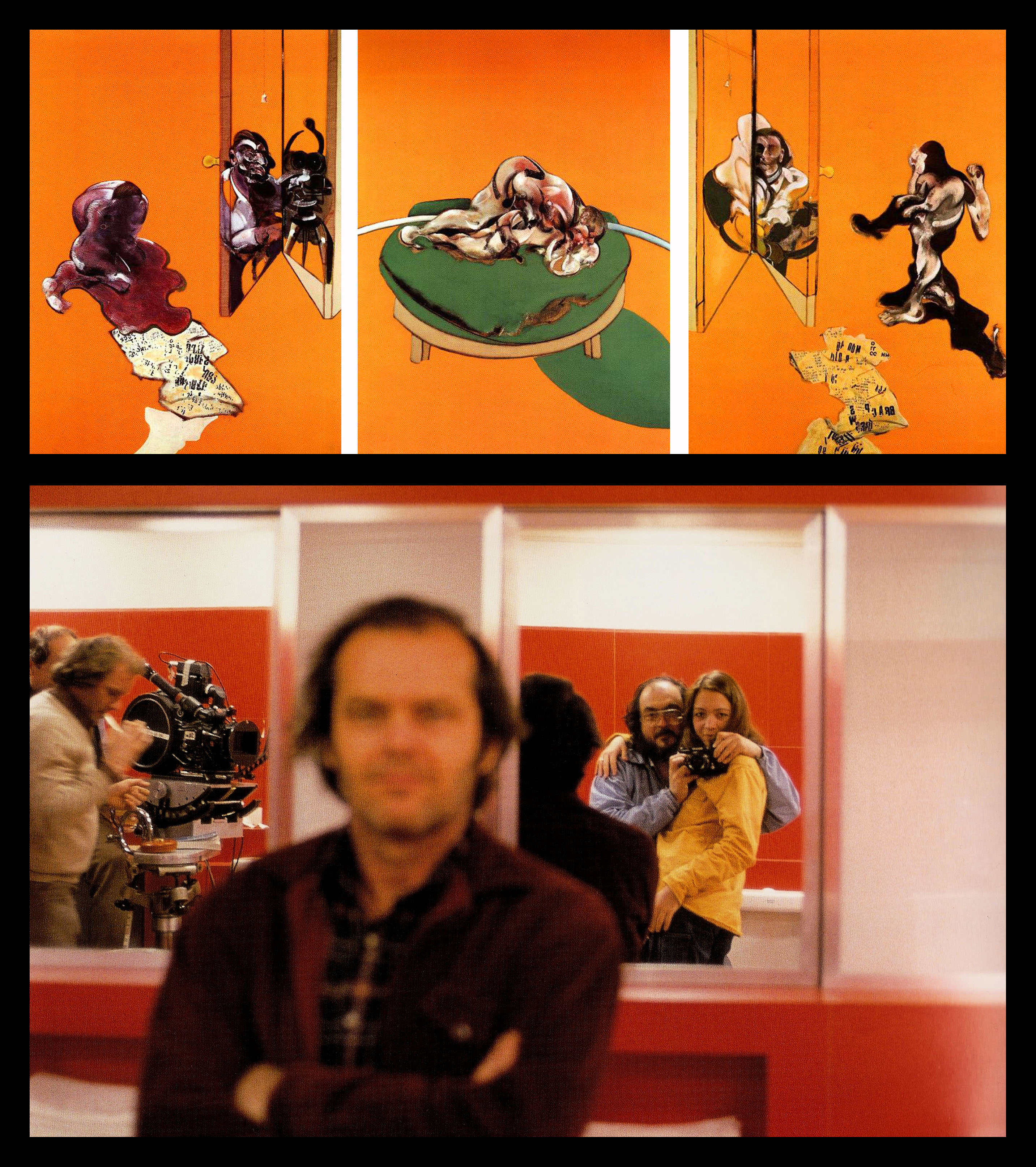
Just writing those words for this title: “On becoming a filmmaker” makes my hands shake because in my mind that distinction is reserved for people next to the Gods. I’m a huge Terantino fan but way before that, and for ever after, I’m a freak for Stanley Kubrick, as well as an absolute groupie of David Lynch but my list of adoration for movie cinema doesn’t stop there, rather it starts there and goes on for pages.
There are so many great filmmakers that it staggers the imagination, it’s just that I never thought, or supposed, that I would ever have the chance to be one of them AND now I do because tonight, in Hollywood, it’s the Academy Awards, better known as the “Oscars” and for the first time in history and Internet geek, like me, is bringing the info to the masses by Video Logging (vlogging) and preparing a film, for the masses, over the night. His name is Casey Neistat and he’s my new hero!
This is the “reality” of reality TV! One person creates the entire episode, every time, with no hidden agenda or sponsored message. Pure reality, streamed in your face, every day. We have crossed an important demarcation point from which we may actually gain ground and become much closer to the real “truth”, than what is currently called “Reality Television”. We have reached a major milestone, where youtube and all of the social infrastructure that surrounds it, all of a sudden becomes as important as mainstream media’s canned, packaged, over-produced and heavily-processed, mind-numbing, made-for-the-masses, mainstream “synthetic truth”, film-production.
We Internet geeks and Youtube warriors have crossed the Rubicon, there’s no coming back and it’s up to us, now that Casey has breached the gate, to attack! The door is open for us and the entire world is turning towards a new information source. It’s one to the many, or one to none, it doesn’t matter, we all have been given the green-light and shown the future.
Raymond “Ray” Kurzweil; (born February 12, 1948) is an American author, computer scientist, inventor and futurist. Kurzweil received the 1999 National Medal of Technology and Innovation, the United States’ highest honor in technology, from President Clinton in a White House ceremony. He was the recipient of the $500,000 Lemelson-MIT Prize for 2001, the world’s largest for innovation. And in 2002 he was inducted into the National Inventors Hall of Fame, established by the U.S. Patent Office. He has received twenty honorary doctorates, and honors from three U.S. presidents.
[box type=”note”]For the past several decades, Kurzweil’s most effective and common approach to doing creative work has been conducted during his lucid dreamlike state which immediately precedes his awakening state. He claims to have constructed inventions, solved difficult problems, such as algorithmic, business strategy, organizational, and interpersonal problems, and written speeches in this state.[/box]
Kurzweil has been described as a “restless genius” by The Wall Street Journal and “the ultimate thinking machine” by Forbes. PBS included Kurzweil as one of 16 “revolutionaries who made America” along with other inventors of the past two centuries. Inc. magazine ranked him #8 among the “most fascinating” entrepreneurs in the United States and called him “Edison’s rightful heir”.
Kurzweil – the thinking machine quote;
“I realize that most inventions fail not because the R&D department can’t get them to work, but because the timing is wrong—not all of the enabling factors are at play where they are needed. Inventing is a lot like surfing: you have to anticipate and catch the wave at just the right moment.”
Kurzweil has authored seven books, five of which have been national bestsellers. The Age of Spiritual Machines has been translated into 9 languages and was the #1 best-selling book on Amazon in science. Kurzweil’s book The Singularity Is Near was a The New York Times bestseller, and has been the #1 book on Amazon in both science and philosophy. Kurzweil speaks widely to audiences public and private and regularly delivers keynote speeches at industry conferences like DEMO, SXSW and TED. He maintains the news website KurzweilAI.net, which has over three million readers annually.
Future predictions by the Ultimate Thinking Machine Ray Kurzweil
In 1999, Kurzweil published a second book titled The Age of Spiritual Machines, which goes into more depth explaining his futurist ideas. The third and final part of the book is devoted to predictions over the coming century, from 2009 through 2099. In The Singularity Is Near he makes fewer concrete short-term predictions, but includes many longer-term visions.
He states that with radical life extension will come radical life enhancement. He says he is confident that within 10 years we will have the option to spend some of our time in 3D virtual environments that appear just as real as real reality, but these will not yet be made possible via direct interaction with our nervous system. “If you look at video games and how we went from pong to the virtual reality we have available today, it is highly likely that immortality in essence will be possible.” He claims to know that 20 to 25 years from now, we will have millions of blood-cell sized devices, known as nanobots, inside our bodies fighting against diseases, improving our memory, and cognitive abilities.
Kurzweil claims to know that a machine will pass the Turing test by 2029, and that around 2045, “the pace of change will be so astonishingly quick that we won’t be able to keep up, unless we enhance our own intelligence by merging with the intelligent machines we are creating”. Shortly after, Kurzweil claims to know that humans will be a hybrid of biological and non-biological intelligence that becomes increasingly dominated by its non-biological component. He stresses that “AI is not an intelligent invasion from Mars. These are brain extenders that we have created to expand our own mental reach. They are part of our civilization. They are part of who we are.
So over the next few decades our human-machine civilization will become increasingly dominated by its non-biological component. In Transcendent Man Kurzweil states “We humans are going to start linking with each other and become a metaconnection we will all be connected and all be omnipresent, plugged into this global network that is connected to billions of people, and filled with data.” Kurzweil states in a press conference that we are the only species that goes beyond our limitations- “we didn’t stay in the caves, we didn’t stay on the planet, and we’re not going to stay with the limitations of our biology”. In his singularity based documentary he is quoted saying “I think people are fooling themselves when they say they have accepted death”.
In 2008, Kurzweil said in an expert panel in the National Academy of Engineering that solar power will scale up to produce all the energy needs of Earth’s people in 20 years. According to Kurzweil, we only need to capture 1 part in 10,000 of the energy from the Sun that hits Earth’s surface to meet all of humanity’s energy needs.
Ever since my teens I’ve been fascinated by Atlantis, pyramids, crystals, ancient history and lost civilizations. Maybe most people are curious about these subjects but the person who’s done an exceptional job of exploring these topics is Graham Hancock. His work, 15+ books and 5 films, is rich in detail, with a keen sense of history and deep knowledge of ancient civilizations. He’s spent more time with his boots (or flippers) on the ground than any other writer/researcher, studying ancient civilizations.
Ironically this brilliant speech, which I’d previously heard and wasn’t new then, was recorded at a Ted Talk in the UK then some time after it was uploaded, they decided to remove it. Now, this compelling idea has had more exposure than the first time because of being censored by the esteemed think-tank Ted.com. Naturally a theory emerged that it was the Ted sponsors Johnny Walker and Pfizer Pharma that pulled the plug but that seems unlikely, especially for the whiskey brand however it’s unlikely we’ll ever know because the video is back online.
The War on Consciousness is such a great title, there’s so much truth, just in that title. Ultimately, it’s rather shameful for Ted, as the decision to remove Graham Hancock’s video was obviously related to money.
[box]If you’re thinking about trying ayahuasca yourself, here are some important things to consider when making this decision.[/box]
1. AYAHUASCA IS NOT FUN. It’s commonly and poignantly referred to as “The Purge”, which basically means that ayahuasca makes you puke and poop your brains out. It gets rid of EVERYTHING in there, and spares no shred of comfort in the process. I may have struggled with this part, but believe me — the purge eventually revealed itself in a very drawn out suffering. Whoever might approach this in a “recreational” fashion should definitely find new hobbies.
2. AYAHUASCA CAN BE SCARY. I had never tried a hallucinogenic before participating in ayahuasca cermonies, but from what I had heard from more experimental friends was that hallucinogenic drugs produce bright colors and fun visuals that make you giggle like a little kid. Ayahuasca is a much darker experience. Although it can produce bright colors and happy thoughts, it’s more likely to reveal darkness, as the point of the experience is to face your inner demons and to expel them. I heard some laughter in our hut, but I also heard a lot of suffering. It all proved to be productive suffering, but you have to prepare yourself for the possibility of feeling and seeings things that you’ve previously buried.
3. YOU ARE COMPLETELY ALONE IN THIS EXPERIENCE. You may seek comfort in those that surround you before the candle is blown out and the ceremony begins, but once you drink, you are on your own. You will find yourself in complete darkness, likely unable to make out the faces of those around you. Everyone will drift into their own world, and you will be in yours. Be prepared for this, and if you’re only doing it because your friends are doing it — then don’t.
4. YOU MAY NOT EXPERIENCE MUCH OF ANYTHING. People often enter ayayhuasca cermonies with grandiose ideas of epic hallucinations and spiritual awakenings. No matter how open you may feel, remember that Westerners are typically hard-wired to resist this type of physical and emotional vulnerability. It’s regularly effective for the indigenous people of Peru and Colombia, where the practice originated and where the ayahuasca vine can be found, because its ingrained in their culture. Your experience may be intense, or mild, or practically non-existent. But if your mind is open and you’re willing to try it more than once, you’ll likely get the desired effects eventually. Just don’t go into it with inflated expectations.
5. ONLY YOU CAN TELL IF THIS IS SOMETHING YOU WANT TO DO. My friend in no way swayed my decision to try ayahuasca. It was a confusing decision, made easier by the idea of someone joining me to the retreat, but we both went with different motivations and our personal experiences leading up to the decision and during the experience were entirely our own.
In overhearing some backpackers discuss the idea of trying ayahuasca, I’ve noticed some peer pressure involved. Ayahuasca is by no means recreational or as I said before — fun. And again, its not something you do “with” anyone else. So decide for yourself and yourself alone if this is something you want to try. If anyone else has a say in your decision, your stomach will be very, very angry with you.
6. RESEARCH YOUR SHAMAN. TRUST YOUR SHAMAN. The popularity of ayahuasca has had some seriously negative effects on the industry surrounding the sacred practice. Unfortunately, the surge in ayahuasca tourism has led to scores of fake shamans, just looking to make a buck. Do your research before you put your well-being in the hands of a shaman. They the show during the ayahuasca ceremony and when you’re allowing yourself to become vulnerable under the effects of ayahuasca, you absolutely must trust the person in control.
Do you research, talk to plenty of people, and seek the highest recommendations. A large portion of tourists in Iquitos are there to do ayahuasca and everyone is talking about it, so it isn’t difficult to find people who have already participated in ceremonies and seek their advice. Consider this experience similar to going into surgery. You wouldn’t trust just anyone with a scalpel and you should NOT trust just anyone to administer ayahuasca.
7. NOTHING IN THE WORLD TASTES WORSE THAN AYAHUASCA, EXCEPT AYAHUASCA COMING BACK UP. Sorry for the visual, but its important to understand that the taste of ayahuasca is truly indescribable. I read somewhere that it tastes like blended toad, and I don’t think I can come up with anything closer. Many people struggle to keep it down, and most people eventually, puke it back up. It’s bad — really, really bad. But if you can handle it, the taste does fade and in the wake of that struggle can come some really amazing results.
It might not sound like it with all this talk of blockage and purging and struggle, but I’m glad I tried ayahuasca. It’s a deeply personal experience and it’s different for everyone, but I was able to take away some valuable insight at the conclusion of my retreat. If you choose to try ayahuasca, I wish you all the best in your journey. If you choose to forgo the experience, I encourage you to eat as much spice and sweets and meat as your heart desires and enjoy the natural beauty of the Amazon region — a magical place that can be a cleansing and healing experience in and of itself.
On this 4th of July I spent several hours reading and reviewing what I knew about Aaron H. Swartz. I wish I could have met him, we would have lot’s in common to talk about. The first time I heard about him, was only a year or so before his sad demise. Now I’m very well aware of his genius and hold the highest regard for his efforts, on behalf of all people, everywhere, prior to his untimely end. This page and article, containing copy & paste text from Wikipedia is being published here, as a tribute to a great American hero.
It’s really important to understand what a threat Aaron posed to the establishment and to corrupt leaders everywhere. Aaron did not steal anything and was not a felon, or a criminal.
Upon his death the following statement was issued by the family and partner of Aaron Swartz
[box]Aaron’s death is not simply a personal tragedy, it is the product of a criminal justice system rife with intimidation and prosecutorial overreach. Decisions made by officials in the Massachusetts U.S. Attorney’s office and at MIT contributed to his death.[/box]
Highlight of a short career (Aaron Swartz passed at age 26)
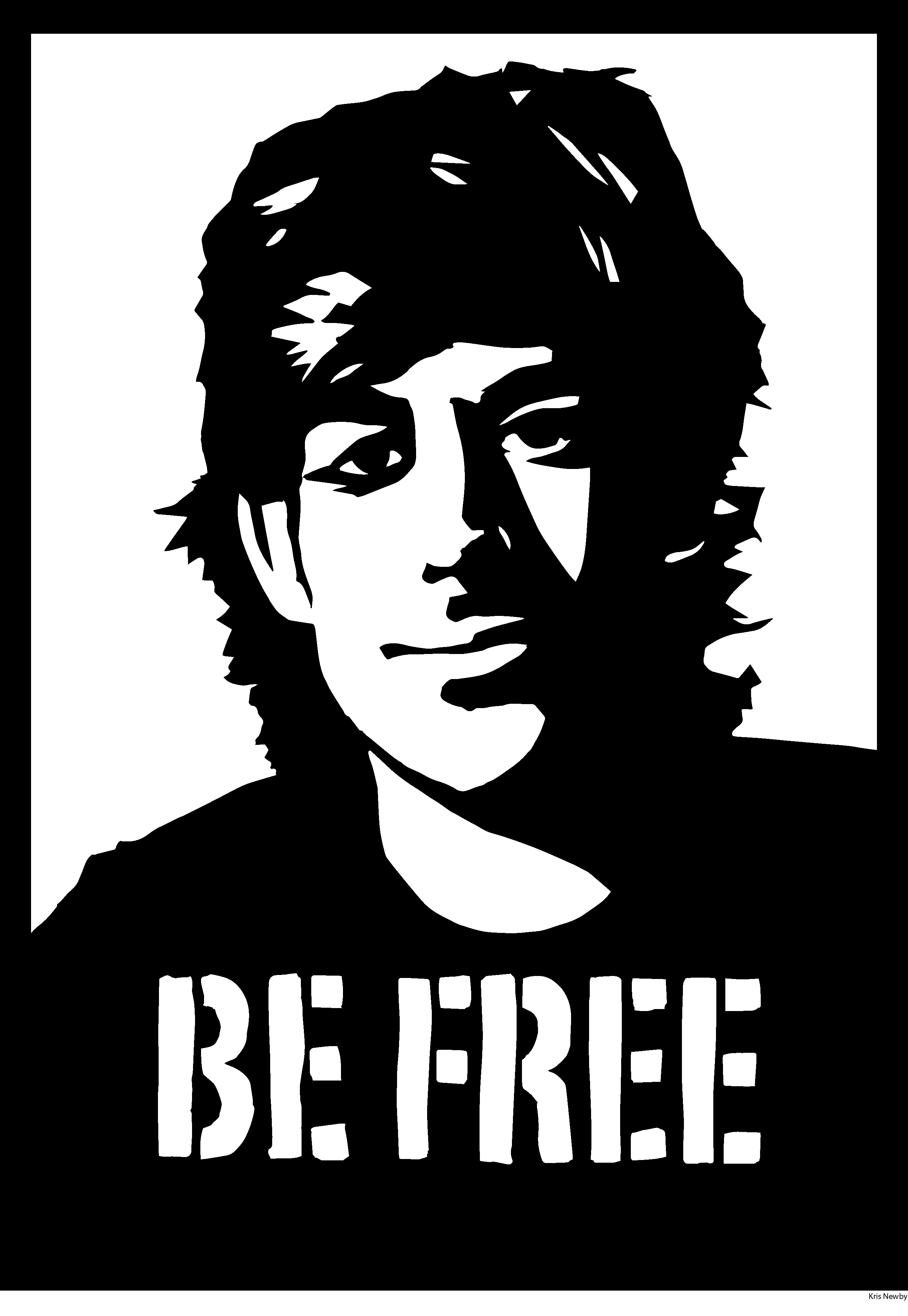
Aaron Swartz – Be Free
Swartz was instrumental in the campaign to prevent passage of the Stop Online Piracy Act (SOPA), which sought to combat Internet copyright violations but was criticized on the basis that it would have made it easier for the U.S. government to shut down web sites accused of violating copyright and would have placed intolerable burdens on Internet providers. Following the defeat of the bill, Swartz was the keynote speaker at the F2C:Freedom to Connect 2012 event in Washington, D.C., on May 21, 2012. His speech was titled “How We Stopped SOPA” and he informed the audience:
This bill … shut down whole websites. Essentially, it stopped Americans from communicating entirely with certain groups….
[quote]I called all my friends, and we stayed up all night setting up a website for this new group, Demand Progress, with an online petition opposing this noxious bill…. We [got] … 300,000 signers…. We met with the staff of members of Congress and pleaded with them…. And then it passed unanimously…. And then, suddenly, the process stopped. Senator Ron Wyden … put a hold on the bill.[/quote]
He added, “We won this fight because everyone made themselves the hero of their own story. Everyone took it as their job to save this crucial freedom.” He was referring to a series of protests against the bill by numerous websites that was described by the Electronic Frontier Foundation as the biggest in Internet history, with over 115,000 sites altering their webpages. Swartz also presented on this topic at an event organized by ThoughtWorks.
Swartz’s family and his partner created a memorial website on which they issued a statement, saying,
“He used his prodigious skills as a programmer and technologist not to enrich himself but to make the Internet and the world a fairer, better place.
Swartz’s funeral services were held on January 15, 2013, at Central Avenue Synagogue in Highland Park, Illinois.
Tim Berners-Lee, co-creator of the World Wide Web, delivered a eulogy.
The same day, the Wall Street Journal published a story based in part on an interview with Stinebrickner-Kauffman. She told the Journal that Swartz lacked the money to pay for a trial and “it was too hard for him to … make that part of his life go public” by asking for help. He was also distressed, she said, because two of his friends had just been subpoenaed and because he no longer believed that MIT would try to stop the prosecution.
On January 19, hundreds attended a memorial at Cooper Union. Speakers included Stinebrickner-Kauffman, Open Source advocate Doc Searls, Creative Commons’ Glenn Otis Brown, journalist Quinn Norton, Roy Singham of ThoughtWorks, and David Segal of Demand Progress.
On January 24, there was a memorial at the Internet Archive with speakers including Stinebrickner-Kauffman, Alex Stamos, and Carl Malamud.
On February 4, a memorial was held in the Cannon House Office Building on Capitol Hill. Speakers included Senator Ron Wyden and Representatives Darrell Issa, Alan Grayson and Jared Polis/ Other lawmakers in attendance included Senator Elizabeth Warren and Representatives Zoe Lofgren and Jan Schakowsky. “Stick it to the man,” said Issa. “Access to information is a human right.” A historic photo of Warren and Issa sitting together before an image of Swartz was posted on Twitter.
A memorial also took place on March 12, 2013 at the MIT Media Lab.
Reuters news agency called Swartz “an online icon” who “help[ed] to make a virtual mountain of information freely available to the public, including an estimated 19 million pages of federal court documents.” The Associated Press (AP) reported that Swartz’s case “highlights society’s uncertain, evolving view of how to treat people who break into computer systems and share data not to enrich themselves, but to make it available to others,” and that JSTOR’s lawyer, former U.S. Attorney for Manhattan Mary Jo White, had asked the lead prosecutor to drop the charges.
As discussed by editor Hrag Vartanian in Hyperactive, Brooklyn, NY muralist BAMN (“By Any Means Necessary”) created a mural of Swartz.
“Swartz was an amazing human being who fought tirelessly for our right to a free and open Internet,” the artist explained. “He was much more than just the ‘Reddit guy’.”
The Internet’s Own Boy: The Story of Aaron Swartz
Aaron Swartz profile
On January 11, 2014, marking the first anniversary of his death, a sneak preview was released from The Internet’s Own Boy: The Story of Aaron Swartz, a documentary about Swartz, the NSA and SOPA. The film was officially released at the January 2014 Sundance Film Festival. The documentary was to be released under a Creative Commons License; it debuted in theaters and on-demand in June 2014.
Mashable called the documentary “a powerful homage to Aaron Swartz”. Its debut at Sundance received a standing ovation. Mashable printed, “With the help of experts, The Internet’s Own Boy makes a clear argument: Swartz unjustly became a victim of the rights and freedoms for which he stood.” The Hollywood Reporter described it as a “heartbreaking” story of a “tech wunderkind persecuted by the US government”, and a must-see “for anyone who knows enough to care about the way laws govern information transfer in the digital age”.
Open AccessIn 2002, Swartz had stated that when he died he wanted all the contents of his hard drives made publicly available. A long-time supporter of Open Access, Swartz wrote in his Guerilla Open Access Manifesto:
The world’s entire scientific … heritage … is increasingly being digitized and locked up by a handful of private corporations….
The Open Access Movement has fought valiantly to ensure that scientists do not sign their copyrights away but instead ensure their work is published on the Internet, under terms that allow anyone to access it.
Supporters of Swartz responded to news of his death with an effort called #PDFTribute to promote Open Access. On January 12, Eva Vivalt, a development economist at the World Bank, began posting her academic articles online using the hashtag #pdftribute as a tribute to Swartz. Scholars posted links to their works.
Swartz’s death prompted calls for more open access to scholarly data.
The Think Computer Foundation and the Center for Information Technology Policy (CITP) at Princeton University announced scholarships awarded in memory of Aaron Swartz.
In 2013, Aaron Swartz was posthumously awarded the American Library Association’s James Madison Award for being an “outspoken advocate for public participation in government and unrestricted access to peer-reviewed scholarly articles.”
In March, the editor and editorial board of the Journal of Library Administration resigned en masse, citing a dispute with the journal’s publisher. One board member wrote of a “crisis of conscience about publishing in a journal that was not open access” after the death of Aaron Swartz.
Hacks
On January 13, 2013, members of Anonymous hacked two websites on the MIT domain, replacing them with tributes to Swartz that called on members of the Internet community to use his death as a rallying point for the open access movement. The banner included a list of demands for improvements in the U.S. copyright system, along with Swartz’s Guerilla Open Access Manifesto.
On the night of January 18, 2013, MIT’s e-mail system was taken out of action for ten hours. On January 22, e-mail sent to MIT was redirected by hackers Aush0k and TibitXimer to the Korea Advanced Institute of Science & Technology. All other traffic to MIT was redirected to a computer at Harvard University that was publishing a statement headed “R.I.P Aaron Swartz,” with text from a 2009 posting by Swartz, accompanied by a chiptunes version of The Star-Spangled Banner. MIT regained full control after about seven hours.
In the early hours of January 26, 2013, the U.S. Sentencing Commission website, USSC.gov, was hacked by Anonymous. The home page was replaced with an embedded YouTube video, Anonymous Operation Last Resort. The video statement said Swartz “faced an impossible choice”.
A hacker downloaded “hundreds of thousands” of scientific-journal articles from a Swiss publisher’s website and republished them on the open Web in Swartz’s honor a week before the first anniversary of his death.
Commemorations
On August 3, 2013, Swartz was posthumously inducted into the Internet Hall of Fame.
There was a hackathon held in Swartz’ memory around the date of his birthday in 2013.
Over the weekend of November 8–10, 2013, inspired by Swartz’s work and life, a second annual hackathon was held in at least 16 cities around the world.
Preliminary topics worked on at the 2013 Aaron Swartz Hackathon[205] were privacy and software tools, transparency, activism, access, legal fixes, a low-cost book scanner.
In January 2014, Larry Lessig led a walk across New Hampshire in honor of Swartz, rallying for campaign finance reform.
Aaron Swartz will never be forgotten, and every July 4th honored as an American hero, and an Internet Legend. We do not forgive. We do not forget. Expect us.
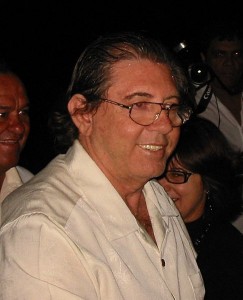
João Teixeira de Faria (born June 24, 1942), known also as João de Deus (“John of God”), is a self-described medium and “psychic surgeon” from Signal river. I’m on my way to this small town in the state of Goiás, southwest of Brasília (a 5 hour drive from my home in Sao Paulo) to visit his farm.
For as long as I can remember hearing about John of God, I’ve wanted to meet him. Years ago I met a man from the Philippines, whom I witnessed perform some extraordinary treatments and help people (including myself) to heal. My suspicion is that John of God is far more evolved, than the Philippine “psychic surgeon”, which means that I’m in for a truly enlightening experience.
UPDATE:
May 12, 2019
Now that I’ve had a chance to review the accusations and hear the testimony of one of the Whistleblowers, I need to report my understanding and add my own thoughts and observations.
In my case, John of God helped me and I believe that the Casa was and is a very energetic place. My treatment was entirely metaphysical and the perception I had of Joao, was that he was a gifted healer and that he had helped to heal me. Whatever happened when I was in the treatment, worked and my broken ankle did in fact excrete some type of fluid, which had never happened before or since. I walked better after the treatment.
I may have experienced psychosomatic healing but something improved with my injury as a result of the John of God treatment. Also, the people who volunteered were so nice, committed to well-being and absolutely convinced that John of God was holly, or at least very gifted.
To this day I use a crystal from Abadiânia and since I brought my mountain bike to the Casa and spent allot of time riding all around the area, I observed many crystals in the ground. This is something I’ve not seen anywhere, some times I would stop my bike, look down and see pieces of crystal in the dirt. Plus the amount of crystals, some the largest I’d ever seen and all the energy from people in mediation, probably helps people heal themselves.
Some people I met were watching UFO’s and most locals just accepted the fact that UFO’s are seen over the area so constantly that it’s just normal. I have never seen a UFO but never tried to summon them. However, that’s the place I’d go if I wanted to prove they exist.
My heart goes out to the victims and I admit that I was completely conned as well, so it’s easy to understand how a sexual predator was dressed as Lamb and tricked so many people. We all want to believe that God could channel his energy through living people, when in fact he does but none more so than an other. We all have healing power but don’t know it.
Early life of John of God
João Teixeira de Faria was born in Cachoeira da Fumaça, Goiás (now Cachoeira de Goiás). There are no records of his early life and De Faria himself has not provided precise details. His best known biography is The Miracle Man, written by Robert Pellegrino-Estrich, who runs tours to Abadiânia.
De Faria has no medical training and describes himself as a ‘simple farmer.’ He completed only two years of education and spent a number of years travelling from village to village in the states of Goias and Minas Gerais.
Casa de Dom Inácio de Loyola, Abadiânia Brazil
João Teixeira de Faria
De Faria says he was told by his spirit guides that he must expand his work to reach more people and spiritist medium Chico Xavier told him he should go to the small Goiás town of Abadiânia to fulfill his healing mission. Around 1978, when João first performed ‘healings’ there, he just sat outdoors in a chair near the main road where people began to arrive seeking cures for their various illnesses and conditions. Gradually the numbers increased to thousands per day and he developed his centre, Casa de Dom Inácio de Loyola. The Casa de Dom Inácio de Loyola has since been visited by millions of people seeking healing. He also owns a nearby cattle ranch, which covers about 1,000 acres.



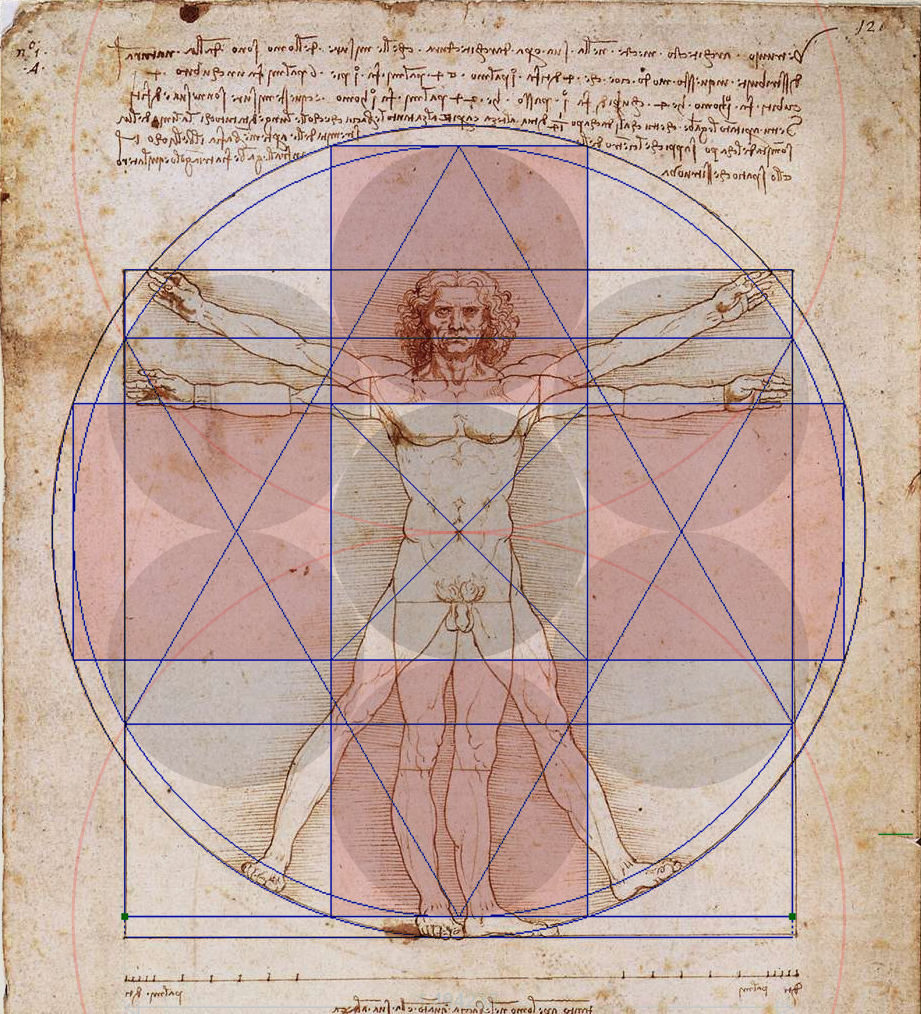
 in it’s 15th edition since 2009 and originally published in 1994. A major part of the book is about sacred geometry. Sacred geometry is in everything, everywhere. Once you start to see it, you see it often but it probably never crossed your mind that it could be used as code, or software to unlock your mind. The core idea of “Nothing to something” (the original title) is to accelerate our planetary ascent into higher consciousness.














You must be logged in to post a comment.