I found Angus and Julia Stone by chance when the algorithm for youtube introduced me, as soon as I heard them I wanted to hear more, now I’ve listened to their entire catalogue and enjoy every song. Sounds like I want to hear more of these great Australian artists, please,encore!
Angus & Julia Stone are an Australian folk and indie pop group, formed in 2006 by brother and sister Angus and Julia Stone. Angus & Julia Stone have released four studio albums: A Book Like This (2007), Down the Way (2010), Angus & Julia Stone (2014), and Snow (2017). At the ARIA Music Awards of 2010, they won five awards from nine nominations: Album of the Year, Best Adult Alternative Album, Best Cover Art and Producer of the Year for Down the Way, and Single of the Year for “Big Jet Plane“. The siblings have issued two solo albums each.
Sounds like, was the name of an algorithm I learned about many years ago, now that’s what causes the introduction, as I was listening to something similar in genre, perhaps Ben Harper or Michael Kiwanuka, both favourites of mine, so sounds like works great!
The brother and sister duo made an excellent video that is haunting and beautiful about the life and times of a rock star, maybe it was written as a sister to a brother or a woman to her love but whichever it’s very sweet
I had that feeling, upon entering the second hand store, that there was something in there I needed to find. It was a glorious Saturday in March and a little framed print caught my eye, on one of the lower shelves of a tightly packed array, when I went to the trouble to bend down, reach in and pull it out to look, the moment I saw eyes looking back at me I was thrilled and clutched it, then bought it, and came immediately home to hang it up.
Here’s the image from the Michelle Kuen Suet Fung website and her story of creating; Just Hanging Out…
Just Hanging Out 遊戲人間, 2008. Ink and Coloured Pencils on Paper 鋼筆、木顏色紙本 8×10″ Private Collection.
Michelle Kuen Suet Fung 馮捲雪!
“Just Hanging Out” is my most popular series to date.
Sometimes a great series was meticulously researched and carefully planned. Other times, it just happened.
This series just happened.
Late 2008, under the dark sky deep into the wee hours of the evening,
I buried myself in the studio, physically tired yet with blade-sharp
concentration. I was in that trance where I wanted to stay up all night
and create. (No, with no aid of drugs. See point 54.) I grabbed a piece of paper and started drawing.
There! it was done in one sitting.
To be honest, when I finished it, I treated it as one of my many drawings. I never paid much attention to it. I didn’t even like it that much. I didn’t do anything with it until in Jan 2009, I took this drawing (along with other works) to Doctor Vigari Gallery. The drawing was sold within a month and I had constant positive feedback from people.
The central tree is a symbolic tree of life and the various little people or animals/objects “just hanging out” with the tree parallel how we all just hanging out during the span of our lifetime. I use this context to ask some of my endless questions about life, death, love…I chose to take a playful approach rather than a didactic one. I prefer to be provided with a space to medidate rather than told how/what to think. This translate into how I want my viewers to approach my works. The light-hearted imageries reduces the emotional guard of adults. No matter how much one cannot identify with these big-eyed figures, it is rather difficult to be intimidated by them.
In this particular drawing (which was only meant to be a stand-alone
drawing in the beginning), I ask questions about life and death. A baby,
wrapped in a soft cocoon, is hung from a leaveless tree in a style not
unlike on a death rope. The tree is in its withering (or resting) stage,
whereas the baby in its cocoon suggests a glorious metamorphosis.
I love playing with contradiction within one image. My mother is in love with Charlotte Brontë’s Jane Eyre. (Alas I was into her sister’s Wuthering Heights more. Mom was not pleased that I was into the wild passion as a teen. See point 23) She always quoted “a bundle of contradictions” when I was a girl. I have always found the term befit me well. So there, as I say in my artist statement, none of my artworks is self portrait, but I acknowledge a lot of myself in them.
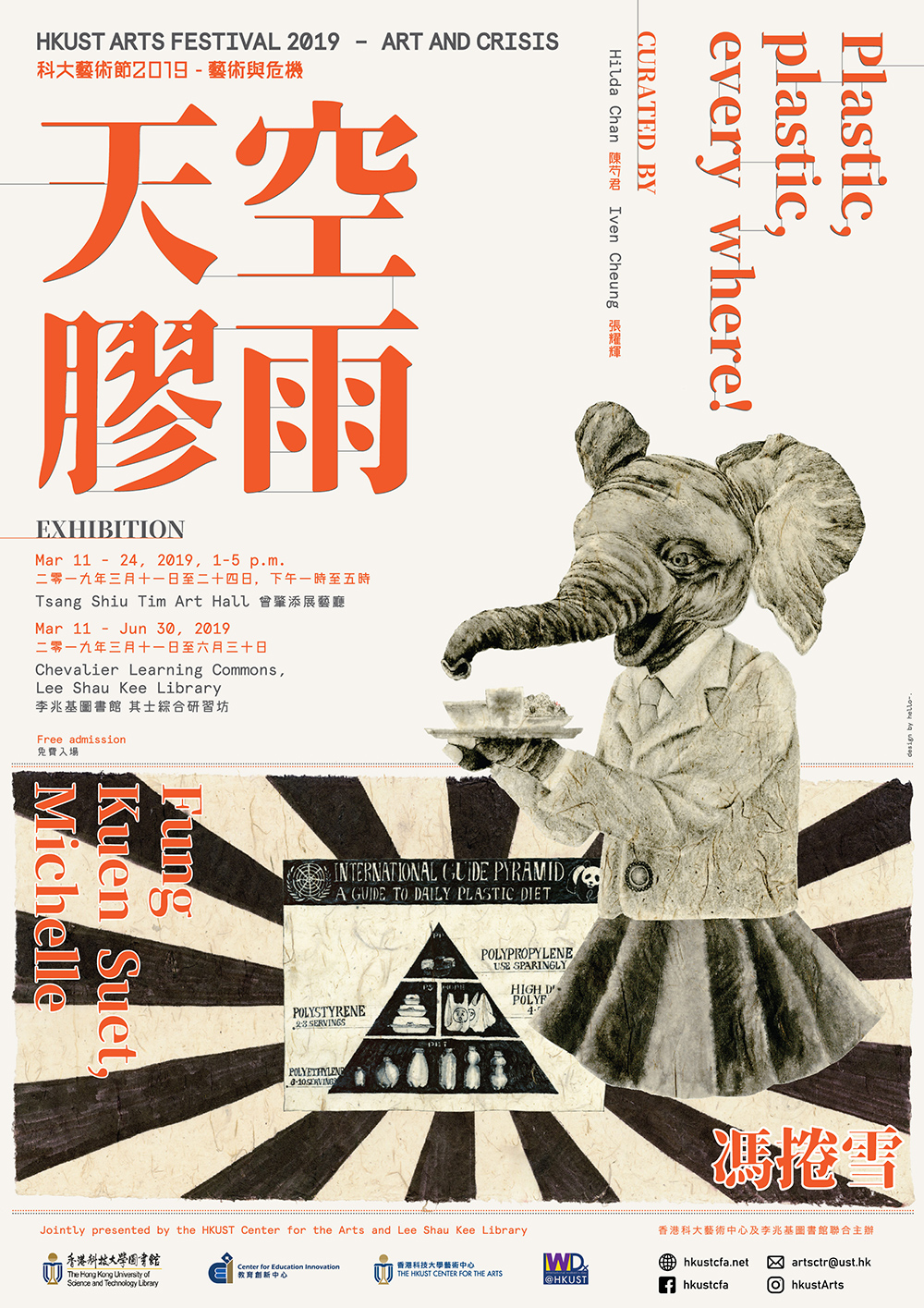
More promotion of Michelle Kuen Suet Fung, as she has an awesome exhibition to reduce plastic waste and help raise awareness of the danger to nature, with her exhibition called: Plastic, plastic, every where! 天空膠雨
One of the great inspiration for me lately was finding out about Scott Adams, the cartoon artist and creator of Dilbert. Not only is his cartoon excellent but he’s on a great youtube channel where he expounds about the persuasion techniques that President Trump is using in his speeches and tweet storms etc…
Scott Adams was predicting a Trump victory from early on because, as he explains, he had a unique qualification to understand the way main-stream America responds to powerful persuasion techniques that Donald Trump has mastered and uses to his advantage daily.
Scott Adams has invented a creative signature idiosyncrasy of his Youtube videos is what he calls the “simultaneous sip”, where he hoists up his extra-large coffee cup and takes a big sip, supposedly at the same time as all the viewers at home, hence almost each show he prompts us to take a sip of beverage, at the same time as he does. Listening to Scott Adams explain the clever tactics of persuasion techniques, was how I came across the book by him called “How to Fail at almost everything and still succeed”.
Click to read the back of the book
Fair enough to say that I have read and chuckled at Dilbert cartoons for as many years as they’ve been syndicated. The key to Dilbert is that it appeals to real people, working in real jobs in the real world. The masses can relate to Dilbert and people like to dislike the Boss, wherever they happen to work, it’s a normal thing for people to joke about the ineptitude of the company-life managers and the office world. This gives Scott Adams an interesting perspective, also because the cartoons are short and need to be blunt, he’s become an expert in expressing ideas in very short sentences and delivers a punch-line.
Having listened to Scott Adams speak in front of a crowd to promote his book “How to Fail at almost everything and still succeed” I was very impressed to learn about his determined life story and how he persisted until he found success as the Dilbert creator, however hearing him deliver a seminar convinced me that he would succeed at “something”, as he is very smart.
Once I heard him mention that he was a member of Mensa since he was interested to have his IQ tested (at a moment of self-doubt) and anyone can perform the IQ test, so he discovered he’s in the top 2%. This higher intelligence helps Adams to articulate himself in a very concise way, to explain how he sees incredible techniques of persuasion in Trump.
[box]Membership of Mensa is open to persons who have attained a score within the upper two percent of the general population on an approved intelligence test that has been properly administered and supervised.[/box]
The global economy is in crisis. The exponential exhaustion of natural resources, declining productivity, slow growth, rising unemployment, and steep inequality, forces us to rethink our economic models. Where do we go from here? In this feature-length documentary, social and economic theorist Jeremy Rifkin lays out a road map to usher in a new economic system.
A Third Industrial Revolution is unfolding with the convergence of three pivotal technologies: an ultra-fast 5G communication internet, a renewable energy internet, and a driverless mobility internet, all connected to the Internet of Things embedded across society and the environment. This 21st century smart digital infrastructure is giving rise to a radical new sharing economy that is transforming the way we manage, power and move economic life. But with climate change now ravaging the planet, it needs to happen fast. Change of this magnitude requires political will and a profound ideological shift.
Mar is short for Mary Anne, or so my Mom tells me so. Mar was born in 1935 and became my mother in 1961. She’s the most amazing soul, always seeking things that others have overlooked. Recognizing value in art with an eye for style and a natural tendency to discover treasures. Mar finds art and second hand goods that improve or enhance the houses of her friends and family. A constant source of new used furniture, equipment and art, or the person to discover appliance or furniture for someone who needs something for home improvement. If there’s a “Restore or Value Village” she knows where but it’s her art collection that’s impressive containing a mix of original painting and sketches, plus several prints from Canadian artists including Emily Carr.
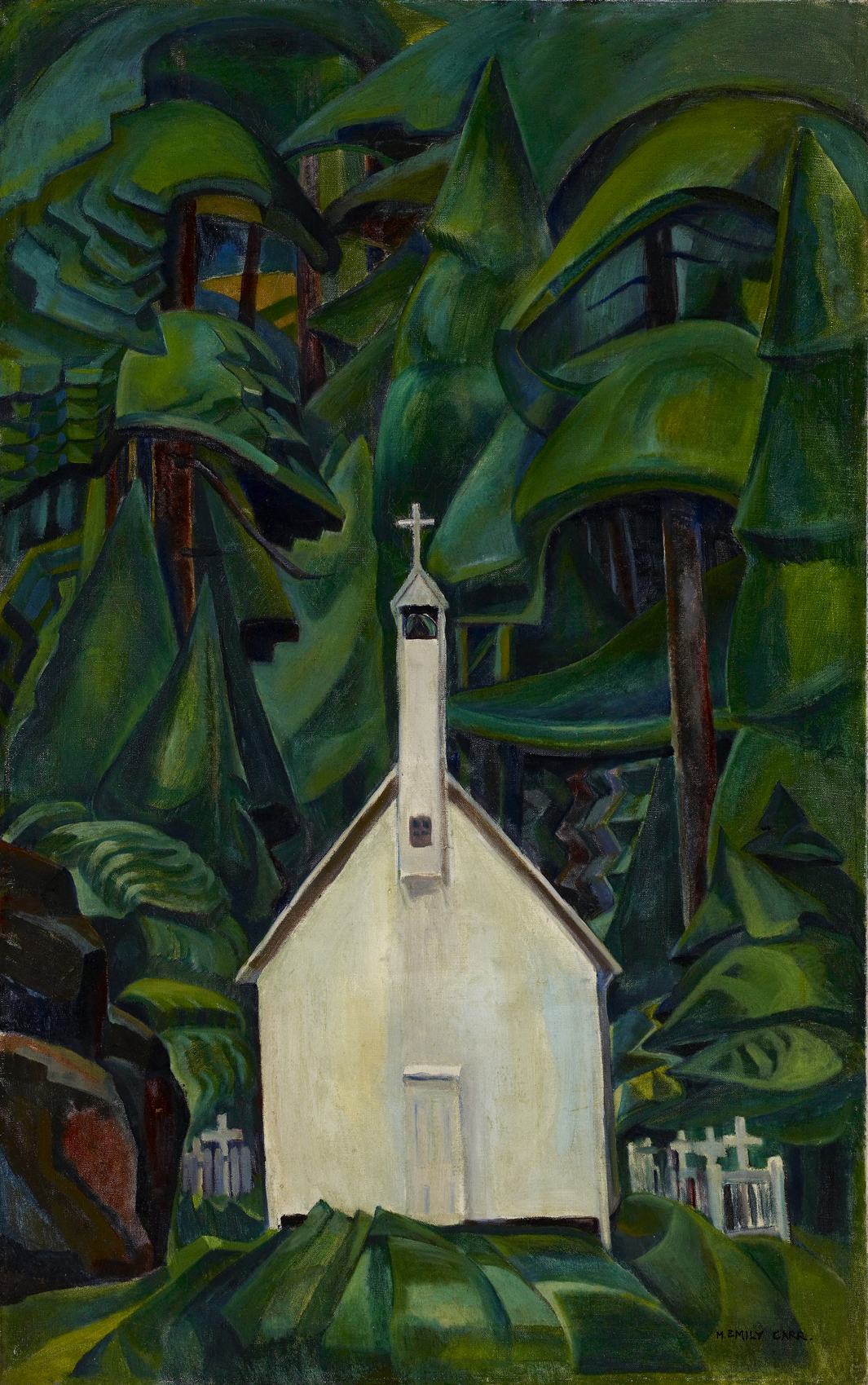
Mar keeps an entire collection of Emily Carr books and reviews of her large collection. Emily Carr has always been Mar’s favorite and reminds us of the story of Emily Carr’s life, before she became a famous artist. Recently Mar had to replace one of her favorite prints, of the painting that made Emily Carr famous; The Indian Church
Emily Carr – Wikipedia
The Indian Church is a 1929 painting by Canadian artist Emily Carr.Group of Seven artist Lawren Harris bought the painting to showcase it in his dining room, and called it Carr’s best work. In 1930, the work was shown in the Fifth Annual Exhibition of Canadian Art organised by the National Gallery of Canada. In 1938, the painting was chosen for an exhibition titled A Century of Canadian Art, at the Tate Gallery. The exhibition was described by Vincent Massey as “a most representative showing of Canadian painting and sculpture, including all schools and all periods.” It is considered a “transitional” painting because it reflects the transition of Carr’s artistic work from purely depicting Native Art to shifting her focus toward the land.
In her autobiography, Carr wrote that she “felt the subject deeply”. She painted it at Friendly Cove, near a lighthouse. When Carr saw her painting in Harris’s home, she exclaimed: “The house must have bewitched this thing! It was better than I had thought.” However she could not look at it, because she could not accept praise from other people, and felt embarrassed when others complimented her about her work. The painting is one of Carr’s most reproduced works, and was eventually donated to the Art Gallery of Ontario by Charles Band.
Creation
In the spring of 1929, Carr travelled by train through Vancouver Island to Port Alberni from where she went by steamer to Nootka Island. There she sketched, among other subjects, a white church that was in the area. When she returned to Victoria, she started painting crosses around the church, creating the impression of a graveyard. In the painting, she omitted adding any other buildings near the church, as was the case with the actual church, to emphasise the isolation of the church within its green environment. She also added an element of danger in the form of wavy dark green undergrowth erupting in front of the church.
[box style=”rounded” size=”large” border=”full”]Incredibly sad to learn about the untimely passing of John Perry Barlow, Internet Pioneer, 1947-2018[/box]
John Perry Barlow (JPB) was an inspiration, he was my hero. I will never forget that he answered the phone for me once and he was in London and getting a back massage, late in the evening. His voice was changing as he spoke, from the pleasure he was receiving but he had the decency to take the call and this was in the days before caller ID. In 1999 I was the CEO of Rock-n-Roll.com and JPB had agreed to become the first advisor on our advisory board and he was advising us on how to set rock and roll free. Perhaps that the company failed along with Napster and hundreds of other free music download sites, just because you can’t own rock ‘n roll and to even try to capture it for re-distribution, in a purely artistic ideology, destroys what rock ‘n roll is.
For the following 20 years, after having met John Perry Barlow by telephone and through email correspondence, his ideas have never left me. The first question he asked us about Rock-n-Roll.com was “is it open source?” and I’d never heard the term but seen it on the content management systems (CMS) we were using at that time (pre-wordpress), everything we used for web development were plugins cobbled together on to an open source platform like a BBS (bulletin board system). Web development wasn’t turn-key back then, so we used open source software BUT that was not what JPB was asking and at that time I was too naive to understand what he meant.
I thought often about that call to London and other conversations I’d had with this incredible intellect and I thought that I was among the few who admired the mind and ideas of this cool dude and was able to reach him. Also, I felt that he gave me a chance because I was a BC cattle country red-neck that was way out of my league in the digital download music space. Anyone could tell my love for rock ‘n roll but we did share that also, plus I was the webmaster for the Bob Marley Movement in Miami at that time, so I had enough kudos to grab his attention. What we were attempting to do was create a global free search engine of rock music to identify where are the free lyrics and legal cover tracks, of each and every rock song in each and every genre. Years later I learned that JPB was so beloved that there was a thing called a “Barlow frenzy” which was an instant viral message blast of his whereabouts at 4:20, so fans could join him for an impromptu happy-hour, or even late night party. It was a big deal to be on that mobile phone message list, especially in San Francisco but it worked the same, anywhere in the world – press send and “poof” instant party!
Needless to say that the death of Napster killed almost every other digital download website and the domains of Rock-n-Roll.com (rockandroll.com & rocknroll.com) were sold off and the company was disbanded but not before we had built a subscriber list of 1 million double opt-in subscribers. Also, I was invited to speak at a recording industry event at Bilboard Live in Miami Beach a few days before the Latin Grammy’s were to be held in the same the building and interestingly at the same time that the rock band “The Stripes” were launching their careers from the very same venue. I was given 10 minutes to speak to a room full of the top music industry executives at which time I frisbee’d a whole stack of CD Roms and told them this online is a dollar download, a dollar, a dollar, a dollar, as I tossed the disks all over the floor I explained that on that day 3 billion illegal downloads would happen and they were wasting time and money with the disks.
John Perry Barlow made me understand the concept of the idea economy, he never to me for long but what he did say, aside from that he also liked Bob Marley’s music, was that if you created an idea that was good and you gave it away enough times, and kept improving both the idea and how you were giving it away, that eventually your ideas would become valuable and that there are more ways than can be imagined to make value from ideas. Our limitation is our imagination.
God Bless John Perry Barlow and may he rest in peace.
We’re told that “Global Warming”, now conveniently called “Climate Change”, is a threat to Agriculture and therefore an issue of National Security. As a National Security issue, whatever they do to combat climate change, can be kept out of the public domain.
For years, many people have observed, what we were told to be, “Con-Trails” (Airplane engine condensation trails), but different from the contrails as we used to see them. Instead of dissipating quickly, they spread, stayed in the atmosphere for a pro-longed period, and if a lot of them, criss-crossing, caused a more cloudy sky. In the Pacific Northwest, we often suffer cloudy skies, the evidence was not always visible, but many people here, as elsewhere, referred to the cloud forming trails as “Chem-Trails”, trails not caused by water condensing but trails full of toxic substances to supposedly fight Global Warming.
In government circles it is referred to as “Geo-engineering”, it’s manipulating the earth weather system. Scary stuff, especially when we consider the enormous capabilities of the HAARP technology. For the purpose of our submission, to seek information, Geo-engineering and Chem-Trails are defined as a military-industrial complex program in partnership with private contractors and possibly major fuel suppliers and airline companies, whereby planes spray particulate matter into the atmosphere that would otherwise not be there.
It may seem ‘far-fetched’ to some, but it’s only recently that we found out a Drone can see a human face on the ground, from 10,000 ft. up, that the government can monitor every phone call we make and every email we send and a terrorist can detonate a bomb by using a cell-phone from miles away.
Chem-Trails are said to consist of tiny particles of the very harmful toxins, Aluminum and Barium. Toxins that we inhale, poison our water and kill the soil. We can avoid cancer causing second hand smoke, but there’s no way to avoid the far more toxic particles that fall from the sky. Already diseases like Cancer, Alzheimer, Lou Gehrichs, Huntingtons, Parkinsons, Autism and Bone diseases are at a highest level ever, all of which could be directly linked to Aluminum.
Whenever man manipulates nature, be it for profit or politics, the cost and consequences are horrific. Events like the Hurricanes in the East, the Tornadoes in the Mid-West, the flooding in Toronto, the unprecedented flooding in Calgary, the loss of millions of trees in B.C. due to a pine beetle epidemic, will all be attributed to “Mother Nature” and Climate change and not a mention of Geoengineering.
I would highly recommend that anyone wanting further information, check the internet for well known Neuro Surgeon Dr. Russell L. Blaylock who tells us about Social Engineering by the Elitists, funded by such foundations as “Rockefellers”, Ford and Carnegie.
According to documents released by the National Academy of Sciences, the CIA is funding a scientific study to determine the feasibility of altering the planet’s climate, in order to stave off climate change. When a government agency does a study, it might well be to justify activities already in play.
No such activity, as spraying the atmosphere with toxic chemicals could ever take place without government consent, Federally, State or Provincially and without a detailed agreement governing times, places and materials used. The government of Maui, Hawaii is now considering an Ordinance (law) prohibiting the release of aerosols and other particulates into the atmosphere without informed consent from the people of Maui.
Neither Federal, State or Provincial government has ever announced such a “Climate Control Program” nor denied it existed.
I’m aware that any attempt at rationalizing complicated problems will be characterized, by the Elitists and those they control, as Conspiracy theories, and some will be, but this is then used to stop all attempts at creating a public awareness. Not too long ago, mention of governments telephone evesdropping or screening all our emails, would have been tagged as Conspiracy theory at its worst.
(1) I, Bill Vander Zalm, request through “Freedom of Information”, both Federal and Provincial, all information on file about “Climate Control Programs” with the government or anyone of its Ministries.
(2) I, Bill Vander Zalm, request that Municipal Councils, City Councils and Regional Boards pass a resolution to say that “no particulate matter for climate control be sprayed in the atmosphere above their jurisdiction, without informed consent” and that the issue be presented to the annual meeting of the Union of Municipalities for debate and consideration this September.
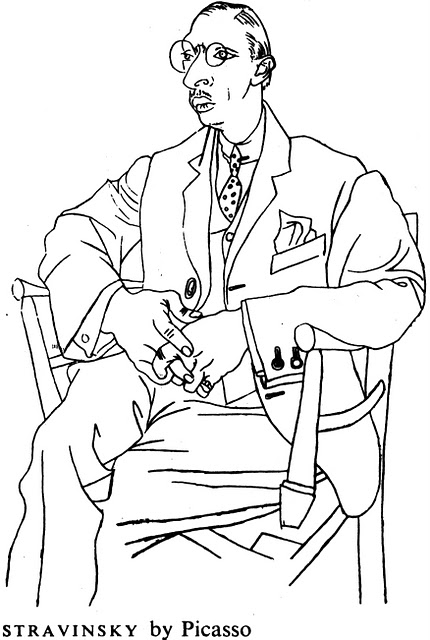
Igor Stravinsky (5 June 1882 – 6 April 1971) was a Russian-born composer, pianist, and conductor. He is widely considered one of the most influential composers of the 20th century. Stravinsky lived a remarkable life, during the most amazing era, among the most fascinating people but we may have never known about it, were it not for the genius of Pablo Picasso.
Igor Stravinsky as drawn by Pablo Picasso (dated 31 December 1920). Published in France in May 1921 in the program for the 14th season of the Ballets Russes at the Théâtre de la Gaîté-Lyrique in Paris.
Stravinsky despised the Bolsheviks as he was a staunch Monarchist, so the Russian revolution forced him to move to the Ukraine and then Switzerland, however it was the couturière Coco Chanel who invited Stravinsky and his family to reside at her new mansion “Bel Respiro” in the Paris suburb of Garches (until they could find a more suitable residence). Life became illustrious from that day forward, as he became the preeminent composer and conductor of the twentieth century.
Despite the outbreak of World War II on 1 September 1939, the widowed Stravinsky sailed (alone) for the United States at the end of the month, arriving in New York City and thence to Cambridge, Massachusetts, to fulfill his engagement at Harvard. Vera followed him in January, and they were married in Bedford, Massachusetts, on 9 March 1940.
Essex House in New York, where Stravinsky lived at the end of his life
Stravinsky settled in West Hollywood. He spent more time living in Los Angeles than any other city. He became a naturalized United States citizen in 1945. In 1969, Stravinsky moved to the Essex House in New York, where he lived until his death in 1971 at age 88 of heart failure. He was buried at San Michele, close to the tomb of Sergei Diaghilev.
Stravinsky had adapted to life in France, but moving to America at the age of 57 was a very different prospect. For a while, he maintained a circle of contacts and emigré friends from Russia, but he eventually found that this did not sustain his intellectual and professional life. He was drawn to the growing cultural life of Los Angeles, especially during World War II, when so many writers, musicians, composers and conductors settled in the area: these included Otto Klemperer, Thomas Mann, Franz Werfel, George Balanchine and Arthur Rubinstein. Bernard Holland claimed Stravinsky was especially fond of British writers, who visited him in Beverly Hills, “like W. H. Auden, Christopher Isherwood, Dylan Thomas. They shared the composer’s taste for hard spirits – especially Aldous Huxley, with whom Stravinsky spoke in French”. Stravinsky and Huxley had a tradition of Saturday lunches for west coast avant-garde and luminaries.
Stravinsky displayed a taste in literature that was wide and reflected his constant desire for new discoveries. The texts and literary sources for his work began with a period of interest in Russian folklore, which progressed to classical authors and the Latin liturgy and moved on to contemporary France (André Gide, in Persephone) and eventually English literature, including Auden, T. S. Eliot and medieval English verse. He also had an inexhaustible desire to explore and learn about art, which manifested itself in several of his Paris collaborations. Not only was he the principal composer for Diaghilev’s Ballets Russes, but he also collaborated with Picasso (Pulcinella, 1920), Jean Cocteau (Oedipus Rex, 1927), and George Balanchine (Apollon musagète, 1928). His interest in art propelled him to develop a strong relationship with Picasso, whom he met in 1917, announcing that in “a whirlpool of artistic enthusiasm and excitement I at last met Picasso.” From 1917 to 1920, the two engaged in an artistic dialogue in which they exchanged small-scale works of art to each other as a sign of intimacy, which included the famous portrait of Stravinsky by Picasso, and Stravinsky’s “Sketch of Music for the Clarinet”. This exchange was essential to establish how the artists would approach their collaborative space in Pulcinella.
Louise Donahue portrait of Igor StravinskyAccording to Robert Craft, Stravinsky remained a confirmed monarchist throughout his life and loathed the Bolsheviks from the very beginning. In 1930, he remarked, “I don’t believe that anyone venerates Mussolini more than I … I know many exalted personages, and my artist’s mind does not shrink from political and social issues. Well, after having seen so many events and so many more or less representative men, I have an overpowering urge to render homage to your Duce. He is the saviour of Italy and – let us hope – Europe”. Later, after a private audience with Mussolini, he added, “Unless my ears deceive me, the voice of Rome is the voice of Il Duce. I told him that I felt like a fascist myself… In spite of being extremely busy, Mussolini did me the great honour of conversing with me for three-quarters of an hour. We talked about music, art and politics”. When the Nazis placed Stravinsky’s works on the list of “Entartete Musik“, he lodged a formal appeal to establish his Russian genealogy and declared, “I loathe all communism, Marxism, the execrable Soviet monster, and also all liberalism, democratism, atheism, etc.” Towards the end of his life, at Craft’s behest, Stravinsky made a return visit to his native country and composed a cantata in Hebrew, traveling to Israel for its performance.
Stravinsky proved adept at playing the part of a ‘man of the world’, acquiring a keen instinct for business matters and appearing relaxed and comfortable in public. His successful career as a pianist and conductor took him to many of the world’s major cities, including Paris, Venice, Berlin, London, Amsterdam and New York and he was known for his polite, courteous and helpful manner. Stravinsky was reputed to have been a philanderer and was rumored to have had affairs with high-profile partners, such as Coco Chanel. He never referred to it himself, but Chanel spoke about the alleged affair at length to her biographer Paul Morand in 1946; the conversation was published thirty years later. The accuracy of Chanel’s claims has been disputed by both Stravinsky’s widow, Vera, and by Craft. Chanel’s fashion house avers there is no evidence that any affair between Chanel and Stravinsky ever occurred. A fictionalization of the supposed affair formed the basis of the novel Coco and Igor (2002) and a film, Coco Chanel & Igor Stravinsky (2009). Despite these alleged liaisons, Stravinsky was considered a family man and devoted to his children.
Brazil enjoys the largest recording industry outside of the United States, so the number of brilliant artists and the wide variety of genres (most people have never heard of), is truly staggering.
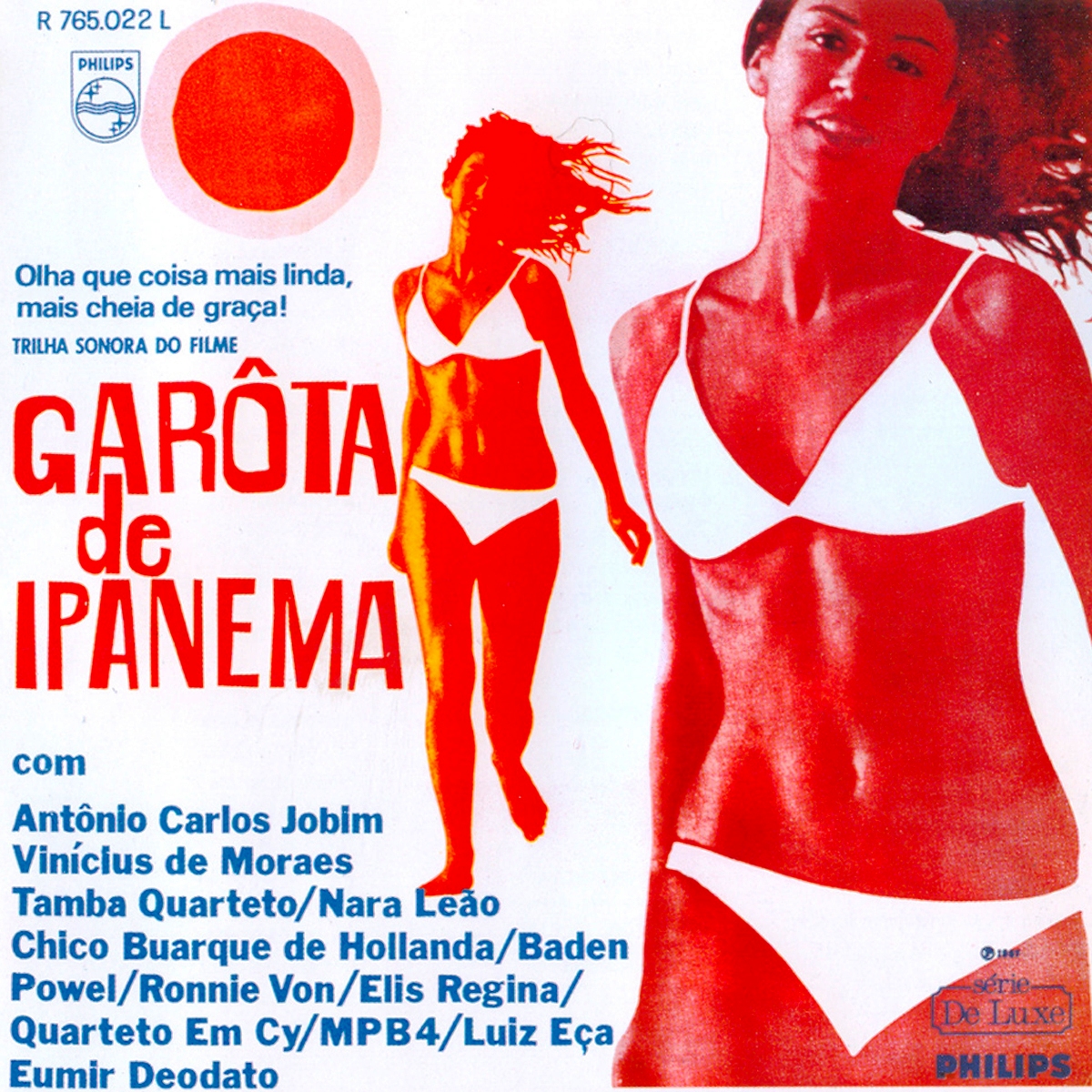
The first time I’d ever hear this beautiful language was by vinyl record, as my father had a huge jazz collection, and even before I was born the Bossa Nova was played in my house often, so the first song I can remember, and first words in Portuguese are from the famous song: Garota de Ipanema (The Girl from Ipanema).
The Girl from Ipanema is a well-known bossa nova song, a worldwide hit in the mid-1960s that won a Grammy for Record of the Year in 1965. It was written in 1962, with music by Antônio Carlos Jobim and Portuguese lyrics by Vinicius de Moraes. English lyrics were written later by Norman Gimbel.
In Revelação: a verdadeira Garota de Ipanema (Revealed: The Real Girl from Ipanema) Moraes wrote she was:
“o paradigma do broto carioca; a moça dourada, misto de flor e sereia, cheia de luz e de graça mas cuja a visão é também triste, pois carrega consigo, a caminho do mar, o sentimento da mocidade que passa, da beleza que não é só nossa—é um dom da vida em seu lindo e melancólico fluir e refluir constante.”
Translation:
“the paradigm of the young Carioca: a golden teenage girl, a mixture of flower and mermaid, full of light and grace, the sight of whom is also sad, in that she carries with her, on her route to the sea, the feeling of youth that fades, of the beauty that is not ours alone—it is a gift of life in its beautiful and melancholic constant ebb and flow.”
The song was inspired by Heloísa Eneida Menezes Paes Pinto (now Helô Pinheiro), a nineteen-year-old girl living on Montenegro Street in the fashionable Ipanema district in Rio de Janeiro, Brazil. Daily, she would stroll past the popular Veloso bar-café, not just to the beach (“each day when she walks to the sea”), but in the everyday course of her life. She would sometimes enter the bar to buy cigarettes for her mother and leave to the sound of wolf-whistles.
As the legend has it (which isn’t 100% accurate), in the winter of 1962, the composers watched the girl pass by the bar (now a restaurant, see footnote), and it is easy to imagine why they noticed her—Helô was a 173-cm (five-foot eight-inch) brunette, and she attracted the attention of many of the bar patrons. Since the song became popular, she has become a celebrity.
While Helô inspired the song, it was another Carioca who carried it beyond Rio. Astrud Gilberto was just the wife of singing star João Gilberto when she entered a NYC studio in March 1963. João and Jobim were making a record with tenor saxman Stan Getz. The idea of cutting a verse on “Ipanema” in English came up, and Astrud was the only one of the Brazilians who spoke more than phrasebook English.
The hit English language song; “The Girl from Ipanema” was the alchemy of Astrud’s child-like vocal, devoid of vibrato and singerly mannerisms, it was the perfect foil for her husband’s soft bumblebee voice. Jobim tinkled piano. Getz blew a creamy smooth tenor. Four minutes of magic went to tape.
Note:One of my favorite places to eat and drink in Rio is the Garota de Ipanema, sure it’s a bit of a tourist trap because of the song “Girl from Ipanema” but seriously the restaurant is really excellent and it’s super casual being just a couple of blocks from Ipanema beach. You can grab a good window seat near the corner if your timing is good and then watch all the Cariocas trudging home from the beach at the end of the day. The draft beer is cold and frothy however the caipirinhas might be as good as you’ll find anywhere but the main attraction is the great food, especially the Picanha, which is thinly sliced beef rump that you grill yourself, right at your table, on a super-hot brazier, similar to a hibachi bar-b-que. (See: Garota de Ipanema Restaurant)
I was born under a lucky star, or so my Dear Old Mom tells me. She was born of Irish immigrants to Canada, who taught her to always look on the bright side of life, with a good dose of chin-up and carry-on when things didn’t go as planned. She and my Dad taught me to ski before I could walk, and how to teach skiing before I could drive (driving age is 16 in Canada).
My lucky star was being able to teach, that meant I was able to earn money, then own my own pick-up truck. Every Canuck buck wants to own a truck but the thing is you need an income to be able to keep one, same as today. I may have changed my choice of car but still need the money to keep it.
The Internet was how I managed to carve out a living, so that was another part of lucky star status. I saw the web really early and jumped all over it, had my first web design company before the mid 90’s. Mostly through consulting work and webmaster contracts I was able to support a nice lifestyle in South Florida, although it was up and down since we were all learning at the same time and the Industry was so new and unexplored.
Nowadays the U.S. Expat has a major advantage throughout the world in the Internet niche because most of the rest of the world want U.S. Talent, knowledge and experience, especially as in the case of countries where allot of those people want to travel to USA, like China and Brazil for example, where it’s right of passing for middle class and up to make trips abroad.
The key thing to know about becoming an Expat is that there’s more opportunity and often much bigger opportunities when you can provide a bridge between your culture and local knowledge and that of your new foreign home. The world is your oyster, when you’ve got a skill-set, that can help other people succeed.
~~ Mount Robson, Mount Robson Provincial Park, ~~ British Columbia, Canada.
When I first left Canada I was young and had serious wanderlust, funding my adventures was no easy feat. Several people I knew taught skiing and/or English, one friend that I admired in particular was Max, because he stayed in college to obtain an economics degree, then moved to Japan to teach English in a corporation.
Max had a thing about him, aside from being very smart, he was an absolute freak for mountain sports and outdoor recreation of all kinds. Ace tennis player and great golfer but even before snow boards arrived, he loved heli-skiing and knew about these incredible areas in British Columbia because we had planted trees in these mountains (for summer jobs). That’s how Max and I met.
Now that you have the backstory, while Max was in Japan teaching English to corporate execs, he was always talking about the back-country sports of BC. Next thing you know he’s opening an adventure guiding business in Canada, when Snow Boards arrived Max was among the first riding them, so he jumped all over the opportunity. Shortly thereafter it was Max throughout the mid 80’s that was showing Warren Miller and other ski film makers where to heli-ski. Max was the guide to the guides. To this day Max lives at Whistler, still involved in the hospitality industry and still helping Japanese people have an awesome experience in Canada.
There are so many examples of the foreigner next door. Everyone can remember someone in their life, who had a funny sounding accent. My life growing up in Western Canada was all about sports and recreation.
In the ski teaching business we would meet interesting people all the time, people from the farthest corner, end up at ski chalets. Especially common near ski resorts and water sports are Australian’s and Kiwi’s (New Zealanders). My young impressionable life was filled with great stories about “Down Under”, as my winters were filled with many weekends with my Oz and Kiwi mates, at our ski club. We loved to ski together, the deeper and steeper the better!
These people were smart, sophisticated, experienced and very determined to live free and prosperous. Their timing made them appear to be Hippy but they were world-wise way beyond their youthful appearance. World travel had also taught them about cultural cuisine, and they loved to cook fabulous foreign dishes and entertain large groups of us, with music and wine from the various regions of the world, to match the meal.
One winter we made our own Saki from rice, then at the end of the season, enjoyed an authentic 7 course Japanese dinner party with the homemade rice wine. It tasted great, as did incredible Mexican and my personal favorite Greek dinners, all of which were very novel to me, at 16 years old.
WildVenture Volunteers Teaching English in Mongolia
Teaching skiing taught me how to help people get what they wanted. This is what is so fundamental about our language, more than half of the world wants to learn English.
All of the people I mentioned above, and just about anyone who has ever lived overseas, has at one time or another, taught English to someone. It’s part of humanity, to try to exchange languages. It is the most common principle of good-will, to show an interest in another person’s culture, to speak their words.
The best thing about Teaching English is the people you meet, and that you are becoming an Ambassador of our language. You are helping someone else get what they want, that’s what creates value, and it’s the most common way to make money while living overseas.
The greatest thing in today’s English teaching community is Internet video, as many people want to learn online but still the basis of the teaching starts with a book at a table, with the student sitting beside you. It’s a one-on-one style method, where the book does the work but you need to be taught how to teach.
It’s highly recommended, that anyone embarking on a serious global Expat exploration being armed with more money making methods, than just teaching English. However, always be proud and happy to teach, it’s an excellent means of immersion into a foreign country.
Remember it’s an honor to be invited to anyone’s kitchen table, to teach them how to speak English. You benefit in many more ways, for sharing your time with people, than just the money in your hand.
Classroom teaching is another realm and above my pay-grade but I imagine that it’s the same in that your let the books do the teaching, just follow the words in the book and do the best that you to help people get what they want – and – if all else fails in the class – speak English!
You must be logged in to post a comment.