One of the most profound things you can seek, is your own holiness, activated by Nicolas Kimaz
Nicolas Kimaz has 25 years of expertise and a unique approach that will activate your 4 Wisdoms to be transformed through a special process to give your Life a Spiritual Meaning that will influence your leadership and relationships to Scale to a Higher Being – to become a river of Gifts, a river of Love, a river of Giving and a river of Healing.
Nicolas Kimaz is the founder and director of 4 WISDOMS Academy. He can well be referred to as a true walking miracle. It is of little surprise that his passion and mission in life is to bring healing to the planet through Christ-centered Wisdom, one person at a time.
Nicolas is a world traveller who has enjoyed success as a world renown Executive Leadership Strategist, naturopathic doctor, healer, mentor, teacher, entrepreneur, consultant, author, broadcaster, speaker and businessman.
From my perspective, having studied “The Course in Miracles” I find 4 Wisdoms to be aligned with same ideals of seeking peace, prosperity and enlightenment, by living by the same principles and primarily; treating other people, as you would wish to be treated. It’s an honour and a thrill to be involved in helping Dr. Nic in his expression of the 4 Wisdoms.
A Course in Miracles
“This is A Course in Miracles. It is a required course. Only the time you take it is voluntary. Free will does not mean that you can establish the curriculum. It means only that you can elect what you want to take at a given time. The course does not aim at teaching the meaning of love, for that is beyond what can be taught. It does aim, however, at removing the blocks to the awareness of love’s presence, which is your natural inheritance. The opposite of love is fear, but what is all-encompassing can have no opposite. This Course can therefore be summed up very simply in this way:
Nothing real can be threatened. Nothing unreal exists.
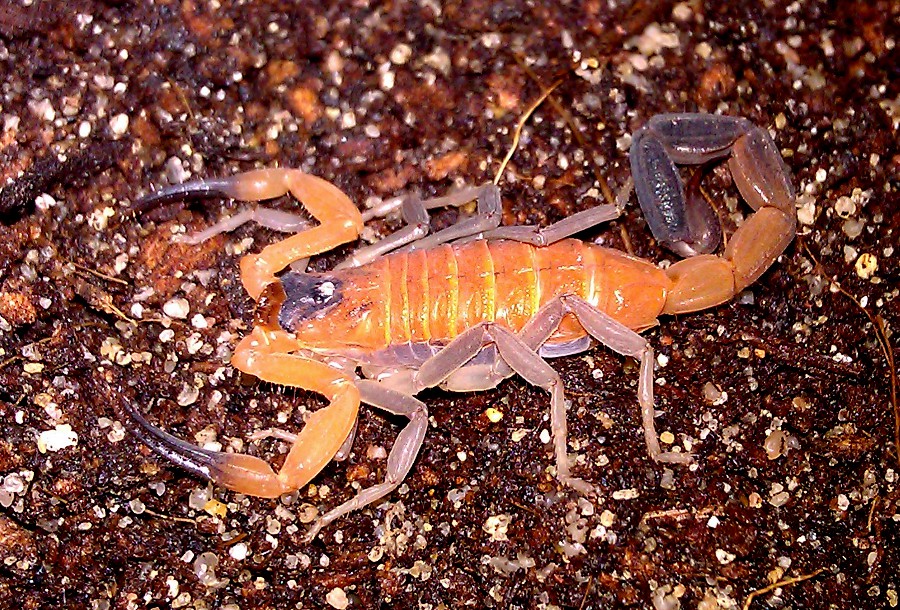
Rhopalurus junceus also known as the Caribbean Blue Scorpion
Caribbean Blue Scorpion Venom as a medicine is one of the coolest things I’ve learned about lately and makes perfect sense to me. Beneficiaries of this amazing nutraceutical are survivors of chemo therapy. This modern marvel of naturaopathic science is called Escozine.
Escoazul or escozul (from escorpión azul – in Spanish: blue scorpion – the name by which it’s known in Cuba) refers to a mixture used in Cuban traditional medicine as an anti-inflammatory. The composition may vary, but always contains a diluted dose of Rhopalurus junceus venom.
The Rhopalurus junceus poison, coloured blue, contains a toxin whose composition and structure is still unknown. The escozul gained fame when in Latin America and Europe was spread, through internet, the voice of a possible antineoplastic effect. After that, the Cuban Government started some studies, all in preliminary stages, in order to discover its real effects
The founder of Escozine, Dr. Arthur Grant Mikaelian, started his independent investigation in 2004 related to the Caribbean Blue Scorpion. Scientific data, which was available at the time, made him believe that the scorpion venom had potential therapeutic values. He was sure it could be a valuable organic compound when combined with his polarization technology.
In 2007, Dr. Mikaelian and the Ministry of Environment and Bio Diversity of the Dominican Republic started discussing a joint investigation of several scorpion species endemic to the Dominican Republic. In 2008, both parties came to final conclusion and Dr. Arthur Grant Mikaelian signed an agreement with the Minister of Environment, Dr. Jaime David Fernandez Mirabal, and started a joint investigation.
In 2010, Escozine received its first Registration for its product, Escozine, in the Dominican Republic. Escozine received a full Patent in 2012. This exclusive patent license, (United States patent # 8,097,284 B2) is being used to make a new generation of nutraceuticals and drugs utilizing the polarization technology for higher potency bioactive peptides. Escozine™ is registered and certified for oncological treatment by the Minister of Health in the Dominican Republic. Escozine™ is currently sold through direct online marketing to over 40 countries and is currently registered in six countries (Dominican Republic, Vietnam, Russia, Belarus, Kazakhstan, Nigeria, and Armenia) as well as being sold in the United States as a nutraceutical.
The Cuban product Vidatox (formerly known as Escozul) is not produced or sold by Escozine and Escozine does not rely on this product in any way. Escozine has its own independent source of Blue Scorpion venom in the Dominican Republic and has established the world’s first Scorpion Reservation which is 50,000 square meters and can produce millions of doses to meet global demand. Products are currently sold through direct online marketing to over 40 countries.
If I were to have a bucket list, and I suppose I do, now that I mention Chile, it’s been on the top of the list for twenty years. Uruguay, Peru, Brazil and Venezuela but not Chile, Colombia, Bolivia and Argentina (yet). The love of Patagonia clothing company founders were the people who opened my mind to the idea of Chile and now learning about Pumalín Park in a new documentary, I’m enchanted with the wide-open and rugged spaces.
Huinay, Pumalín National Park, Chile
History
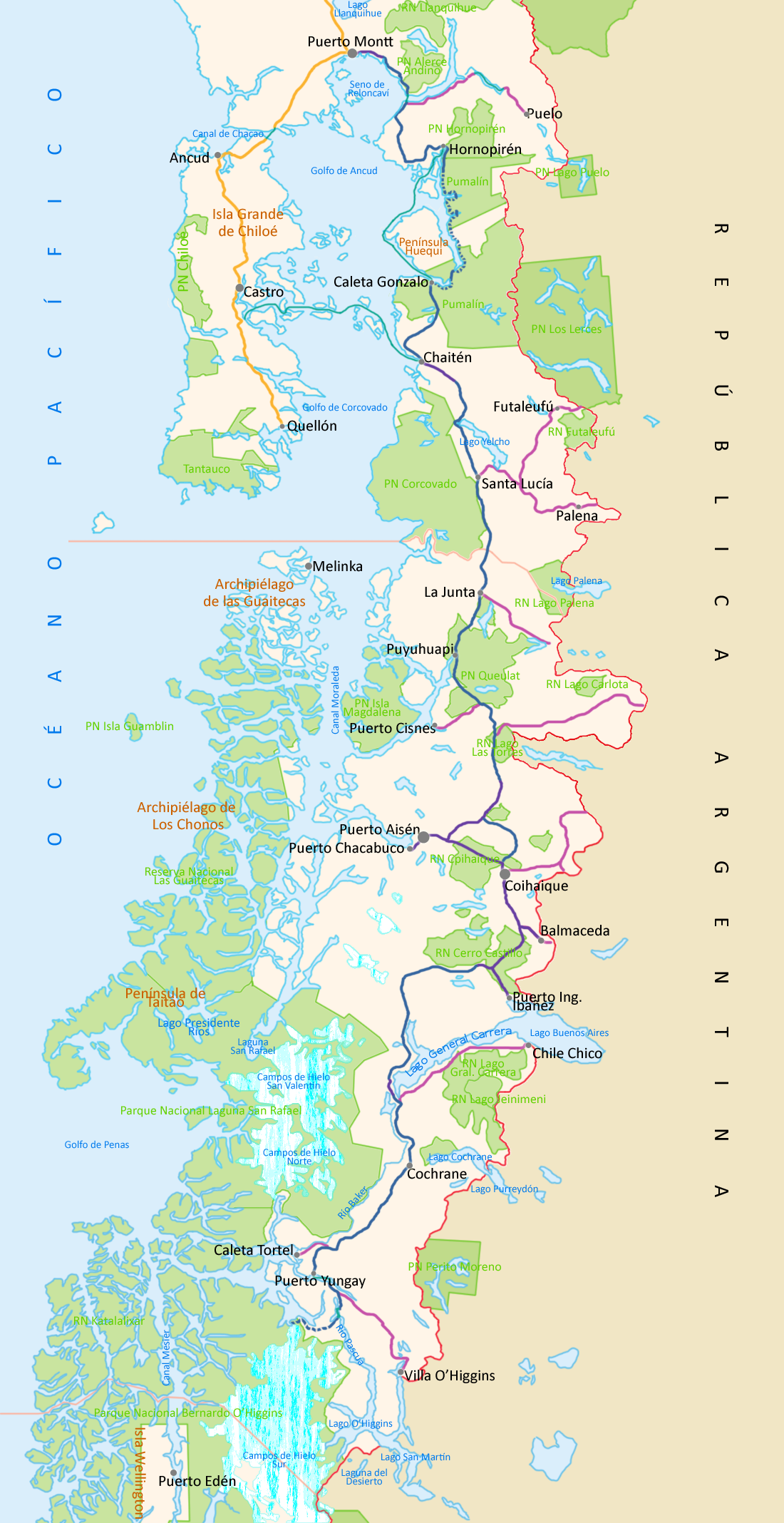
Pumalín Park is situated on the upper right corner of the map
In 1991, Douglas Tompkins bought a large, semi-abandoned plot of land in the Reñihue River
Valley of the Chilean province of Palena. A mountaineer and
conservationist who had been visiting Patagonia since the early 1960s,
Tompkins sought to protect the 16,996.6 ha (42,000 acres) tract, most of
which was primeval Valdivian temperate rainforest,
from future exploitation. After moving to Reñihué to live full-time,
Tompkins began developing plans for a larger park, gradually acquiring
additional adjacent properties from willing sellers. Ultimately, roughly
98 percent of the park acreage was bought from absentee landowners.
The Conservation Land Trust subsequently added approximately
283,280 ha (700,000 acres) in nearly contiguous parcels to form Pumalín
Park, which was declared a Nature Sanctuary on August 19, 2005, by
then-president Ricardo Lagos.
This special designation by the Chilean government grants the land
additional protections to secure its ecological values and prevent
development. The Conservation Land Trust later donated the protected
lands to Fundación Pumalín, a Chilean foundation, for their administration and ongoing preservation as a national park under private initiative.
While nature-related philanthropy has a long tradition in the
United States, large-scale private land acquisition for parks was
unfamiliar in Chile, and initially generated skepticism and political
opposition. Over the years of the project’s development, confidence has
been built, both locally and nationally, as Pumalín Park’s public access
infrastructure began serving thousands of visitors annually.
Tourist Services of Pumalín and Patagonia parks in the process of concession
Tompkins Conservation recently donated more than 407,000 hectares to the state of Chile to help create 5 new national parks, including Pumalín Douglas Tompkins and Patagonia parks. The restaurants, lodge, cabins and information centers in these parks will be closed until the selection of a new concessionaire, a process that is being carried out by the National Forest Service (Conaf) through concessions. Meanwhile, visitors can still enjoy the trails.
For any questions about reservations in the cabins of Pumalín or the lodge at Valle Chacabuco of Parque Patagonia please write to the following emails: reservas@parquepumalin.cl or reservas@vallechacabuco.cl
The Divine will is our effortless existence, when we align with our solar consciousness. The Solstice in Cancer is the most powerful of all days in a celestial cycle, known as a year. It represents the pinnacle of the energy force of light and love. In a metaphysical sense, we receive the most pure radiance into our souls at that time of the year. We need to honour it.
The Sun represents wealth and the eternal spring, it’s the key of almost every believe system since the beginning of man. The sun represents the word, it’s the symbol of light and the great central sign. The birth and creation of all things, is related to the sun.
I can never forget the first time the summer solstice had significance for me, it was during my early twenties. In 1983 there was an global oil crisis and the entire oil industry of western Canada shut down. That year there was no work available in northern BC and Alberta, so I drove the entire Alaska Highway seeking a job. I was finally hired in Inuvik NWT to work on a seismic ship, seaman first class, until the arctic sea began to freeze. Then arrived in Tuktoyuktuk, the northern most seaport in the world, at the end of the summer season, having made enough money to move to Australia.
That adventure had me camping in BC, Yukon, Northwest Territories and even made a port of call in Deadhorse Alaska. Yep, I’ve been to Whitehorse, the Capital of Yukon and Deadhorse the capital of Prudhoe bay, Alaska. Even getting to the seismic ship was incredible, in a single engine float plane we flew over the McKenzie delta, the second largest river delta in the world (after the Amazon) to land at the only island in the Yukon where a massive pile of bleached whales bones remained from whale-oil hunter camps, of 100 years earlier. From the plane floats I boarded a 150 foot ship and was replacing the first mate from Newfoundland, who had become a new father, so I was the replacement for 90 days and worked at the helm and managed the tender, which was a zodiac with an outboard engine.
On that tour I received a letter from a friend who was working in Queensland, Australia, I decided the day I read it, crumpled it and threw it in the sea. I went from the Arctic to Darwin Australia from Bali, Indonesia via Hong Kong by way of San Francisco. From Darwin, where I arrived with $14 dollars left and a one way ticket, on a 6 month visa (stayed 3 years), was clean-cut and well dressed, carrying a single sports bag with short flip flops, change of clothes and my tooth brush. I began hitch-hiking from the airport to Cairns, Queensland, where after a few days I was with old friends and living in paradise. All in a year, from one extreme to another.
I was in Dawson City on the Yukon River for Solstice 1983
I was in Dawson City, Yukon for the Summer Solstice and joined a group of revellers atop Dome Mountain, above the ancient mining town, where there had been a gold rush of 100,000 men a century previous. From the top of the mountain we could look down on the confluence of the Yukon and Klondike Rivers and on that day the sun doesn’t set, it kisses the horizon and then rises again. It’s a very dramatic cosmic event.
There’s always a dark side to Solstice too, Veterinarians will tell you that it’s the time of year when old dogs die, old horses, old cats, old everything will perish, if they’re end is near the reaper comes for them, something about those Solstice is related to death and birth, hence the rituals. (song added for the icebergs)
Solstice in Cancer is a time to understand more about our Solar Consciousness. The idea is to align our mission and purpose with our passion. Some might think of it as reaching our optimum potential in a natural and authentic manner, so that the act of living becomes a pleasure and the felling of satisfaction provides enormous peace and comfort.
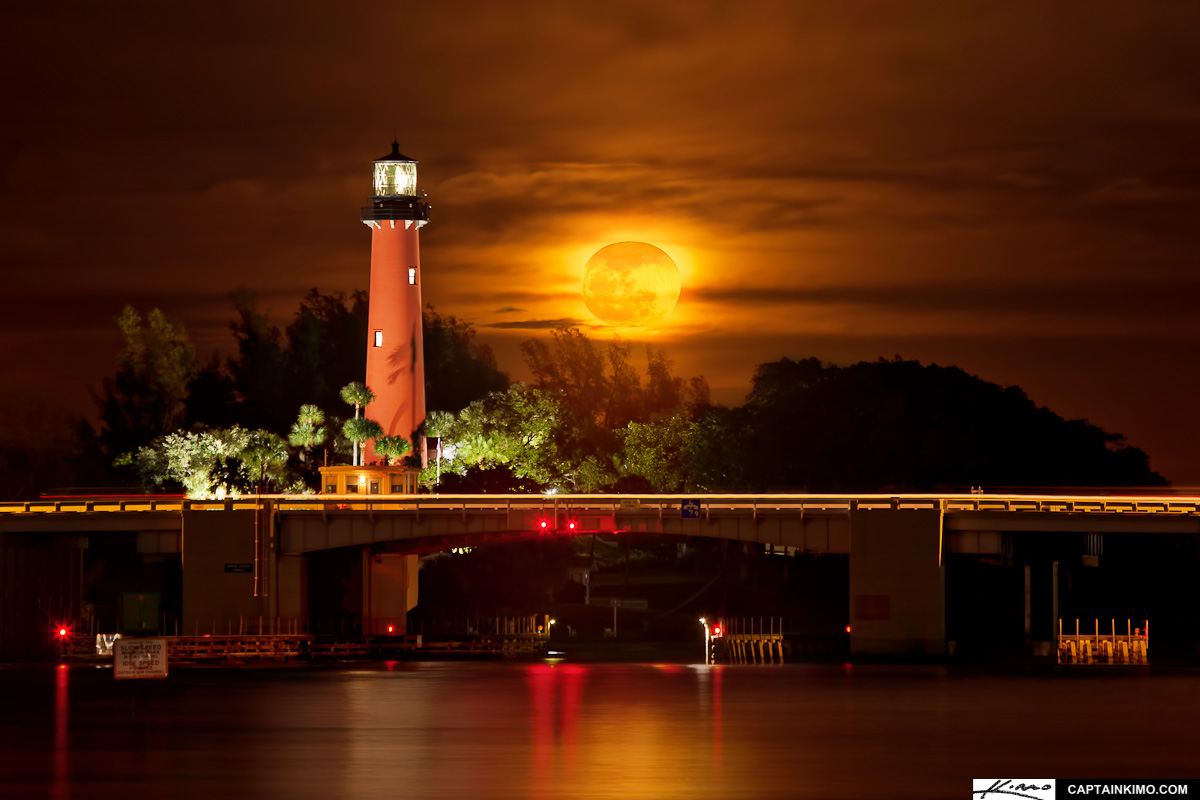
Burning Moonrise at Jupiter Inlet Lighthouse Florida
My first friend in USA when I moved to Pompano Beach, Florida following the great real estate crash of Toronto in 1989, where I had been a licensed real estate agent. My next door neighbour on the Intra-coastal waterway, was James Taylor Bruce. James created the concept of Share the Growth and now created the website SharetheGrowth.org.
Share the Growth presents 4 Wisdoms; knowledge and training for peace, prosperity and happiness. Here’s an excerpt from 4 Wisdoms about the author and founder Nicolas Kimaz.
Nicolas Kimaz’s 25 years of expertise and unique approach will activate your 4 Wisdoms to be transformed through a special process to give your Life a Spiritual Meaning that will influence your leadership and relationships to Scale to a Higher Being –to become a river of Gifts, a river of Love, a river of Giving and a river of Healing.
4 Wisdoms is co-created with Share the Growth and incorporates the business model where many more people are engaged in an operation but the distribution of expenses is used across a greater number of individuals, a synergy of more hands making lighter work, to provide better service, better end results and a better customer experience, with more profit.
Share the Growth is genius and a simple idea long overdue, essentially the idea is bring innovation to the business model itself, which was never transferred into the concept of being in service of others, and extending that into a business model that can harmonize management and operations of any type of traditional business. Share the Growth is the way of the future, as we begin to return to collective societies.
In various online sources, a series of frequencies are listed as “The Ancient Solfeggio Frequencies” as been revealed by Dr. Joseph Puleo and Leonard G. Horowitz. The proclaimed “Solfeggio frequencies” are: UT – 396 Hz – Liberating Guilt and Fear. … SOL – 741 Hz – Awakening Intuition.
The Solfeggio Frequencies genesis is another online enigma, as there’s controversy of the authenticity of claim that these specific frequencies are of ancient sources. All that aside, there’s something intrinsic about frequency healing and even to an untrained ear these sounds have a comforting effect, on this listener for one.
After having found a huge selection of various Solfeggio Frequencies recorded and uploaded to YouTube. Whether or not these sounds are good for the suggested body parts, or chakras, or even for helping to open the pineal gland, as some of them claim.
“f” Holes / Sound Holes Evolution
What is the difference between frequency and vibration?
Vibration is a physical phenomenon involving matter. Its description is complete only with frequency and amplitude of displacement. Frequency is any occurrence or a cycle of events repeating at regular intervals. … In these parameters, frequency remains same, while amplitude variation takes place.
Observations with NASA’s Chandra, Swift, and Rossi X-ray observatories, Fermi Gamma-ray Space Telescope, and ESA’s XMM-Newton have revealed that a slowly rotating neutron star with an ordinary surface magnetic field is giving off bursts of X-rays and gamma rays. This discovery may indicate the presence of an internal magnetic field much more intense than the surface magnetic field, with implications for how the most powerful magnets in the cosmos evolve.
The neutron star, SGR 0418+5729, was discovered on June 5, 2009 when the Fermi Gamma-ray Space Telescope detected bursts of gamma-rays from this object. Follow-up observations four days later with the Rossi X-Ray Timing Explorer (RXTE) showed that, in addition to sporadic X-ray bursts, the neutron star exhibits persistent X-ray emission with regular pulsations that indicate that the star has a rotational period of 9.1 seconds. RXTE was able to monitor this activity for about 100 days. This behavior is similar to a class of neutron stars called magnetars, which have strong to extreme magnetic fields 20 to 1000 times above the average of the galactic radio pulsars.
The Coit Tower murals were carried out under the auspices of the Public Works of Art Project, the first of the New Deal federal employment programs for artists. Ralph Stackpole and Bernard Zakheim successfully sought the commission in 1933, and supervised the muralists, who were mainly faculty and student of the California School of Fine Arts (CSFA), including Maxine Albro, Victor Arnautoff, Ray Bertrand, Rinaldo Cuneo, Mallette Harold Dean, Clifford Wight, Edith Hamlin, George Harris, Robert B. Howard, Otis Oldfield, Suzanne Scheuer, Hebe Daum and Frede Vidar. After Diego Rivera’s Man at the Crossroads mural was destroyed by its Rockefeller Center patrons for the inclusion of an image of Lenin, the Coit Tower muralists protested, picketing the tower. Sympathy for Rivera led some artists to incorporate leftist ideas and composition elements in their works. Bernard Zakheim’s “Library” depicts fellow artist John Langley Howard crumpling a newspaper in his left hand as he reaches for a shelved copy of Karl Marx’s Das Kapital with his right, and Stackpole is painted reading a newspaper headline announcing the destruction of Rivera’s mural; Victor Arnautoff’s “City Life” includes the The New Masses and The Daily Worker periodicals in the scene’s news stand rack; John Langley Howard’s mural depicts an ethnically diverse Labor March as well as showing a destitute family panning for gold while a rich family observes; and Stackpole’s Industries of California was composed along the same lines as an early study of the destroyed Man at the Crossroads.[4] Two of the murals are of San Francisco Bay scenes. Most murals are done in fresco; the exceptions are one mural done in egg tempera (upstairs, in the last decorated room) and the works done in the elevator foyer, which are oil on canvas. While most of the murals have been restored, a small segment (the spiral stairway exit to the observation platform) was not restored but durably painted over with epoxy surface.
Art for art sake, is one thing but for virtue and beauty is more valid, however it’s just not something taught in the mainstream. Perhaps the institutionalization of education, which started in Britain and ran the course of the world, changing private education forever and diminishing the value of art education and practice.
Art saves! Art can make anything better. If all else fails, we have art and when we are gone, there will remain art. Art exists where there is consciousness.
“Art for art’s sake” is the usual English rendering of a Frenchslogan from the early 19th century, “l’art pour l’art“, and expresses a philosophy that the intrinsic value of art, and the only “true” art, is divorced from any didactic, moral, or utilitarian function. Such works are sometimes described as “autotelic“, from the Greek autoteles, “complete in itself”, a concept that has been expanded to embrace “inner-directed” or “self-motivated” human beings.
The term is sometimes used commercially. A Latin version of this phrase, “ARS GRATIA ARTIS“, is used as a motto by Metro-Goldwyn-Mayer and appears in the circle around the roaring head of Leo the Lion in its motion picture logo.
History
“L’art pour l’art” (translated as “art for art’s sake”) is credited to Théophile Gautier (1811–1872), who was the first to adopt the phrase as a slogan in the preface to his 1835 book, Mademoiselle de Maupin. Gautier was not, however, the first to write those words: they appear in the works of Victor Cousin,[1]Benjamin Constant, and Edgar Allan Poe. For example, Poe argues in his essay “The Poetic Principle” (1850):
We have taken it into our heads that to write a poem
simply for the poem’s sake […] and to acknowledge such to have been
our design, would be to confess ourselves radically wanting in the true
poetic dignity and force: – but the simple fact is that would we but
permit ourselves to look into our own souls we should immediately there
discover that under the sun there neither exists nor can exist any work
more thoroughly dignified, more supremely noble, than this very poem,
this poem per se, this poem which is a poem and nothing more, this poem written solely for the poem’s sake.[2]
“Art for art’s sake” was a bohemiancreed in the nineteenth century, a slogan raised in defiance of those who – from John Ruskin to the much later Communist advocates of socialist realism – thought that the value of art was to serve some moral or didactic purpose. It was a rejection of the marxist aim of politicising art. “Art for art’s sake” affirmed that art was valuable as
art, that artistic pursuits were their own justification and that art
did not need moral justification – and indeed, was allowed to be morally
neutral or subversive.
In fact, James McNeill Whistler
wrote the following in which he discarded the accustomed role of art in
the service of the state or official religion, which had adhered to its
practice since the Counter-Reformation
of the sixteenth century: “Art should be independent of all claptrap –
should stand alone […] and appeal to the artistic sense of eye or ear,
without confounding this with emotions entirely foreign to it, as
devotion, pity, love, patriotism and the like.”[3]
Such a brusque dismissal also expressed the artist’s distancing himself from sentimentalism. All that remains of Romanticism in this statement is the reliance on the artist’s own eye and sensibility as the arbiter.
The explicit slogan is associated in the history of English art and letters with Walter Pater and his followers in the Aesthetic Movement, which was self-consciously in rebellion against Victorian moralism. It first appeared in English in two works published simultaneously in 1868: Pater’s review of William Morris‘s poetry in the Westminster Review and in William Blake by Algernon Charles Swinburne. A modified form of Pater’s review appeared in his Studies in the History of the Renaissance (1873), one of the most influential texts of the Aesthetic Movement.
In Germany, the poet Stefan George was one of the first artists to translate the phrase (“Kunst für die Kunst“) and adopt it for his own literary programme which he presented in the first volume of his literary magazine Blätter für die Kunst (1892). He was inspired mainly by Charles Baudelaire and the French Symbolists whom he had met in Paris, where he was friends with Albert Saint-Paul and consorted with the circle around Stéphane Mallarmé.
Criticism
Friedrich Nietzsche claimed that there is no art for art’s sake, arguing that the artist still expresses his/her being through it:
When the purpose of moral preaching and of improving man
has been excluded from art, it still does not follow by any means that
art is altogether purposeless, aimless, senseless — in short, l’art pour l’art,
a worm chewing its own tail. “Rather no purpose at all than a moral
purpose!” — that is the talk of mere passion. A psychologist, on the
other hand, asks: what does all art do? does it not praise? glorify?
choose? prefer? With all this it strengthens or weakens certain
valuations. Is this merely a “moreover”? an accident? something in which
the artist’s instinct had no share? Or is it not the very
presupposition of the artist’s ability? Does his basic instinct aim at
art, or rather at the sense of art, at life? at a desirability of life?
Art is the great stimulus to life: how could one understand it as
purposeless, as aimless, as l’art pour l’art?[4]
Criticism by Marxists
Marxists have argued that art should be politicised for the sake of transmitting the socialist message[5].
George Sand, who was a socialist writer[6][7], wrote in 1872 that L’art pour l’art
was an empty phrase, an idle sentence. She asserted that artists had a
“duty to find an adequate expression to convey it to as many souls as
possible,” ensuring that their works were accessible enough to be
appreciated.[8]
Former Senegal president and head of the Socialist Party of SenegalLeopold Senghor and anti colonial Africanist writer Chinua Achebe
have criticised the slogan as being a limited and Eurocentric view on
art and creation. In “Black African Aesthetics,” Senghor argues that
“art is functional” and that “in black Africa, ‘art for art’s sake’ does
not exist.” Achebe is more scathing in his collection of essays and
criticism entitled Morning Yet on Creation Day, where he asserts that “art for art’s sake is just another piece of deodorised dog shit” (sic).[9]
Walter Benjamin, one of the developers of Marxist hermeneutics[10], discusses the slogan in his seminal 1936 essay “The Work of Art in the Age of Mechanical Reproduction.”
He first mentions it in regard to the reaction within the realm of
traditional art to innovations in reproduction, in particular photography. He even terms the “L’art pour l’art” slogan as part of a “theology of art” in bracketing off social aspects. In the Epilogue to the essay Benjamin discusses the links between fascism and art. His main example is that of Futurism and the thinking of its mentor Filippo Tommaso Marinetti.
One of the slogans of the Futurists was “Fiat ars – pereat mundus”
(“Let art be created, though the world perish”). Provocatively, Benjamin
concludes that as long as fascism expects war “to supply the artistic
gratification of a sense of perception that has been changed by
technology,” then this is the “consummation,” the realization, of “L’art
pour l’art.”[11]
Diego Rivera, who in life was a member of the Mexican Communist Party and “a supporter of the revolutionary cause”[12],
claims that the “art for art’s sake” theory would further divide the
rich from the poor. Rivera goes on to say that since one of the
characteristics of so called “pure art” was that it could only be
appreciated by a few superior people, the art movement would strip art
from its value as a social tool and ultimately make art into a
currency-like item that would only be available to the rich. [13]
Former Chinese communist leader Mao Zedong said: “There is in fact no such thing as art for art’s sake, art that stands above classes, art that is detached from or independent of politics. Proletarian literature and art are part of the whole proletarian revolutionary cause; they are, as Lenin said, cogs and wheels in the whole revolutionary machine.
The easiest product endorsement for me to make is that Kona Bikes Rock! The love story started in the 80’s in place on the North Shore of Vancouver called Deep Cove, when one fine Sunday afternoon in the month of June two Dudes emerged from the woods on bicycles that were covered in mud and at a glance your could tell that they had just been extreme off-road.
What I was witness to, was the birth of mountain bike development, as those were the early generation of Kona Bikes that were made for the off-road, right near where I first saw them. Ever since that day I’ve loved the breakthrough that is mountain bike riding and appreciate the way in which Kona Bikes have remained on the cutting edge of radical riding.
Now of course the company has gone global for decades and has Kona World for online bike selection, in every category, not just radical off-road, downhill mountain bikes. Kona makes every type of bike and I’ve owned them for years, here’s a classic Kona Therefore I made this page for an archive of Bike photos from over the years.
Sampa Mongoose Mountain Bike Aug 24, 2012
Kona Bikes is a bicycle company based in the Pacific Northwest. The company was founded in 1988 by Dan Gerhard and Jacob Heilbron in Vancouver, British Columbia,
Canada. Still owned by Gerhard and Heilbron, their world headquarters
are located in Ferndale, Washington, with Canadian distribution offices
in Vancouver, and European distribution offices in Geneva, Switzerland.
Gerhard and Heilbron worked initially with Mountain Bike Hall of Fame rider Joe Murray
to create a range of custom steel hardtails. Kona was the first brand
to produce a complete range of sloping top tube design mountain bike
frames.
Paul Brodie collaborated with the TBG and was likely instrumental in
implementing the sloping top tube design from previous work with Rocky
Mountain and with his own company.
The Canadian headquarters are located near the famous North Shore mountains of Vancouver, leading Kona to develop a range of Freeride mountain bikes in 1998 known for durability as well as for their ability to handle extremely technical downhill terrain.
the kona is finally done, no longer sharing parts with any other bikes 🙂
Kona has gone on to develop a complete range of road, commuter, cyclo-cross in addition to a complete range of mountain bikes. Using a range of materials including carbon fiber, titanium, aluminum and steel, Kona’s bikes are sold in over 60 countries worldwide.
NOTE: Only 5 days after I posted the above story, my favourite Kona Bike was stolen from in front of my apartment. In broad day light the combination lock was picked or the Krypto cable was cut with bolt cutters, either way, in 60 seconds something so precious, having travelled twice to Brazil and thousands of miles of riding in BC, was stolen from me.
Trust is the key to bliss, as we forgive our trespassers. Temptation is the path towards darkness, without which we’d never know the way to the light.
Here’s an excerpt from USA TODAY on June 6, 2019;
Pope Francis reportedly approved changes to the wording of the Lord’s Prayer, also known as the Our Father.
Instead of saying, “Lead us not into temptation,” Catholics will say, “Do not let us fall into temptation,” The Guardian and Fox News reported.
The pope said he thought the English translation of the prayer was not correct.
“It
is not a good translation because it speaks of a God who induces
temptation,” he told Italy’s TV2000 channel in 2017, per The Guardian.
“I am the one who falls. It’s not him pushing me into temptation to then
see how I have fallen.
Overcoming temptation is what the point was. Temptation will always be
there, it’s not something we fall into. The way to the Kingdom is by
right choices, so we pray every day for the resolve (by the hand of the
almighty).
Obviously we must know temptation too! It’s not always what we might think it is but each one of us is faced with. As such, ascension must then be the mental capacity to rise above all thoughts that diminish bliss. Hell is the consequence of repetitive sin, whatever that might be to you.
Amazing to think that we can think our way through to a higher consciousness. It is possible to achieve a higher level of bliss, of that I’m certain but temptation will always remain a constant enemy until we leave this flesh. Due to memory, as well as input of new stimulation and ideas.
My life long key reasoning remains in tact, that we must have hopes and dreams, then strive with passion and sincerity, to improving as much as you can, to become the best version of yourself that you can make. Learn from everything, like a sponge and constantly challenge your own thinking. Try to study into the areas where you recognize as your own weaknesses.
Never stop expanding the definition of temptation and always ask yourself; “what could I do to make the world a better place?” Do You honour God by what you do and how you act? Do you treat other people as a brother?
Believe it or not I am un-Churched, just annoyed that the Pope would feel that just because he stopped wearing Red Shoes, that he can change the Lord’s Prayer. Also, he’s now a Climate propagandist for the Paris Accord. Enough already! Please Pope just solve your own problems
Pope backs carbon pricing to stem global warming and appeals to deniers – June 14
Needless to say, there are other Global leaders with opposing views and yet others with really just want war, at any and all costs and that’s what Pope’s used to be involved in talking about. What happened to peace? Why is the Pope so tempted to use his power fort he wrong things, what happened to him? The only good thing about Francis is that he’s not got a Nuke button like other global leaders, all of whom are compromised.
Now United Kingdom has been found to be spying against USA, so the leaders of the world are all at odds with one another except the 3 Kings but we all know that 2 is company and 3 is a crowd, so in the end we conclude that the single most important word in any language is Trust.
In God we Trust, there’s nothing else to have faith in.
Middle Eastern Cuisine can be discovered at the many Middle Eastern Restaurants in Vancouver. Learning how to prepare these dishes is my endeavour here with this post, as I’ve often stated that if I had to choose one cuisine from around the world to be my permanent choice, it would be Middle Eastern Cuisine.
Meze is a selection of small dishes served to accompany alcoholic drinks as a course or as appetizers before the main dish in Arab countries, Turkic countries, and Iran.
The Middle East is such a broad term too, obviously, since Greek and Lebanese food are not the same, yet they both are lumped in with Middle Eastern Cuisine, as do Turkish mainstays and even Afghan specialties. It includes Arab, Iranian/Persian, Israeli/Jewish, Assyrian, Kurdish, Cypriot, and Turkish cuisines.
The regional cuisines share a few things in common, this I know without having actually have been to the countries of the Middle East, it’s that they have traded olives, olive oil, goat cheese, figs and chickpeas, just to name a few of the obvious. However, there are major differences in regional meat, squid and fish preparation, as well as lamb and chicken.
Food Display on Istiklal Caddesi, Istanbul
As a young ski bum in my late teens, back when Blackcomb was conceived and born beside Whistler, my cousin and I would explore the new terrain during the weekdays and drive back to Vancouver every Friday, to avoid the weekends, we’d return Monday morning to hike up to the cornices and drop into the back bowls that were once exclusive to chopper skiers, now we’re were creaming the POW and end the day by non-stop run the springboard. Our favourite thing to start dinner, was Hummus and Pita Bread with Tabbouleh and Baba Ganoush.
Greek and Middle Eastern cuisine began my love affair with food
Hummus, a Levantine and Egyptian dip made from mashed chickpeas
Whistler Village had Middle Eastern cuisine in several restaurants and we learned the love of the chickpea in the form of Humus and pita bread, with pitchers of beer, that was a mainstay of my winter diet at Whistler, plus the beginning of a life long love of all Middle Eastern cuisine.
In my early 20’s I lived in Melbourne Australia for a couple of years, where they boast the largest Greek population outside of Greece, my good mate there was a semi-pro soccer star named Denni Zeminuck, his team was almost all Greek or related to Greek and after the party, after his victory (or loss) we’d club until the sun comes up and eat the best gyros s and souvlakis I ever imagined, the owners sponsored his soccer team and the word was known far and wide the best late-night snack ever invented,
















You must be logged in to post a comment.