Bar do Juarez has long been my second favourite restaurant in Sao Paulo, they serve a steak dish that they’ve become famous for called “Picanha no Réchaud”, which is a cut of beef that arrives at your table un-cooked but thinly sliced and in the accompaniment of an extremely hot brazier, upon which you grill your own dinner, just the way you want it.
The serving of “Picanha no Réchaud” is easily enough food for 3 people, or can be shared amongst 4 with a large salad or the best antipasto I know of in Brazil. However 2 hungry diners can also finish this meal, with some hard-work and patience. The side dishes are coleslaw, vinaigrette, and farofa, which is a popular toasted cassava flour mixture and this tasty ensemble is served with fresh Italian bread. In my opinion this is a really excellent way to eat, it’s a really fun meal to enjoy with a friend.
Bar do Juarez History
Juarez Alves is the owner of the trendy Bar do Juarez, which has four locations in São Paulo: Itaim, Moema, Brooklin and Pinheiros. Originally from Ibitira in the state of Bahia, Juarez came to the city of São Paulo in 1973, at age 12, and from an early age dreamed of setting up his own business. He achieved this goal with a lot of hard work to make the money, then discipline to save the capital: he worked as a cafeteria clerk, fry cook, then a waiter in various establishments. From the beginning Juarez discovered the pleasure of serving the people, contributing towards making it a nice time for family and friends.
In 1986 with his brother and a partner opened the “Restaurant Bier Bier”, serving German food. In 1997, the house was sold and the following year opened the Juarez Moema, the first location of Bar do Juarez. Inspired by the famous pubs of the old center of São Paulo, places where a “good conversation” going through the night and people ended up almost forgetting to return home, the “Juarez Bar” soon became a reference and point meeting to the public that goes to the region for happy hour or to stay in the neighborhood through the night. With the successful establishment, it was opened in the following years the bars in Itaim (2001), Brooklyn and Pinheiros (both in 2008). A success story that has lasted 15 years.
Of the 4 locations, Brooklin is my favourite, which naturally, is the reason I made a video about it. Here’s some photos of the Brooklin Bar do Juarez from their website.
Felt Mountain Bike by the Tomsk River Bridge, Siberia
The bike is a modern day horse, the right bike can be a workhorse, and if you add a skateboard, you now have an urban, tactical ground transport system (your ground game). Bikes sometimes go on buses, and often on trains but many times you don’t want to have to deal with the bike at your destination, like in the case of going into a busy downtown core for a business meeting. Or perhaps you’re going to an airport, or renting a car at the other end of the train ride. These occasions are when you lock your bike in the safest place you can find, extract your skateboard and proceed to the train. The combination of bike and skateboard provides an Expat with a rapid, light weight, transportation strategy, that can’t be matched in it’s diversity of uses and cost to implement vs. benefits.
At 55 years old, it may sound childish (to some), that I’m such an advocate of the bike and board transport system. However, when I was a backpacker in Australia in my early 20’s, I owned 4 surfboards (at a time, sold each), 1 skateboard (lasted me years, then I mailed it to Canada) and a forgotten number of bikes. Once I was living in a youth hostel in Freemantle, Western Australia, up on the hill with a view towards Perth and out to the Indian Ocean. I made a bet with a brash young Dude in a flashy new car, that I could beat him to the train station, where we were catching a train into Perth. The girls rode with him and I set off on my skateboard, knowing that I could use the momentum of the hill we lived on to gain enough speed to cruise down the pedestrian mall, which runs block after block through the very center of Freemantle, all the way to the train station. I won that bet because the car could not go where I could go, however I got lucky and timed the stop light at the bottom of the hill, whereas the car had to wait at more than 1 stop-light.
Skateboard benefits worth their weight in gold, is how a skateboard can be used to move heavy objects like boxes of books. Then, when strapped to your backpack with the wheels facing out, the first roll-aboard was born years before Travelpro patented the design we know today. Plus, have you ever seen how children love them? Everywhere in the world, kids want to ride on skateboards. If the environment is right and there’s a safe place to learn, then it’s almost impossible to damage a skateboard, however you do need to be aware that learning means falling and sometimes falling means pain, which can lead to crying. Always use caution and protective gear when learning to skateboard. It’s also not the best type of sport to take-up if you’re not in decent physical shape, as for me, I’d been riding the bikes and boards for my my entire life. I’d also been around boats and skis since before I could walk, however I’ve never lived anywhere that a boat would be more of an advantage, although many places I lived, like Sydney and Hong Kong where I would have had one if I had more time to get my hands on one.
Getting your hands on a bike is the easiest thing, since there are used bikes in garages everywhere on the planet. Often times a person will give, or lend you there a bike, just because it’s been sitting so long that the tires need replacing. Once an elderly couple in South Florida gave me a perfect-condition Peugeot 10 Speed that had been in the closet of their closet for decades, the only thing I had to do was buy new tires because the old ones had dried out to the point of rotting off the bike. The guy at bike shop was in shock at the condition that this antique road bike was in, as for me I loved it and rode it by the old man’s place after to tell him about all the fun he’d missed out on. Riding home on that bike, down the beach on sunset, after a hot day of swimming and laying-out in the sun with my girl, remain some of my fondest memories.
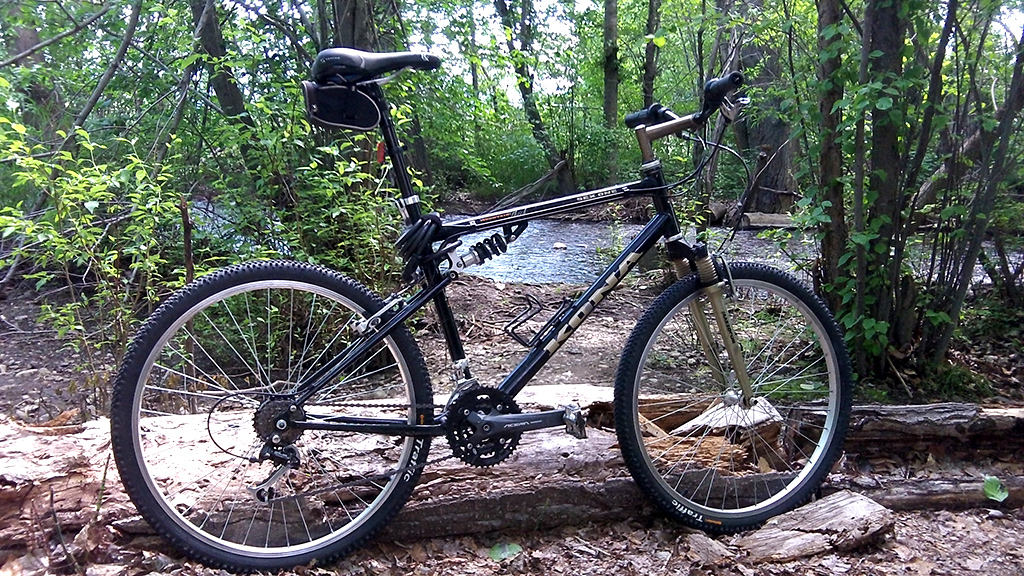
My current bike, which I just now came back from riding, is a stealth (matte black [dull]) urban mountain bike, I call the Canadian Mongoose (my ground game). The previous bike was a Snake by Caloi (Brazilian bike maker), so the Mongoose followed the Snake, and Canadian because it’s tricked out with kit from my favorite gear store in Vancouver the World (Mountain Equipment Co-op), to be as good or better than my Dad’s mountain bike in Canada (which I mooch while there)
December bike ride (Photo credit: siliconpalms)
, but also I have an awesome street racing, 18 speed Trek that was given to me by my Dad’s best friend, he kept it in excellent condition and it rides beautifully. Having said all that, my passion is urban mountain bike riding here in Sampa (Sao Paulo, Brazil), which is a sport I feel I’m part of pioneering. This city has the most challenging riding of any city I’ve seen, part of the challenge is the danger of crossing major roads and hiways because of potential crime/violence. The risks of urban riding here are much more related to cars, motor-bikes and people, this adds a whole new dimension to the sport of regular mountain bike riding – which btw: where I come from in Western Canada is not only perilously dangerous, if you screw up on some trails, you are dead for sure.
Anyone who doesn’t own a bike, is because they don’t want one and that’s normally because they forgot how much fun they are. Now in every city in the world there are bike rentals, get your gusto back on, improve your ground game and get out there and take a peddle. Also, never go to Amsterdam and not rent a bike (unless it’s snowing), that is the one city in the world where no other transportation system can compare. The bike lanes go towards the on-coming traffic but on the safety of the sidewalk. Dutch people revere the bicycle and it’s the most fun of any city to ride a bike in, although China is no slouch on bike lanes and many other places have more people moving around on 2 wheels, under their own power, than people in cars.
Canadian Mongoose, custom made mountain bike
So i leave this review of one of the best lightweight jogging stroller on sale right now as i promised the other day.
Here in Brazil it’s expensive to buy imported bikes, and although my custom made bike cost me about $500 USD because it was made with KHS frame and imported parts. The Kona I like would set you back $5,000 USD but it’s available because they sell. Sadly though the Brazil government increases prices for a bicycle profile that Brazilian manufacturers are not able to manufacture. Brands like KHS, Specialized, Trek, Cannondale, Kona, Scott and others represent no more than 3 percent of the total volume of bicycles sold in Brazil. However, they’ve been selling here for a long time, so there’s always used ones somewhere, that someone wants to unload. Realistically I’d say you just walk into a busy bike shop and buy the best used bike that comes closest to your needs, and ride by the shop every month to see if there’s a used Kona come in for sale. My friend that owns Moema Bikes in Sao Paulo speaks perfect English, can build any type of bike, has every accessory, and sees Gringoes ride up and sell a bike (with tears in their eyes) because they’re going back Stateside, or moving overseas, those bikes sell really fast but there’s always a bike for the right price, ready to ride away on – just make sure you know where you’re going and how to get there, especially in Sampa.
The bike is irrefutably the best method of sight-seeing too, what are you waiting for? Just pick up a local newspaper, or better still, find the classifieds online and search your scene for “used bike for sale”. Or walk into a bike with a MasterCard and ride out on my favorite, a brand new Kona (Deep Cove, BC, Bike Maker). Just remember to buy a bigger lock, and that you can’t leave it parked anywhere for very long – even the big locks get jacked in under 30 seconds. A fancy looking bike attracts the thieves, dull it down and don’t leave it tied-up outside super-busy areas, like at bus stations etc…. Get yourself the best helmet you can find, not some sissy Tour de France looking racing helmet – a full-blown Extreme-sports helmet and the correct gloves. Wear excellent footwear, never flip-flops (unless it’s to the corner store) and always, always “ride to arrive alive”! Click here to learn how to make backup for power cuts.
São Paulo is the dynamic result of the demolition and reconstruction of successive cities in just over a century. In that short time, the citadel with 30 000 inhabitants has become a metropolis with 20 million inhabitants, and its nature has practically disappeared. Originally very rich in biodiversity, São Paulo showed extensive forests of the Atlantic Forest, Araucaria, savannas and wetlands, forming a unique landscape. During the process of urbanization, the ancestral vegetation was being cleared and replaced by species of foreign origin, cultural motivation that led to the mass extinction of native flora and fauna and the current situation of 80% of urban vegetation to be of foreign origin, ie , exotic.
To be a palm tree, or any kind of tree in a city like São Paulo is not easy. It complicates your life – contaminated and compacted soil, the narrow sidewalk and all cemented the overhead wires everywhere, harmful pruning and people who see it as an obstacle or producers of “dirt”. However, they are what make the city livable, breathable and beautiful. We hired a tree care company from https://www.atlantatreeaces.com to help take care of our beautiful trees.
The Organization; SOS Mata Atlântica of São Paulo decorates trees for resistance to uncontrolled urban development, mobilizing the population to create a map to the great trees in town, then tell their stories and to report any mistreatment.
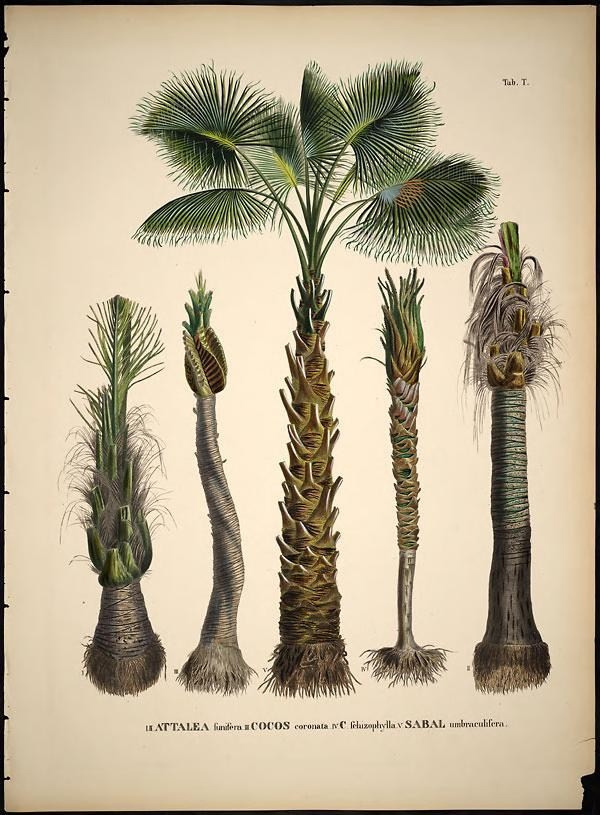
[box type=”info”]Euterpe edulis, commonly known as juçara, jucara (misspell of the former name, of Luso-Tupian origin), jussara (an archaic alternative spelling), açaí-do-sul or palmiteiro, is a palm species in the genus Euterpe. It is now predominantly used for hearts of palm. It is closely related to the açaí palm (Euterpe oleracea), a species cultivated for its fruit and superior hearts of palm. The larvae of Caligo brasiliensis are reported to feed on E. edulis.[/box]
Palmeiras do Jardim Botanico – Imperial Palms are a Palm of great beauty and elegance, the palm-juçara is the parent plant of the Atlantic Forest, providing their food with fruit for much of the fauna, the paca the toucan. In São Paulo it occurred in abundance prior to urbanization, but faded to near local extinction by searching for your palm for cooking (heart of palms) and as a construction material. Palmital in the Botanical Garden, around the source of one of the trainers of the famous Riacho Ipiranga, São Paulo is an ancestral landscape, true environmental relic.
We owe a huge debt of gratitude to Aaron Swartz for the whole “creative commons” movement. I feel that he was somewhat unsung for his part in Wikipedia, so we must strive to always remember him for Wikimedia Commons. Imagine how much music, art, content, media and photography has been licensed and protected for the public to use, all because of Aaron Swartz’s great idea – create a license and make it free!
Often times the media has a license calling for “Attribution” but who would care about that, if someone has created a great image or sound-track (for example) and they license it creative commons, then it’s “fair use” to add value to what your own creative efforts, for free, just attribute the licensor, many of whom are professionals and want to give-away their media and ideas. This platform promotes collaboration in the most subtle and yet obvious way, people working over great distances and yet with instant communication, is creating a new renaissance of sorts. New ground is being broken in every imaginable direction, just like Ray Kurzweil describes in his future trends forecast; we’re expanding exponentially because our minds are connected through devices that enable us tremendous access to ideas and knowledge.
Before Wikimedia Commons private image archives and news media would employ teams of IP (intellectual property) experts and copyright cops yo seek-out web publishers like me, that would often borrow maps, charts, content and images that clearly belonged to someone other than me, someone who had undoubtedly paid some other person to create such media. In others words, it had obvious value and I, in some cases, did not have the express written consent from the owner of said media. One day I learned better….
For years now it’s not been necessary to go anywhere but to huge royalty free archives, none though, came anywhere close to the home page for the Creative Commons, and the doorway into some of the best images and media anywhere. Several months ago I was tipped-off by Robin Good, he’s the guru of good ideas for content collaboration and web marketing, about VisualHunt.com which is the absolute most exciting thing for me, since Yahoo was launched because it’s a search engine of 354,191,553 Creative Commons Photos. Yep, that’s right… if you can’t find an image to express your vision, from amongst 350 million, then maybe it doesn’t exist and you need to create, so you can upload it and give a “creative commons” license. Let’s all put our best something good there.
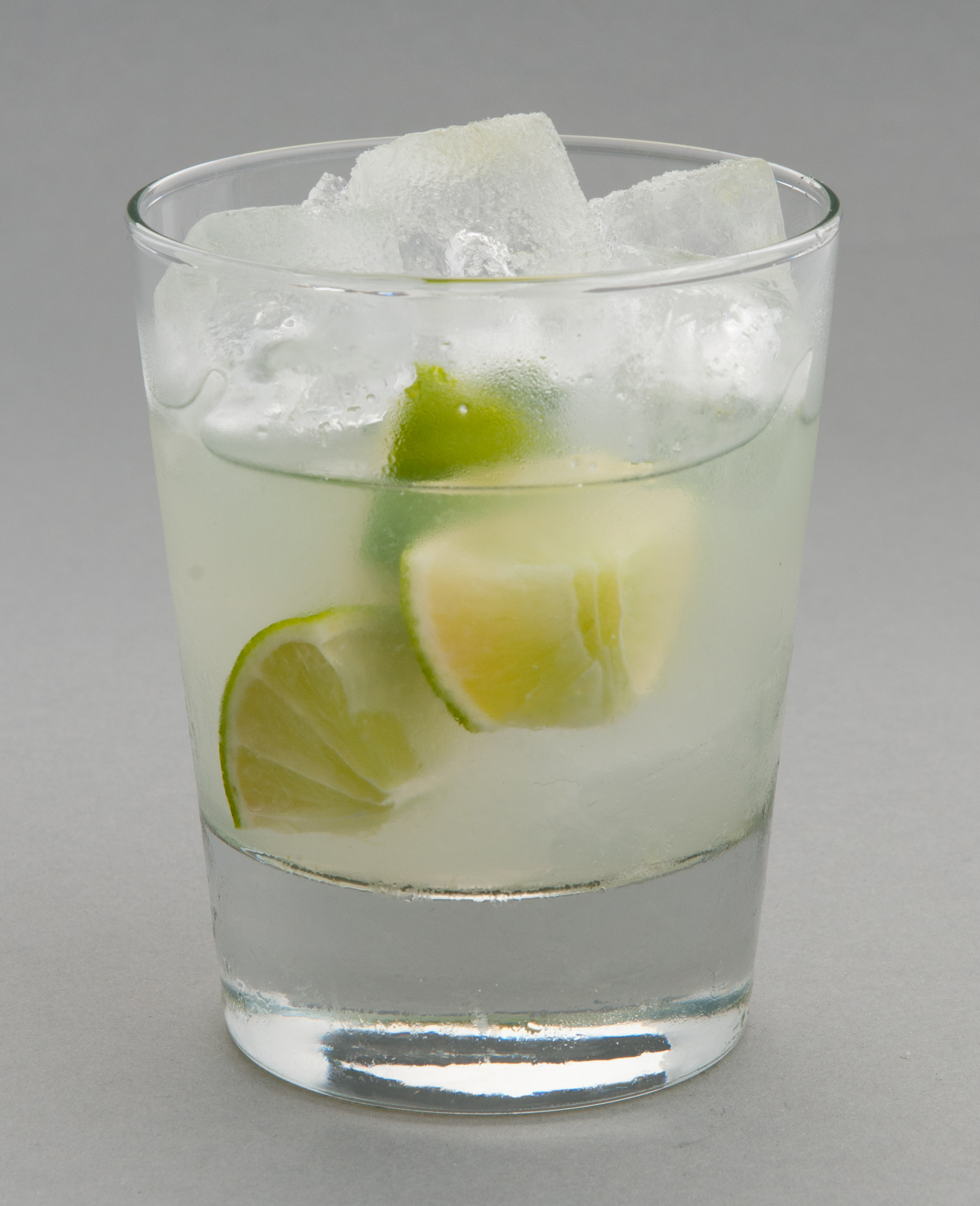
The last Caipirinha was the best one, exactly because it was the last one. The time had come and past, it was time for me to hit the wagon for good. My romance with the Cachaça had lasted long enough, the magic was gone from the relationship and all that was left was drudgery and boredom but that wasn’t the worst of it, watching my own destruction, as I drank those frozen concoctions, which “yes” I falsely thought they were helping me hang-in, as if I were living in Margaritaville but this is much worse because Cachaça, or “pinga” as it’s called in Brazil slang, is more powerful, more prevalent and can be ridiculously cheap.
[box]For example, imported cheap tequila is at least ten times more expensive here but it’s not just that it’s the formula for a Caipirinha and how they’re constructed, plus with which Cachaça.[/box]
Listen to my love of the Caipirinha (above), see it was totally out-of control. Plus I liked to drink ice cold Heineken of Stella Artois at the same time, which I was always warned against. Brazilian tradition has a huge reverence for Cachaça, a folklore’ish belief in how, where, when and how much is a safe and smart amount. It’s free from small kegs, with little shot glasses, in most decent Minas Geriais (type of cuisine) restaurants. On the beaches they have some of the best hand-made drinks. All that’s needed is lime, sugar, ice and pinga for the absolute perfect beach cocktail.
It was a crazy, impulsive decision to join One Year No Beer and take the 90 challenge. It’s a social network for people like me, who want to win our lives back from booze and in particular beer. I also had respect and reverence for the mighty Cachaça and the oh-so-sweet Caipirinha, so I had a weekend’s only rule but would often break that rule. The thing of it is, beer is the ultimate gateway drug. My Dad gave me my first beer, everyone in Canada drank beer, it’s a national pastime to accompany, for watching hockey during the long cold winters.
Brazil has the best beer culture in the world, just watch some of our programmed Television and you’ll see a ton of sex-appeal selling billions of dollars of beer. There is cold beer everywhere here in Brazil and although I drank mostly imported, partly because it’s $1 or $2 USD cost, whereas I paid up to $10 USD in Europe.
My drinking days are over and I’m glad to say “tchau Cachaça”.
Pay attention to this information. In 1999 something really old and really important was discovered in a forest in Germany, the truth about this find, is just beginning to be told.
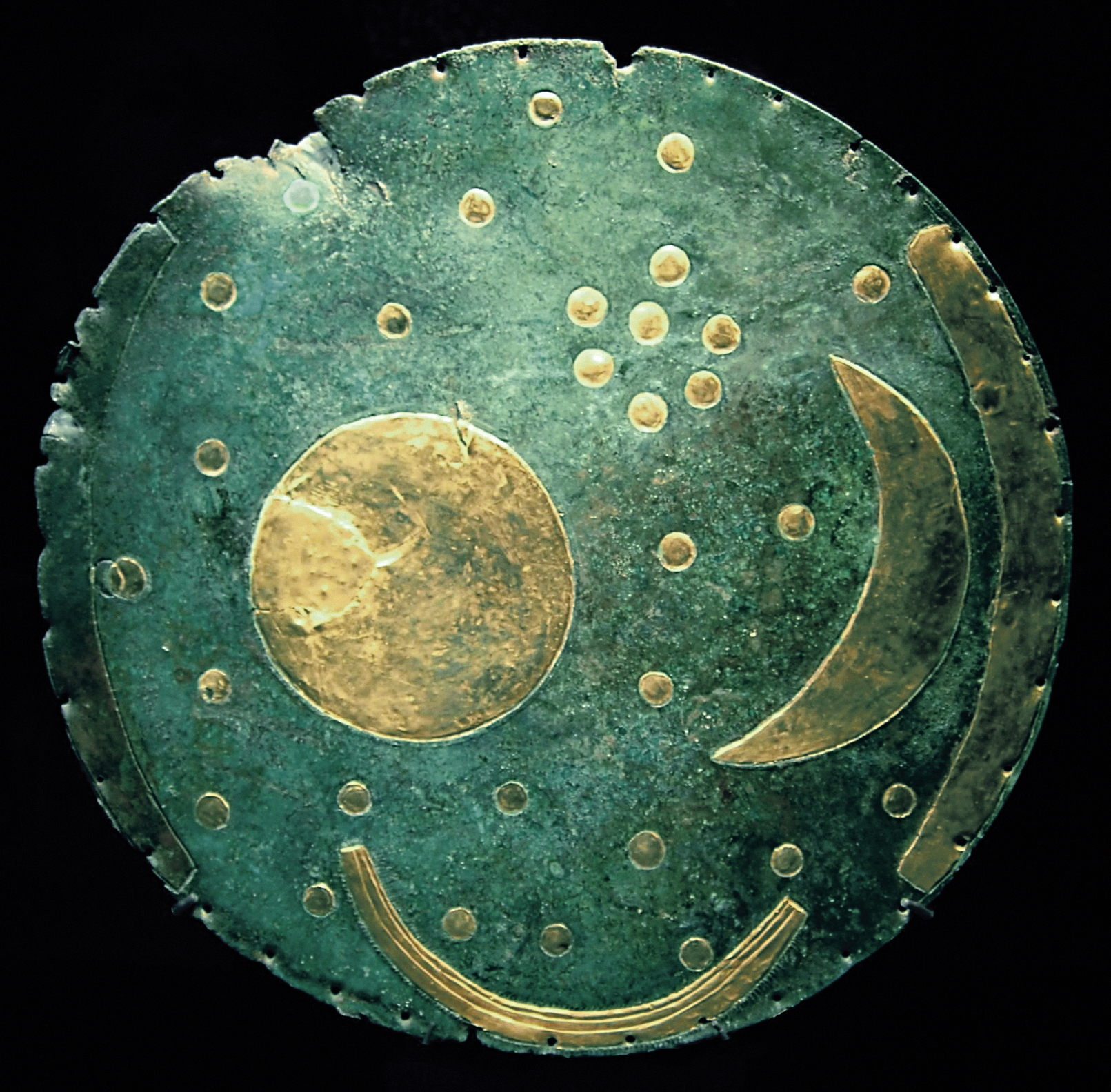
The Nebra sky disk is a bronze disk of around 30 cm diameter and a weight of 2.2 kg, with a blue-green patina and inlaid with gold symbols. These are interpreted generally as a sun or full moon, a lunar crescent, and stars (including a cluster interpreted as the Pleiades). Two golden arcs along the sides, marking the angle between the solstices, were added later. A final addition was another arc at the bottom surrounded with multiple strokes (of uncertain meaning, variously interpreted as a Solar Barge with numerous oars, as the Milky Way, or as a rainbow).
The disk is attributed to a site near Nebra, Saxony-Anhalt, in Germany, and associatively dated to c. 1600 BC. It has been associated with the Bronze Age Unetice culture.
The disk is unlike any known artistic style from the period, and was initially suspected of being a forgery, but is now widely accepted as authentic.
The Nebra sky disk features the oldest concrete depiction of the cosmos worldwide. In June 2013 it was included in the UNESCO’s Memory of the World Register and termed
“one of the most important archaeological finds of the 20th century.”
Discovery
The disk, two bronze swords, two hatchets, a chisel, and fragments of spiral bracelets were discovered in 1999 by Henry Westphal and Mario Renner while they were treasure-hunting with a metal detector. Archaeological artifacts are the property of the state in Saxony-Anhalt. The hunters were operating without a license and knew their activity constituted looting and was illegal. They damaged the disk with their spade and destroyed parts of the site. The next day, Westphal and Renner sold the entire hoard for 31,000 DM to a dealer in Cologne. The hoard changed hands within Germany over the next two years, being sold for up to a million DM. By 2001 knowledge of its existence became public.
In February 2002 the state archaeologist Harald Meller acquired the disk in a police-led sting operation in Basel from a couple who had put it on the black market for 700,000 DM. The original finders were eventually traced. In a plea bargain, they led police and archaeologists to the discovery site. Archaeologists opened a dig at the site and uncovered evidence that supports the looters’ claims. There are traces of bronze artifacts in the ground, and the soil at the site matches soil samples found clinging to the artifacts. The disk and its accompanying finds are now held at the State Museum of Prehistory in Halle.
The two looters received sentences of four months and ten months, respectively, from a Naumburg court in September 2003. They appealed, but the appeals court actually raised their sentences to six and twelve months, respectively.
The discovery site is a prehistoric enclosure encircling the top of a 252 metres (827 ft) elevation in the Ziegelroda Forest, known as Mittelberg (“central hill”), some 60 km west of Leipzig. The surrounding area is known to have been settled in the Neolithic era, and Ziegelroda Forest contains around 1,000 barrows.
The enclosure is oriented in such a way that the sun seems to set every solstice behind the Brocken, the highest peak of the Harz mountains, some 80 km to the north-west. The treasure-hunters claimed the artifacts were discovered within a pit inside the bank-and-ditch enclosure.
Dating
The precise dating of the Nebra skydisk depended upon the dating of a number of Bronze Age weapons, which were offered for sale with the disk and said to be from the same site. These axes and swords can be typologically dated to the mid 2nd millennium BC. Radiocarbon dating of a birchbark particle found on one of the swords to between 1600 and 1560 BC confirmed this estimate. This corresponds to the date of burial, at which time the disk had likely been in existence for several generations.
Significance
The disk is possibly an astronomical instrument as well as an item of religious significance. The blue-green patina of the bronze may have been an intentional part of the original artifact.
If authentic, the find reconfirms that the astronomical knowledge and abilities of the people of the European Bronze Age included close observation of the yearly course of the Sun, and the angle between its rising and setting points at summer and winter solstice. While much older earthworks and megalithic astronomical complexes such as the Goseck circle or Stonehenge had already been used to mark the solstices, the disk is the oldest known “portable instrument” to allow such measurements. Pásztor, however, sees no evidence that the disk was a practical device for solar measurements.
Euan MacKie suggests that the Nebra disk can be linked to the solar calendar reconstructed by Alexander Thom from his analysis of standing stone alignments in Britain.
Every body has an idea. Every day, every single person breathing (that’s over seven billion individuals) has new ideas. Who decides what ideas have value? Why do some ideas manifest into reality and other ideas “die-on-the-vine“? When does a good idea become reality? Where do good ideas come from? What is it about ideas that makes them so valuable? How does a person sell an idea?
These are the two most important questions, you need to ask yourself.
Let’s cut to the chase, shall we? Assume you’re up to speed, in real-time, today. Let’s assume that your best epilator ain’t that sharp like a razor (IQ 160+) and let’s take it another degree and assume you’re surrounded with contemporaries ( in Oz {Australia}, we called “mates“) and also, for laughs and giggles, imagine that you’re also totally dialed-in too. I mean, you’re connected to Dudes who are bringing-down six-figures for how-smart they are, in the hi-tech-sector. This is a common scenario in today’s world. This is normal. You are asking the right questions….
So you wake-up one morning and you, for some un-known reason, probably because you were getting ripped with one of your inside “mates” and all of a sudden, low and behold, you concoct in your mind, the web-geek equivalent to the cure for cancer. So now what?
Ideas are a dime a dozen. It takes about 2 hours of research to know, that your new mouse-trap is a file for the permanently delete folder, or is it? Or does that stupid idea hold merit? Is that brain-fart worth money? Is it equal to other bad-ideas that flew in the face of reason?
I’m going to be brutally honest here. It’s not that ideas are over-rated, “au contraire”, it’s that so few people have the intention to make them happen. Understand that there’s a giant gap between thinking about something and doing it. The value of ideas get’s completely diluted at this exchange, so much so, that one million-to-one seems like a realistic likelihood. Now we know, ideas are cheap, everybody is selling them and it’s one million to one that your idea has value.
So what’s a poor-boy to do? Lot’s of ideas and no-way to make any of them turn-into money.
Come back soon and I will share some ideas about how but for now, at this point in my mining, there’s an opportunity happening about 15 floors beneath me, which I have access to because of my proximity, so I must take action and put an idea into effect. See you again soon.
As the suns sets on Sampa, I reflect back on my beginning with this Big Pineapple, as it’s perhaps the sweetest and certainly the most poignant memories of all my dozen years living here. It was the power of love that brought me. The single most powerful force known to mankind.
Back-story: A girl from Sao Paulo was traveling with two girlfriends in the ABC islands (Aruba, Bonaire and Curacao) of the Dutch West Indies and I happened to be on “C” island (Curacao) working on a project to design, develop, license and launch the first on-line casino, or at least in amongst the first 100 (Note: this was a new gold rush). She was staying with her friends in the same hotel on Curacao.
I first saw her from across the hotel lobby and fell in love at first sight, it hit me like a ton of bricks and there wasn’t a thing I could do about it….
In this abbreviated rendition I’ll fast forward the year to say that we “re-connected on Curacao, six months later”, followed by a three month lapse and a “bring the girl to meet the family” in Canada, where my love landed in Vancouver for a month of mid-summer madness, covered hundreds of miles of British Columbia and visited every single beach in Vancouver, from Wreck Beach all the way to Horseshoe Bay, then a magical tour of the Okanagan (interior BC) with an ecstatic welcoming committee from my tribe, as the whole world adores Brazil.
After the Canada tour, we both knew that we were destined to keep going towards each other. The power of love was intense and totally irrefutable, it wasn’t just lust, or imagination, it was real and it was way too powerful to explain in words. All that I knew, is that there was nothing in this world that could, or would, stop me from seeing her again. We needed to meet half-way, in Miami, which is exactly what my plan was, from the very beginning when I laid-eyes on her, I wanted her on the beach in Florida, living with me.
Six more agonizing months go by and finally it’s my turn to meet her family. Uh-oh, boy meets girl’s Mom and Dad, yikes! But I was un-daunted, the power of love had a grip on me like a fuckin GPS signal, I was tuned-to-it. So I arrived in, you guessed it, Sao Paulo, Brasil about mid-December of ’97 and it’s hotter than Haiti (Note: I’ve not been to Haiti yet, it’s just an expression) and I’ve come from the great white north, however since I had so many months to think about this trip and was laid-over in Miami (my second home, as I’ll explain another time) for a month on my way to South America, also because I knew enough about every family member in her tribe, I was able to arrive bearing meaningful gifts but nothing I was to give would ever come close to what I was about to receive.
Once upon a time, in my “young ‘n feerless” days, way back in my early 20’s, I was hitching across Queensland looking for work and boy did I find it. Just outside of Port Douglas, in northern Queensland I met a young dude who’s family owned a sugar plantation, every day they took newbies out to the fields to see if they could “hack-it”, literally. The old photo from Ayr, Queensland shows one major difference from my session (which lasted 2.5 days, as I was let-go at lunch on the 3rd day), was that we were sugar cane cutters of just previously “burnt” sugar cane. Yes, it was black with soot and with every whack of the machete, big blooms of black dust would poof into the air from the sugar cane stocks. Burning the sugar cane a couple of days before the cutters get there, reduces the number of deadly snakes in the 8 foot high sugar cane fields.
It was the single hardest job I ever tried and one of the very few times I was let-go, for not being able to keep swinging. The first few hours seemed easy and relatively enjoyable, as a young man you’d be thinking about a golf or baseball swing and how this repetitive chopping will be good for the physique etc… Then, as the afternoon heat starts to melt into heavy humidity, you begin to realize that the sweat is causing slippery grip issues with the machete, next you start to realize that your hand is beginning to blister. If you make it through your first day, as I did but most walk-off (without pay). The next day was a total attitude adjustment, ok I thought, let’s do this and it will get easier after today. By the late morning it was discovered that I wasn’t chopping the sugar cane stocks low enough to the ground, more demonstrations were given, corrections made and work carried on but it was obvious that I was falling behind the other cane cutters.
On the 3rd morning, I was dreading holding on to that machete in my oh-so-sore hand. The regular crew of sugar cane cutters just jump straight into the black charred wall of sugar cane. it’s truly incredible watching a real pro, the ease with which they chop through giant stocks of sugar with perfect precision, to lay it in a perfect angle on the ground. It’s similar in some ways to watching a golf or tennis pro. The toll it takes on the body is insane, even hard to explain, unless you’ve tried it. The amount of deadly snakes in Australia is another factor but it’s that humid heat of northern Queensland that put’s a young man to the test. My test ended about mid-morning on the third day. The boss dropped me in town, paid me, thanked me and said I did much better than most. That was my dirtiest job and I was happy to get sacked, the sore hands and arm were soon forgotten.
In modern days and the reason for remembering this story, is that I’m an agent for Brazil Sugar, the best sugar in the world. Sugar is the commodity that I have focused on learning about, now I am a commodity trader. Yes, after years of trying, I finally found a buyer for sugar. For years I’ve had the exact perfect connections and agency agreements in place, to sell and export Brazil sugar. Although it’s taken me over 5 years to make my first sugar deal, I’ve got one in the bag and just getting started. If you’re a commodity trader and know a buyer for sugar, please contact me for a Brazil sugar quote.
Max Egan from the Crowhouse, was the first person I heard use the expression; “Stand in your own Power!” However, it’s possible and very likely, that Max borrowed it from someone else, who borrowed it from someone else. The meaning is profound!
Each and every one of us are the same and yet entirely unique, it’s our energy field that makes us unique and we can’t see it. It’s our meat-body that makes us the same, yet we all look different. Truth is, under the skin, we’re all the same. So this idea, to “stand in your own power”, has significant value.
The idea is that we are each an invisible entity of energy, an energetic field if you will… Our energy field and it’s influence on other similar entities, exponentially grows when we become fully aware of our power, this energy is derived from our will to make ideas happen. In the writing of Carlos Castaneta this is called “the power of intention”.
[box]Castaneda’s first three books – The Teachings of Don Juan: A Yaqui Way of Knowledge; A Separate Reality; and Journey to Ixtlan – were written while he was an anthropology student at the University of California, Los Angeles (UCLA). He wrote these books as his research log describing his apprenticeship with a traditional “Man of Knowledge” identified as don Juan Matus, a Yaqui Indian from northern Mexico. Castaneda was awarded his bachelor’s and doctoral degrees based on the work described in these books.
In 1974 his fourth book, Tales of Power, was published and chronicled the end of his apprenticeship under the tutelage of Matus. Castaneda continued to be popular with the reading public with subsequent publications. In his books, Castaneda narrates in first person the events leading to his 1960 introduction to Matus, a half-Yaqui “Man of Knowledge”.
Castaneda’s experiences with Matus inspired the works for which he is known. He also says the sorcerer bequeathed him the position of nagual, or leader of a party of seers. Matus also used the term nagual to signify that part of perception which is in the realm of the unknown yet still reachable by man, implying that, for his party of seers, Don Juan was a connection in some way to that unknown.
Castaneda often referred to this unknown realm as non-ordinary reality. The term nagual has been used by anthropologists to mean a shaman or sorcerer who claims to be able to change into an animal form, or to metaphorically “shift” into another form through magic rituals, shamanism and experiences with psychoactive drugs (e.g., peyote and jimson weed – Datura stramonium).[/box]The idea here, is that anyone can increase personal power, by standing in it.
You must be logged in to post a comment.