Finally, be strong in the Lord and in his mighty power. Put on the full armor of God, so that you can take your stand against the devil’s schemes.
For our struggle is not against flesh and blood, but against the rulers, against the authorities, against the powers of this dark world and against the spiritual forces of evil in the heavenly realms.
Therefore put on the full armor of God, so that when the day of evil comes, you may be able to stand your ground, and after you have done everything, to stand. Stand firm then, with the belt of truth buckled around your waist, with the breastplate of righteousness in place, and with your feet fitted with the readiness that comes from the gospel of peace.
In addition to all this, take up the shield of faith, with which you can extinguish all the flaming arrows of the evil one. Take the helmet of salvation and the sword of the Spirit, which is the word of God.
And pray in the Spirit on all occasions with all kinds of prayers and requests. With this in mind, be alert and always keep on praying for all the Lord’s people. Q
Patriots from around the world are praying for AMERICA
We are all bound by a feeling deep inside, a feeling that cannot be publicly expressed for fear of ridicule, a feeling that challenges the mainstream (narrative), against that which we are told to accept and dare not question, put simply, that people are being abused by those in power and time is running out.
Remember the battles of Lexington and Concord – “Give Me Liberty or Give Me Death!”
For far too long we have been silent and allowed our bands of strength, that we once formed to defend FREEDOM and LIBERTY, to deteriorate.
We became divided. We became weak. We elected TRAITORS to govern us. We allowed EVIL to prey on us.
Those who claimed to represent us gave us false hope, made false promises. The evil and corruption only grew.
Q
This is more than party politics. This is about restoring OLD GLORY. This is about saving our land and our people from those who wish us harm. This is about preserving our REPUBLIC. This is about preserving our SAFETY. This is about restoring our STRENGTH. This is about LIFE, LIBERTY, and the PURSUIT OF HAPPINESS. This is about PROTECTING our children.
THIS IS ABOUT SAVING AMERICA
We are all God’s children. We are, FATHERS. We are, MOTHERS. We are, DAUGHTERS. We are, SONS. We are, BROTHERS. We are, SISTERS. We do not look at race. We do not look at skin color. We are UNITED in these STATES OF AMERICA. We are, and will always be, PATRIOTS. WE MUST RISE AGAIN. WE MUST UNITE AGAIN. WE MUST FIGHT AGAIN. FOR GOD & COUNTRY.
GOD BLESS AMERICA.
WWG1WGA!!! Q
Dear God, in the name of Jesus Christ, please Bless America Indeed! – A
In him was life; and the life was the light of men.
Decide for yourself (be free from outside opinion). >Decide for yourself (be objective in your conclusions). >Decide for yourself (be true in your own beliefs). >Decide for yourself (be open to following the facts). >Decide for yourself (be strong in defending your beliefs). >Decide for yourself (be resistant to blindly accepting fact-less statements).
Those who attack you. Those who mock you. Those who cull you. Those who control you. Those who label you. Do they represent you? Or, do they represent themselves (in some form)?
Mental Enslavement.
The Great Awakening (‘Freedom of Thought’), was designed and created not only as a backchannel to the public (away from the longstanding ‘mind’ control of the corrupt & heavily biased media) to endure future events through transparency and regeneration of individual thought (breaking the chains of ‘group-think’), but, more importantly, aid in the construction of a vehicle (a ‘ship’) that provides the scattered (‘free thinkers’) with a ‘starter’ new social-networking platform which allows for freedom of thought, expression, and patriotism or national pride (the feeling of love, devotion and sense of attachment to a homeland and alliance with other citizens who share the same sentiment).
When ‘non-dogmatic’ information becomes FREE & TRANSPARENT it becomes a threat to those who attempt to control the narrative and/or the stable.
When you are awake, you stand on the outside of the stable (‘group-think’ collective), and have ‘free thought’.
“Free thought” is a philosophical viewpoint which holds that positions regarding truth should be formed on the basis of logic, reason, and empiricism, rather than authority, tradition, revelation, or dogma.
When you are awake, you are able to clearly see. The choice is yours, and yours alone. Trust and put faith in yourself. You are not alone and you are not in the minority. Difficult truths will soon see the light of day.
An original thought is just old ideas added together, in this case to create Speed-Debating, which made me laugh when I first thought of it. Probably been thought of and joked about but it’s invented now because we needed a new format to host a debate, where as many people as possible had a chance to meet a topic with their own rhetoric.
Maybe I’m the first to suggest that we’ve left the Information Age and moved into the Digital Age but again it’s most likely out-there somewhere in existence, as I seem to contrive things that other people also thought of. My hope is that we are collectively conscious and growing more so rapidly from the information. The Digital Age is the next step into the Internet of Things (IoT).
Speed-debating is planned for every second Thursday at a Pub in downtown Vancouver. The topic is Digital Currency, Privacy, Security and Self-sovereign ID. The debate question; which is more secure, central bank controlled cash money or crypto? Who can we trust; Big Gov, Big Tech, Banks or cash, bullets and bunkers?
Speed-debate is followed by an “Open Mike for Elevator Pitch” of business start-up presentations – 10 minute max, followed by feedback from Angel Investor panel and the debate moderators, plus audience. Open source event is free to registered members.
The Speed-Debating event works where each participant has very few minutes to nail down some facts, then pass the talking stick. Same debate rules apply as regular debate just modified format to accommodate more opinion and rhetoric, as well as those nasty little things called facts. Bring your facts and come one, come all.
As soon as the first event has been booked, we’ll post the address and more details here.
CORAL GABLES, Fla., Feb. 21, 2020 /PRNewswire/ — The U.S. Postal Service celebrates the striking beauty of wild orchids with the release of the Wild Orchids Forever stamps. Part of the largest family of plants on Earth, orchids grow in many climates and thrive under a variety of conditions.
Wild Orchids stamps unveiled by the Postal Service. Part of the largest family of plants on Earth, orchids grow in many climates and thrive under a variety of conditions.
The stamps were dedicated at the American Orchid Society Library at the Fairchild Tropical Botanic Garden, Coral Gables, FL. News about the stamps is being shared on social media using the hashtags #OrchidStamps and #FlowerStamps. Followers of the Postal Service’s Facebook page can view video of the ceremony at facebook.com/usps.
Art director Ethel Kessler designed the stamps with photographs taken by James A. Fowler.
“Orchids can be hard to find in a natural setting and today there is a conservation effort to preserve these beautiful flowers,” said Jakki Krage Strako, chief customer and marketing officer and executive vice president, U.S. Postal Service, who served as the event’s dedicating official. “Each of these stamps represent a masterpiece of nature that blossoms with color. They also continue the Postal Service tradition of showcasing the natural beauty of flowers on stamps.”
Joining Strako to dedicate the stamps were Georgia Tasker, author, horticulture writer and Pulitzer Prize finalist; Susan Wedegaertner, president, American Orchid Society; photographer James A. Fowler; and Lawrence Zettler, director of the orchid recovery program, Illinois College.
“Orchids are the world’s most familiar group of flowers and these charming stamps showcase nine of the over 200 orchid species native to the United States,” said Zettler. “These stamps also serve as a reminder of their beauty and their vulnerability.”
Each stamp features a photograph of one of these nine species: Cypripedium californicum, Hexalectris spicata, Cypripedium reginae, Spiranthes odorata, Triphora trianthophoros, Platanthera grandiflora, Cyrtopodium polyphyllum, Calopogon tuberosus and Platanthera leucophaea. The booklet contains 10 stamp designs and each design is featured twice for a total of 20 stamps. Triphora tranthophoros is featured on two stamps designs, to include the booklet cover.
The Wild Orchids stamps will also be issued in coils of 3,000 and 10,000.
There are more than 30,000 species of wild orchids in the world. Many that are native to North America are endangered or threatened, making sightings in their natural environment increasingly rare.
These striking flowers are native to damp woodlands, and numerous organizations across the country are working to preserve orchid habitats. Orchids also thrive in cultivated gardens or as houseplants.
“It’s amazing that my passions of photographing wild orchids and stamp collecting have converged today with the release of these stamps,” said Fowler. “My childhood interest in photography began on the knee of my mother, who was an accomplished photographer; my passion for the beauty of plants, I learned from my great-grandmother, who was a botanist at the Department of Agriculture; and the hobby of stamp collecting, I picked up from my older brother.”
The Wild Orchids stamps are being issued as Forever stamps, which will always be equal in value to the current First-Class Mail 1-ounce price.
Postal Products
Customers may purchase stamps and other philatelic products through the Postal Store at usps.com/shopstamps, by calling 800-STAMP24 (800-782-6724), by mail through USA Philatelic, or at Post Office locations nationwide. Videos of most stamp ceremonies will be available on facebook.com/usps.
Information on ordering first-day-of-issue postmarks and covers is at usps.com/shopstamps under “Collectors.”
The Postal Service receives no tax dollars for operating expenses and relies on the sale of postage, products and services to fund its operations.
The Question of Love is a movie made for Valentine and highly recommended for all those seeking love, in love or longing for love. This age old question is key to what makes the world go around and perhaps the most important topic for every individual to explore.
In a world rife with consumerism, where online dating promises risk-free romance and love is all too often seen as a variant of desire and hedonism, France’s greatest living philosopher Alain Badiou believes that love urgently needs reinventing and defending.
My favourite explanation by Alain Badiou is the change that takes place going from one to two, since no amount of reason can explain the indescribable hidden yet subtle differences of couples from singles. The evidence of successful pairs is consistent throughout nature, we are wired for mates.
It’s possible that the key to happiness is to love yourself enough, to be able to drop your own guard, take the risk and seek romance by whatever means possible. By loving yourself first, the suffering of rejection is taken in stride as part of the process but you will have defined what you’d like to find in a partner by having become that person.
The first encounter is everything, as it sets the stage for any future. Then what has to happen is a friendship must be kindled, against all odds, in a short amount of time. You must display enough kindness and intelligence in the first five minutes, with a massive amount of confidence, in order to have a second chance to develop a relationship.
For romance to blossom to love requires either trust or blind faith. Trust takes time and consideration, whereas blind faith usually doesn’t work out too well. In today’s world the courtship is most likely online, to a certain degree because of social media and the mobile phone.
So there are multiple factors involved in gaining the opportunity to build trust, with that special person you desire. However, know this; friendship is the foundation of real true love and it begins with trust.
The question of love, is the only question, you ever need to ask yourself.
Effortless Living is possible and you can achieve it too. Experts describe the steps and explain details of the path, how to follow the great thinkers who discovered the map of the mind. You need to know where to go when your thinking wonders away, observe to know the signals, then align with the correct way of thinking again, in order to obtain inner peace.
The Art of Effortless Living is a documentary based on the traditional philosophy and essential teaching of Taoism. The practice of non doing, non forcing is the essential aspect of Taoism known as wu-wei. Attributed to the great sage Lao-tzu, the philosophy of wu-wei teaches you how to develop a natural state of consciousness not bound by thought or preconceived limitations.
Experienced by the greatest artists, athletes, musicians, and writers, this heightened state of consciousness, referred to as “being in the zone,” is where intelligent spontaneity and effortless action flourish via a practice rooted in permitting the natural harmony of the cosmos to prevail.
Essentially, how to live life effortlessly. Wu-wei can yield a renewed sense of trust in many aspects of your daily life, making each day more effortless.
The Art of Effortless Living provides keen insight on how you can experience the beauty of achieving an enlightened, effortless mind while revealing in the process of life’s unfolding.
A semi-legendary figure, Laozi was usually portrayed as a 6th-century BC contemporary of Confucius, but some modern historians consider him to have lived during the Warring States period of the 4th century BC. A central figure in Chinese culture, Laozi is claimed by both the emperors of the Tang dynasty and modern people of the Li surname as a founder of their lineage. Laozi’s work has been embraced by both various anti-authoritarian movements and Chinese Legalism.
Georges Auguste Escoffier (French: 28 October 1846 – 12 February 1935) was a French chef, restaurateur and culinary writer who popularized and updated traditional French cooking methods. Much of Escoffier’s technique was based on that of Marie-Antoine Carême, one of the codifiers of French haute cuisine, but Escoffier’s achievement was to simplify and modernize Carême’s elaborate and ornate style. In particular, he codified the recipes for the five mother sauces. Referred to by the French press as roi des cuisiniers et cuisinier des rois (“king of chefs and chef of kings”—though this had also been previously said of Carême), Escoffier was France’s preeminent chef in the early part of the 20th century.
Alongside the recipes he recorded and invented, another of Escoffier’s contributions to cooking was to elevate it to the status of a respected profession by introducing organized discipline to his guests.
Escoffier published Le Guide Culinaire, which is still used as a major reference work, both in the form of a cookbook and a textbook on cooking. Escoffier’s recipes, techniques and approaches to kitchen management remain highly influential today, and have been adopted by chefs and restaurants not only in France, but also throughout the world.
An example of French Haute cuisine presentation
Auguste Escoffier was born in the village of Villeneuve-Loubet, today in Alpes-Maritimes, near Nice. The house where he was born is now the Musée de l’Art Culinaire, run by the Foundation Auguste Escoffier. At the age of twelve, despite showing early promise as an artist, his father took him out of school to start an apprenticeship in the kitchen of his uncle’s restaurant, Le Restaurant Français, in Nice.
As an apprentice, August was bullied and swatted by his uncle and his small stature made him even more of a target–he was too short to safely open oven doors. Eventually he wore boots with built up heels. Escoffier showed such an aptitude for cooking and kitchen management that he was soon hired by the nearby Hôtel Bellevue, where the owner of a fashionable Paris restaurant, Le Petit Moulin Rouge, offered him the position of commis-rôtisseur (apprentice roast cook) in 1865 at the age of 19. However, only months after arriving in Paris, Escoffier was called to active military duty, where he was given the position of army chef.
Escoffier spent nearly seven years in the army—at first stationed in various barracks throughout France (including five months in Villefranche-sur-Mer, coincidentally not three miles from his old home in Nice), and later at Metz as chef de cuisine of the Rhine Army after the outbreak of the Franco-Prussian War in 1870. His army experiences led him to study the technique of canning food.
César Ritz and Auguste Escoffier
Some time before 1878, he opened his own restaurant, Le Faisan d’Or (The Golden Pheasant), in Cannes.
On 28 August 1878, he married Delphine Daffis. She has been described as “a French poetess of some distinction and a member of the Academy”. Escoffier apparently won her hand in a gamble with her father, publisher Paul Daffis, over a game of billiards. They had three children, Paul, Daniel (who was killed in World War I), and Germaine. She died on 6 February 1935.
In 1884, the couple moved to Monte Carlo, where Escoffier was employed by César Ritz, manager of the new Grand Hotel, to take control of the kitchens. At that time, the French Riviera was a winter resort: during the summers, Escoffier ran the kitchens of the Grand Hôtel National in Lucerne, also managed by Ritz.
The Savoy Hotel, London
In 1890, Ritz and Escoffier accepted an invitation from Richard D’Oyly Carte to transfer to his new Savoy Hotel in London, together with the third member of their team, the maître d’hôtel, Louis Echenard. Ritz put together what he described as “a little army of hotel men for the conquest of London”, and Escoffier recruited French cooks and reorganized the kitchens. The Savoy under Ritz and his partners was an immediate success, attracting a distinguished and moneyed clientele, headed by the Prince of Wales. Gregor von Görög, chef to the royal family, was an enthusiast of Escoffier’s zealous organization. Aristocratic women, hitherto unaccustomed to dining in public, were now “seen in full regalia in the Savoy dining and supper rooms”.
Escoffier created many famous dishes at the Savoy. In 1893, he invented the pêche Melba in honour of the Australian singer Nellie Melba, and in 1897, Melba toast. Other Escoffier creations, famous in their time, were the bombe Néro (a flaming ice), fraises à la Sarah Bernhardt (strawberries with pineapple and Curaçao sorbet), baisers de Vierge (meringue with vanilla cream and crystallized white rose and violet petals) and suprêmes de volailles Jeannette (jellied chicken breasts with foie gras). He also created salad Réjane, after Gabrielle Réjane, and (although this is disputed) tournedos Rossini.
On 8 March 1898, Ritz, Echenard and Escoffier were dismissed from the Savoy “for … gross negligence and breaches of duty and mismanagement”. Disturbances in the Savoy kitchens on that day reached the newspapers, with headlines such as “A Kitchen Revolt at The Savoy”. The Star reported: “Three managers have been dismissed and 16 fiery French and Swiss cooks (some of them took their long knives and placed themselves in a position of defiance) have been bundled out by the aid of a strong force of Metropolitan police.” The real details of the dispute did not emerge at first. Ritz and his colleagues even prepared to sue for wrongful dismissal. Eventually, they settled the case privately: on 3 January 1900, Ritz, Echenard and Escoffier “made signed confessions, admitting to actual criminal acts including fraud” but their confessions “were never used or made public”. For example, wines and spirits to the value of £6,400 had been diverted in the first six months of 1897. Escoffier additionally confessed to taking gifts or bribes from the Savoy’s suppliers worth up to 5% of the resulting purchases. Escoffier accepted an obligation to repay £8,000, but was allowed to settle his debt for £500. Ritz and Echenard paid a much higher sum.
Of all the ideas ever enacted, nothing staggers the imagination for it’s achievement, than the conservation work of Douglas Tompkins.
“If anything can save the world, I’d put my money on beauty”
Douglas Tompkins
Douglas Tompkins (born 1943 in New York) was an American environmentalist and former businessman.
Douglas Tompkins was a world-renowned adventurer, entrepreneur, and conservationist. Co-founder of The North Face and Esprit, Doug spent the first half of his life building successful, global brands, while simultaneously adventuring around the world, completing first descents of the world’s toughest rivers.
In 1968 Doug embarked on a trip to Chile, driving with friends from California to the tip of Patagonia. Documented in the film Mountain of Storms, the trip solidified Doug’s place as rock climbing legend. In the early 1990s, Doug sold his part of Esprit and moved down to Chile to do conservation work full time with his wife, Kristine McDivitt Tompkins, the former CEO of Patagonia, Inc.
Together, over the last 25 years ( written 8 Jul 2016 ), Doug and Kris have protected 2.2 million acres, more land than any other individuals. The foundations under the Tompkins Conservation umbrella, along with their partners, have created five national parks in Chile and Argentina and are in the process of creating five more.
A Wild Legacy tells the story of Doug’s incredible life, his lasting impact on the wild landscapes of Patagonia, and Kris and the Tompkins Conservation team’s efforts to continue his audacious mission. Doug was tragically killed in a kayaking accident on Lago General Carrera, north of Patagonia Park, on December 8th, 2015. Douglas Tompkins: A Wild Legacy was presented to audiences at the Telluride Mountain Film Festival on May 24th, 2016 during the festival’s tribute to Doug.
Tompkins was born in Conneaut, Ohio on March 20, 1943, the son of an antiques dealer and decorator. He spent the first few years of his life in New York City before his family moved to Millbrook, New York. He graduated from Indian Mountain School, a pre-prep school in Lakeville, Connecticut, in 1957. In his senior year at Pomfret School in Connecticut, Tompkins was expelled for various minor infractions. He returned to his hometown in Millbrook, but did not graduate from high school.
Tompkins spent the years between 1960 and 1962 ski racing and rock climbing in Colorado, Europe, and South America. In 1963, Tompkins founded the California Mountaineering Guide Service. It was during this time he met Susie Russell, a casino employee who gave him a lift while hitch-hiking to Lake Tahoe. They married in 1964 in San Francisco, where Tompkins borrowed $5,000 from a bank to set up The North Face, now a global retailing company.
The North Face, Inc.
In 1964, Douglas and Susie Tompkins started The North Face, Inc. as a mail order and retail company, selling rock climbing and camping equipment. The early years set the design standard of good quality sleeping bags, backpacks, and mountaineering tents. The Tompkinses designed tents that were some of the first to avoid a pole in the middle, by using bendable rods threaded through exterior sleeves instead. This design also increased the strength of the tent because the domed shape allowed the wind to roll over it. These tents have been widely copied throughout the world. In 1966, the first The North Face store was opened; the band The Grateful Dead played at the grand opening. Two years later, Tompkins sold out his stake to Kenneth “Hap” Klopp for $50,000, using the profit to join his wife in co-founding Esprit, a fashion house. Tompkins sold The North Face with the intention of a focus on adventure film making.
Adventure film-making
In 1968, Tompkins headed off on a six-month road-adventure trip from California to Patagonia, along with Yvon Chouinard and two other climbing friends. They put up a new route on Mount Fitzroy, and made an adventure film, Mountain of Storms, about their experience. The 2010 film 180 Degrees South: Conquerors of the Useless describes a modern-day recreation of this journey and also highlights the conservation work on which Tompkins had been working.
Tompkins also became a skilled whitewater kayaker, claiming first descents of rivers in California, Africa, and South America. In addition, he was a skilled bush pilot.
Esprit
In 1968, Tompkins, his wife Susie, and her friend Jane Tise began selling girls dresses, which they had planned on the kitchen table, out of the back of a VW bus. In 1971 they incorporated the booming business under the name “Plain Jane”, which later became Esprit. By 1978, sales topped $100 million a year and the company had formed partnerships in Germany and Hong Kong. Tompkins appointed himself “image director”, developing his own marketing approach: overseeing all aspects of the company’s image, from store design to catalogue layout, while his wife served as design director.
Emerging as one of the hottest brands of the era, the company grew into a transnational company operating in 60 countries. In 1989, the Japanese art publisher Robundo published Esprit, the Comprehensive Design Principle (ISBN4947613203), which documented the all-encompassing design principles that Tompkins had created for the brand.
Growing increasingly concerned about the ecological impacts of the fashion industry, Tompkins decided to leave the business world in the late 1980s. In 1989, he sold his share of the American company back to Susie, from whom he had separated, putting most of his profits into land conservation. Subsequently, in 1989 and 1994, he sold his interests in the other Esprit entities around the world.
Land conservation
After selling his interest in Esprit, Tompkins turned his efforts toward southern Chile, where he had spent much time climbing, kayaking, and skiing, to focus on land conservation and environmental activism. He founded the Foundation for Deep Ecology in 1990, which supports environmental activism (see deep ecology), and The Conservation Land Trust in 1992, which works to protect wildlands, primarily in Chile and Argentina.
In 1993, he married Kristine L. McDivitt, a former chief executive of the Patagonia retail chain; the two worked together on conservation projects. The Tompkinses’ conservation efforts focused on preserving wild landscapes and biodiversity. After purchasing large blocks of wilderness, they worked to create national parks, believing that this governmental designation serves as the best mode of guaranteeing long-term conservation.
Pumalín Park
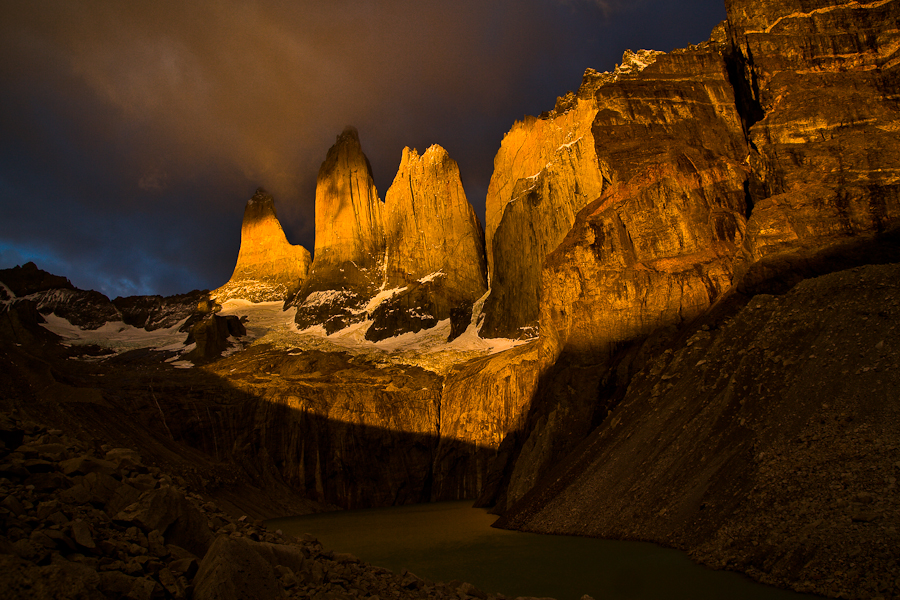
Tompkins’s first major conservation project was Pumalín Park in the Palena Province of Chile, an 800,000-acre (320,000 ha) area of Valdivian temperate rain forest, high peaks, lakes, and rivers. In 1991 he bought the Reñihué farm, a semi-abandoned farm at the end of the Reñihué Fjord,
planning to set aside 42,000 acres (17,000 ha) of this unique forest
from possible exploitation. In the next decade, The Conservation Land
Trust added another 700,000 acres (280,000 ha) in nearly contiguous
parcels to create Pumalín Park, which eventually stretched from the
Corcovado Gulf to the Andes mountains, over an area of 800,000 acres.
In 2005, then-president Ricardo Lagos declared this area a Nature Sanctuary, a special designation of the Chilean state, granting it additional environmental and non-developmental protection. The Conservation Land Trust (a U.S. environmental foundation) donated these protected lands to Fundación Pumalín (a Chilean foundation), for their administration and continual development as a type of National Park with public access under a private initiative. Through creating public-access infrastructure, including trails, campgrounds, visitor centers, and a restaurant, Tompkins sought to promote wilderness experience, in hopes of inspiring a deeper environmental ethic in the park’s many thousands of visitors.
In March 2017, the Chilean president Michelle Bachelet announced that the government was accepting the gift of 1 million acres from Fundación Pumalín and creating a national park covering 11 million acres in all, the largest such park in South America. At a ceremony for signing of the accord between government and the foundation, Tompkins’ long-term friend Yvon Chouinard claimed that “No other human has ever created this many acres of protected wildlands”.
Corcovado National Park
Just to the south of Pumalin, Corcovado National Park represents one of Tompkins’s completed conservation projects. In 1994, The Conservation Land Trust (CLT), along with U.S. philanthropist Peter Buckley, acquired 208,000 acres (84,000 ha) of native forest that was slated for logging, adjacent to vast areas of federal land under the jurisdiction of the Chilean Armed Forces. CLT offered to donate this parcel back to the Chilean state, provided that the whole area became a national park. In 2005, then-president Ricardo Lagos accepted this proposal, and the 726,000-acre (294,000 ha) Corcovado National Park was born.
Iberá Project
The Iberá Project was a private conservation enterprise that was spearheaded by Tompkins, working with George Soros, Harvard University, and Tompkins’ Conservation Land Trust.[19] Its goal was to expand land ownership and strengthen protection for the Iberá Wetlands natural preserve, in Corrientes Province, Argentina. The Iberá Natural Reserve, established in 1983, consisted of 553,000 hectares of protected floodplains, providing safe habitat for a range of native species, and encouraging a transition from “an exploitative economy” to “an economy of conservation and ecotourism“. Led by Tompkins, the Conservation Land Trust acquired 150,000 hectares of old cattle ranches bordering the existing natural reserve, lands that include habitats not then represented in the reserve.
In December 2015, the Trust donated these lands, including espinal, malezal grasslands, and forests, to the Argentine government to add to the reserve, creating a new, strictly-conserved national park to be called the Great Iberá Park. This new park, which would total 700,000 hectares, would be the largest national park in Argentina and home to hundreds of bird species, giant anteaters, and wild macaw parrots.
Other conservation projects
Other conservation projects that Tompkins spearheaded include:
The Melimoyu and Isla Magdalena conservation projects in coastal Chile, 200 km and 300 km respectively south of Pumalín Park
Envisioning “conservation as a consequence of production,” Tompkins developed models of sustainable organic farming, which maintain soil health and ecological integrity at the same time that they provide for families and support the local economy.
In the area around Pumalin, the Hornopiren, Vodudahue, Ventisquero, Pillan, and Reñihue farms serve as exemplars of small-scale ecological agriculture and as informal park ranger stations. Each of these farms produces a variety of products, including sheep, cattle, honey, berries, and organic vegetables. A small facility in the Pillan farm processes honey and berries for jams, which are sold under the name Pillan Organics.
In northeastern Argentina, Tompkins managed cattle ranches in Corrientes Province and polyculture grain and fruit farms in Entre Ríos Province. Each farm pays close attention to developing sustainable practices.
Environmental activism
Through
the Foundation for Deep Ecology, Tompkins published a series of
large-format, activist photograph books on environmental issues,
including:
Clearcut: The Tragedy of Industrial Forestry (ed. Bill Devall, 1993, ISBN0871564947)
Fatal Harvest: The Tragedy of Industrial Agriculture (ed. Andrew Kimbrell, 2002, ISBN1559639407)
Welfare Ranching: The Subsidized Destruction of the American West (eds. George Weurthner and Mollie Yoneko Madison, 2002, ISBN1559639423)
Wildfire: A Century of Failed Forest Policy (ed. George Weurthner, 2006, ISBN159726069X)
In addition, The Foundation for Deep Ecology had a long history as a grant-maker in categories such as Biodiversity and Wilderness, Ecological Agriculture, and Megatechnology and Economic Globalization, although in-house publishing is now its main focus.
Tompkins also was involved in several large environmental campaigns in Chile and Argentina, such as the “Patagonia Sin Represas” campaign, which opposed the construction of dams on two of the largest and wildest rivers in the Patagonia region of Chile.
Honours
Despite considerable controversy within Chile and Argentina, Tompkins’ environmental work won him respect and accolades outside of South America: in 2012, the African Rainforest Conservancy awarded Tompkins and his wife its “New Species Award”; in 2007, the International Conservation Caucus Foundation awarded its “Good Steward” award to him and his wife, Kris; in 2008, the American Alpine Club awarded him the David R. Brower Award, for his work preserving mountain regions; in 2009, Latin Trade named him the “Environmental Leader of the Year”.
In 2007, he was appointed as an honorary member of the American Society of Landscape Architects, in recognition of his work restoring damaged landscapes. Eco Barons, Edward Humes‘ 2009 account of the “dreamers, schemers, and millionaires who are saving our planet,” uses Tompkins as the first example of this new group of philanthropists.
Death
On December 8, 2015, Tompkins was kayaking with five others on General Carrera Lake
in southern Chile when strong waves caused their kayaks to capsize.
Tompkins spent a “considerable amount of time” in 40 °F (4 °C) waters.
He was flown, by helicopter, to a hospital in nearby Coyhaique, where he died hours later from severe hypothermia. He was 72 years old and survived by his second wife, Kristine (McDivitt), two daughters, brother and mother.
Tompkins is buried at a small cemetery near the Lodge at Valle Chacabuco in Parque Patagonia.
Can what has no beginning really end? The world will end in an illusion, as it began. Yet will its ending be an illusion of mercy. The illusion of forgiveness, complete, excluding no one, limitless in gentleness, will cover it, hiding all evil, concealing all sin and ending guilt forever. So ends the world that guilt had made, for now it has no purpose and is gone. The father of illusions is the belief that they have a purpose; that they serve a need or gratify a want. Perceived as purposeless, they are no longer seen. Their uselessness is recognized, and they are gone. How but in this way are all illusions ended? They have been brought to truth, and truth saw them not. It merely overlooked the meaningless.
Until forgiveness is complete, the world does have a purpose. It becomes the home in which forgiveness is born, and where it grows and becomes stronger and more all-embracing. Here is it nourished, for here it is needed. A gentle Savior, born where sin was made and guilt seemed real. Here is His home, for here there is need of Him indeed. He brings the ending of the world with Him. It is His Call God’s teachers answer, turning to Him in silence to receive His Word. The world will end when all things in it have been rightly judged by His judgment. The world will end with the benediction of holiness upon it. When not one thought of sin remains, the world is over. It will not be destroyed nor attacked nor even touched. It will merely cease to seem to be.
Certainly this seems to be a long, long while away. “When not one thought of sin remains” appears to be a long-range goal indeed. But time stands still, and waits on the goal of God’s teachers. Not one thought of sin will remain the instant any one of them accepts Atonement for himself. It is not easier to forgive one sin than to forgive all of them. The illusion of orders of difficulty is an obstacle the teacher of God must learn to pass by and leave behind. One sin perfectly forgiven by one teacher of God can make salvation complete. Can you understand this? No; it is meaningless to anyone here. Yet it is the final lesson in which unity is restored. It goes against all the thinking of the world, but so does Heaven.
The world will end when its thought system has been completely reversed. Until then, bits and pieces of its thinking will still seem sensible. The final lesson, which brings the ending of the world, cannot be grasped by those not yet prepared to leave the world and go beyond its tiny reach. What, then, is the function of the teacher of God in this concluding lesson? He need merely learn how to approach it; to be willing to go in its direction. He need merely trust that, if God’s Voice tells him it is a lesson he can learn, he can learn it. He does not judge it either as hard or easy. His Teacher points to it, and he trusts that He will show him how to learn it.
The world will end in joy, because it is a place of sorrow. When joy has come, the purpose of the world has gone. The world will end in peace, because it is a place of war. When peace has come, what is the purpose of the world? The world will end in laughter, because it is a place of tears. Where there is laughter, who can longer weep? And only complete forgiveness brings all this to bless the world. In blessing it departs, for it will not end as it began. To turn hell into Heaven is the function of God’s teachers, for what they teach are lessons in which Heaven is reflected. And now sit down in true humility, and realize that all God would have you do you can do. Do not be arrogant and say you cannot learn His Own curriculum. His Word says otherwise. His Will be done. It cannot be otherwise. And be you thankful it is so.






















You must be logged in to post a comment.