Tag: BC

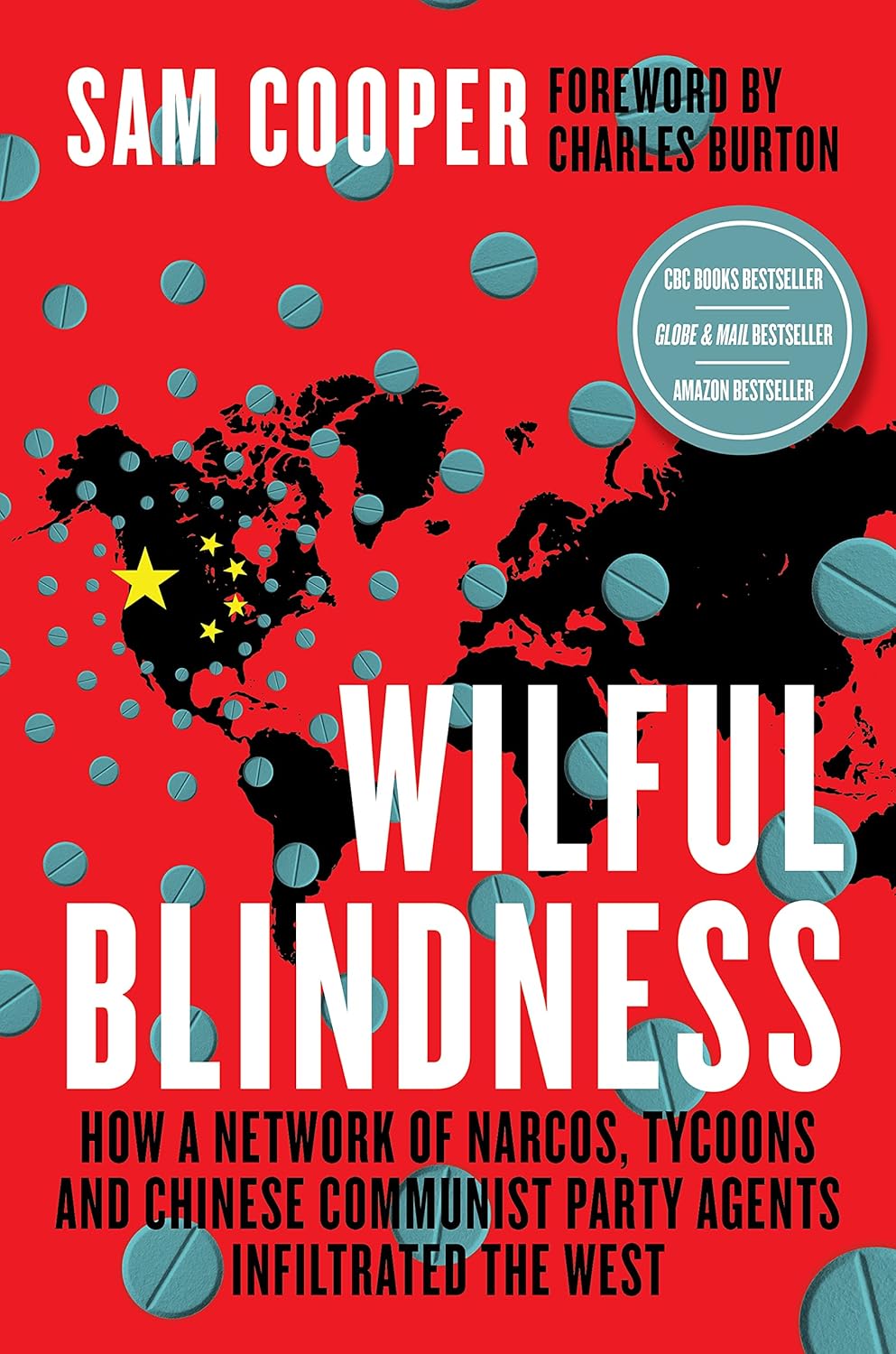
  • Wilful Blindness: How a network of narcos, tycoons and CCP agents infiltrated the West

    Wilful Blindness: How a network of narcos, tycoons and CCP agents infiltrated the West

    Wilful Blindness: How a network of narcos, tycoons and CCP agents infiltrated the West

    by Sam Cooper

    In 1982 three of the most powerful men in Asia met in Hong Kong. They would decide how Hong Kong would be handed over to the People’s Republic of China and how Chinese business tycoons Henry Fok and Li Ka-Shing would help Deng Xiaoping realize the Chinese Communist Party’s domestic and global ambitions. That meeting would not only change Vancouver but the world. Billions of dollars in Chinese investment would soon reach the shores of North America’s Pacific coast. B.C. government casinos became a tool for global criminals to import deadly narcotics into Canada and launder billions of drug cash into Vancouver real estate. And it didn’t happen by accident.

    A cast of accomplices – governments hungry for revenue, casino and real estate companies with ties to shady offshore wealth, professional facilitators including lawyers and bankers, an aimless RCMP that gave organized crime room to grow – all combined to cause this tragedy. There was greed, folly, corruption, conspiracy, and wilful blindness.

    Wilful Blindness: How a network of narcos, tycoons and CCP agents infiltrated the West

    Decades of bad policy allowed drug cartels, first and foremost the Big Circle Boys – powerful transnational narco-kingpins with ties to corrupt Chinese officials, real estate tycoons, and industrialists – to gain influence over significant portions of Canada’s economy. Many looked the other way while B.C.’s primary industry, real estate, ballooned with dirty cash. But the unintended social consequences are now clear: a fentanyl overdose crisis raging in major cities throughout North America and life spans falling for the first time in modern Canada, and a runaway housing market that has devastated middle-class income earners.

    This story isn’t just about real estate and fentanyl overdoses, though. Sam Cooper has uncovered evidence that shows the primary actors in so-called “Vancouver Model” money laundering have effectively made Canada’s west coast a headquarters for corporate and industrial espionage by the CCP. And these ruthless entrepreneurs have used Vancouver and Canada to export their criminal model to other countries around the world including Australia and New Zealand. Meanwhile, Cooper finds that the RCMP’s 2019 arrest of its top intelligence official, Cameron Ortis, raises many frightening questions. Could Chinese transnational criminals and state actors targeting Canada’s industrial and technological crown jewels have gained protection from the Mounties?

    Wilful Blindness by Sam Cooper

    Could China and Iran have insight into Canada’s deepest national security secrets and influence on investigations? According to the evidence Cooper has found, Ortis had oversight of many investigations into transnational money laundering networks and insight into sensitive probes of suspects seeking to undermine Canada’s democracy and infiltrate the United States.

    Wilful Blindness is a powerful narrative that follows the investigators who refused to go along with institutionalized negligence and corruption that enabled the Vancouver Model, with Cooper drawing on extensive interviews with the whistle-blowers; thousands of pages of government and court documents obtained through legal applications; and large caches of confidential material available exclusively to Cooper.

    The book culminates with a shocking revelation showing how deeply Canada has been compromised and what needs to happen to get the nation back on track with its “Five Eyes” allies.

    BUY: Wilful Blindness: How a network of narcos, tycoons and CCP agents infiltrated the West by Sam Cooper on Amazon

    “I’m astonished that some Hollywood production company hasn’t already signed him for a big-screen treatment of this story. It’s a huge story.” – Terry Glavin, National Post

    A Globe and Mail and Amazon #1 bestseller

    If you want to understand war in the 21rst century. Read this to get part of the story”

    Robert Spalding, US Brigadier General(retired)

    “A Gripping read that you won’t want to put down”

    Benedict Rogers, Hong Kong Watch

    “This is a must-read book for concerned citizens who want to keep their democratic societies free”

    Solomon Yue, Vice-Chair and CEO, Republicans Overseas and the National Committee of the Republican Party of Oregon
  • Tree Planter Tea Strategy

    Tree Planter Tea Strategy

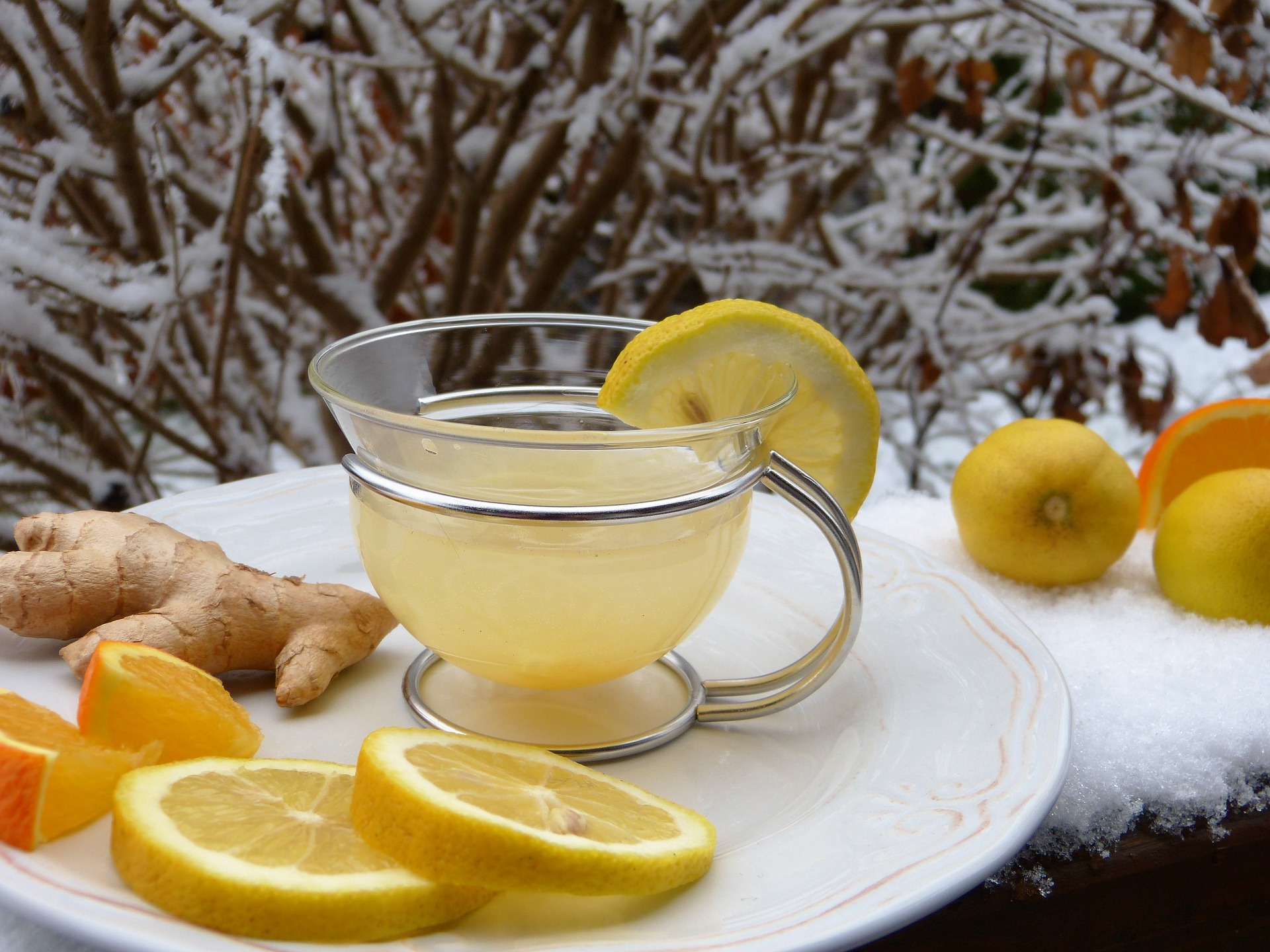
    To endure one of the toughest jobs I ever had, which was to plant trees in British Columbia, the best tip I learned, was how to make what I now call “Tree Planter Tea”.

    The reason BC tree planting is the toughest job is because of the environment that you live and work in, for weeks at a time is completely in the “bush”. The tea was the best tip is because it’s not easy to sustain energy when carrying heavy loads of trees, often plugs but mainly bare-root, up and across massive clear cuts, on the sides of mountains.

    The terrain and weather conditions, especially if it’s coastal planting, drain the body of it’s vital strength. The high performance veterans in the industry, back my day, were a team of women that lived on the tea and paced themselves.

    That gang of women, were the top professional tree planters. Their secret to success was to not burn out and the key to physical endurance is diet and lifestyle. The key to the diet was the tea, the reason I’m telling you this is because if you learn how to make this and drink it every day, on a regular basis, you will notice the difference.

    Essentially the OG (original) recipe was lemons, ginger, turmeric, cayenne pepper and maple syrup and orange pekoe tea. My version kicks it up a notch by adding beet juice from boiling two full size beets cut into eight pieces, then simmer for an hour to make the juice. Also, steep a full pot of high-quality black tea from China, using a tea ball.

    When incorporating all the ingredients, it’s important to simmer for long enough that the cinnamon sticks release flavour. Then balance the cayenne pepper and maple syrup to taste.

  • Yuquat: Nootka Crisis

    Yuquat: Nootka Crisis

    John Webber‘s Ship Cove, Queen Charlotte Sound, c. 1788

    In a race with other European nation states to establish colonies, since the 1490s Spain had claimed sovereignty over the Pacific coast of North and South America. The Spanish developed an empire that by the 16th century included much of South America, Central America and Mexico. In the second half of the 18th century Spain became worried about Russian advances into North America, then a Conference was held at Yuquat,

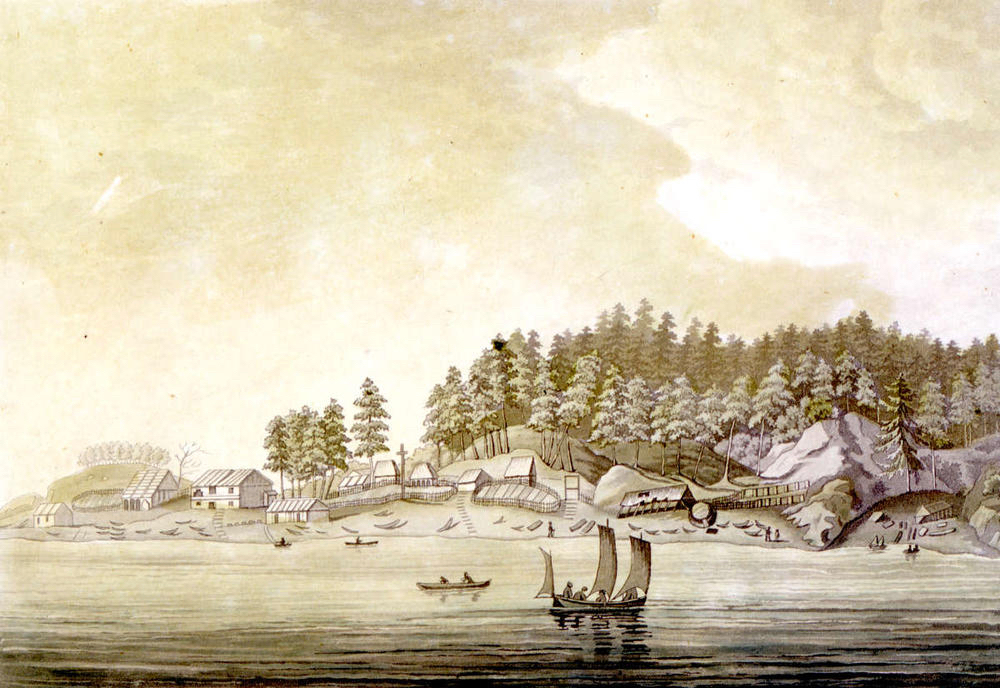
    An illustration of the Spanish establishment at Yuquot at the time of Quadra and Vancouver’s visit in 1792.
    Illustration of Chief Maquinna dancing at feast in his bighouse at Tahsis, held in honor of Spanish delegate Quadra and British delegate Vancouver, in 1792.

    The arrival of numerous fur traders to Yuquot in the late 1700s also threatened Spain’s claims over the west coast of the Americas. In response, in 1789 the Spanish navy sent an expedition under the command of Esteban Martínez to construct a base and fort at Yuquot, with the authorization of Chief Maquinna. Later that year, Martinez arrested some British trading ships, sparking the “Nootka Crisis” that brought Spain and Britain to the brink of war. The “Nootka Convention” of 1790 initially settled the issue.

    A fanciful illustration of a “Spanish insult to the British flag” at Yuquot in 1789 that brought England and Spain to the brink of war.

    Two specially appointed commissioners – George Vancouver (Britain) and Juan Francisco de la Bodega y Quadra (Spain) – came to Yuquot in 1792 to oversee the transfer of claimed rights to Nootka Sound from Spain to Britain. However, the two delegates could not agree on differing interpretations of the treaty, and matters had to be finally settled in Europe. As the Spanish ships departed their outpost at Yuquot for the last time in 1795, they watched Mowachaht people tearing down the Spanish fort and other buildings to re-occupy the site.

    Source: The Mowachaht/Muchalaht First Nation

  • The Syilx People of the Okanagan Nation

    The Syilx People of the Okanagan Nation

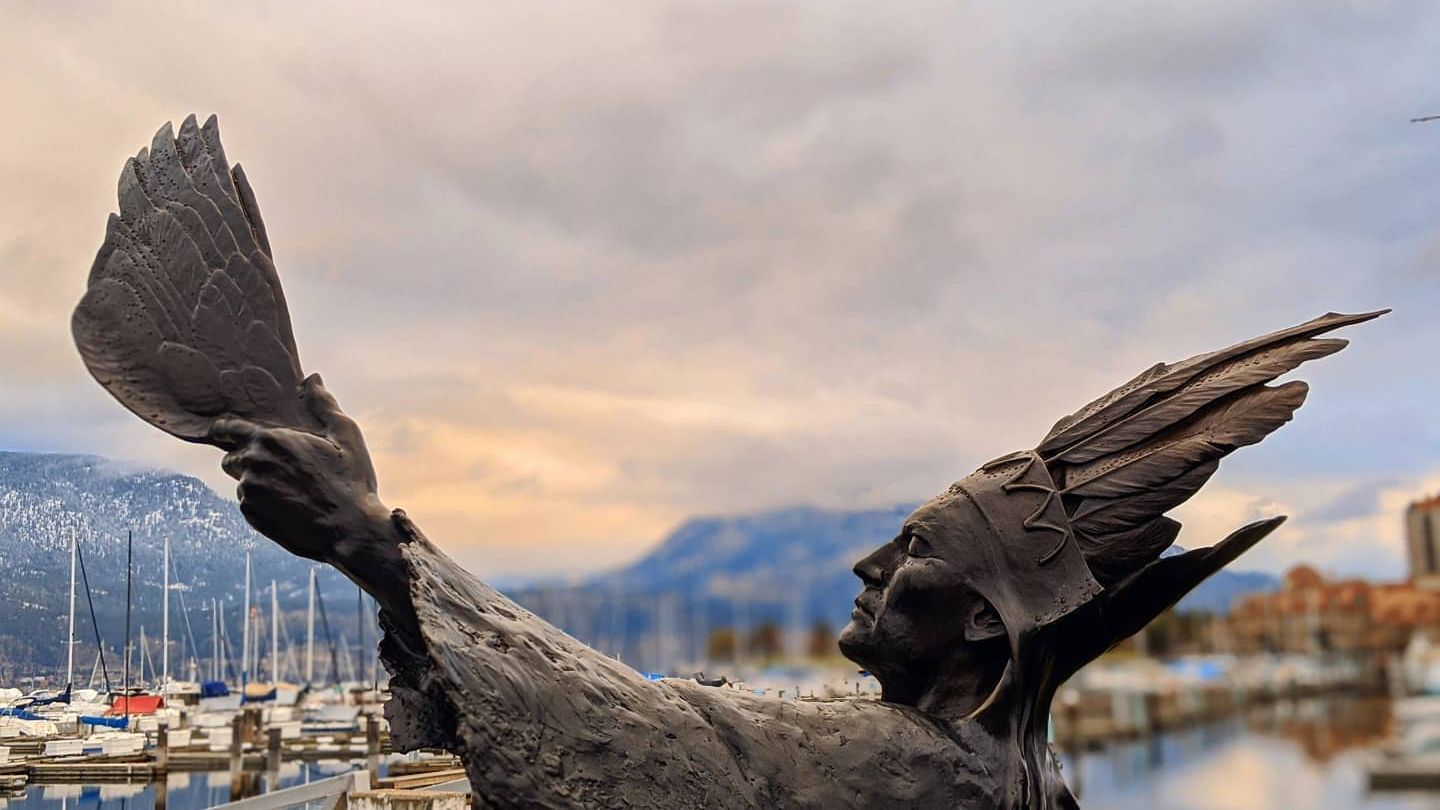
    Syilx Chief, Charlie Swkn̓cut

    Kelowna sits on the traditional, unceded territory of the Syilx/Okanagan people. This sculpture of historic Syilx Chief, Charlie Swkn̓cut, created by Crystal Przybille, features details signifying various aspects of Syilx culture.

    Kelowna, BC

    At the height of Syilx culture, about 3000 years ago, it is estimated that 12,000 people lived in this valley and surrounding areas. The Okanagan people employed an adaptive strategy, moving within traditional areas throughout the year to fish, hunt, or collect food, while in the winter months, they lived in semi-permanent villages of kekulis, a type of pithouse.

    When the Oregon Treaty partitioned the Pacific Northwest in 1846, the portion of the tribe remaining in what became Washington Territory reorganized under Chief Tonasket as a separate group from the majority of the Okanagan, whose communities remain in Canada. The Okanagan Tribal Alliance, however, incorporates the American branch of the Okanagan. The latter are part of the Confederated Tribes of the Colville, a multi-tribal government in Washington state.

    The bounds of Okanagan territory are roughly the basin of Okanagan Lake and the Okanagan River, plus the basin of the Similkameen River to the west of the Okanagan valley, and some of the uppermost valley of the Nicola River. The various Okanagan communities in British Columbia and Washington form the Okanagan Nation Alliance, a border-spanning organization which includes American-side Okanogans resident in the Colville Indian Reservation, where the Okanagan people are sometimes known as Colvilles.

    The today Upper Nicola Indian Band, an Okanagan group of the Nicola Valley, which was at the northwestern perimeter of Okanagan territory, are known in their dialect as the Spaxomin, and are joint members in a historic alliance with neighbouring communities of the Nlaka’pamux in the region known as the Nicola Country, which is named after the 19th-century chief who founded the alliance, Nicola. This alliance today is manifested in the Nicola Tribal Association.

    Sylix First Nation BC locator map

    The Syilx People of the Okanagan Nation

    Okanagan family, c. 1918

    The Syilx People of the Okanagan Nation are a trans-boundary tribe separated at the 49th parallel by the border between Canada and the United States. Our Nation is comprised of seven member communities in the Southern Interior of British Columbia: Okanagan Indian Band, Osoyoos Indian Band, Penticton Indian Band, Upper Nicola Band, Upper and Lower Similkameen Indian Bands, and Westbank First Nation; and in Northern Washington State, the Colville Confederated Tribes. Our members share the same land, nsyilxcən language, culture, and customs. We are a distinct and sovereign Nation.

    Today the Syilx/Okanagan People continue to assert their jurisdiction and responsibility over the stewarding of their land, resources and quality of life of their citizens. Our nsyilxcən language and our Syilx/Okanagan culture respectfully honour the natural laws of the tmixw that which gives us life.

    Source: About Syilx Nation

  • Sooke, British Columbia

    Sooke, British Columbia

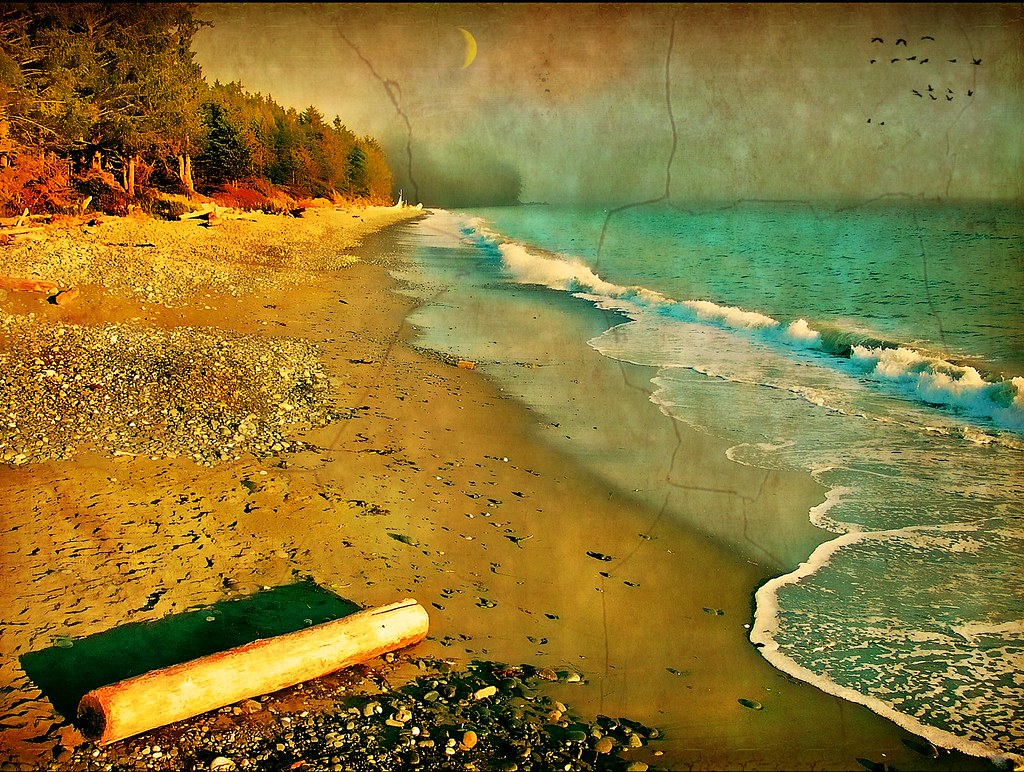
    French Beach , Vancouver Island, near Sooke, British Columbia
    French Beach, Vancouver Island, near Sooke, British Columbia

    The town of Sooke is another place in British Columbia that I have not seen and even though I won’t admit to a bucket list, there are some place I just feel I must go an experience for myself. That being said; Sooke British Columbia is high on the list.

    Sooke’s popularity as a scenic tourist destination has existed for generations. Well-known destinations in Sooke, such as Whiffin Spit Park, the Sooke Potholes Regional Park and adjacent Sooke Potholes Provincial Park attract visitors both locally and from around the world. Sooke is also home to the Sooke Region Museum and Visitor Centre; where visitors and locals are able to get information on regional attractions and history.

    Sooke Basin View by Kiwibirdman
    Sooke Basin View by Kiwibirdman

    The area’s popularity has increased as a base for visiting the wilderness parks of Vancouver Island‘s southwest coast — the West Coast Trail and the Juan de Fuca Provincial Park which includes the now highly popular Juan de Fuca Marine Trail. Sooke, BC is also famous for its beaches just on the outskirts of its neighbouring communities such as Shirley and Jordan River. These beaches include Sandcut, French beach, Fishboat bay, China beach, Mystic beach and more.

    To get an idea of how amazing awesome the beaches are near Sooke, check out this fabulous short video

    The beaches near Sooke, BC in one day

    Back country recreation, or off-road recreation brings a constant stream of 4X4s, quads, ATVs, dirt bikes and home built off-highway vehicles through Sooke as people search out back country access. Hundreds of kilometres of logging roads thread through the hills north of Sooke in the Rural Resource Lands of the Juan de Fuca electoral area, enabling access to several community lakes and small reservoirs. Two large reservoirs, Bear Creek and Diversion, are popular destinations north and west of Sooke.

    Mountain biking is growing in popularity in British Columbia, and Sooke is establishing itself as a destination for the sport. Local advocacy groups such as the Sooke Bike Club are working to have areas such as Broom Hill set aside as parkland.

    The Galloping Goose Regional Trail, part of the Trans-Canada Trail, runs through Sooke and is a popular cycling route to Victoria.

    French Beach, Sooke, British Columbia Photo credit: Nick Kenrick. on VisualHunt.com / CC BY-NC-SA

  • Freedom Cove, Tofino

    Freedom Cove, Tofino

    Freedom Cove, Tofino, BC
    Freedom Cove, Tofino, BC February 2018

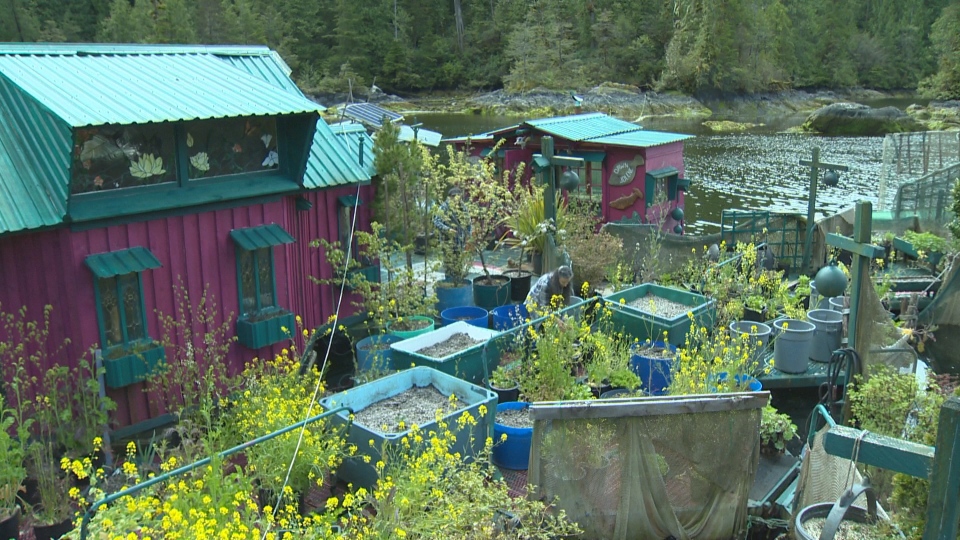
    British Columbia is so vast that you constantly learn about or discover new incredible off-the-grid homesteads, such as Freedom Cove, Tofino, where the owners enjoy a holistic and balanced lifestyle and have flourished, right alongside Super Natural British Columbia.

    Freedom Cove, BC

    For the over 25 years, B.C. couple Wayne Adams and Catherine King have been living on an artificial island that they created themselves. The island property floats majestically at the end of an isolated cove that is located a 30-minute boat ride away from Tofino.

    Freedom Cove Tour: Magical Living on a Floating World

    Deep in the remote wilderness of Clayoquot Sound, in the little bay called Freedom Cove live the artists Catherine and Wayne Adams.

    Visit Freedom Cove with Browning Pass Charters and immerse yourself in a world of creative energy and good spirits.

    Freedom Cove Float House, Tofino BC. Catherine & Wayne Adams live in the remote wilderness off Vancouver Island, BC, Canada on a floating “farm”. They sustain their lifestyle by growing most of their own food, including all their fruit and selling their art. Wayne is a carver and is constantly creating and recreating their home as a form of expression art. Catherine is also a carver who is the master mind behind the gardening and is also a painter and a writer.

    To learn more see: Browning Pass Charters.