
Tag: Exodus

  • Exodus & Trezor Que Entre La Luz

    Exodus & Trezor Que Entre La Luz

    Exodus Movement
    Click and marvel, how easy it is….

    Exodus helps individuals control their wealth independent of old banking models and free from institutional control. Now, Exodus & Trezor make advanced security easy – allowing anyone to safely manage digital assets.

    Exodus is a software platform ONLY and does not conduct any independent diligence on or substantive review of any blockchain asset, digital currency, cryptocurrency or associated funds. You are fully and solely responsible for evaluating your investments, for determining whether you will exchange blockchain assets based on your own, and for all your decisions as to whether to exchange blockchain assets with Exodus.

    In many cases, blockchain assets you exchange on the basis of your research may not increase in value, and may decrease in value. Similarly, blockchain assets you exchange on the basis of your research may increase in value after your exchange.

    Exodus and Trezor worked in partnership to advance the hardware wallet experience.

    Trezor One & Model T now work with Exodus

    Exodus & Trezor

    Manage and exchange your cryptocurrencies in Exodus securely from your Trezor. No signup or registration required.

    Choose a good PIN

    The PIN is a powerful tool to keep your coins safe. It is the only thing between a thief and your funds if someone steals your device.

    Do not use a simple or predictable PIN, such as “1234,” or any series of repeated or sequential numbers.

    Suggestion: The numbers displayed on the Trezor screen when it requests a new PIN are in a random order which changes every time you use your device. You can use them as the basis for your PIN if you do not have any better ideas. For example, you can use the first two rows when you see the matrix for the first time.

    If you have trouble remembering your PIN, write it on your recovery card.

    For more information, see also Set up a PIN and our blog articles 3 simple rules for a good PIN, How easy would it be to guess your PIN? and Recovery Seed, PIN and Passphrase.
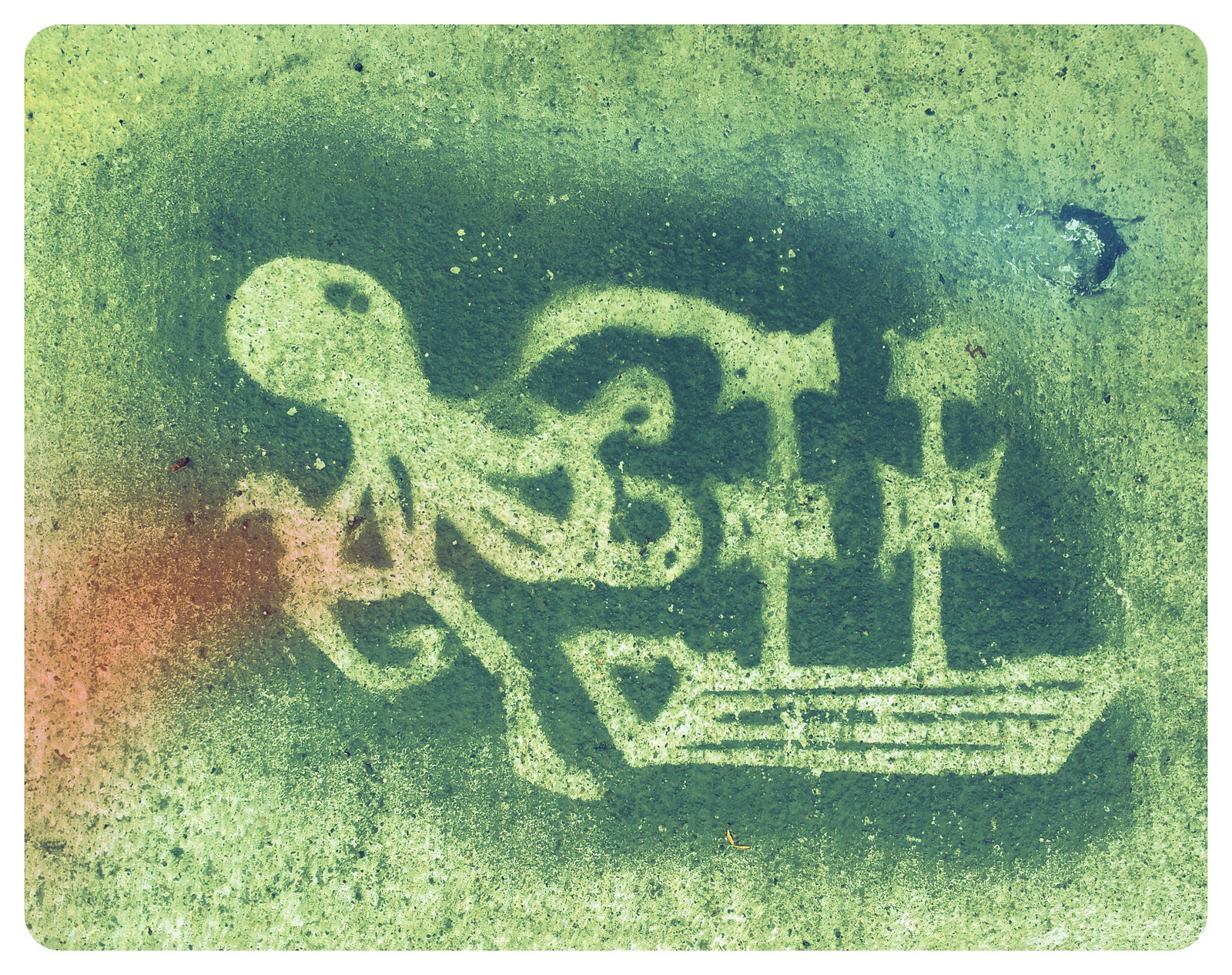
  • Release the Kracken on the Blockchain of Cryptocurrency

    Release the Kracken on the Blockchain of Cryptocurrency

    Release the KrackenMy adventure in cryptocurrency started recently, despite having joined Steemit a few years ago I did not start purchasing Bitcoin until 2017 but began investing and trading in February of 2018. This is the beginning of my cryptocurrency love affair, the evolution of which became heated with the combination of an excellent buying opportunity and the introduction to Kraken for exchange and Exodus for wallet and cyber asset management system. All of a sudden I found myself enraptured by the allure of power, control and simplicity.

    Cryptocurrency market timing knowledge is the only missing ingredient, for which we have found a guru on Youtube with a Channel called the “Arcane Bear”. There are others too, as well as Clif High the predictive linguistics prognosticator, that has developed a habit of being correct about the future of the crypto market, the climax of his analysis is that Bitcoin is here to stay and could reach $1 million dollar valuation in 3 years and will find itself above $84,000 by the end of 2018 – very impressive upside, even if these predictions were 10% accurate and Bitcoin was worth $100,000 each by 2020.

    For several years I’ve been promoting cryptocurrency because I sincerely believe in the concept. I also think that the old system was rigged, corrupt and bankrupt so why wait for the banksters to try to fix the system, the next time it crashes, let’s take the future into our own hands. This is exactly what is described in theĀ  famous Bitcoin white paper by Satoshi Nakamoto.

    Satoshi Nakamoto is the name used by the unknown person or people who designed bitcoin and created its original reference implementation. As part of the implementation, they also devised the first blockchain database. In the process they were the first to solve the double-spending problem for digital currency. They were active in the development of bitcoin up until December 2010.

    Bitcoin: A Peer-to-Peer Electronic Cash System

    Bitcoin Abstract

    A purely peer-to-peer version of electronic cash would allow online payments to be sent directly from one party to another without going through a financial institution. Digital signatures provide part of the solution, but the main benefits are lost if a trusted third party is still required to prevent double-spending. We propose a solution to the double-spending problem using a peer-to-peer network. The network timestamps transactions by hashing them into an ongoing chain of hash-based proof-of-work, forming a record that cannot be changed without redoing the proof-of-work. The longest chain not only serves as proof of the sequence of events witnessed, but proof that it came from the largest pool of CPU power. As long as a majority of CPU power is controlled by nodes that are not cooperating to attack the network, they’ll generate the longest chain and outpace attackers. The network itself requires minimal structure. Messages are broadcast on a best effort basis, and nodes can leave and rejoin the network at will, accepting the longest proof-of-work chain as proof of what happened while they were gone.

    Source: Bitcoin.org

    Release Kracken Photo credit: aforonda on Visual Hunt / CC BY-SA