Author: Aaron

  • Saint Patrick was Known as the “Apostle of Ireland”

    Saint Patrick was Known as the “Apostle of Ireland”

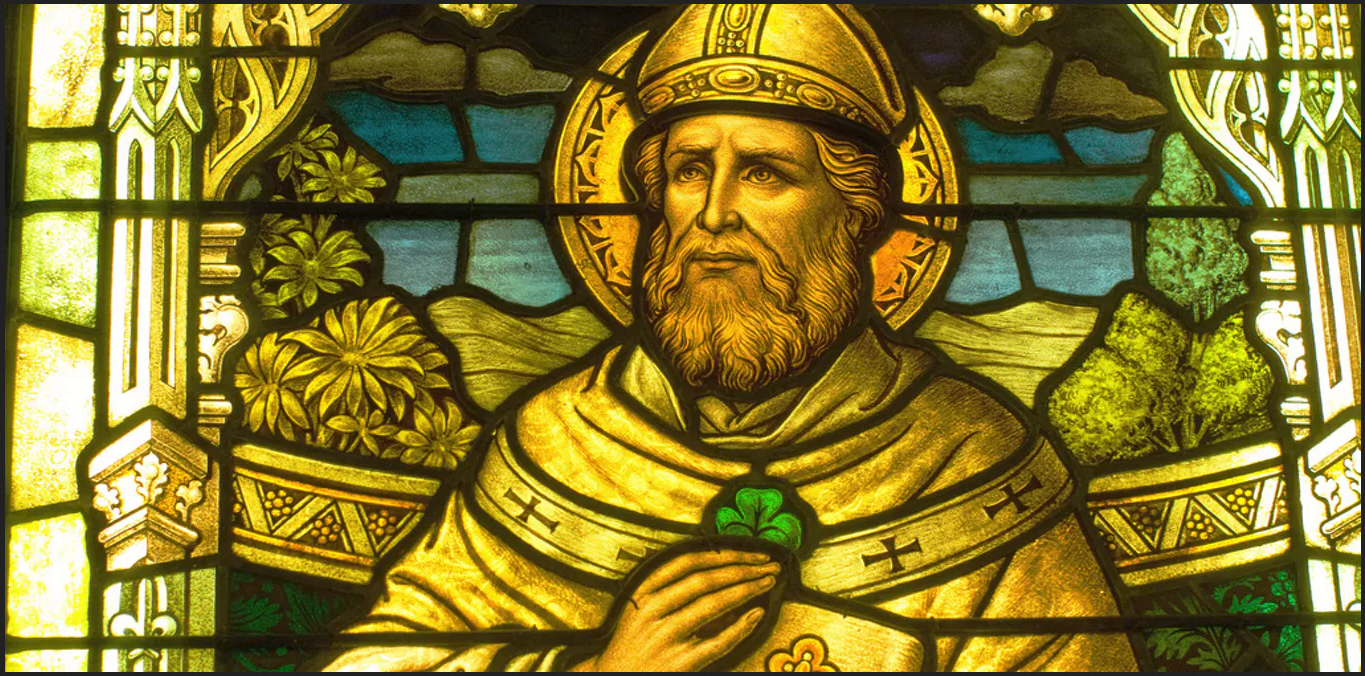
    Saint Patrick Catholic Church (Junction City, Ohio) – stained glass, Saint Patrick – detail

    Happy Saint Paddy Day! Saint Patrick’s Day, or the Feast of Saint Patrick, is a cultural and religious celebration held on 17 March, the traditional death date of Saint Patrick, the foremost patron saint of Ireland. All over the world and especially wherever there’s an Irish pub, which is almost every city in the world, today is the day to celebrate Ireland and the great cultural heritage they have shared abroad. NOTE: in Q code today is the “green light” for GO!

    Saint Patrick (Latin: Patricius; Irish: Pádraig [ˈpˠaːd̪ˠɾˠəɟ]; Welsh: Padrig) was a fifth-century Romano-British Christian missionary and bishop in Ireland. Known as the “Apostle of Ireland”, he is the primary patron saint of Ireland, the other patron saints being Brigit of Kildare and Columba. Patrick was never formally canonised, having lived prior to the current laws of the Catholic Church in these matters. Nevertheless, he is venerated as a Saint in the Catholic Church and in the Eastern Orthodox Church, where he is regarded as equal-to-the-apostles and Enlightener of Ireland. He is also regarded as a Saint within the framework of their respective doctrine by the Anglican Communion and the Lutheran Churches.

    The dates of Patrick’s life cannot be fixed with certainty, but there is general agreement that he was active as a missionary in Ireland during the fifth century. A recent biography on Patrick shows a late fourth-century date for the saint is not impossible. Early medieval tradition credits him with being the first bishop of Armagh and Primate of Ireland, and regards him as the founder of Christianity in Ireland, converting a society practising a form of Celtic polytheism. He has been generally so regarded ever since, despite evidence of some earlier Christian presence in Ireland.

    According to the autobiographical Confessio of Patrick, when he was about sixteen, he was captured by Irish pirates from his home in Britain and taken as a slave to Ireland, looking after animals; he lived there for six years before escaping and returning to his family. After becoming a cleric, he returned to northern and western Ireland. In later life, he served as a bishop, but little is known about the places where he worked. By the seventh century, he had already come to be revered as the patron saint of Ireland.

    Saint Patrick’s Day is observed on 17 March, the supposed date of his death. It is celebrated inside and outside Ireland as a religious and cultural holiday. In the dioceses of Ireland, it is both a solemnity and a holy day of obligation; it is also a celebration of Ireland itself.

  • Blood of Christ and the Lion of Judah

    Blood of Christ and the Lion of Judah

    Blood of Christ in Christian theology refers to (a) the physical blood actually shed by Jesus Christ primarily on the Cross, and the salvation which Christianity teaches was accomplished thereby; or (b) the sacramental blood present in the Eucharist or Lord’s Supper, which some Christian denominations believe to be the same blood of Christ shed on the Cross.

    The crosses were erected by sliding the bottom of the crucifix into deep holes that were dug in the rock at Moriah, Golgotha, and Calvary outside Jerusalem. The holes were carved out long before Jesus, they were used over and over again by the Romans and signs were carved and painted on the rock face of Golgotha with the charges of criminals who would be intentionally executed in this manner, outside the back-road to Jerusalem. Romans ruled with brute force and this was a message to would be thieves or raiders, that crime would be strictly punished.

    Ron Wyatt discovered what many experts believe to be the blood of Christ, trapped in a crack in the rock some 70 feet beneath the ground in an ancient archaeological tunnel exploration. For almost 20 years Ron Wyatt led a team of archaeologists on a dig underneath the temple mount in Jerusalem, to follow an ancient tunnel system, digging deeper and deeper, year after year, to finally discover the site of the original tabernacle for the Ark of the Covenant.

    Using modern techniques of GPS they were able to determine the exact location of the Ark was directly underneath the location on Golgotha where Jesus Christ was first crucified and then later punctured by a Roman spear, the blood of that puncture would bleed down the cross and into crucifix hole in the rock, at the bottom of which, was a crack that went down all the way to the underground chamber where the Ark was hidden 600 years previously. The archaeologists brought samples of he Blood of Christ and studied under electron-microscope to witness particles in the blood are still alive, from the samples off the rock stain.

    The following day, after the crucifixion of Christ, there was an earthquake

    The Blood of Christ is insignia of the Lion of Judah, as the ancients knew things about blood we are just beginning to appreciate. To keep the blood clean is to believe in God and that the living particles in our blood will remain forever. There’s something especially mystical about our blood and the Blood of Christ is still alive.

    Ron Wyatt claims that the blood stain was trapped in the rock and never washed away because there was an earthquake the day following the crucifixion of Christ and that shifted the rock and closed the crack that contained the blood that had seeped all the way down from 70 feet (think 7 floors) above the cavern where the Ark of the Covenant had been hidden about 600 years previously.

    Lion of Judah

    Quake Reveals Day of Jesus’ Crucifixion

    Jesus, as described in the New Testament, was most likely crucified on Friday April 3, 33 A.D.

    The latest investigation, reported in the journal International Geology Review, focused on earthquake activity at the Dead Sea, located 13 miles from Jerusalem. The Gospel of Matthew, Chapter 27, mentions that an earthquake coincided with the crucifixion:

    “And when Jesus had cried out again in a loud voice, he gave up his spirit. At that moment the curtain of the temple was torn in two from top to bottom. The earth shook, the rocks split and the tombs broke open.”

    To analyze earthquake activity in the region, geologist Jefferson Williams of Supersonic Geophysical and colleagues Markus Schwab and Achim Brauer of the German Research Center for Geosciences studied three cores from the beach of the Ein Gedi Spa adjacent to the Dead Sea.

    Varves, which are annual layers of deposition in the sediments, reveal that at least two major earthquakes affected the core: a widespread earthquake in 31 B.C. and an early first century seismic event that happened sometime between 26 A.D. and 36 A.D.

    The latter period occurred during “the years when Pontius Pilate was procurator of Judea and when the earthquake of the Gospel of Matthew is historically constrained,” Williams said.

    “The day and date of the crucifixion (Good Friday) are known with a fair degree of precision,” he said. But the year has been in question.

    In terms of textual clues to the date of the crucifixion, Williams quoted a Nature paper authored by Colin Humphreys and Graeme Waddington. Williams summarized their work as follows:

    • All four gospels and Tacitus in Annals (XV,44) agree that the crucifixion occurred when Pontius Pilate was procurator of Judea from 26-36 AD.
    • All four gospels say the crucifixion occurred on a Friday.
    • All four gospels agree that Jesus died a few hours before the beginning of the Jewish Sabbath (nightfall on a Friday).
    • The synoptic gospels (Matthew, Mark, and Luke) indicate that Jesus died before nightfall on the 14th day of Nisan; right before the start of the Passover meal.
    • John’s gospel differs from the synoptics; apparently indicating that Jesus died before nightfall on the 15th day of Nisan.

    When data about the Jewish calendar and astronomical calculations are factored in, a handful of possible dates result, with Friday April 3, 33 A.D. being the best match, according to the researchers.

    In terms of the earthquake data alone, Williams and his team acknowledge that the seismic activity associated with the crucifixion could refer to “an earthquake that occurred sometime before or after the crucifixion and was in effect ‘borrowed’ by the author of the Gospel of Matthew, and a local earthquake between 26 and 36 A.D. that was sufficiently energetic to deform the sediments of Ein Gedi but not energetic enough to produce a still extant and extra-biblical historical record.”

    “If the last possibility is true, this would mean that the report of an earthquake in the Gospel of Matthew is a type of allegory,” they write.

    Williams is studying yet another possible natural happening associated with the crucifixion – darkness.

    Three of the four canonical gospels report darkness from noon to 3 PM after the crucifixion. Such darkness could have been caused by a dust storm, he believes.

    Williams is investigating if there are dust storm deposits in the sediments coincident with the early first century Jerusalem region earthquake.

    Part of This story was provided by Discovery News.

  • Shakespeare and the King James Bible

    Shakespeare and the King James Bible

    This was long thought to be the only portrait of William Shakespeare that had any claim to have been painted from life, until another possible life portrait, the Cobbe portrait, was revealed in 2009. The portrait is known as the ‘Chandos portrait‘ after a previous owner, James Brydges, 1st Duke of Chandos. It was the first portrait to be acquired by the National Portrait Gallery in 1856. The artist may be by a painter called John Taylor who was an important member of the Painter-Stainers’ Company

    Never has there been a better conspiracy theory than William Shakespeare and the King James Bible edition of 1611. Just five years later the mysterious William Shakespeare is said to have left this earth, in 1616. Meanwhile many wonder if he was every really born on earth and believe the Shakespeare name was a nom-de-plume. Now 420 years since it’s issue we are intrigued to discover the unmistakable hidden hand of Shakespeare in the KJV (King James Version).

    Definition of nom de plume: a name that a writer uses instead of his or her real name

    William Shakespeare’s grave, Holy Trinity Church, Stratford-on-Avon, England. On his grave is written: Good frend for Jesus sake forbeare, To digg the dust encloased heare. Bleste be þe man þt spares thes stones, And curst be he þt moves my bones. In modern English: Good friend for Jesus sake forbear, To dig the dust enclosed here. Blessed be the man that spares these stones, And cursed be he that moves my bones.

    Speculation about Shakespeare Authorship

    Main article: Shakespeare authorship question

    Around 230 years after Shakespeare’s death, doubts began to be expressed about the authorship of the works attributed to him. Proposed alternative candidates include Francis Bacon, Christopher Marlowe, and Edward de Vere, 17th Earl of Oxford. Several “group theories” have also been proposed. Only a small minority of academics believe there is reason to question the traditional attribution, but interest in the subject, particularly the Oxfordian theory of Shakespeare authorship, continues into the 21st century.

    James I and his royal progeny, by Charles Turner, from a mezzotint by Samuel Woodburn (1814), after Willem de Passe

    Conspiracy is evident, whether Shakespeare was an actual person or not. Now a scholar named Alan Green has uncovered the very real evidence that King James conspired with writers and editors of his time, that would have been the best in his Kingdom, to perform what would have been the greatest operation of information warfare in all of human history. The compilation, editing and publishing of the King James Bible, which has become the number one selling book in human history and may very well have shaped the culture of the planet in the past 420 years.

    Alan provides absolute proof that the Rosicrucian masters (Edward de Vere, Sir Francis Bacon and Dr. John Dee) who pulled off the great ‘Shakespeare’ subterfuge, masterminded stunning codes embedded in the 1611 King James Bible engravings! Their purpose was indisputable; they were pointing us to the missing Ark of the Covenant!

    Bardcast™ 13 (The King James Bible & Ark of the Covenant)
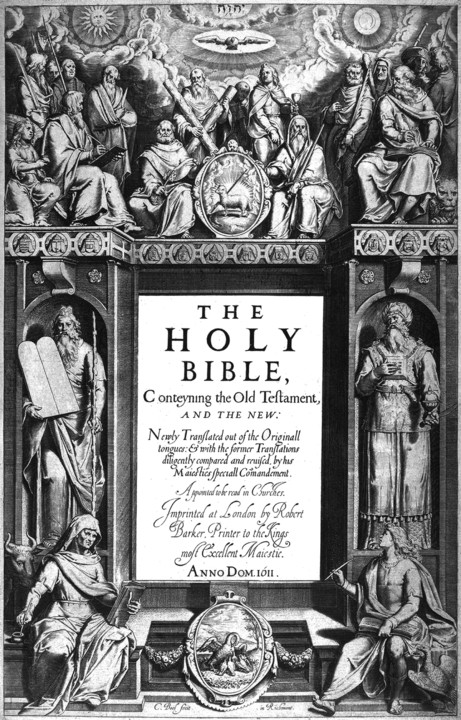
    The title page to the 1611 first edition of the Authorized Version of the Bible by Cornelis Boel shows the Apostles Peter and Paul seated centrally above the central text, which is flanked by Moses and Aaron. In the four corners sit Matthew, Mark, Luke and John, the traditionally attributed authors of the four gospels, with their symbolic animals. The rest of the Apostles (with Judas facing away) stand around Peter and Paul. At the very top is the Tetragrammaton “יְהֹוָה” written with Hebrew diacritics.

    The King James Version (KJV), also known as the King James Bible (KJB), sometimes as the English version of 1611, or simply the Authorized Version (AV), is an English translation of the Christian Bible for the Church of England, commissioned in 1604 and completed as well as published in 1611 under the sponsorship of James I and VI. The books of the King James Version include the 39 books of the Old Testament, an intertestamental section containing 14 books of the Apocrypha, and the 27 books of the New Testament. Noted for its “majesty of style”, the King James Version has been described as one of the most important books in English culture and a driving force in the shaping of the English-speaking world.

    It was first printed by John Norton and Robert Barker, both holding the post of the King’s Printer, and was the third translation into English approved by the English Church authorities: The first had been the Great Bible, commissioned in the reign of King Henry VIII (1535), and the second had been the Bishops’ Bible, commissioned in the reign of Queen Elizabeth I (1568). In Geneva, Switzerland the first generation of Protestant Reformers had produced the Geneva Bible of 1560 from the original Hebrew and Greek scriptures, which was influential in the writing of the Authorized King James Version.

    Portrait by Paul van Somer, c. 1620. In the background is the Banqueting House, Whitehall, by architect Inigo Jones, commissioned by James.

    In January 1604, King James convened the Hampton Court Conference, where a new English version was conceived in response to the problems of the earlier translations perceived by the Puritans, a faction of the Church of England.

    James in 1586, age 20

    James gave the translators instructions intended to ensure that the new version would conform to the ecclesiology—and reflect the episcopal structure—of the Church of England and its belief in an ordained clergy. The translation was done by 6 panels of translators (47 men in all, most of whom were leading biblical scholars in England) who had the work divided up between them: the Old Testament was entrusted to three panels, the New Testament to two, and the Apocrypha to one. In common with most other translations of the period, the New Testament was translated from Greek, the Old Testament from Hebrew and Aramaic, and the Apocrypha from Greek and Latin. In the Book of Common Prayer (1662), the text of the Authorized Version replaced the text of the Great Bible for Epistle and Gospel readings (but not for the Psalter, which substantially retained Coverdale’s Great Bible version), and as such was authorized by Act of Parliament.

    By the first half of the 18th century, the Authorized Version had become effectively unchallenged as the English translation used in Anglican and English Protestant churches, except for the Psalms and some short passages in the Book of Common Prayer of the Church of England. Over the course of the 18th century, the Authorized Version supplanted the Latin Vulgate as the standard version of scripture for English-speaking scholars. With the development of stereotype printing at the beginning of the 19th century, this version of the Bible became the most widely printed book in history, almost all such printings presenting the standard text of 1769 extensively re-edited by Benjamin Blayney at Oxford, and nearly always omitting the books of the Apocrypha. Today the unqualified title “King James Version” usually indicates this Oxford standard text.

  • Vortex Math and Tesla 369 Code

    Vortex Math and Tesla 369 Code

    Vortex math is a system of numbers which explains the essence of form as a sphere with a vortex. The numbers reveal a spiral line and a curved plane. The numbers in this spiral line describe the form of a vortex, the vortex describes an inward contraction with its equal expansion which is the inner form of a torus.

    The numbers 1, 2,4,5,7 represent the physical world while the 3 6 9 represent the divine realm of the physical world. The physical world is influenced by the spiritual world and thus mastering the secrets in the Tesla 3 6 9 code is key to controlling the events in the physical universe.

    To understand the vortex math theory and begin to visualize the torus or the flower of life, this unlocks new ways of thinking and opens up entirely new ideas. Everything is light and frequency, therefore as other people have been able to conceptualize it using numbers and math, we can too.

    The more we learn, the more we are capable of learning. Reminds of the quote, as you illuminate the dark, thereby do you also increase the circumference of the surrounding darkness. Or rather; only by exploring new ideas can we determine what it is we don’t know.

    Flower of life 6-levels.png
    By <a href=”//commons.wikimedia.org/wiki/User:Tomruen” title=”User:Tomruen”>Tomruen</a> – <span class=”int-own-work” lang=”en”>Own work</span>, CC BY-SA 4.0, Link

  • Sanskrit Mantra for how to be Invincible

    Sanskrit Mantra for how to be Invincible

    There’s something magical about Sanskrit Mantra called invincible but also there is something special about Sanskrit, maybe it’s that it’s new and refreshingly different for me, or maybe that it’s the sweetest singing language ever invented but what if it were forgotten from our consciousness?

    The words of this Sanskrit Mantra is the reason why we like it so much, just immerse yourself and enjoy. You are invincible, this song is the code to program your own mind.

    The Sanskrit Mantra is for Invincibility in sense of Freedom from destructive tendency of thought patterns.

    The Sanskrit College and University

    Sanskrit (/ˈsænskrɪt/, attributively संस्कृत-, saṃskṛta-, nominally संस्कृतम्, saṃskṛtam) is a classical language of South Asia belonging to the Indo-Aryan branch of the Indo-European languages. It arose in South Asia after its predecessor languages had diffused there from the northwest in the late Bronze Age. Sanskrit is the sacred language of Hinduism, the language of classical Hindu philosophy, and of historical texts of Buddhism and Jainism. It was a link language in ancient and medieval South Asia, and upon transmission of Hindu and Buddhist culture to Southeast Asia, East Asia and Central Asia in the early medieval era, it became a language of religion and high culture, and of the political elites in some of these regions. As a result, Sanskrit had a lasting impact on the languages of South Asia, Southeast Asia and East Asia, especially in their formal and learned vocabularies.

    A 19th-century illustrated manuscript from the Bhagawad Gita composed in Sanskrit ca 400 BC – 200 BC, Chapter 1, portions of verses 20, 21: … प्रवृत्ते शस्त्रसम्पाते धनुरुद्यम्य पाण्डवः ॥ २० ॥ Then, beholding the sons of Dhritarâshtra standing arrayed, and flight of missiles about to begin, … the son of Pându, took up his bow, हृषीकेशं तदा वाक्यमिदमाह महीपते । अर्जुन उवाच । … ॥ २१ ॥ And spake this word to Hrishîkesha, O Lord of Earth: Arjuna said:

    Sanskrit generally connotes several Old Indo-Aryan varieties. The most archaic of these is Vedic Sanskrit found in the Rig Veda, a collection of 1,028 hymns composed between 1500 BCE and 1200 BCE by Indo-Aryan tribes migrating east from what today is Afghanistan across northern Pakistan and into northern India. Vedic Sanskrit interacted with the preexisting ancient languages of the subcontinent, absorbing names of newly encountered plants and animals; in addition, the ancient Dravidian languages influenced Sanskrit’s phonology and syntax. “Sanskrit” can also more narrowly refer to Classical Sanskrit, a refined and standardized grammatical form that emerged in the mid-1st millennium BCE and was codified in the most comprehensive of ancient grammars, the Aṣṭādhyāyī (“Eight chapters”) of Pāṇini. The greatest dramatist in Sanskrit Kālidāsa wrote in classical Sanskrit, and the foundations of modern arithmetic were first described in classical Sanskrit. The two major Sanskrit epics, the Mahābhārata and the Rāmāyaṇa, however, were composed in a range of oral storytelling registers called Epic Sanskrit which was used in northern India between 400 BCE and 300 CE, and roughly contemporary with classical Sanskrit. In the following centuries Sanskrit became tradition bound, stopped being learned as a first language, and ultimately stopped developing as a living language.

    Historic Sanskrit manuscripts: a religious text (top), and a medical text

    The hymns of the Rigveda are notably similar to the most archaic poems of the Iranian and Greek language families, the Gathas of old Avestan and Iliad of Homer. As the Rigveda was orally transmitted by methods of memorisation of exceptional complexity, rigour and fidelity, as a single text without variant readings, its preserved archaic syntax and morphology are of vital importance in the reconstruction of the common ancestor language Proto-Indo-European. Sanskrit does not have an attested native script: from around the turn of the 1st-millennium CE, it has been written in various Brahmic scripts, and in the modern era most commonly in Devanagari.

    Sanskrit’s status, function, and place in India’s cultural heritage are recognized by its inclusion in the Constitution of India‘s Eighth Schedule languages. However, despite attempts at revival, there are no first language speakers of Sanskrit in India. In each of India’s recent decadal censuses, several thousand citizens have reported Sanskrit to be their mother tongue, but the numbers are thought to signify a wish to be aligned with the prestige of the language. Sanskrit has been taught in traditional gurukulas since ancient times; it is widely taught today at the secondary school level. The oldest Sanskrit college is the Benares Sanskrit College founded in 1791 during East India Company rule. Sanskrit continues to be widely used as a ceremonial and ritual language in Hindu and Buddhist hymns and chants.

    Sanskrit Mantra in music at it’s best here – https://linktr.ee/Gaiea

  • Divine Retribution for Sodom and Gomorrah

    Divine Retribution for Sodom and Gomorrah

    The End of the World, commonly known as The Great Day of His Wrath, an 1851–1853 oil painting on canvas by the English painter John Martin.

    The Bible refers to divine retribution as, in most cases, being delayed or “treasured up” to a future time. Sight of God’s supernatural works and retribution would militate against faith in God’s Word. William Lane Craig says, in Paul’s view, God’s properties, his eternal power and deity, are clearly revealed in creation, so that people who fail to believe in an eternal, powerful creator of the world are without excuse. Indeed, Paul says that they actually do know that God exists, but they suppress this truth because of their unrighteousness.

    Some religions or philosophical positions have no concept of divine retribution, nor posit a God being capable of or willing to express such human sentiments as jealousy, vengeance, or wrath. For example, in Deism and Pandeism, the creator does not intervene in our Universe at all, either for good or for ill, and therefore exhibits no such behavior. In Pantheism (as reflected in Pandeism as well), God is the Universe and encompasses everything within it, and so has no need for retribution, as all things against which retribution might be taken are simply within God. This view is reflected in some pantheistic or pandeistic forms of Hinduism, as well.

    According to Frances Carey, the painting by John Martin shows the “destruction of Babylon and the material world by natural cataclysm”. This painting, Frances Carey holds, is a response to the emerging industrial scene of London as a metropolis in the early nineteenth century, and the original growth of the Babylon civilisation and its final destruction.

    Some other scholars such as William Feaver see John Marin’s painting as “the collapse of Edinburgh in Scotland”. Charles F. Stuckey is sceptical of the link with Edinburgh. According to the Tate, the painting depicts a portion of Revelation 16, a chapter from the New Testament.

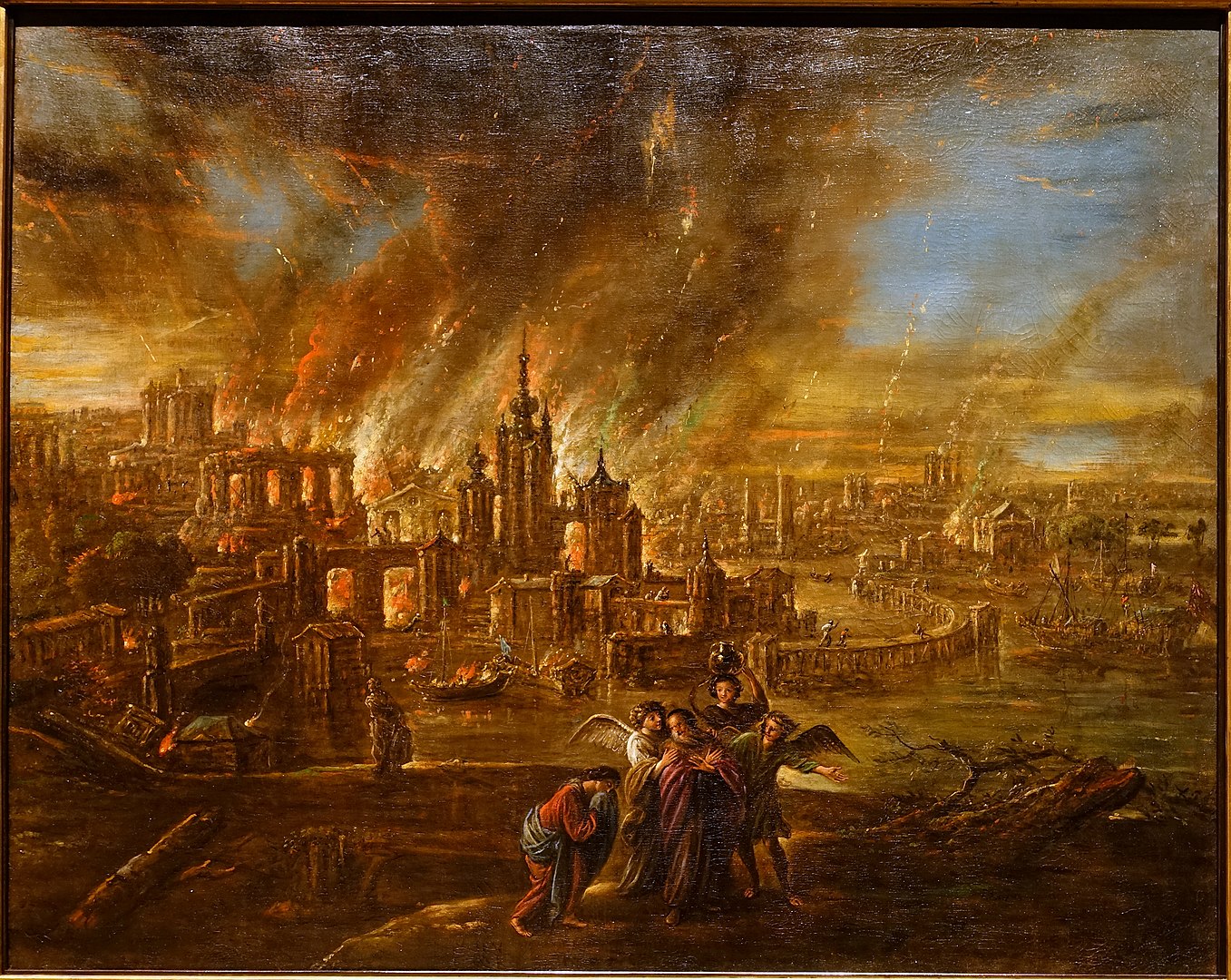
    Sodom and Gomorrah afire

    Sodom and Gomorrah afire by Jacob de Wet II, 1680

    Sodom and Gomorrah were two cities mentioned in the Book of Genesis and throughout the Hebrew Bible, the New Testament, and in the deuterocanonical books, as well as in the Quran and the Hadith.

    According to the Torah, the kingdoms of Sodom and Gomorrah were allied with the cities of AdmahZeboim, and Bela. These five cities, also known as the “cities of the plain” (from Genesis in the King James Version), were situated on the Jordan River plain in the southern region of the land of Canaan. The plain was compared to the garden of Eden[Gen.13:10] as being well-watered and green, suitable for grazing livestock. Divine judgment was passed upon them and four of them were consumed by fire and brimstone. Neighboring Zoar (Bela) was the only city to be spared. In Abrahamic religions, Sodom and Gomorrah have become synonymous with impenitent sin, and their fall with a proverbial manifestation of divine retribution.[5][6][Jude 1:7] The Bible mentions that the cities were destroyed for their sins, haughtinessegoism, and attempted rape.

    Sodom and Gomorrah being destroyed in the background of Lucas van Leyden‘s 1520 painting Lot and his Daughters

    Sodom and Gomorrah have been used historically and in modern discourse as metaphors for homosexuality, and are the origin of the English words sodomite, a pejorative term for male homosexuals, and sodomy, which is used in a legal context under the label “crimes against nature” to describe anal or oral sex (particularly homosexual) and bestiality. This is based upon exegesis of the Biblical text interpreting divine judgement upon Sodom and Gomorrah as punishment for the sin of homosexual sex, though some contemporary scholars dispute this interpretation. Some Islamic societies incorporate punishments associated with Sodom and Gomorrah into sharia.

    NOTE: This post was about the art, not about morality and the views above were accompanying the artwork and added for context.

    Source: Divine Retribution in Wikipedia

  • Jeep Cherokee an American Auto Icon

    Jeep Cherokee an American Auto Icon

    Jeep Cherokee

    Jeep respectfully declined dropping the Cherokee name for it’s famous U.S. Auto brand. For this corporate courage we salute the automaker of this legendary driving experience, enjoyed by car enthusiasts all over the world. Jeep Grand Cherokee set the first standard for luxury sport utility and may have even been the inventor of the modern day SUV.

    American Indians, or whatever the politically correct term for the indigenous people of America, are proud of these brands like the Cleveland Indians or Chicago Blackhawks and all people of the world are sadden by the woke culture of political correctness. We wish to remember and honor the American Indians, like the famous Indian motorcycle, as the symbol of superior toughness and endurance. It is wrong to diminish heritage.

    Jeep Grand Cherokee

    The Grand Cherokee’s origins date back to 1983 when American Motors Corporation (AMC) was designing a successor to the smaller Jeep Cherokee (XJ). Three outside (non-AMC) designers—Larry Shinoda, Alain Clenet, and Giorgetto Giugiaro—were also under contract with AMC to create and build a clay model of the Cherokee XJ replacement, then known as the “XJC” project. However, the basic design for the Cherokee’s replacement was well under way by AMC’s in-house designers and the 1989 Jeep Concept 1 show car foretold the basic design.

    As AMC began development of the next Jeep in 1985, management created a business process that is now known as product lifecycle management (PLM). According to François Castaing, Vice President for Product Engineering and Development, the smallest U.S. automaker was looking for a way to speed up its product development process to compete better against its larger competitors. The XJC’s development was aided by computer-aided design (CAD) software systems making the engineers more productive. Meanwhile, new communication systems allowed potential conflicts to be resolved faster, thus reducing costly engineering changes, because all drawings and documents were in a central database. The system was so effective that after Chrysler purchased AMC in 1987, it expanded the system throughout its enterprise, thus connecting everyone involved in designing and building products.

    The Grand Cherokee thus became the first Chrysler-badged Jeep product. Development work for the new Jeep model continued and Chrysler’s employees (after the 1987 buyout of AMC) were eager for a late-1980s release date; however, CEO Lee Iacocca was pushing for redesigned Chrysler minivans, thus delaying the Grand Cherokee’s release until late 1992 as an Explorer competitor. Unlike the Explorer, the Grand Cherokee utilized monocoque (unibody) construction, whereas the Explorer was a derivative of the Ranger pickup with a separate body-on-frame.

    The Grand Cherokee debuted in grand fashion at the 1992 North American International Auto Show in Detroit, Michigan. The vehicle that was driven was a Poppy Red Clear Coat 1993 Grand Cherokee ZJ Laredo with a quartz cloth interior and high-back bucket seats. Then Chrysler president Robert Lutz drove Detroit mayor, Coleman Young, from the Jefferson North Assembly Plant on North Jefferson Avenue via a police escort to Cobo Hall, up the steps of Cobo Hall and through a plate glass window to show off the new vehicle. Sales of the 1993 model year Grand Cherokee began in April 1992.

    Production of the Grand Cherokee started shortly afterward in the purpose-built Jefferson North Assembly in Detroit, Michigan. European Grand Cherokees are manufactured in Austria by Magna Steyr. The Grand Cherokee “played a significant part in reviving Chrysler’s fortunes by moving it into the then nascent market for high-margin sports utility vehicles.”

    Upon its introduction, it was the first full-scale manufacture of an automobile in the US using HFC-134a refrigerant in place of HCFC-12 for the HVAC system.

    Jeep Cherokee Photo by Kirk Thornton on Unsplash

  • Ziggurat of Ur and the Plan of the Pope

    Ziggurat of Ur and the Plan of the Pope

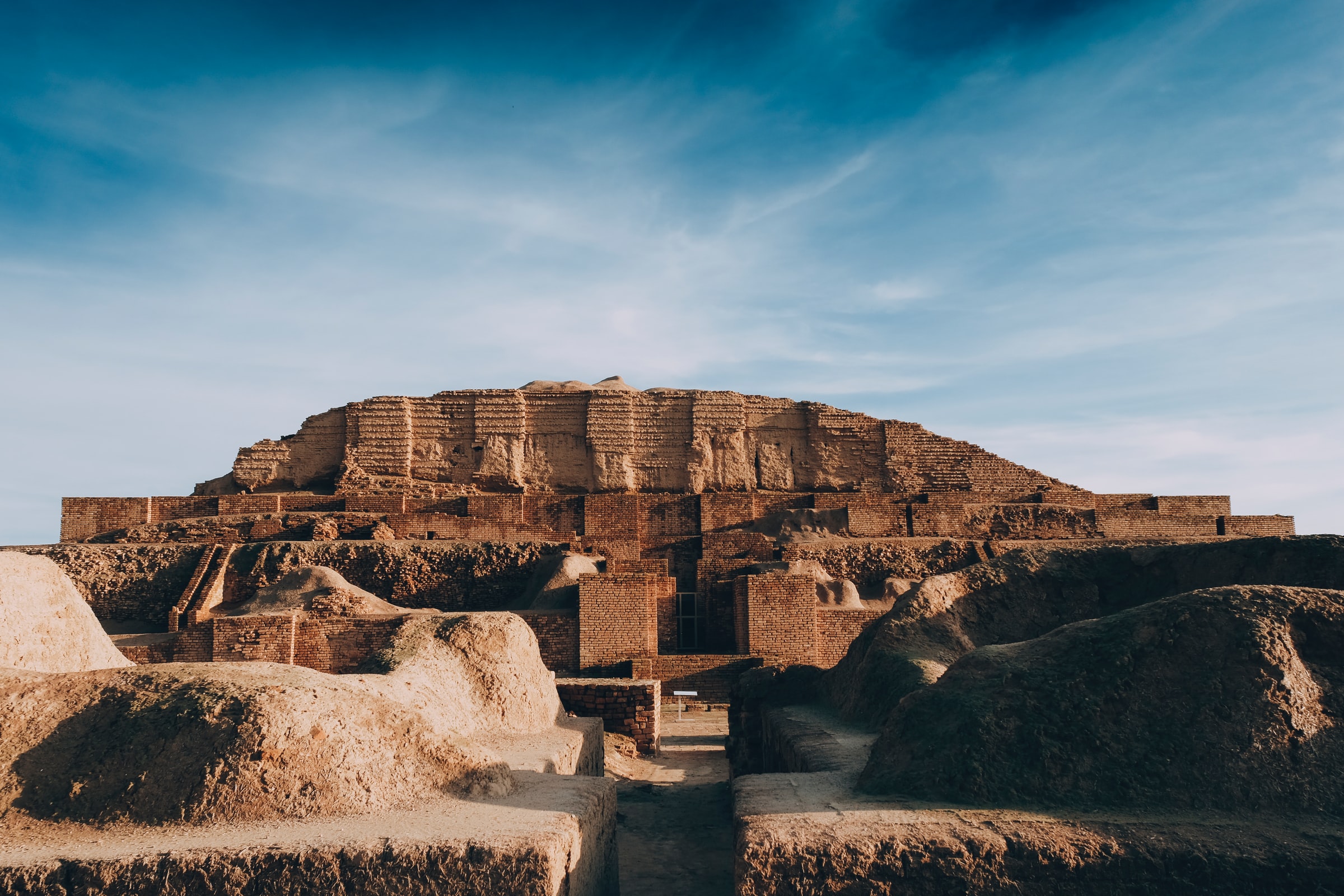
    BAGHADAD – Pope Francis is due to hold an inter-religious prayer service at the ancient Mesopotamian site of Ur when he visits Iraq next week – an event local archeologists hope will draw renewed attention to the place revered as the birthplace of Abraham. (Source: Reuters)

    The father of Judaism, Christianity and Islam, Abraham is described in the biblical book of Genesis as living in the city before God called upon him to create a new nation in a land he later learned was Canaan.

    Definition of ziggurat

    : an ancient Mesopotamian temple tower consisting of a lofty pyramidal structure built in successive stages with outside staircases and a shrine at the top also : a structure or object of similar form

    Image by Abdulmomn Kadhim from Pixabay

  • Miracle on Mainstream on the Feast of Esther

    Miracle on Mainstream on the Feast of Esther

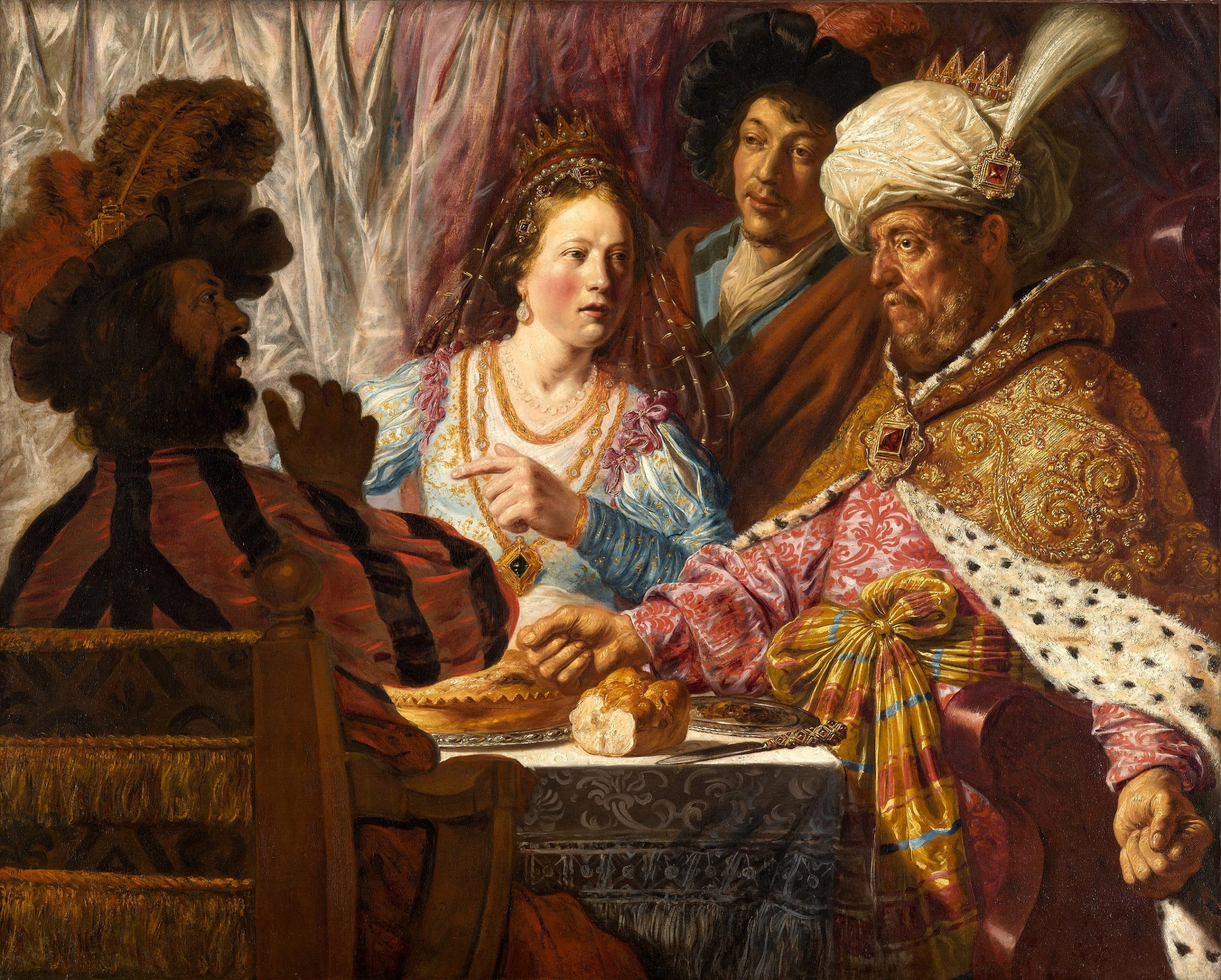
    The Feast of Esther (Feest van Esther, 1625) by Jan Lievens, North Carolina Museum of Art.
    The Feast of Esther (Feest van Esther, 1625) by Jan Lievens, North Carolina Museum of Art.
    “For God doth know that in the day ye eat thereof, then your eyes shall be opened, and ye shall be as gods, knowing good and evil.” Genesis 3:5

    Good Morning Patriots! It’s a beautiful day today, and the start of the Jewish holiday Purim. Now, I’m not sure if you know what that is, it’s when God gets ready to turn your story upside down for the GOOD. Whatever that may be for you, financial trouble, relationship trouble, family trouble etc. It’s a fascinating story from the book of Esther in the Bible, you should go read about it. The time when God works His most incredible miracles.

    There are two things that are currently taking place that I absolutely believe are NOT coincidental during this time:

    1. Biden has yet to make a SOTU speech, and is the first “President” in over 87 years NOT to. That’s VERY telling.
    2. Trump is making his triumphant return to the public eye at CPAC on Sunday. The timing is absolutely impeccable!

    I really feel like this is the point in the movie when the plot starts twisting. Much will happen in our favor in the following weeks/months. You already see it now. EVERY LIE and work of darkness will be REVEALED. Believe that.

    Make NO mistake, God is IN CONTROL and you don’t mess with His anointed!

    Amen!

    Source: QAnon John https://t.me/QAnonJohn17/3036

    The Book of Esther (hebrew: מְגִלַּת אֶסְתֵּר‎, Megillat Esther), also known in Hebrew as “the Scroll” (Megillah), is a book in the third section (Ketuvim, כְּתוּבִים‎ “Writings”) of the Jewish Tanakh (the Hebrew Bible). It is one of the five Scrolls (Megillot) in the Hebrew Bible and later became part of the Christian Greek Old Testament.

    The book relates the story of a Hebrew woman in Persia, born as Hadassah but known as Esther, who becomes queen of Persia and thwarts a genocide of her people. The story forms the core of the Jewish festival of Purim, during which it is read aloud twice: once in the evening and again the following morning. The books of Esther and Song of Songs are the only books in the Hebrew Bible that do not mention God.

  • New moon in Aquarius is Abundance Arising

    New moon in Aquarius is Abundance Arising

    Double Aquarius as we are now in the Age of Aquarius on planet earth which entered the astrological constellation of Aquarius. Most exciting time to be alive as we ascend as a species towards manifesting a higher level of peace and potentially; happiness. Assuming that love is the energy that each one of us is receiving more of, therefore in theory a greater level of consciousness and therefor awareness.

    My hope is that people in service of other people, for the sheer bliss of atonement, will become a trend as the masses awaken to true meaning of prosperity. To share and give to others what is more that you need to be happy, in order to realize the actual meaning of abundance.

    Flower Image by Mariya 💚 STAY SAFE ☘️ Take care of each other 🌍 from Pixabay

    New moon in Aquarius message. What guidance does this new moon offer for my current events? THE STAR We now enter the land flowing with milk and honey, full of peace and hope made manifest. We have overcome many difficult experiences which shows us that we are proof, miracles do exist.

    We are reminded to trust we are in the hands of divine synchronicity. And yes, a reminder to “Be sweet!” 🌛 How can I use this New Moon cycle to help me move forward?

    THE MOON Let’s dive deep into our intuition and find the answers hidden in the depths so we can discover the gateway to our destiny. Release old fears. We are rewriting our very own story.

    Meditate and do some free writing to connect to our Inner Voice of wisdom. 🌜 What mindset can greatly support me during this moon cycle?

    THE SUN Let’s be happy and see our way clearly revealed for our path ahead. We have come to the oasis in the desert. Be refreshed. We have the mindset to see all things with clarity, nothing is hidden from our view. We have such potential to grow our gifts in ways that we could not have before. Be optimistic; have a very positive outlook! Our way forward is prosperous and we shall find good success.