It seems incorrect to wish someone a “Happy New Year” (perhaps a happy new year’s eve). However, I think it’s unrealistic to be happy for an entire year. We should wish someone a “Healthy New Year”, now that’s realistic and would certainly make anyone happy.
Month: January 2007
-
Search Engine Marketing
It’s time to get my mind back on making money, so it can be spent on more travel and lifestyle. Planning a trip to Santa Catarina to experience the great beaches of Southern Brazil and visit the city of Florianópolis, for sometime in February, so stay tuned.
Meanwhile, it’s time once again to analyze and then improve the search engine rankings of my sites an blogs. Search engine marketing is not my favorite task but it’s very important, so much so that it could, or maybe should, be a full-time occupation. I’ll review some of my tips for search engine marketing. -
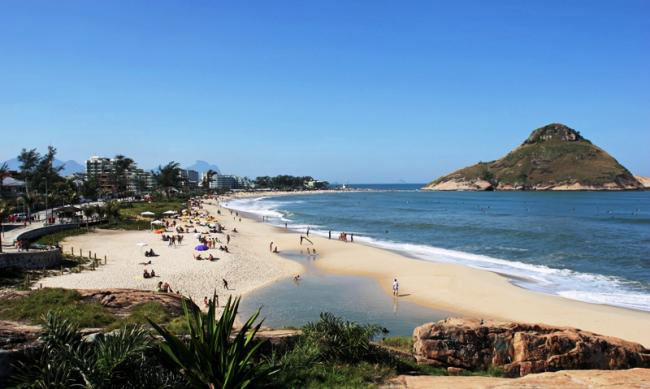
Macumba Beach

The more that you read the more things you will know, the more that you learn the more places you’ll go.
~ Dr. SeussThe world’s record for most surfers riding the same wave simultaneously is 42 and was set at Rico’s Point, Macumba Beach, Rio de Janeiro, Brazil on the 18th of November 2005.
Recreio translates in English to “school recess” and is an old town that used to be out of the way, from Rio. Favorite area of surfistas is now a prime zone for real estate development and becoming a bedroom community of Rio with Barra de Tijuca just 10 km up the road.
There are 2 roads that connect Leblon and Ipanema (districts of Rio) to this open region of land called a “barra” (sand bar), one of those roads cuts straight through the mountain by 2 lane tunnel and the other is a twisty 1 lane cliff-hanger that circumnavigates the tall pointy mountain, above the sea. That single mountain is all the separates the big crowded city of Rio from the big, wide-open barra and ultimately from the bitter-end, where I find myself writing this travelogue today, at Macumba Beach.
The contrast of leaving Ipanema and driving, either through or around the mountain to reach the barra is extreme, partly because when you get to the other side, to Sao Conrado, you arrive at the foot of the biggest, most famous favela (slum) of all Brazil, called Rocinha, where the shacks of some 160,000 inhabitants stretch up the steep mountain. Sometimes stone, sometimes dirt (often mud) roads go either straight-up or zig-zag back-n-forth like the nightmare of an urban planner but they say the view from the top is awesome.
Nowadays you can rent a guide and take a tour of the massive slum (see: www.favelatour.com.br/ ) but I never felt compelled, since you can see enough from the base. Besides it doesn’t feel right to be gawking at the lives of the poor and then go back to living with the rich. Also, there is risk because frequently gun fights break-out as there’s no law in Rocinha, except that which is enforced by the trafficantes (drug traffickers) that control the place.
After you pass Sao Conrado (home to Rocinha) the area opens up to create a wide open plain which is the barra, the road is a modern highway that whisks you past new shopping malls and high-rise apartment buildings. Every where there is signs of development and growth. I was surprised by how much had been built in the 10 years since my last visit. All the way along the highway there are signs to mark the exits which will lead you to the long, wide, clean and popular beaches of Barra de Tijuca but we keep driving until the mountains move back in to close out the barra and then form the spit of land where Recreio sits.
To mark the spit and end of the barra there’s a most unusual geographical formation. It’s a small mountain 50 meters off the beach, all by itself, connected to the land by a narrow isthmus. Perfectly round and jutting up from the sea to form what looks like the nipple of a woman’s breast or “bico de seio” (in Portuguese). The main street of the town Recreio aligns with the spit of land and comes to an end, with the small mountain like the dot of an exclamation point. On one side of the isthmus you can face towards Rio and even see the city way up the coast. On the other side of the isthmus you face south and towards Macumba Beach, which is a fairly short beach and divided almost in half by a rock formation that juts out to create Rico’s Point, this point causes a nice surf break for surfers when the Atlantic swells are favorable.
 If you walk down Macumba Beach and follow the path up and over Rico’s Point, from the top of the hump of the rock formation, you’ll be looking at what I call “the bitter end”, as the mountains rise-up sharply to define an abrupt end to the beaches of Rio de Janeiro. On the side of the hill a narrow twisty road cuts precariously into the rock, surrounded by vegetation, curves out of sight, up and around the cornice. This road is one of the best I’ve ever driven but that’s another story.
One other thing you’ll need to know about this beach is that the word “macumba” is frequently used in Brazil to refer to any ritual or religion of African origin (similar to Voodoo in Jamaica). In several places around the rock formation at Rico’s Point and at the bitter-end of the beach, where a small river estuary can be found, you’ll see signs like ritual offerings, from the modern-day practice of Macumba. Don’t be alarmed but also don’t touch.
-
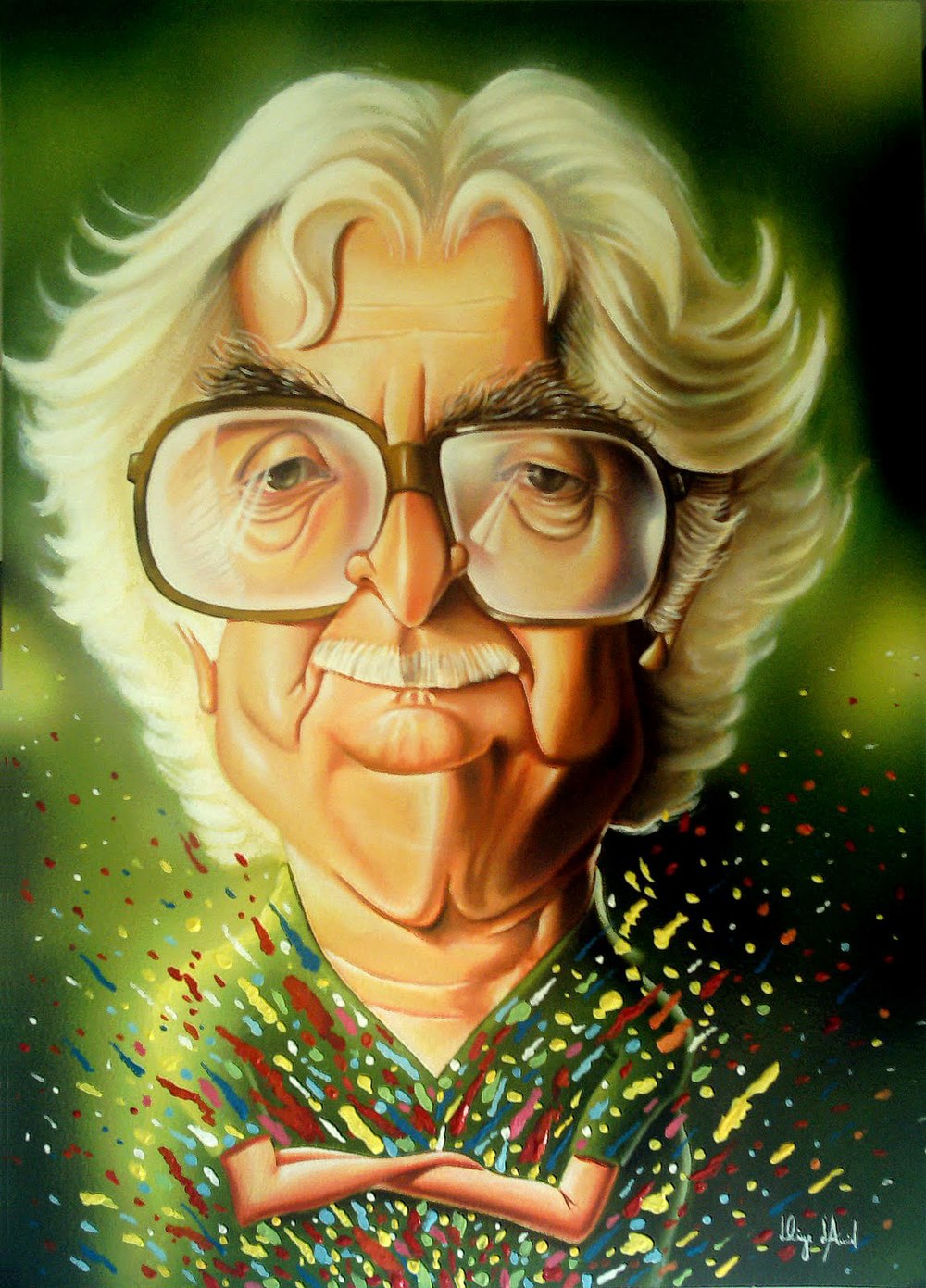
Burle Marx
 My good friends from Miami own and operate a successful landscape business, they impressed upon me the beauty of landscape as an “art-form”, and then introduced me to the work of a Brazilian legend.
Burle Marx, as he’s known, was the greatest thing to ever happen to plants in Brazil. He’s internationally known as one of the most important landscape architects of the 20th century. An artist of multiple facets, besides being a landscape designer he was also a remarkable painter, sculptor, singer, and jewelry designer, with a sensibility that is shown throughout his work.
[box]Born in São Paulo (August 4, 1909 – Rio June 4, 1994), Roberto Burle Marx moved to Rio de Janeiro in 1913. During the years of 1928 and 1929 he studied painting in Berlin – Germany, where he was often seen at the Dahlem Botanic Garden’s greenhouses. In this garden he noticed for the first time the beauty of the tropical plants and the Brazilian flora.[/box]
His first landscape project was a private garden for a house designed by the Architects Lucio Costa and Gregory Warchavchik in 1932. Since then, his landscape works improved as well as his painting and drawing.

[box type=”note” size=”large”]In 1949, Burle Marx bought a 365,000 square meter estate in Barra de Guaratiba, in the outskirts of Rio de Janeiro, where he started organizing his incredible collection of plants.[/box]Sítio Roberto Burle Marx
One of the most beautiful places I’ve ever visited in Brazil is the Roberto Burle Marx home and gardens outside Rio. Burle Marx bought the Santo Antonio da Bica sítio in 1949 to store his plant collection. The sítio has a marvelous house and a small chapel that dates back to the 16th century. Both buildings were lovingly restored and Burle Marx lived there from 1973 until his death in 1994. The chapel is available for weddings, ladies and gentlemen!! In 1985, the property was donated to the Brazilian government in trust for posterity and became a National Monument. It is now called Sítio Roberto Burle Marx.

In an area of approximately 100 acres, visitors can see more than 3,500 species of plants, an extraordinary collection of religious images and pottery from the River Jequitinhonha Valley, and, of course, Burle Marx’s own paintings. If you wish to be amazed and enjoy a couple of hours walking and gawking at a remarkable collection of bromeliads, heliconias and tens of dozens of plant species with long Latin names, it’s awe inspiring!
[box type=”info” style=”rounded”]There are two daily tours by appointment (9:30 a.m. and 1:30 p.m.) and you’ll need someone to drive you there or you can take a bus that will drop you off nearby; call (021) 2410-1412 / 2410-1171 for appointments and information.[/box]

In 1955, Burle Marx founded a landscape company, called Burle Marx & Cia. Ltda. (Burle Marx & Company), where he started to develop landscape design, along with the implementation and maintenance of his residential and public gardens. In 1968, Haruyoshi Ono, a landscape architect, became his partner. Burle Marx & Cia. Ltda. landscape studio, created by Roberto Burle Marx in 1955. The office develops landscape projects, and implements, maintains, and restores gardens. It is also requested as a consulting board, giving supervision and orientation in landscape and environmental issues. In addition, it owns a small nursery that produces and sells plants.
[box type=”note” style=”rounded”]In 1985, Burle Marx donated this estate to a federal government cultural organization, Pró-Memória National Foundation, which is nowadays called National Institute for Cultural Heritage – IPHAN.[/box]
[box]Roberto Burle Marx died in Rio de Janeiro in 1994, at the age of 84.[/box]
 If you asked most people in Rio what Burle Marx is famous for and 9 times out of ten their going to tell you it’s the abstract wave design in the side walks of Copacabana Beach and other beaches of Rio. In many ways this cool wave concept in landscape design concept was conceived by Roberto Burle Marx, of his inspired concepts, the wave concept may have become his landscape design signature, you see it everywhere you go in Rio de Janeiro and it’s magnificent but the thing that made him famous was his super-creative use of plants.
 -
Art of Life
Life doesn’t imitate art,
Life is Art.
~ John LennonImagine living in peace without any fear? where each day was filled with beauty, love, happiness, pleasure, work, reward, discovery, and achievement.


You must be logged in to post a comment.