Tag: Ethiopia

  • Ark of the Covenant Restored by Lambs Bread

    Ark of the Covenant Restored by Lambs Bread

    Tigray Province of Ethiopia is where the Ark of the Covenant is stored in the Chapel of St Mary of Zion. A former scholar from Britain had been a professor in Ethiopia examined the remains of the fabled sacred object as a mere rustic wooden artifact, appeared to be the remains of an old box.

    Ark of the Covenant

    The Ark of the Covenant is a powerful instrument that may contain the salvation of humanity, if it were restored and re-enacted. The shear feat of cooperation it would take to recover and restore this powerful device, to it’s peak performance, requires an act of God or Bob Marley Peace.

    Financial resources sufficient to hire Graham Hancock to consult on how to recover and restore the Ark of the Covenant, plus the estimated cost for about a metric ton of pure gold. Our plan is to grow high grade lambs bread to create the wealth to bankroll the operation.

    Lambs Bread is landrace strain of cannabis from Jamaica. By definition, a landrace is a variety of cannabis that has been grown in and adapted to the environment of its native land. The unique alterations of these strains are caused by its environment and isolation from other populations of species. Names typically come from the native region to the strain.

    Landrace strains are cannabis cultivars that have never been crossed by breeders, evolving stable genetics over centuries of natural selection and long-term exposure to their home environment. Cannabis is a highly adaptable plant and as generations of mankind spread throughout the world, so too did cannabis, becoming a “native” of numerous regions in the Middle East, Africa, the Americas, and Asia.

    Where do landrace strains come from?

    Cannabis is one of the oldest crops in history. The plant was first referenced in historical documents in 2900 B.C. by the Chinese emperor Shen-Nung. Known as the Father of Chinese Medicine, Shen wrote of cannabis in his encyclopedia of plant medicines called the Pen Ts’ao. Further archaeological evidence of hemp rope imprints on broken pottery indicates cannabis was already in use during the Neolithic period in China, about 10,000 B.C. 

    Stone Town Genetics is a project with a plan to harness the economic power of cannabis by creating an African Cannabis Seed Bank, plus all the scientific genetic profiles to breed superior cannabis strains by having the control of the Lambs Bread strain by breeders rights arbitration.

    Rastafari, Ark of the Covenant and the Book of Enoch

    The plan is to allocate proceeds from Lambs Bread Cannabis seeds towards the cause of Bob Marley Peace and to save the Ark of the Covenant. By word of mouth marketing, we will begin to develop a global brand of cannabis for the Bob Marley Peace Seekers. We forward in this generation, triumphantly.
  • Our Father of Peace the Revealer of Light

    Our Father of Peace the Revealer of Light

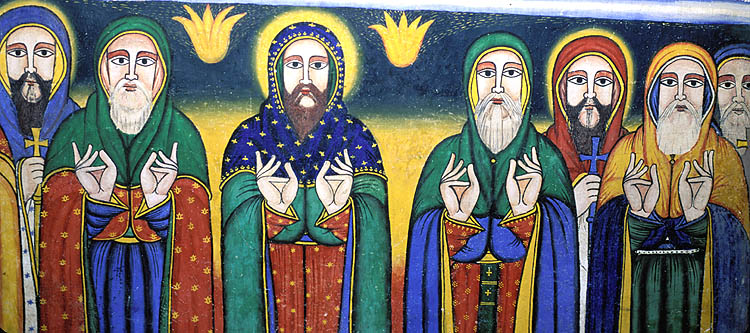
    Painting of the nine saints (not all in photo) of the Ethiopian Orthodox Church, as depicted on the mural in the Church of Our Lady Mary of Zion.

    Bob Marley made Movement of Jah people for the ARK OF THE COVENANT to Bless Our Father of Peace the Revealer of Light. This was the mandate of Haile Selassie a crown prince and regent of the Ethiopian Empire from 1916 to 1928, and then king and regent from 1928 to 1930, and finally Emperor from 1930 to 1974. This Emperor inspired Bob Marley and Rastafari.

    Old Church of Saint Mary of Zion in Aksum, Tigray Region, Ethiopia

    The Church of Our Lady Mary of Zion (Amharic: ርዕሰ አድባራት ቅድስተ ቅዱሳን ድንግል ማሪያም ፅዮን Re-ese Adbarat Kidiste Kidusan Dingel Maryam Ts’iyon) is an Ethiopian Orthodox Tewahedo Church in Ethiopia. It is claimed to contain the Ark of the Covenant. It is located in the town of Axum, Tigray.

    The original church is believed to have been built during the reign of Ezana the first Christian ruler of the Kingdom of Axum (Present-day Eritrea and Ethiopia), during the 4th century AD, and has been rebuilt several times since then.

    The Chapel of the Tablet

    St. Mary of Zion claims to contain the original Ark of the Covenant. Reportedly, the Ark was moved to the Chapel of the Tablet adjacent to the old church because a divine ‘heat’ from the Tablets had cracked the stones of its previous sanctum. Emperor Haile Selassie’s wife, Empress Menen, paid for the construction of the new chapel.

    According to tradition, the Ark came to Ethiopia with Menelik I after he visited his father King Solomon. Only the guardian monk may view the Ark, in accordance with the Biblical accounts of the dangers of doing so for non-Kohanim. This lack of accessibility, and questions about the account as a whole, has led Ethiopians and foreign scholars alike to express doubt about the veracity of the claim.

    The guardian monk is appointed for life by his predecessor before the predecessor dies. If the incumbent guardian dies without naming a successor, then the monks of the monastery hold an election to select the new guardian. The guardian then is confined to the chapel of the Ark of the Covenant for the rest of his life, praying before it and offering incense.

    In a 1992 interview, Edward Ullendorff, former Professor of Ethiopian Studies at the University of London, says that he personally examined the ark contained within the church in 1941 while a British army officer. Describing the ark, he says, “They have a wooden box, but it’s empty. Middle- to late-medieval construction, when these were fabricated ad hoc.

    The dome and bell tower of the new Cathedral of Our Lady Mary of Zion, built by Emperor Haile Selassie in the 1950s

    Since its founding during the episcopacy of Frumentius (known in Ethiopia as Abune Selama Kesatie Birhan or “Our Father of Peace the Revealer of Light”) the Church of Mary of Zion has been destroyed and rebuilt at least twice. Its first putative destruction occurred at the hands of Queen Gudit during the 10th century. Its second, confirmed, destruction occurred in the 16th century at the hands of Ahmad ibn Ibrihim al-Ghazi, after which it was rebuilt by the Emperor Gelawdewos, then further rebuilt and enlarged by Fasilides during the 17th century.

    St. Mary of Zion was the traditional place where Ethiopian Emperors came to be crowned. And indeed, if an Emperor was not crowned at Axum, or did not at least have his coronation ratified by a special service at St. Mary of Zion, he could not be referred to by the title of “Atse”