Tag: Christ

  • What’s the difference between Jew and Jewish

    What’s the difference between Jew and Jewish

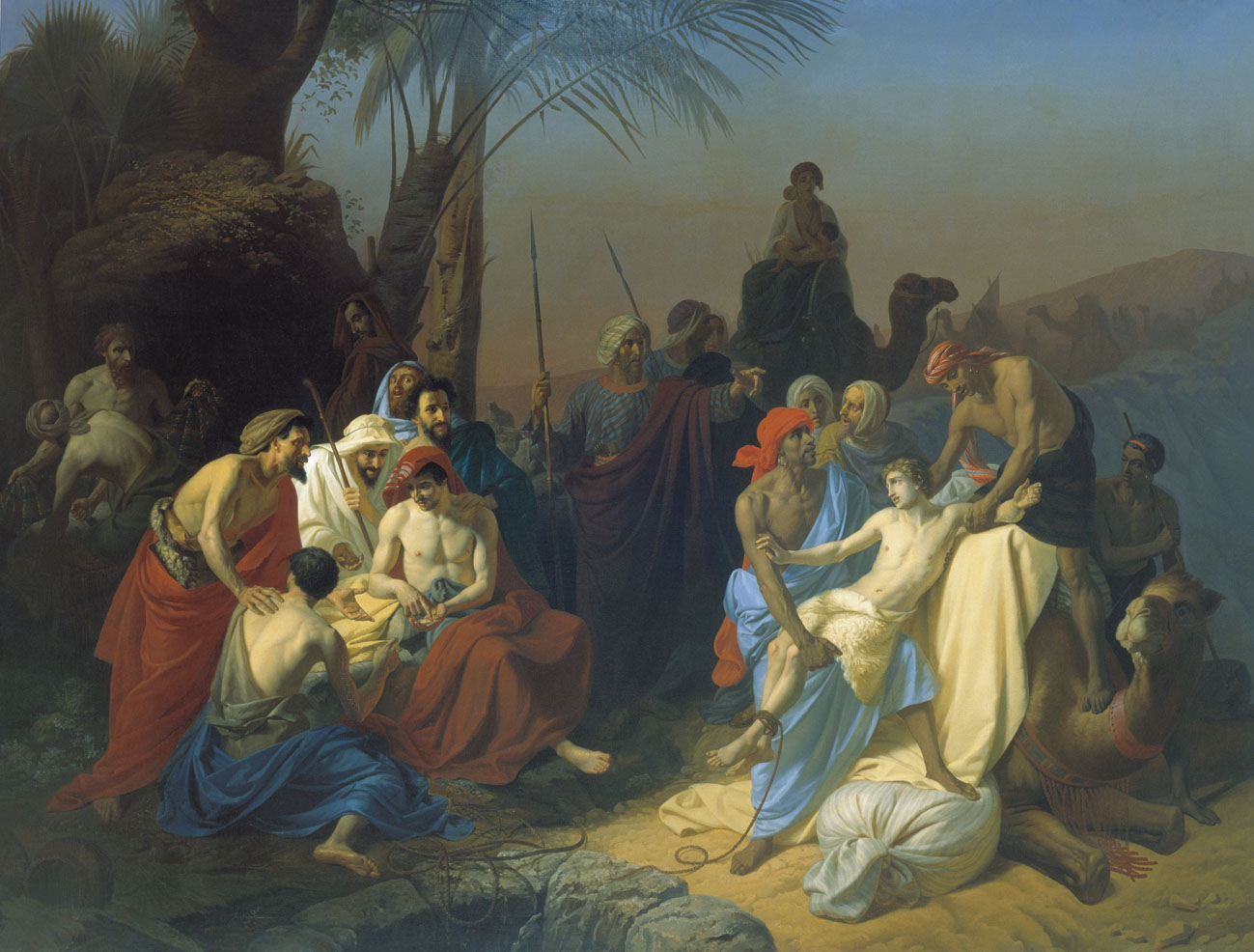
    The children of Jacob sell their brother Joseph by Konstantin Flavitsky, 1855. Judah was the one who suggested that Joseph be sold, rather than killed.

    Let’s unwind this one shall we? by GhostEzra

    First, we must start with the origins of both words Jew and Jewish. Both are recent modern words found nowhere in the NT or OT Greek or Hebrew. Modern translations put both words there. The original words used are Yudaean, Yehudite, Yudaite. The letter J was never in the original Hebrew.

    The term Jew is an attempt to describe heritage.

    The term Jewish is an attempt to describe religious belief (Judaism).

    Portrait of Yehuda (Judah), son of Jacob (oil on canvas)
    Portrait of Yehuda (Judah), son of Jacob (oil on canvas)

    Mixing these terms up is done often and on purpose to bring confusion between heritage and religion. It’s why most people can’t explain the difference of both terms.

    Literally anyone can become Jewish. Not everyone can be a Jew. Also, the vast majority of those that say they are Jews aren’t actually Jews but rather from the lineage of Esau. They are a mixed race.

    The term Jew isn’t derogatory whatsoever. It’s often the goal of those who convert to Judaism, but conversion doesn’t make you a Jew.

    To be a considered a “Jew”, you’d have to either be from the tribe of Judah or have lived in Judea. It’s impossible to prove who are actually Jews today. After the destruction of the temple in 70 AD records were destroyed.

    God’s people Israel, the people not the state (descendants of Jacob) had 12 tribes. Judah or the Jews were one of them. They were considered by Christ as stiffed necked and hard hearted. The Pharisees and Sadducees by example were real Jews. Born of a virgin, Christ came through the lineage of Judah, so that is why Jews think they are special and or chosen. It’s the cornerstone of the Jewish religion. Yet ironically they deny Christ.

    Over the centuries, the Synagogue of Satan and or the global cabal has figured this out. How to use this for their benefit. The goal was to hijack a heritage to use for political and financial gain. It’s become a gang moreover than a religion because of this. The perversion of the Torah via the Talmud has made this possible and is the blueprint for doing so dating back since Babylon. The Canaanites created Kabbalah, Jesuits, Illuminati, Templars, etc..

    Judah (left) talking to Tamar (right) (1606–1669), by Rembrandt

    Not all Jewish people are evil or bad. Many are ignorant to all of it. Nevertheless, they have gained from this ignorance. You rarely hear someone who is Jewish call out another Jewish person publicly. It is extremely rare. There are social and financial consequences for doing so.

    The people who are destroying the world identify as Jewish but are not actually even Jews. They all converted. Bill Gates, George Soros, Klaus Schwab, Rothchild family. Communism is Jewish, put forth by the Jewish Bolsheviks. The goal is total world domination and control. Up unto this point they have been extremely successful. Therefore, this topic is extremely important. Hiding behind terms like anti-Semitism is a cover to allow all of this to be unexamined and criticisms to be silenced.

    If you identify as a good Jewish person, the way you can help is simple. Lose the chosen mentality and help join the fight in exposing the hypocrisy and wickedness of the Talmud at all costs, as it’s destroying the world.

    To learn more about Judah see Wikipedia
  • Christ in the Wilderness

    Christ in the Wilderness

    Christ in the Wilderness

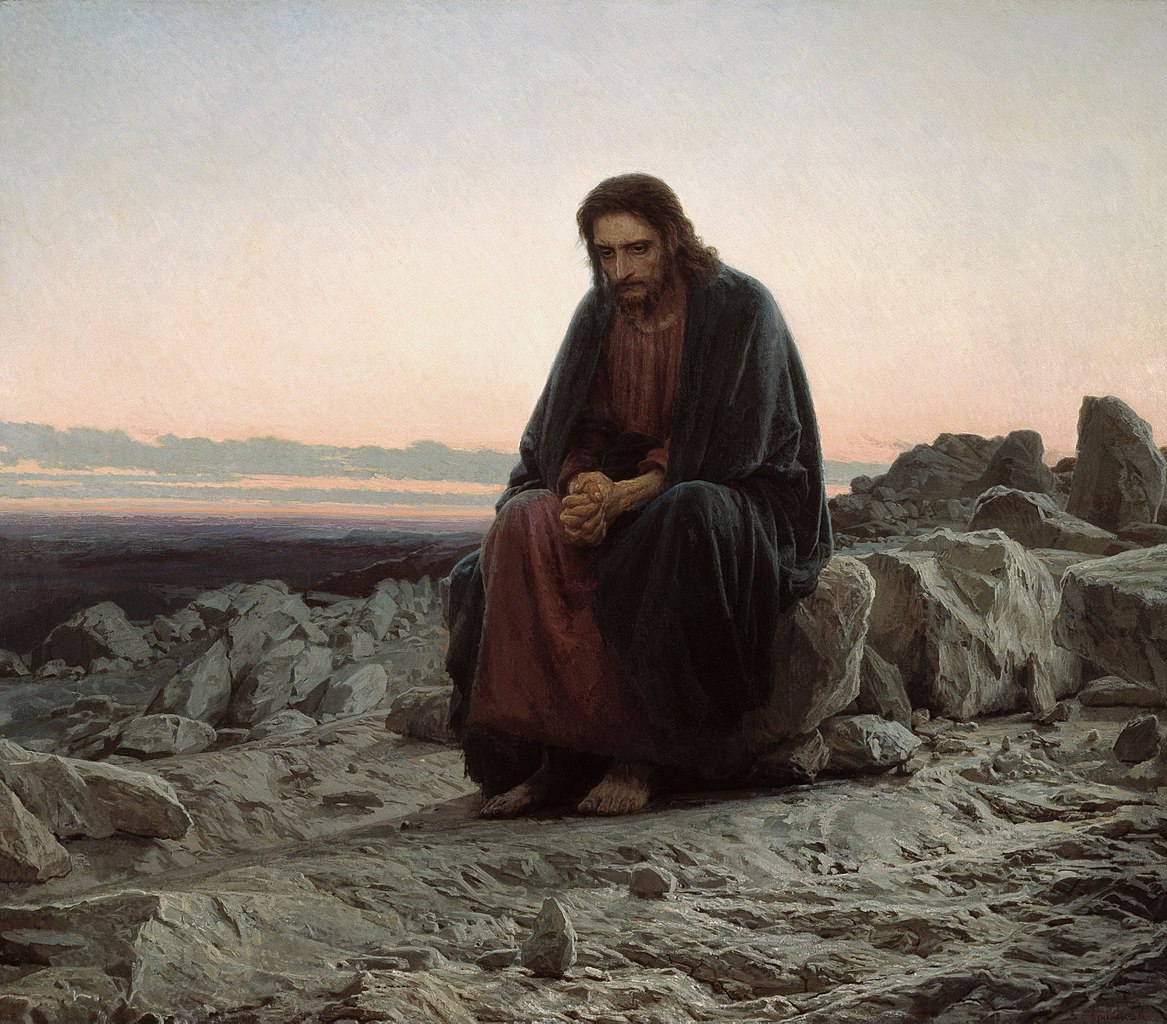
    Christ in the Wilderness by Ivan Kramskoi. This great artist lived in Russia, born in 1837 and died at 50 years old in 1887 but left behind this amazing painting called “Jesus in the Desert” (or wilderness). This image is a scan by the Google Cultural Institute, as the original hangs in the Tretyakov Gallery in Russia.

    Ivan Kramskoi was able to capture an intense feeling in this depiction of man confronting his fear and desperate for a communication with God, compelled to seek drastic measures to force and outcome to a deep conviction. The artists is able to sit us on that rock in anguish.

    Many other artists have created works to depict the Temptation of Christ, including a powerful masterpiece by James Tissot, which hangs in Brooklyn.

    Jesus Tempted in the Wilderness (Jésus tenté dans le désert), James Tissot, Brooklyn Museum

    Temptation of Christ

    Discussion of status as parable

    Discussion of the literary genre includes whether what is represented is a history, a parable, a myth, or compound of various genres. This relates to the reality of the encounter. Sometimes the temptation narrative is taken as a parable, reading that Jesus in his ministry told this narrative to audiences relating his inner experience in the form of a parable. Or it is autobiographical, regarding what sort of Messiah Jesus intended to be.

    Writers including William Barclay have pointed to the fact that there is “no mountain high enough in all the world to see the whole world” as indication of the non-literal nature of the event, and that the narrative portrays what was going on inside Jesus’ mind.

    “In regard to the words, ‘He showed Him all the kingdoms of the world, and the glory of them,’ we are not to understand that He saw the very kingdoms, with the cities and inhabitants, their gold and silver: but that the devil pointed out the quarters in which each kingdom or city lay, and set forth to Him in words their glory and estate.”

    Dominican theologian Thomas Aquinas

    The debate on the literality of the temptations goes back at least to the 18th century discussion of George Benson and Hugh Farmer.

    The Catholic understanding is that the temptation of Christ was a literal and physical event. “Despite the difficulties urged, …against the historical character of the three temptations of Jesus, as recorded by St. Matthew and St. Luke, it is plain that these sacred writers intended to describe an actual and visible approach of Satan, to chronicle an actual shifting of places, etc., and that the traditional view, which maintains the objective nature of Christ’s temptations, is the only one meeting all the requirements of the Gospel narrative.”

    The Catechism of the Catholic Church states:

    The Gospels speak of a time of solitude for Jesus in the desert immediately after his baptism by John. Driven by the Spirit into the desert, Jesus remains there for forty days without eating; he lives among wild beasts, and angels minister to him. At the end of this time Satan tempts him three times, seeking to compromise his filial attitude toward God. Jesus rebuffs these attacks, which recapitulate the temptations of Adam in Paradise and of Israel in the desert, and the devil leaves him “until an opportune time…” The temptation in the desert shows Jesus, the humble Messiah, who triumphs over Satan by his total adherence to the plan of salvation willed by the Father.

    Use of Old Testament references

    The account of Matthew uses language from the Old Testament. The imagery would be familiar to Matthew’s contemporary readers. In the Septuagint Greek version of Zechariah 3 the name Iesous and term diabolos are identical to the Greek terms of Matthew 4. Matthew presents the three scriptural passages cited by Jesus (Deut 8:3, Deut 6:13, and Deut 6:16) not in their order in the Book of Deuteronomy, but in the sequence of the trials of Israel as they wandered in the desert, as recorded in the Book of Exodus.

    Luke’s account is similar, though his inversion of the second and third temptations “represents a more natural geographic movement, from the wilderness to the temple”. Luke’s closing statement that the devil “departed from him until an opportune time” may provide a narrative link to the immediately following attempt at Nazareth to throw Jesus down from a high place, or may anticipate a role for Satan in the Passion (cf. Luke 22:3).