
The Bible refers to divine retribution as, in most cases, being delayed or “treasured up” to a future time. Sight of God’s supernatural works and retribution would militate against faith in God’s Word. William Lane Craig says, in Paul’s view, God’s properties, his eternal power and deity, are clearly revealed in creation, so that people who fail to believe in an eternal, powerful creator of the world are without excuse. Indeed, Paul says that they actually do know that God exists, but they suppress this truth because of their unrighteousness.
Some religions or philosophical positions have no concept of divine retribution, nor posit a God being capable of or willing to express such human sentiments as jealousy, vengeance, or wrath. For example, in Deism and Pandeism, the creator does not intervene in our Universe at all, either for good or for ill, and therefore exhibits no such behavior. In Pantheism (as reflected in Pandeism as well), God is the Universe and encompasses everything within it, and so has no need for retribution, as all things against which retribution might be taken are simply within God. This view is reflected in some pantheistic or pandeistic forms of Hinduism, as well.
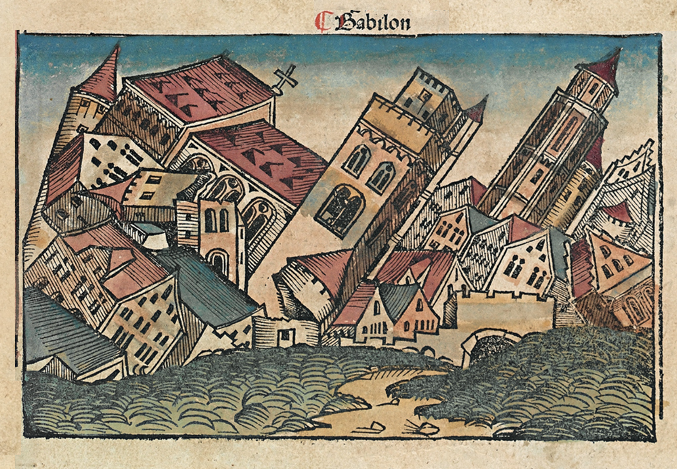
According to Frances Carey, the painting by John Martin shows the “destruction of Babylon and the material world by natural cataclysm”. This painting, Frances Carey holds, is a response to the emerging industrial scene of London as a metropolis in the early nineteenth century, and the original growth of the Babylon civilisation and its final destruction.
Some other scholars such as William Feaver see John Marin’s painting as “the collapse of Edinburgh in Scotland”. Charles F. Stuckey is sceptical of the link with Edinburgh. According to the Tate, the painting depicts a portion of Revelation 16, a chapter from the New Testament.
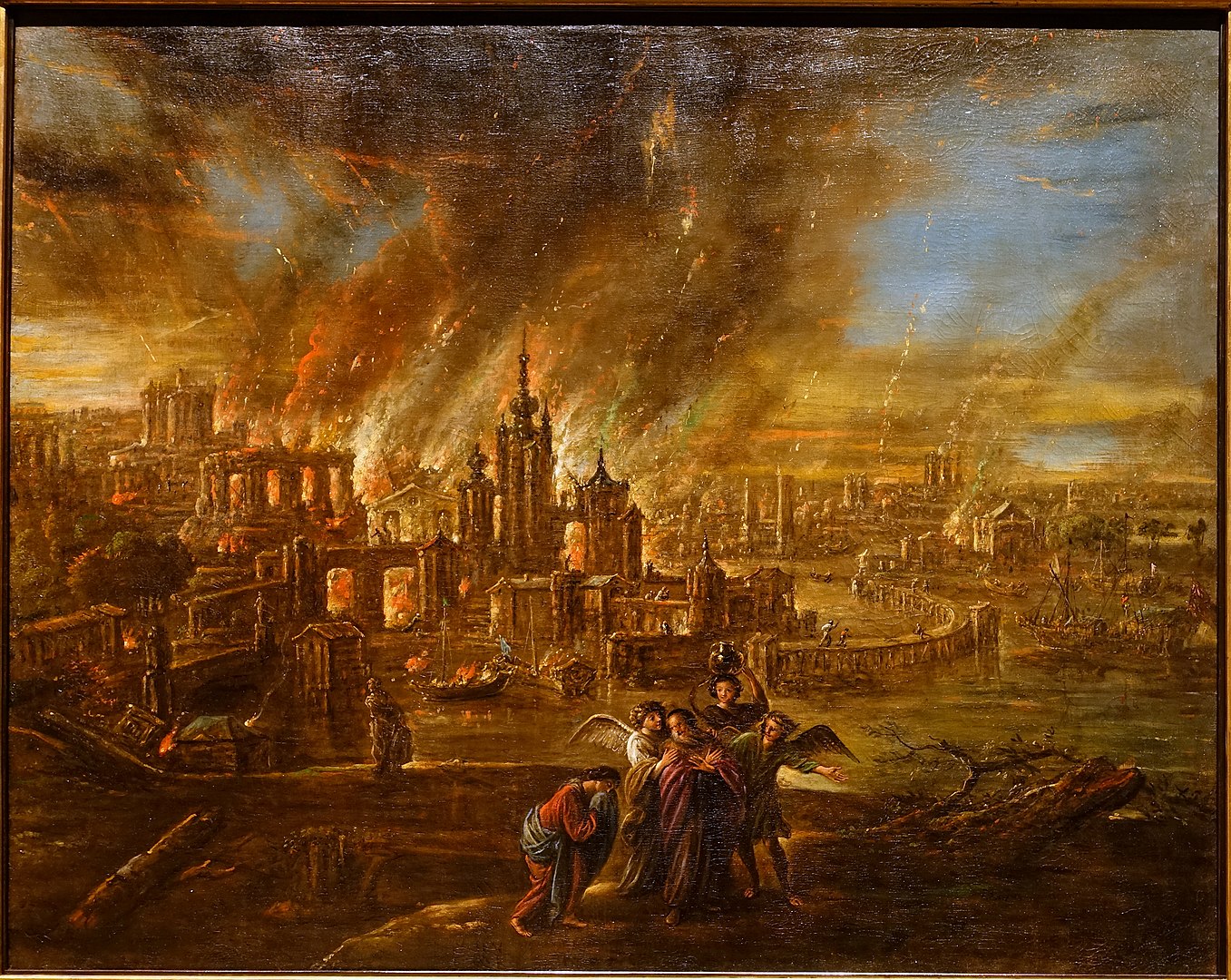
Sodom and Gomorrah afire

Sodom and Gomorrah were two cities mentioned in the Book of Genesis and throughout the Hebrew Bible, the New Testament, and in the deuterocanonical books, as well as in the Quran and the Hadith.
According to the Torah, the kingdoms of Sodom and Gomorrah were allied with the cities of Admah, Zeboim, and Bela. These five cities, also known as the “cities of the plain” (from Genesis in the King James Version), were situated on the Jordan River plain in the southern region of the land of Canaan. The plain was compared to the garden of Eden[Gen.13:10] as being well-watered and green, suitable for grazing livestock. Divine judgment was passed upon them and four of them were consumed by fire and brimstone. Neighboring Zoar (Bela) was the only city to be spared. In Abrahamic religions, Sodom and Gomorrah have become synonymous with impenitent sin, and their fall with a proverbial manifestation of divine retribution.[5][6][Jude 1:7] The Bible mentions that the cities were destroyed for their sins, haughtiness, egoism, and attempted rape.

Sodom and Gomorrah have been used historically and in modern discourse as metaphors for homosexuality, and are the origin of the English words sodomite, a pejorative term for male homosexuals, and sodomy, which is used in a legal context under the label “crimes against nature” to describe anal or oral sex (particularly homosexual) and bestiality. This is based upon exegesis of the Biblical text interpreting divine judgement upon Sodom and Gomorrah as punishment for the sin of homosexual sex, though some contemporary scholars dispute this interpretation. Some Islamic societies incorporate punishments associated with Sodom and Gomorrah into sharia.
NOTE: This post was about the art, not about morality and the views above were accompanying the artwork and added for context.
Source: Divine Retribution in Wikipedia


You must be logged in to post a comment.