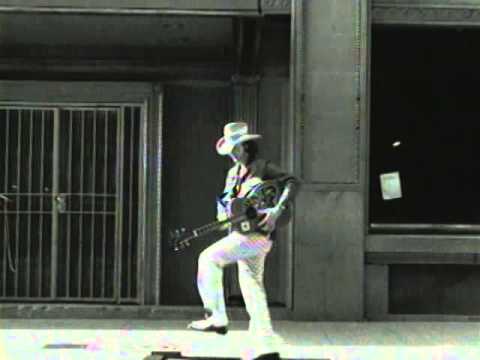
10 Miles to Go on a 9 Mile Road by Jim White is one of my most favourite songs of all time. He is a Rock idol to me, and especially because of his love for Jesus, which is hidden theme in much of his music. Naturally it’s cool also that this incredibly awesome video, which I think of as “the power of love” is filmed in Vancouver in front of 757 West Hastings and in another scene you’ll see the Barlcay Hotel and I live overlooking Barclay Street, nearby.
Jim White – 10 Miles To Go On 9 Mile Road (Official Video)
They tell me miracles abound now more than ever But I don’t care They say, it’s better to be blessed than it is to be clever But I don’t care
Girl, I got ten miles to go on a nine mile road It’s a rocky rough road, but I don’t care For life’s nothing if not a blind rambling prayer You keep your head held high, walkin’ and talkin’ ‘Til the power of love deliver you there The power of love deliver you there The power of love deliver you there The power of love deliver you, you
You don’t get nothing for free, ‘less of course you steal it At least that’s what the people say The sad irony of love is how so seldom you feel it Yet, it’s all you dream about, night and day
From the splinter in the hand To the thorn in the heart, to the shotgun to the head You got no choice but to learn to glean solace from pain Or you’ll end up cynical or dead
Me, I got ten miles to go on a nine mile road And it’s a rocky rough road, but I don’t care For life’s nothing if not a blind rambling prayer You keep your head held high Walkin’ and talkin’ and talkin’ and walkin’ ‘Til the power of love deliver you there (Power of love) The power of love deliver you there (Power of love) The power of love deliver you there (Power of love) The power of love deliver you, there (Power of love)Sometimes you throw yourself into the sea of faith And the sharks of doubt come and they devour you Other times you throw yourself into the sea of faith Only find the treasure lost in the shipwreck inside of you
There ain’t no guarantees, none of that nonsense like on TV Just gotta roll the dice, and take your lumps You’re gonna get yourself knocked down So better learn to stand back up for those who dwell on disaster Let sorrow be their master
Me, I got ten miles to go on a nine mile road It’s a rocky rough road, but I don’t care ‘Cause life’s nothing if not a blind rambling prayer You keep your head held high, walkin’ and talkin” ‘Til the power of love deliver you there (Power of love) The power of love deliver you there (Power of love) The power of love deliver you there (Power of love) The power of love deliver you there (Power of love)My buddy Phillip works as a gas station attendant Strangers call his name to him a thousand times a day They don’t know him, they’re just asking Phillip for a fill-up Funny, how fate plays tricks on us, that way The power of love
The power of the power of love (Power of love) The power of the power of love (Power of love) The power of the power of love (Power of love)
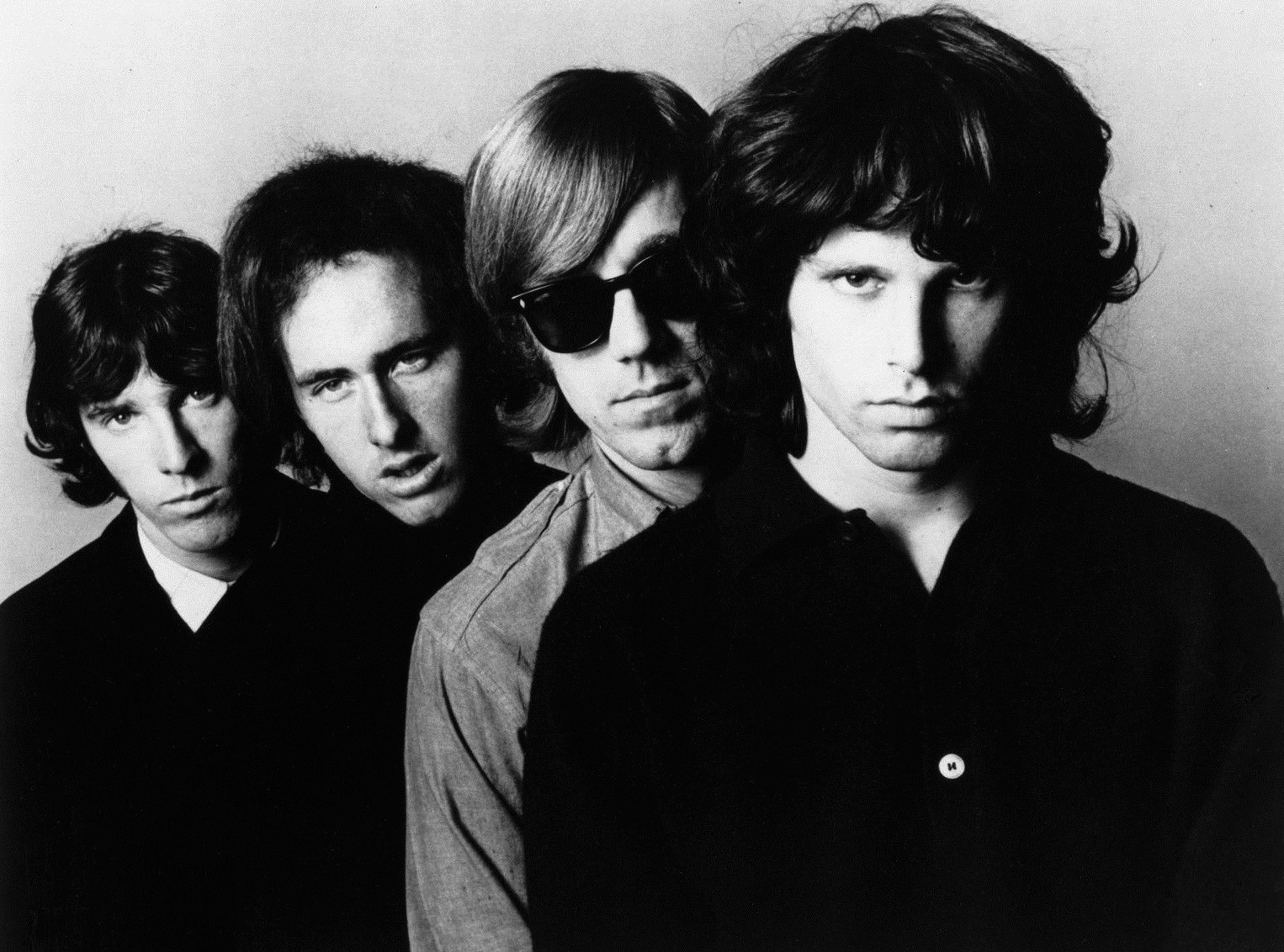
Riders on the Storm is a rock anthem and most loved song by The Doors with Jim Morrison. May have been used more in movies than any other song in rock history (don’t quote me on that), it’s because of the lyrics.
It is popularly believed that “Riders on the Storm” is the song that longtime Doors producer Paul A. Rothchild disparaged as “cocktail music”, precipitating his departure from the L.A. Woman sessions, as corroborated by guitarist Robby Krieger. Rothchild himself denied this claim, stating that he actually applied this moniker to “Love Her Madly“. Following Rothchild’s departure, longtime engineer Bruce Botnick was selected to take over production duties, alongside the Doors themselves.
“Riders on the Storm” was recorded at the Doors Workshop in December 1970 with the assistance of Botnick. Morrison recorded his main vocals and then whispered the lyrics over them to create an echo effect. This was the last song recorded by all four members of the Doors, as well as Morrison’s last recorded song to be released in his lifetime. The single was released in June 1971, entering the Billboard Hot 100 the week ending July 3, 1971, the same week that Morrison died.
Heidegger’s influence
Speaking with Krieger and Manzarek, the German philosopher Thomas Collmer argues that the line “Into this world we’re thrown” recalls Heidegger‘s concept of thrownness (human existence as a basic state). In 1963 at Florida State University in Tallahassee, Jim Morrison heard an influential lecture for him, in which were discussed the philosophers who critically dealt with the philosophical tradition, including Friedrich Nietzsche and also Martin Heidegger. In 2009, Simon Critchley dedicated his column in The Guardian to Heidegger’s thrownness and explained it using the aforementioned verse of the song. The connection between the thrownness into the world and a dog’s life was anticipated by the anti-Heideggerian author Ernst Bloch in his main work The Principle of Hope (1954–9).[18][19]
Legacy
The Doors’ drummer, John Densmore, released a book in 1990 entitled Riders on the Storm, detailing the story of his life and his times with the group. In November 2009, the song was inducted into the Grammy Hall of Fame under the category Rock (single)
Ludwig van Beethoven was baptized 17 December 1770 – 26 March 1827 was a German composer and pianist. Beethoven remains one of the most admired composers in the history of Western music; his works rank amongst the most performed of the classical music repertoire. His works span the transition from the classical period to the romantic era in classical music. His career has conventionally been divided into early, middle, and late periods. The “early” period, during which he forged his craft, is typically considered to have lasted until 1802. From 1802 to around 1812, his “middle” period showed an individual development from the “classical” styles of Joseph Haydn and Wolfgang Amadeus Mozart, and is sometimes characterized as “heroic”. During this time he began to suffer increasingly from deafness. In his “late” period from 1812 to his death in 1827, he extended his innovations in musical form and expression.
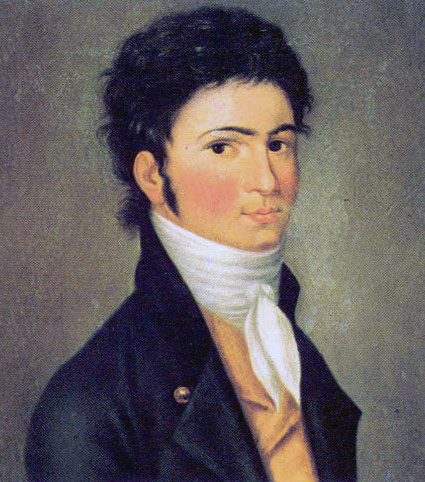
Portrait of Beethoven as a young man, c. 1800, by Carl Traugott Riedel (1769–1832)
Born in Bonn, Beethoven’s musical talent was obvious at an early age, and he was initially harshly and intensively taught by his father Johann van Beethoven. Beethoven was later taught by the composer and conductor Christian Gottlob Neefe, under whose tutelage he published his first work, a set of keyboard variations, in 1783. He found relief from a dysfunctional home life with the family of Helene von Breuning, whose children he loved, befriended, and taught piano. At age 21, he moved to Vienna, which subsequently became his base, and studied composition with Haydn. Beethoven then gained a reputation as a virtuoso pianist, and he was soon courted by Karl Alois, Prince Lichnowsky for compositions, which resulted in his three Opus 1piano trios (the earliest works to which he accorded an opus number) in 1795.
His first major orchestral work, the First Symphony, appeared in 1800, and his first set of string quartets was published in 1801. During this period, his hearing began to deteriorate, but he continued to conduct, premiering his Third and FifthSymphonies in 1804 and 1808, respectively. His Violin Concerto appeared in 1806. His last piano concerto (No. 5, Op. 73, known as the ‘Emperor’), dedicated to his frequent patron Archduke Rudolf of Austria, was premiered in 1810, but not with Beethoven as soloist. He was almost completely deaf by 1814, and he then gave up performing and appearing in public. He described his problems with health and his unfulfilled personal life in two letters, his “Heiligenstadt Testament” (1802) to his brothers and his unsent love letter to an unknown “Immortal Beloved” (1812).
In the years from 1810, increasingly less socially involved, Beethoven composed many of his most admired works including his later symphonies and his mature chamber music and piano sonatas. His only opera, Fidelio, which had been first performed in 1805, was revised to its final version in 1814. He composed his Missa Solemnis in the years 1819–1823, and his final, Ninth, Symphony, one of the first examples of a choral symphony, in 1822–1824. Written in his last years, his late string quartets of 1825–26 are amongst his final achievements. After some months of bedridden illness, he died in 1827. Beethoven’s works remain mainstays of the classical music repertoire.
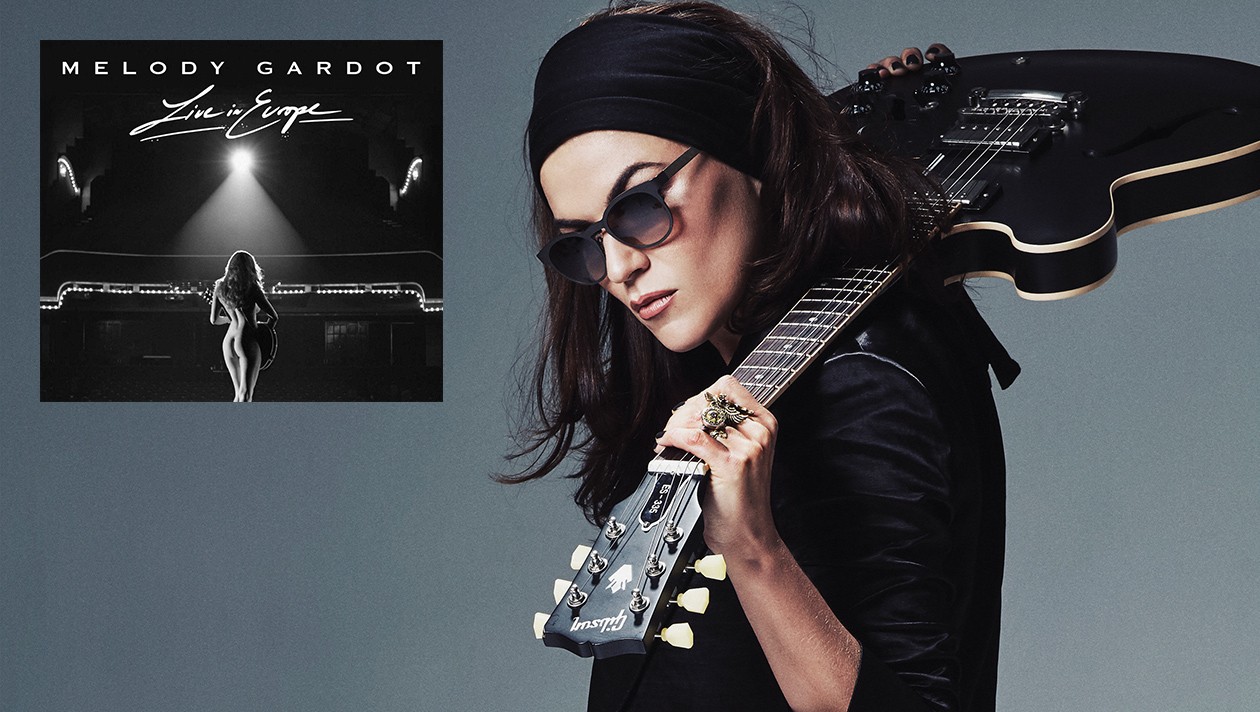
Melody Gardot is a Jazz icon for sure but in my opinion she should be in the Rock’n’Roll Hall of Fame for both the song and the video Preacherman, now in it’s 5th year. This ballad evokes a visceral feeling of pain and suffering like only the greatest rock song can do. She slays it.
I dreamt last night that the end had come I was searching everywhere for food, but there was none Bodies laying burned in the midday sun Nowhere to hide Nowhere to run
I went to the city but the city was gone Irradiated with hatred and destroyed by a bomb Behold the brilliant colors of the nuclear dawn But there is no song All has gone wrong
And when I awoke I could clearly see The seeds of this vision Jah had given me Planted deep within these aristocracies Hypocrisy and Power and greed
So wake up, to the fact that they’re controlling you Whether or not your doing what you want to do The system that we are living in is doomed, Oh! Jah knows it’s true And I man, I know it’s true
And I’m just telling you this Because I love you breddren! Through and through I man true, until the very end The sweeter the kiss The stronger the poison! And this is the reason that I idrens Are dying for nothing
Oh, It’s Babylon control It’s Hollywood mind control They target the youth I’ll show you the proof Come on see the truth It’s written on I am man soul On I am man soul, yeah
It’s News media control Political mind control, yeah Get under your skin They’re wearing you thin But you no give in For not all that glitter is gold, yeahoh
And in my vision I saw incurable disease Genetically engineered by hateful enemies All of this in the name of power and money How could this be The future for we?
The green and mighty forests of the Amazon The lush valleys of Havaii are dead and gone The once abundant and fertile land of Babylon Now sand and stone Stripped to the bone
Oh come quickly They’re taking away our paradise Separating us from the source all lives Poisoning the seas and polluting the skies Ignoring the cries and Promoting the lies
So now that this vision has come into your life I hope you will take up your part in the fight Against those who seek to turn our day into night You know it’s right So stand up and fight
And I’m just telling you this Because I love you mah sistrens! Through and through I man true until the very end The sweeter the kiss, don’t you know The stronger the poison And this is the reason that I idrens Are dying for nothing
Oh, Babylon control It’s Hollywood mind control They target the youth I’ll show you the proof Come on see the truth It’s written on a Rasta mans soul Written on a ya mon soul
It’s News media control Political mind control Get under your skin They’re wearing you thin But do not give in For not all that glitter is gold
For I have been fooled before But now I ‘n’ I know The difference between believing in what I man feel And believing in what I been told ‘Cause their propaganda it burns like wildfire Fire, fire, fire They use it to turn broder against broda Broda, broda, broda
It’s Babylon control It’s Hollywood mind control They target the youth I’ll show you the proof Come on see the truth It’s written on Rrrrrrrrrr..
It’s news media control Political mind control Get under your skin Still wearing you thin But no be victim in this empire Of glittering fool’s gold now
Martin Dreadnought in the house! I bought my first guitar today and started learning Redemption Song by Bob Marley. This is among the most memorable days of my life, I should have done this years ago. I’m in love with this instrument and have found a new passion for a lifetime – learning to entertain myself and the fantasy of becoming a troubadour.
UPDATE: As a sign of congratulations, in June the following story appeared:
BEVERLY HILLS, Calif. (AP) — Grunge became gold Saturday as the guitar Kurt Cobain played on Nirvana’s 1993 “MTV Unplugged” performance months before his death sold for an eye-popping $6 million at auction.
The 1959 Martin D-18E that Cobain played in the band’s rare acoustic performance and subsequent live album was sold to Australian Peter Freedman, owner of Røde Microphones, at the Music Icons event run by Julien’s Auctions in Beverly Hills, California.
The bids opened at $1 million for the sale that ended up breaking several world records.
Cobain used it to play tunes including “About a Girl” and “All Apologies” at the Nov. 18, 1993, show in New York that came less than five months before the singer and songwriter died at age 27.
A day earlier at the same auction event, a custom guitar played by Prince at the height of his stardom in the 1980s and 1990s sold for $563,500, a small sum compared with the Cobain guitar but well over the $100,000 to $200,000 it was expected to fetch.
Prince played the blindingly blue guitar with the artist’s “love” symbol on its neck beginning on the 1984 Purple Rain Tour, as well as on the classic albums “Lovesexy” and “Sign O’ The Times.” He used it into the early 1990s.
Archivists going through Prince’s possessions at his Paisley Park home and musical headquarters in Minnesota recently found the guitar that was thought to be lost during the four years since his death from an overdose at age 57.
Also Friday, a macrame belt that Elvis Presley wore about 30 times on stage brought in nearly 10 times its expected price, with a final bid of $298,000, and an ivory gown worn by Madonna in her 1990 “Vogue” video sold for $179,200.
Martin Guitar Company
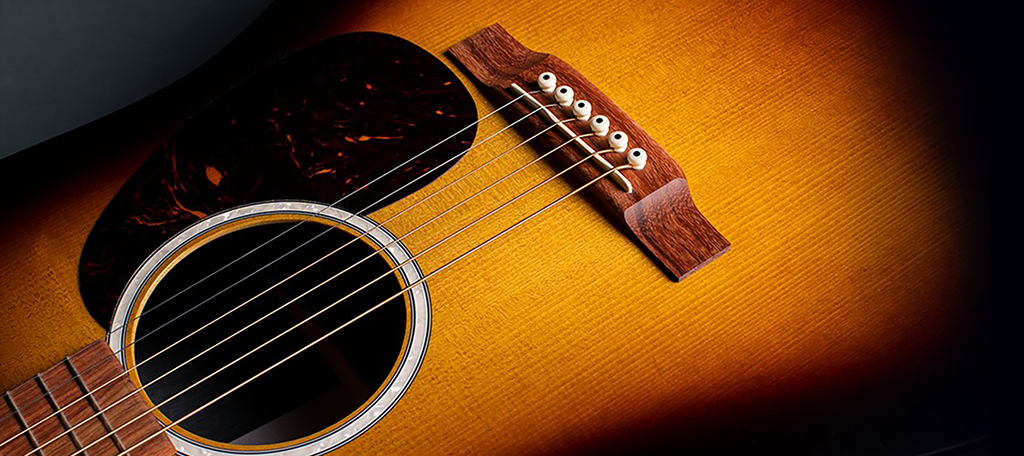
A C.F. Martin & Company HD-28 Dreadnought
Martin (inventor of the Dreadnought in 1916) were founded in 1833. CF Martin were making guitars during the civil war, in a factory that remains today, 30 miles from Gettysburg. They never stopped making guitars. Made in USA ✌
The dreadnought is a type of acoustic guitar body developed by American guitar manufacturer C.F. Martin & Company. The style, since copied by other guitar manufacturers, has become the most common for acoustic guitars.
At the time of its creation in 1916 the word dreadnought referred to a large, all big-gun, modern battleship of the type pioneered by HMS Dreadnought in 1906. A body much larger than most other guitars provided the dreadnought with a bolder, perhaps richer, and often louder tone. It is distinguished by its size and square shoulders and bottom. The neck is usually attached to the body at the fourteenth fret.
Martin dreadnought guitars are also known as “D-size” guitars, or, colloquially among musicians, as dreads. Their model numbers consist of “D-” followed by a number, such as “D-18” and “D-45”. The higher the numerical designation, the more decorative ornamentation on the instrument.
Dreadnought History
The dreadnought style was originally developed in 1916 and was manufactured by Martin specifically for retailer the Oliver Ditson Company. The model was retired after dismal sales. In 1931, after revising the design, Martin began producing dreadnought guitars under its own brand, the first two models being the D-1 and D-2, with bodies made of mahogany and rosewood respectively.
The popularity of and demand for Martin dreadnought guitars was increased by their use, almost exclusively, by folk musicians of the mid-20th century, including most bluegrass guitarists. Today dreadnoughts are considered the standard guitar of bluegrass music, used by many bluegrass musicians to produce a signature sound of that genre.
Martin dreadnoughts manufactured prior to 1946 are highly desired by musicians due to their loud volume and exceptional tone due to the use of scalloped bracing. It is not uncommon for these guitars to sell for in excess of $30,000.
The Gibson Guitar Company‘s initial response to the Martin dreadnought was the round-shouldered J, which it introduced in 1934. It introduced its first square shouldered guitar, the Hummingbird, in 1960.
Since then, dreadnoughts have been made by nearly all of the major guitar manufacturers worldwide in both standard and more recently various single-cutaway forms.
The Trumpet was placed on the top spire of the most famous temple of The Church of Jesus Christ of of Latter-day Saints on April 6, 1892, the photo now shows that the trumpet is gone. The 5.7-magnitude earthquake shook Utah Wednesday March 18th and dislodged a symbolic part of Salt Lake City’s iconic Mormon temple: the trumpet of an angel statue atop its highest spire dropped and now a Natural Mystic is blowing it through the air.
This was the day I picked up the Trumpet and started blowing it in the wind, since A in Day is my Great-grandfather Arthur Day, his name is inscribed on the tabernacle under that angel. My duty is to make way for Jesus Christ, this time he’s bringing a sword.
Movement of Jah people has begun!
There’s a natural mystic Blowing through the air If you listen carefully now you will hear This could be the first trumpet Might as well be the last Many more will have to suffer Many more will have to die Don’t ask me why Things are not the way they used to be I won’t tell no lie One and all got to face reality now
Though I try to find the answer To all the questions they ask Though I know it’s impossible To go living through the past Don’t tell no lie There’s a natural mystic Blowing through the air Can’t keep them down If you listen carefully now you will hear Such a natural mystic Blowing through the air
This could be the first trumpet Might as well be the last Many more will have to suffer Many more will have to die Don’t ask me why There’s a natural mystic Blowing through the air I won’t tell no lie If you listen carefully now, you will hear There’s a natural mystic Blowing through the air
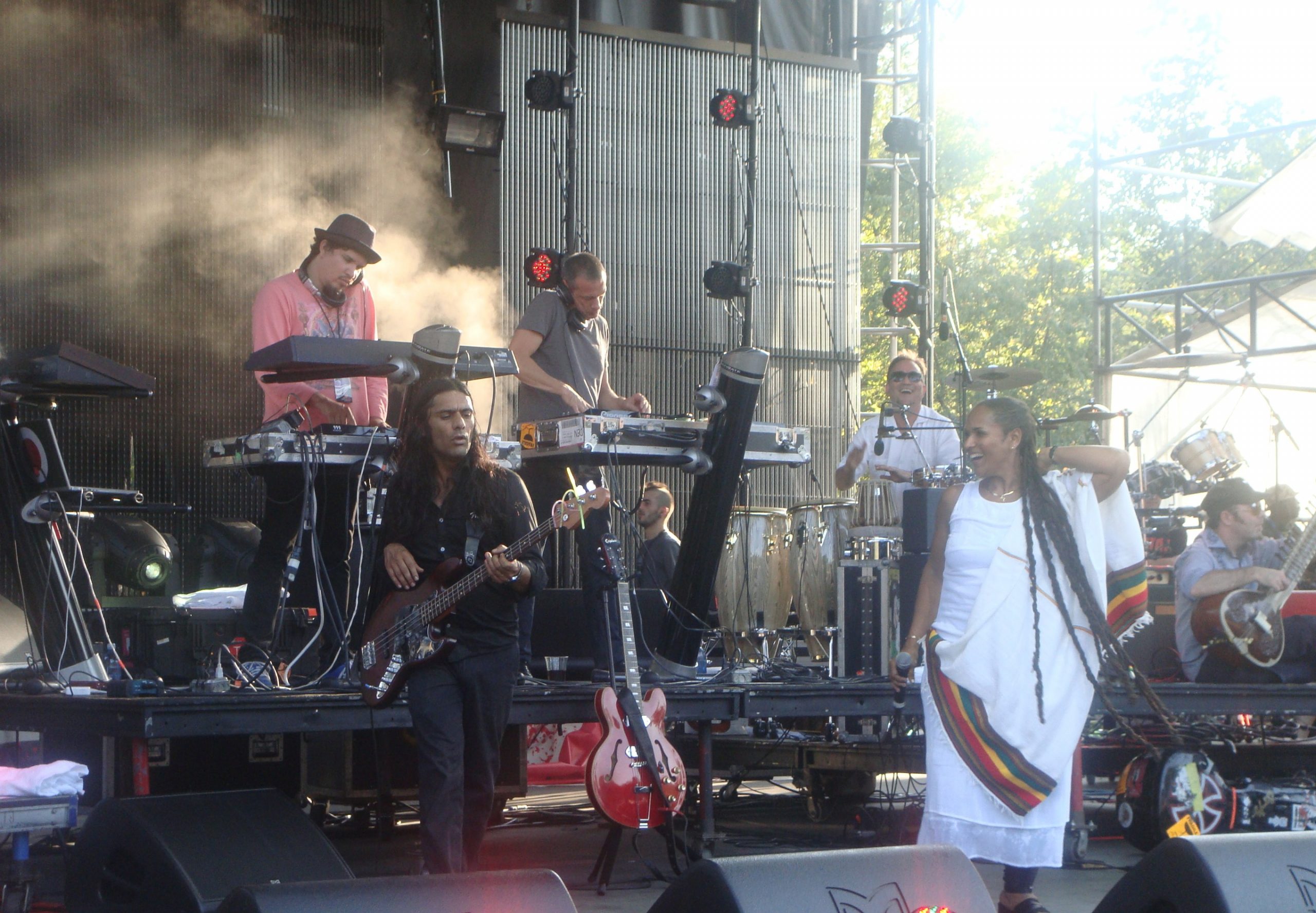
Thievery Corporation give way more than they take! Saw them live tonight WOW! can’t stop thinking how cool they are, like an adventure in music. This band takes you on a tour from the first beat to the last strum.
Thievery Corporation was formed in the summer of 1995 at Washington D.C.’s Eighteenth Street Lounge. Rob Garza and Lounge co-owner Eric Hilton were drawn together over their mutual love of club life, as well as dub, bossa nova and jazz records. They decided to see what would come of mixing all these in a recording studio, and from this, in 1996 the duo started their Eighteenth Street Lounge Music record label.
The duo drew attention with their first two 12-inch offerings, “Shaolin Satellite” and “2001: a Spliff Odyssey” and with their 1996 debut LP, Sounds from the Thievery Hi-Fi.
The duo has publicly stated their fondness of the Brazilian culture in interviews and liner notes of their releases, especially of the 1960s Bossa Nova music movement. Some of their earlier recordings even had specific artwork paying homage to classic releases by bossa nova artists like João Gilberto (His self-titled 1973 album) or Tom Jobim (Stone Flower).
In 2006, the group released Versions, a selection of remixes by Thievery Corporation for other artists. They toured around the United States, playing at Lollapalooza. The tour was photographed by Rob Myers, Thievery Corporation’s sitar and guitar player, in the Blurbphoto bookThievery Corporation 2006. In 2006, the band also recorded “Sol Tapado” for the AIDS benefit album Silencio=Muerte: Red Hot + Latin Redux produced by the Red Hot Organization. As well, in the 2006 release of Tiger Woods PGA Tour for Xbox, their music was featured as the soundtrack to the game.
Also, in 2006, Puma Ptah, then known as Ras Puma, joined and toured with Thievery Corporation and continues to tour with them today.
The group released their fifth studio album, Radio Retaliation, on September 23, 2008. It was nominated for the Grammy for best recording package. Thievery Corporation’s tour started out with five consecutive sold out shows at the 9:30 Club in Washington, DC.
On July 27, 2010, Babylon Central, the cinematic directorial debut of founding member Eric Hilton, was released. Set (and shot) in Washington, D.C., the film follows tripwire events in the interconnected lives of its characters, each influencing power brokers’ schemes to manipulate international currencies.
In June 2011, Thievery Corporation released their sixth album, Culture of Fear, which also featured the vocal stylings of Puma Ptah, then known as Ras Puma, on the tracks: “Overstand” and “False Flag Dub.”
In January 2012, Thievery Corporation launched a remixes contest in conjunction with Dubspot.
Additionally, Eric Hilton from Thievery Corporation produced the debut album, Archives, for the Washington D.C. based reggae band, “The Archives,” which released in July 2012. The four main bandmates which formed the band, “The Archives,” included: Puma Ptah, formerly known as Ras Puma, Darryl Burke, Lenny Kurlou & Mateo Monk.
On January 11, 2017, the band released the song “Ghetto Matrix” from their album The Temple of I & I, which was released on February 10, 2017, again via their own ESL Music label.
On April 20th, 2018, the band released Treasures from the Temple via ESL Music.
Politics
Thievery Corporation has taken progressive political stances on various issues, opposing war and what they regard as exploitative trade agreements, while supporting human rights and food programs.
In September 2005, the group participated in the Operation Ceasefire concert, with the objective of ending the Iraq War.
From their press release regarding their album Radio Retaliation, Garza said:
Radio Retaliation is definitely a more overt political statement […] There’s no excuse for not speaking out at this point, with the suspension of habeas corpus, outsourced torture, illegal wars of aggression, fuel, food, and economic crises. It’s hard to close your eyes and sleep while the world is burning around you. If you are an artist, this is the most essential time to speak up.— Rob Garza
Thievery Corporation are vocal advocates for the World Food Programme, seeing hunger as “…something basic, really elemental, that transcends boundaries around the world.”
“The Foundation” (1996)”Shaolin Satellite” (1996)”2001 Spliff Odyssey” (1996)”ESL Dubplate” (1996)”Encounter in Bahia” (1997)”Lebanese Blonde” (4AD 1997)”.38.45″ (A Thievery Number)” (4AD 1998)”Halfway Around the World” (1998)”So Com Voce” (1998)”Incident at Gate 7″ (1998)”DJ-Kicks EP / It Takes a Thief” (Studio !K7, Rough Trade, 1999)”Focus on Sight” (2000)”The Lagos Communiqué” (2000)”Focus on Sight” (2000)”Sound File 001″ (4AD 2000)”Sound File 002″ (4AD 2000)
“Shadows of Ourselves” (4AD 2000)”DC 3000″ (2000)”Thievery Corporation Vs Nicola Conte – Bossa Per Due” (2001)”The Richest Man in Babylon” (2003)”The Heart’s a Lonely Hunter” (2005)”Revolution Solution” (2005)”Warning Shots” (2005)”The Time We Lost Our Way” (2005)”Sol Tapado” (2005)”Originality (2006)”Supreme Illusion (2007)”Radio Retaliation Extras” (2008)”Sound the Alarm / La Femme Parallel (Sonik Magazine 2009)”Vampires” (2011)”Culture of Fear” (2011)
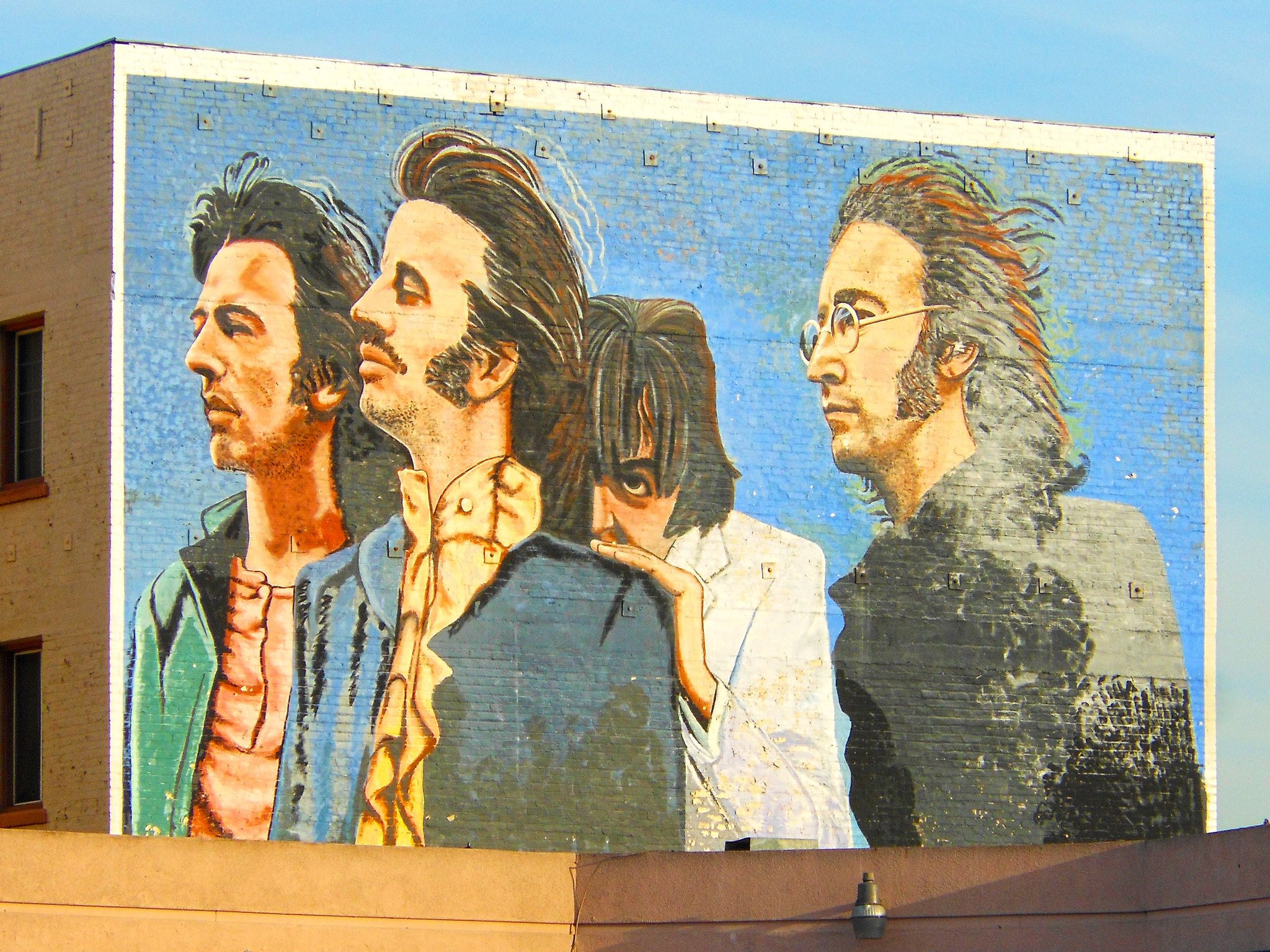
The Beatles, Led Zeppelin and the British bands made such an impact on my generation, we were awe struck from the first note and I know I wasn’t alone at the time, nor am I alone now. Perhaps the greatest cross-culture music movement of all time, and it triggered a rock renaissance in the USA as a response. There were so many great new bands at one time, from both sides of the Atlantic, that each week a new classic hit was dropped
In the first waves of the British invasion we were introduced to bands like the Who, the Rolling Stones, Cream and a long list of legends, as well as artist like Eric Clapton and Sting, just to mention a couple. So the America’s responded with Leonard Skynard selling out Wembly Stadium in London and Creedence Clearwater Revival, the Grateful Dead and the Eagles, with Janis Joplin, Joni Mitchell and Jimi Hendrix blasting there way into the hearts of the British rock fans, and across every border and language.
The Beatles, Let it Be was the first cassette tape I ever bought and that started my life-long passion for rock n roll music, which continues-on today. My favourite song remains “Come Together” and I feel sorry for my parents when I listen to this song, wondering if they know it word for word, from me playing it in the car, on the way to the ski club in the winter.
The Beatles Summary from Wikipedia
Led by primary songwriters Lennon and McCartney, the Beatles built their reputation playing clubs in Liverpool and Hamburg over a three-year period from 1960, initially with Stuart Sutcliffe playing bass. The core trio of Lennon, McCartney and Harrison, who had been together since 1958, went through a succession of drummers, including Pete Best, before asking Starr to join them in 1962. Manager Brian Epstein moulded them into a professional act, and producer George Martin guided and developed their recordings, greatly expanding their domestic success after their first hit, “Love Me Do“, in late 1962. As their popularity grew into the intense fan frenzy dubbed “Beatlemania“, the band acquired the nickname “the Fab Four”, with Epstein, Martin and other members of the band’s entourage sometimes given the informal title of “fifth Beatle“.
The Beatles were international stars by early 1964, leading the “British Invasion” of the United States pop market and breaking numerous sales records. They soon made their film debut with A Hard Day’s Night (1964). From 1965 onwards, they produced increasingly innovative recordings, including the albums Rubber Soul (1965), Revolver (1966) and Sgt. Pepper’s Lonely Hearts Club Band (1967), and enjoyed further commercial success with The Beatles (also known as the “White Album”, 1968) and Abbey Road (1969). In 1968, they founded Apple Corps, a multi-armed multimedia corporation that continues to oversee projects related to the band’s legacy. After the group’s break-up in 1970, all four members enjoyed success as solo artists. Lennon was shot and killed in December 1980, and Harrison died of lung cancer in November 2001. McCartney and Starr remain musically active.
The Song of the Butterfly was recorded at a private session in Hungry 2014 with four brilliant artists in jam. This video has 15,592,964 views for a good reason, especially in today’s pop culture of electronically created music. This mesmerizing song is performed entirely in the spirit of the moment.
While attending Everness Festival in Hungary we were invited by artist Istvan Sky Kék Égto to visit his Surya Sangíta Asram. There four beautiful souls met together and by improvising created the musical adventure you are witnessing now.
Music made by Collaboration of: Istvan Sky Kék Ég, Estas Tonne, Pablo Arellano, Indrė Kuliešiūtė.
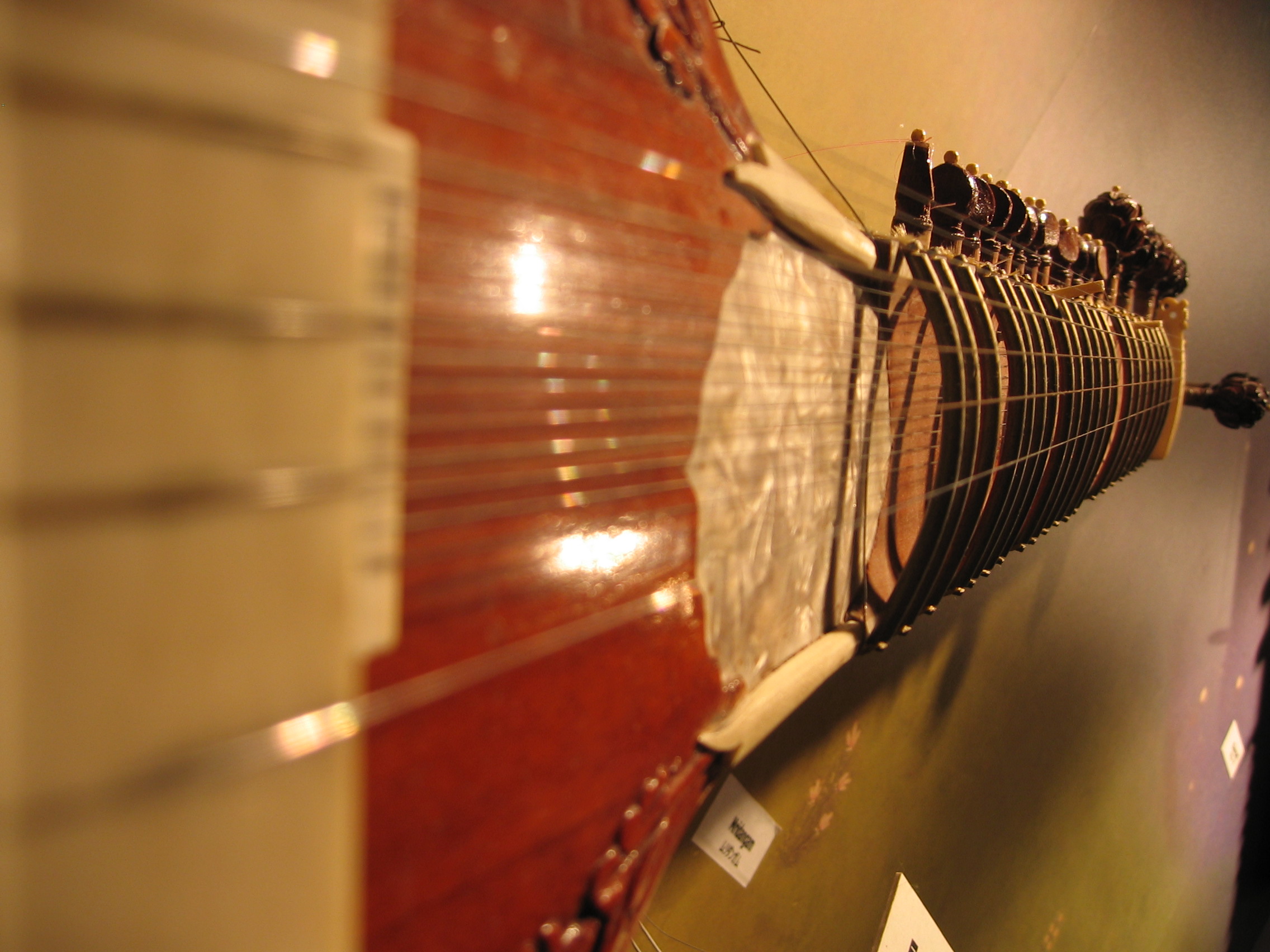
Sitar is the main instrument in The Song of the Butterfly. Sitar is named after a Persian instrument called the setar (meaning three strings). The sitar flourished in the 16th and 17th centuries and arrived at its present form in 18th-century India. It derives its distinctive timbre and resonance from sympathetic strings, bridge design, a long hollow neck and a gourd-shaped resonance chamber. In appearance, the sitar is similar to the tanpura, except that it has frets.
Used widely throughout the Indian subcontinent, the sitar became popularly known in the wider world through the works of Ravi Shankar, beginning in the late 1950s and early 1960s.[1] In the 1960s, a short-lived trend arose for the use of the sitar in Western popular music, with the instrument appearing on tracks by bands such as The Beatles, The Doors, The Rolling Stones and others.















You must be logged in to post a comment.